
Reviewed · TBILISI TOURS
3-Hour Private Guided Walking Tour in Tbilisi
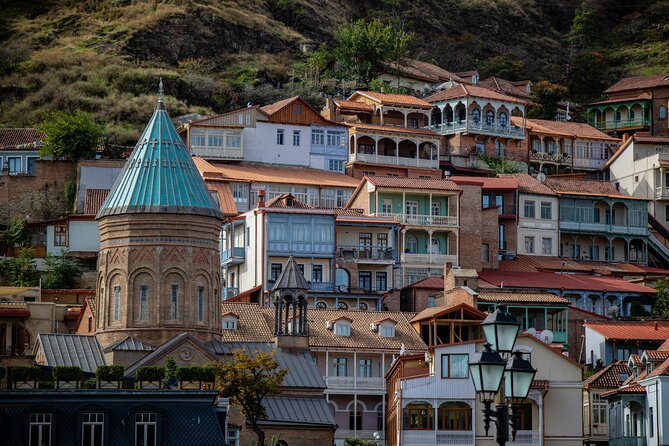
Tbilisi reveals itself best on foot, where a puppet theater, sixth-century church, glass bridge, sulfur baths, and old balconies appear within a few winding blocks. This private tour gives you that close-up look, then adds a cable-car ride toward Narikala and the Mother of Kartli monument.
I like the private format, since your guide can adjust the pace and answer the questions that matter to your group. I also like the mix of major sights and small details, including the Tamada statue, the old Jewish quarter, and the story of how Tbilisi began around its sulfur springs.
The main thing to watch is the timing. The sightseeing portion takes about three hours, but the walk between the meeting and ending points adds roughly an hour, so plan on about four hours and around 4 kilometers on foot. Narikala Fortress is closed for reconstruction, which limits the cable-car stop to the surrounding views and Mother of Kartli.
Key points to know before you book
- A private Old Town route: Only your group takes part, with an English-speaking guide.
- A useful first look at Tbilisi: The route covers churches, bridges, monuments, baths, and city viewpoints in one outing.
- About 4 kilometers of walking: The route includes several hours on foot and some urban climbs.
- Cable-car views included: The ride from Rike Park takes you toward Narikala, although the fortress is closed for reconstruction.
- A guide who can personalize the walk: Luka has been praised for sharing history, culture, and architecture while accommodating requests.
- Church clothing matters: Shorts are not allowed, and women should bring a scarf or hat to cover their head.
Starting at Freedom Square and entering Old Tbilisi
The tour begins at Freedom Square, a handy central meeting point for a first orientation to Tbilisi. From here, you walk toward the Old Town rather than being whisked between sights by vehicle. That choice matters: Tbilisi’s character comes from its changing streets, steep turns, courtyards, balconies, and sudden views.
You should expect the walk to feel like a guided introduction rather than a march from monument to monument. The route links the sights in a sensible way, with about one hour of walking time folded into the full experience. The sightseeing itself takes around three hours, but the total schedule is described as roughly four hours. One part of the details gives an approximate duration of three hours and 30 minutes, so I would keep the morning or afternoon open for the full four-hour window.
Because this is a private activity, you can ask your guide to pause over a detail that catches your eye. The guide named in the available feedback is Luka, who is described as happy to handle requests and explain Tbilisi’s history, culture, and architecture. That flexibility is useful in a city where the best questions often come from what you notice on the street.
more walking tours in Tbilisi
- Tbilisi Walking Tour Including Cable Car and Traditional Bakery
★ 5.0 · 1,310 reviews - Tbilisi:Evening Walking & Talking Tour with Wine & Boat Ride
★ 5.0 · 572 reviews - Old Tbilisi Highlights walking tour with wine & 10 tastings
★ 5.0 · 276 reviews
Gabriadze’s clocktower and the oldest church

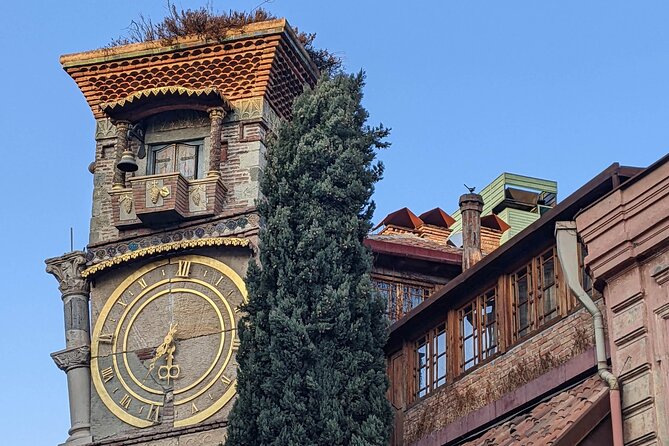
The first stop is the Rezo Gabriadze Marionette Theater, one of Tbilisi’s most playful architectural sights. Its Clocktower is deliberately unusual, with an artistic style that feels far removed from formal monuments and grand religious buildings. You have only about five minutes here, so think of it as a quick introduction and photo stop rather than a theater visit.
The theater and clocktower are popular because they add humor and imagination to the Old Town. I like this early stop because it breaks the usual pattern of beginning with a palace or church. It reminds you that Tbilisi’s personality is not only solemn or historic. It can also be whimsical.
Next comes Anchiskhati Basilica, the oldest surviving church in Tbilisi. Originally built in the sixth century, it is a key religious and cultural site in the Old Town. The scheduled visit lasts about 15 minutes, enough to see the building and understand its importance without turning the tour into a long church service visit.
You should dress properly for the religious sites on this route. Shorts are not permitted, and women are asked to cover their heads with a scarf or hat. These rules apply to both women and men in the supplied guidance, so modest clothing is the safest choice for everyone.
The Peace Bridge and Rike Park
The Bridge of Peace offers a sharp change in mood and design. Opened in 2010, its modern glass-and-steel form contrasts with the older streets around it. When it first appeared, its look divided opinion in Tbilisi. Today, it is one of the city’s most recognized sights.
That contrast is part of the point. You move from a sixth-century basilica and an old theater into a modern public space within a short walk. The bridge is scheduled for about 10 minutes, which gives you time to cross, look along the river, and take in the way new Tbilisi meets old Tbilisi.
After crossing, you continue through Rike Park toward Metekhi Church. This section is more about connecting the city’s landmarks than checking off a single monument. The park provides a break from the tight lanes of the Old Town, while the river and bridge help you understand the shape of central Tbilisi.
Metekhi Church and the best early view
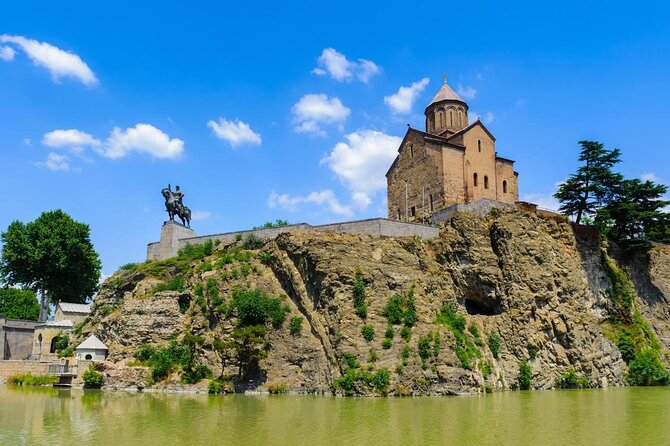
Metekhi Cathedral is one of the most useful stops for orientation. Its courtyard provides broad views over the Old Town, making it a good place to pause and see how the churches, river, streets, and hills fit together. The tour allows about 30 minutes here, which is generous compared with several of the shorter photo stops.
The courtyard also contains a statue of Vakhtang Gorgasali, the legendary Georgian king associated with the founding of Tbilisi. Your guide can connect the statue and the city’s origin story to the sulfur springs below. This is the kind of context that turns a view into something more meaningful.
The route does involve walking uphill and across uneven urban surfaces. The tour asks for a moderate level of physical fitness, and that is fair advice. You do not need to be an athlete, but comfortable shoes will make the day much easier. The total walking distance is around 4 kilometers, with the route spread over several hours.
A different direction out of Tbilisi entirely:
- Day Trip to Kakheti Wine Region Including 9 Wine Tastings
★ 5.0 · 2,774 reviews - Highlights of Caucasus Mountains-Jinvali,Ananuri,Gudauri,Kazbegi(Group tour)
★ 5.0 · 2,682 reviews - Day Trip to Kazbegi and Gudauri
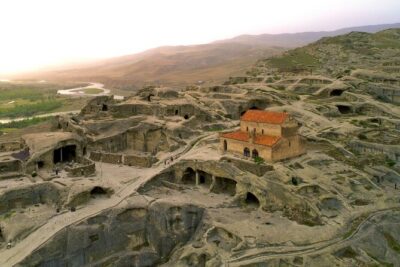
★ 5.0 · 2,009 reviews - Day Trip to Mtskheta Gori and Uplistsikhe
★ 5.0 · 1,801 reviews
Riding up from Rike to the Mother of Kartli
From the lower station at Rike Park, you take the cable car toward Narikala. The ride is included in the price and adds a welcome change from walking. It also gives you a higher view of Tbilisi, the river, and the clustered Old Town.
The important limitation is that Narikala Fortress is closed because of reconstruction. You should not book this tour expecting a full fortress visit. The cable car still serves a purpose, since the stop includes panoramic city views and a visit to the Mother of Kartli monument, but the fortress itself is not available.
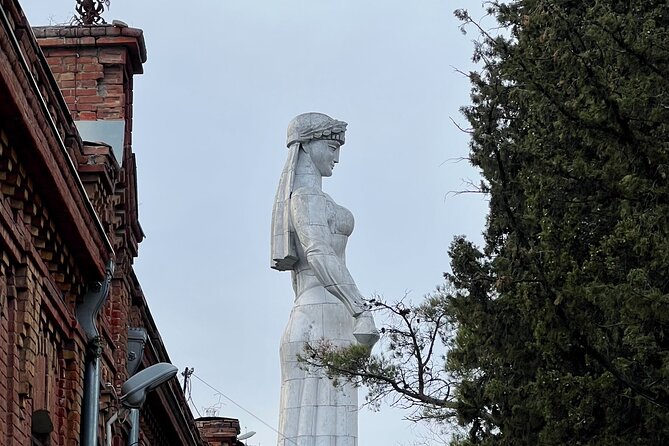
The Mother of Kartli statue is one of Tbilisi’s most familiar symbols. The description points to its Soviet-era spirit and its connection to Georgian character. The figure is commonly read as carrying both welcome and defense, an idea that fits a city shaped by trade, invasion, religion, and political change. The stop lasts about 15 minutes, so it is mainly for the monument and views rather than a long hilltop stay.
This is also one of the tour’s strongest photo opportunities. Still, keep your expectations practical. The information provided does not promise a long independent period at the upper station or entry to Narikala. You are visiting the monument area and taking in the panorama as part of a guided route.
Abanotubani and the beginning of Tbilisi
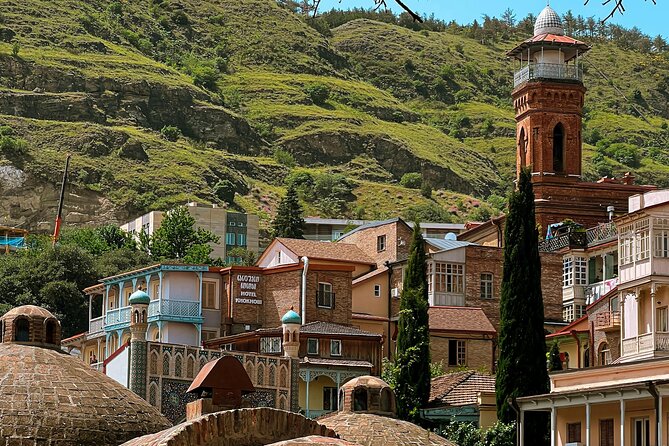
You then return toward Abanotubani, Tbilisi’s sulfur bath district. This area is tied to the city’s founding legend, in which the hot springs played a central role. Even without entering a bath, walking through the district helps explain why the city grew where it did.
The stop lasts about 20 minutes, giving your guide time to explain the springs and point out the bath district’s distinctive setting. This is one of the places where a local explanation adds real value. On your own, you can see the domed bath roofs and narrow streets, but a guide can connect them to the origin story and the city’s long use of the natural hot water.
Do not assume the tour includes a bathing session. The supplied details describe a visit to Abanotubani, not a bath booking. If you want to use one of the sulfur baths, you would need to arrange that separately and allow extra time.
The Tamada statue and Tbilisi’s many communities
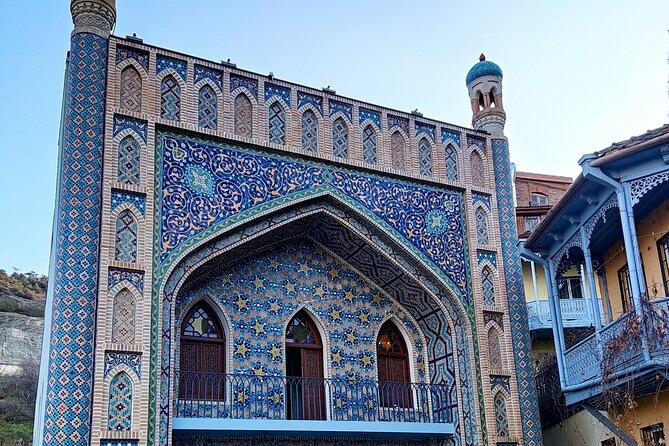
The Tamada, or toastmaster, statue is a small stop with a large cultural theme. The monument is based on an original version found near Vani in western Georgia and dated to the seventh century BC. That gives the statue more weight than a simple modern street decoration.
The toastmaster is central to the Georgian supra, the traditional feast where food, wine, and formal toasts shape the evening. The tour only allows about five minutes here, but the stop works well as a prompt to ask your guide about Georgian customs and social life.
The walk also touches on Tbilisi’s Jewish heritage. Before 1991, about 50,000 Jews lived in the city. The community is now much smaller, but the long friendship between Georgian and Israeli people remains an important part of the city’s multicultural story.
This short section helps keep the tour from becoming only a parade of famous buildings. Tbilisi has long been a meeting point for different faiths and communities. You get a glimpse of that wider story without leaving the Old Town route.
Sioni Cathedral and the final stop
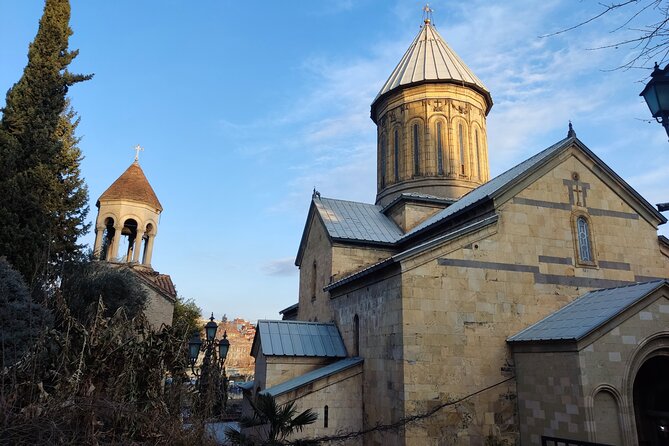
The tour ends at Sioni Cathedral, also called the Cathedral of the Dormition of Tbilisi. It was once the city’s main cathedral and remains one of the important religious buildings in the Old Town.
The cathedral has survived repeated invasions and destruction. Inside, it preserves St. Nino’s Cross, one of the most important religious relics for Georgians. The planned visit lasts about 30 minutes, giving you time to look around and hear why the building matters.
Ending here works well. Sioni brings together several themes from the walk: Georgia’s Christian tradition, the repeated rebuilding of Tbilisi, and the Old Town’s mix of sacred and everyday spaces. Since the tour ends at Sioni Cathedral rather than returning to Freedom Square, you can continue exploring the area afterward on your own.
The end point is listed as 3 Sioni Street. That is useful if you are planning a meal, another Old Town visit, or a return trip by public transport. The start and finish are different, so do not arrange a pickup at Freedom Square for the end of the tour.
What the $25 price gives you
At $25 per person, this is a strong-value introduction to central Tbilisi, especially for a private tour. The fee includes the English-speaking guide and the cable-car ride. Admission to the listed churches, monuments, parks, and outdoor sights is free, so there are no major entry charges waiting along the route.
The value comes from the structure and interpretation. In a few hours, you cover the Gabriadze Clocktower, Anchiskhati Basilica, Peace Bridge, Metekhi Church, Mother of Kartli, Abanotubani, Tamada, and Sioni Cathedral. Reaching all of these independently would be possible, but you would spend more time checking directions and less time connecting the places.
A private tour is especially useful for couples, families, or small groups with a shared pace. Group discounts are available, though the exact reduction is not specified, so check the price for your party before booking. Since only your group participates, you do not have to match the pace of a large mixed group.
The price does not include a visit inside Narikala Fortress, since the fortress is closed for reconstruction. It also does not describe meals, bath access, or additional paid admissions. That keeps the cost clear, but you should budget separately for anything you add after the walk.
Practical details that shape the day
The tour is offered in English and uses a mobile ticket. Confirmation arrives at booking. Service animals are allowed, and the route is near public transportation.
You should wear shoes suited to about 4 kilometers of walking and bring water, especially if you take the tour in warm weather. The route includes hills, stairs or uneven areas may occur in the Old Town, and the cable-car station and viewpoints can make the walk feel more demanding than the distance suggests. The official guidance asks for moderate physical fitness.
Plan your clothing around the churches. Men and women should avoid shorts, and women should bring a scarf or hat for head covering. Dressing correctly saves you from having to adjust plans at Anchiskhati or Sioni.
The stated timing deserves attention. The route describes around two to three hours at the sights, plus about one hour walking from the starting point to the ending point. In practical terms, reserve four hours rather than trying to fit this between tight appointments.
The cancellation terms are simple: you can receive a full refund if you cancel at least 24 hours before the local start time. Changes made within 24 hours are not accepted, and late cancellations are not refunded. The experience also requires a minimum number of participants. If that minimum is not met and the tour is canceled, you are offered another date or experience, or a full refund.
Who should book this Tbilisi walk?
I would choose this tour if you want a first look at Tbilisi that combines major sights with useful cultural context. It suits you best if you prefer walking, want a private guide, and like being able to ask questions rather than listening to a fixed script.
It is also a good fit for a short stay. The route covers enough ground to help you decide where to return later, especially Abanotubani, the Old Town churches, and the viewpoints around Metekhi and Mother of Kartli.
You may want something else if your main goal is entering Narikala Fortress, spending a long time at each church, or taking a sulfur bath during the same outing. The route is broad rather than slow, and several stops last only five to 15 minutes.
Should you book it?
Book this tour if you want a reasonably priced private orientation to Tbilisi, with Luka or another English-speaking guide explaining the city as you walk. The strongest features are the thoughtful route, the blend of old and modern sights, the included cable car, and the flexibility of a private group.
Skip it if you need a fully accessible, low-effort route or if Narikala Fortress is the main reason you are booking. For most first-time visitors who can manage a moderate 4-kilometer walk, this is a practical way to get your bearings and see how Tbilisi’s churches, river, hills, baths, and communities fit together.
FAQ
How long does the tour take?
The experience is described as approximately three hours and 30 minutes, but the practical total is around four hours. About three hours are used for sightseeing, with roughly one additional hour for walking between the start and finish.
How far do you walk?
The total walking distance is around 4 kilometers. A moderate level of physical fitness is recommended.
Where does the tour start?
The meeting point is Freedom Square in Tbilisi, Georgia.
Where does the tour end?
The tour ends at Sioni Cathedral, also called the Cathedral of the Dormition of Tbilisi, at 3 Sioni Street.
Is the cable-car ride included?
Yes. The ride from the Rike-Narikala Cable Car lower station is included.
Can you visit Narikala Fortress?
No. Narikala Fortress is closed because of reconstruction. The route still uses the cable car for city views and includes a visit to the Mother of Kartli monument.
What should you wear to the churches?
Shorts are not allowed. Women should bring a scarf or hat to cover their head, and both women and men should dress appropriately for church visits.
Recently added around Tbilisi
- 2-Day Private Wine Tour to Kakheti from Tbilisi★ 5.0 · 3 reviews
- Kakheti wine region – Private Tour★ 5.0 · 3 reviews
- 17 Day Private Tour through Georgia★ 5.0 · 3 reviews
- Tbilisi and Mtskheta cities private, cultural tour★ 5.0 · 3 reviews
- Tbilisi City Tour with Street Photography★ 5.0 · 3 reviews
- Kakheti With Top Destinations★ 5.0 · 3 reviews
- Jvari monastery & Mtskheta – Half day group tour from Tbilisi★ 5.0 · 3 reviews
- Tbilisi City, Jvari Monastery, Uplistsikhe caves, Mtskheta city Private Day Trip★ 4.5 · 3 reviews
Tbilisi Tours, compared.
Day Trip to Kakheti Wine Region Including 9 Wine Tastings
Read our review →
Highlights of Caucasus Mountains-Jinvali,Ananuri,Gudauri,Kazbegi(Group tour)
Read our review →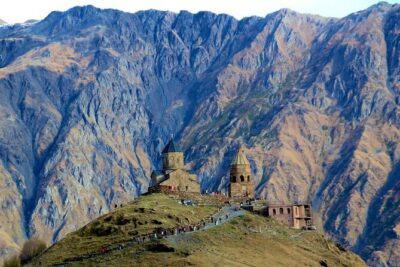

Tbilisi Walking Tour Including Cable Car and Traditional Bakery
Read our review →

Kakheti Wine Region: Signagi and Bodbe Tour with 10 Wine Tastings
Read our review →
Mtskheta,Jvari,Bazaar,wine tasting,Chronicles of Georgia
Read our review →Browse the lists this tour appears in