
Reviewed · HIKING TOURS IN TBILISI
7-day hiking expedition to Tusheti through the Atsunta pass
Tusheti is the kind of place you reach by earning it. This seven-day route crosses Atsunta Pass at 3,431 meters, leaves mobile service behind for two days, and carries you from medieval stone villages to high mountain camps.
I like the careful support: horses carry equipment, 4×4 vehicles handle the rough roads, and meals are included from breakfast through dinner. I also like the human scale of the trip, with a maximum of 10 people and stays in family-run guesthouses rather than standard hotels.
The main caution is the physical demand. One day covers about 20 kilometers, another crosses a high pass, and two nights are spent in tents. You need moderate fitness and a willingness to accept long drives, basic facilities, and changing mountain conditions.
Key points before you book
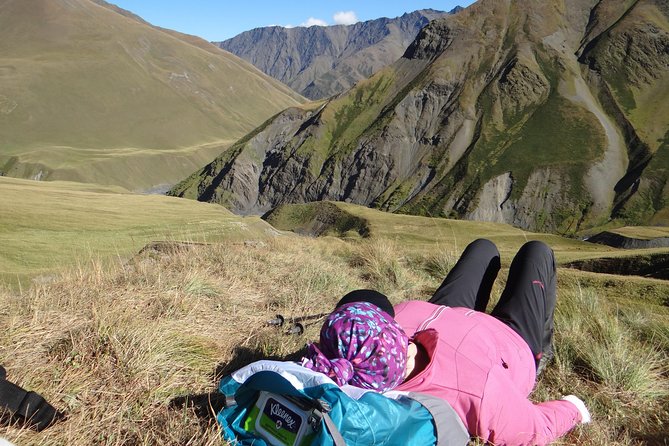
- Atsunta Pass is the trip’s big test: The route reaches 3,431 meters between Khevsureti and Tusheti.
- Two nights are spent camping: The operator supplies a tent, sleeping pad, sleeping bag, and waterproof duffel bag.
- Horses carry your equipment: You hike with less weight, a real help on the pass and the longer valley walk.
- The route links remote villages: Shatili, Mutso, Chontio, Girevi, Dartlo, Kvavlo, Shenako, Diklo, and Omalo all bring a different setting.
- Transport is part of the adventure: Expect minivans, 4×4 jeeps, 60 kilometers of rough road, and the crossing of Abano Pass.
- The price covers most daily costs: At $1,190 per person, food, transfers, camping gear, horse support, and village lodging are included.
Why this route feels different from a normal Georgia tour
Many Georgia trips stay near major roads, wine towns, and city sights. This one heads into a part of the country where roads end, villages are scattered, and mobile communication disappears for two days.
That isolation is the point, but it also shapes the trip. You are not simply walking from one attraction to another. You are moving through a connected mountain route with old defensive villages, shepherd huts, river crossings, border checks, and long stretches without modern services.
I especially like the balance between genuine remoteness and practical support. You do not have to carry every item for seven days, and you are not expected to solve the transport puzzle yourself. Horses help with the load, drivers handle the rough road sections, and the guide manages the daily flow.
The group limit of 10 is useful here. Small numbers make it easier to keep the pace together and fit into village guesthouses. The listed guide, Stanislav, is described as attentive and focused on getting the group safely from place to place.
More Hiking Tours in Tbilisi
- David Gareji and Real Rainbow Mountains Off-Road adventure + hike
★ 5.0 · 129 reviews - 8-Day Trekking Group Tour in Svaneti
★ 5.0 · 21 reviews - Kazbegi Tour with Gergeti Church, Waterfall Hike & Hidden Gems
★ 5.0 · 19 reviews
Day 1: Shatili and the road through Bear Cross Pass
The trip begins with a 9 a.m. pickup from the operator’s office in Tbilisi. The drive to Shatili takes about five hours and covers roughly 150 kilometers, with stops at scenic points along the way.
The first major stop is Bear Cross Pass, at 2,676 meters. A picnic here gives you a break from the minivan and your first strong taste of the high Caucasus. This is not a quick transfer with a single roadside photo. The route includes time to stop, eat, and look around.
Shatili is a fine first night because it immediately gives the trip a sense of place. Its medieval stone buildings are packed into a dramatic mountain setting, and you have time to walk through the settlement after checking into a guesthouse.
I would use that afternoon well. Explore the old structures slowly, take photographs, and enjoy the unusual feel of a village that is also a fortified historic site. In the evening, the guesthouse owners prepare a traditional dinner, giving you a local meal rather than a generic restaurant stop.
The drawback is the long opening drive. Five hours in a vehicle is a lot after arriving in Georgia, though the mountain stops help break it up. You should also expect the road to feel like part of the expedition, not merely a way to get to the hiking.
Day 2: Mutso, Anatori, and the first camp
After breakfast, you leave the main road by jeep for Ardoti, where the road ends. Before hiking, the route pauses at Anatori and the abandoned medieval settlement of Mutso.
A passport check by Georgian border guards is required on this section. The formalities take about 20 minutes, so keep your passport accessible and allow the group to handle the process together.
Mutso adds a strong historical note before the wilderness section begins. Its abandoned stone buildings sit in a remote mountain setting, and the stop helps explain how people once lived and defended these valleys.
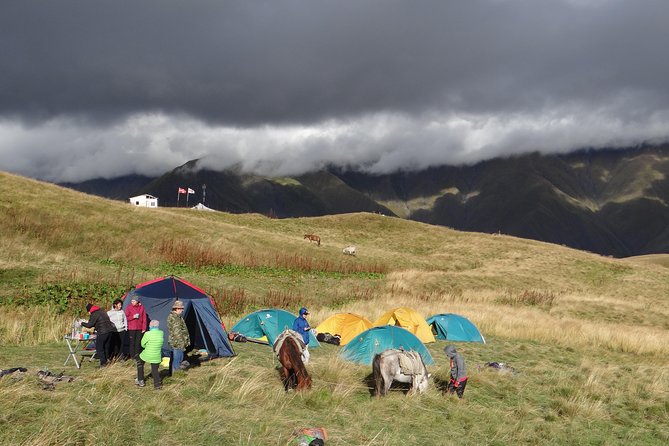
After a picnic, you start hiking. The walk to camp takes about four hours. At camp, the group puts up the tents and rests before dinner.
This is one of the clearest changes in comfort on the trip. You move from a guesthouse and cooked breakfast into a tent, a sleeping bag, and a more basic evening routine. The supplied equipment removes much of the packing burden, but you still need personal clothing and outdoor essentials suited to cold, wet mountain weather.
Horses carry the main equipment, which makes this transition much easier. You will still be walking for hours, but you should not need to haul a full week’s camping load over the trail.
Day 3: The hard crossing of Atsunta Pass
Day three is the physical centerpiece. The trail climbs toward Atsunta Pass, one of the highest passes in Georgia, at 3,431 meters.
The pass divides Khevsureti and Tusheti, so this is also the point where the trip changes region and character. It is a demanding day, and the information provided does not give a fixed hiking time. That uncertainty is worth noting: mountain pace depends on weather, trail conditions, and the group’s ability.
You should treat this as a serious hiking day, not a scenic stroll. Moderate fitness is the stated minimum, but you will be better prepared if you are comfortable with sustained uphill walking and high-altitude conditions.
The reward is the sense of crossing into a place that is genuinely hard to reach. There are no villages on this remote section, and mobile communications are unavailable for two days. That lack of connection can be liberating, but you should tell family or friends before departure that regular contact will not be possible.
This is also the day when the horse support matters most. Carrying less weight lets you focus on footing, weather, and steady progress. Even so, horses do not remove the need for proper boots, warm layers, rain protection, and a small personal daypack.
more days out of Tbilisi to compare
- 3-Day Hiking Group Tour in Kazbegi
★ 5.0 · 14 reviews - Five days tour to Khevsureti (Abudelauri lakes) & Kazbegi with hikes.
★ 5.0 · 14 reviews - Kazbegi Adventure Day Trip – Hike to Gveleti waterfall plus Gergeti, Ananuri
★ 5.0 · 7 reviews - Trekking Tour from Tusheti to Khevsureti via Atsunta Pass
★ 5.0 · 6 reviews
Day 4: A long valley walk to Girevi
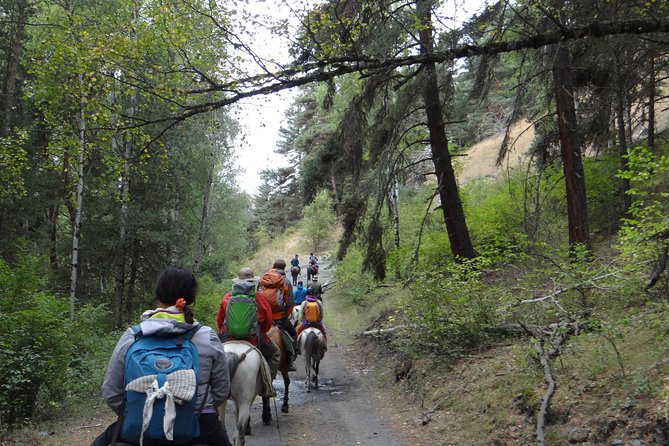
After the high pass, the trail descends gradually along the Pirikiti Alazani River. The route is described as simple, but it is long, roughly 20 kilometers.
That combination matters. You may not face the steepest terrain of the trip, but your legs will have already worked hard on the pass. Plan mentally for a full day on foot, with the river and wide mountain views providing company along the way.
Several shepherd houses appear beside the route, and you also pass Chontio, another abandoned stone settlement. These places give the walk more character than a simple point-to-point trek. You are seeing traces of seasonal work and former village life in a valley that remains lightly developed.
Girevi marks the return to basic civilization. People live there, and guesthouses provide a bed after the two tent nights. That change will feel welcome, especially after the long walk.
The main issue is the distance. A 20-kilometer day can be tiring even on an easy trail, and the description does not promise a short option. If your fitness is only moderate in the everyday sense, ask the operator for more detail about the expected pace and elevation changes before booking.
Day 5: Dartlo and the climb to Kvavlo
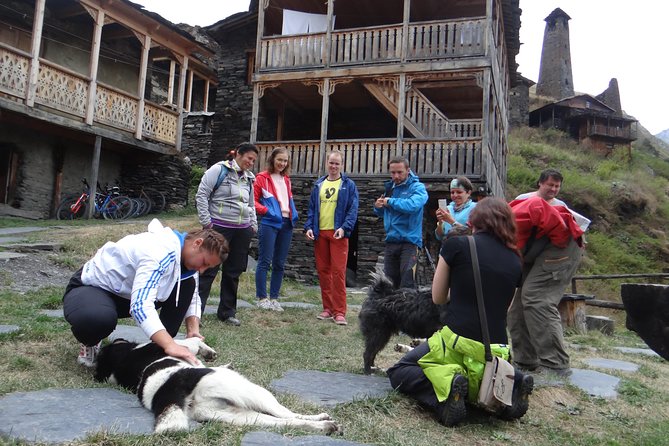
Day five is easier, with about four hours of walking along a jeep road. By lunchtime, you reach Dartlo, one of Tusheti’s most appealing villages.
Dartlo is known for its traditional stone buildings and distinctive mountain character. Its importance is recognized by a claim for inclusion on the World Heritage List, though you should not treat that as a guarantee of formal listing.
After lunch, you have time for an uphill walk to Kvavlo. This optional-feeling afternoon outing is a welcome contrast to the pass and the 20-kilometer valley day. You can spend the morning arriving in Dartlo, eat, then use the remaining time for a shorter climb and views from a higher village.
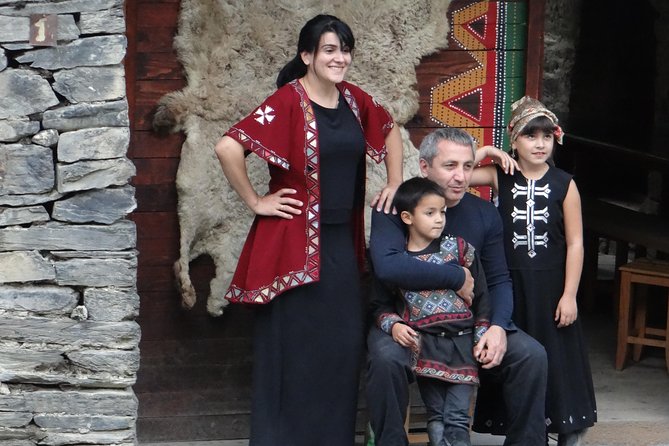
The overnight stay is in a stone house built in local tradition. That is a meaningful part of the route. Instead of returning to a modern hotel after a day outdoors, you spend the night in a building that fits the place.
The tradeoff is comfort. Village guesthouses and traditional stone homes are part of the appeal, but they are not presented as luxury accommodation. If you need private bathrooms, hotel-style bedding, or predictable facilities, this trip may feel too basic.
Day 6: Horse riding from Omalo to Shenako and Diklo
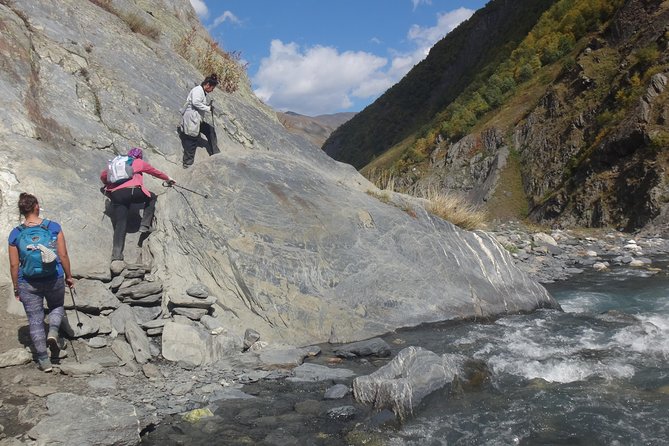
The next morning, a vehicle takes you to Omalo, the largest village in Tusheti. You leave your belongings at a guesthouse, then go out on horseback.
Horse riding is a smart change of pace after several days of hiking. It also connects with the region’s working traditions and gives you a different way to move through the valleys. The route visits Shenako and Diklo before returning to Omalo for dinner.
Shenako is especially notable for the Church of the Holy Trinity, a detail worth remembering if you enjoy small religious buildings and local village settings. Diklo adds another remote settlement to the route, giving the day more substance than a short riding loop.
The horse-riding portion is included, but the available information does not state its duration, riding level, or whether beginners receive a particular type of instruction. Ask about those points if you have never ridden before or feel unsure around horses.
Omalo is also an important practical stop. As Tusheti’s largest village, it is the place where you get a stronger sense of local life and spend the night before the long return to Tbilisi.
Day 7: Abano Pass, Kakheti wine, and Tbilisi
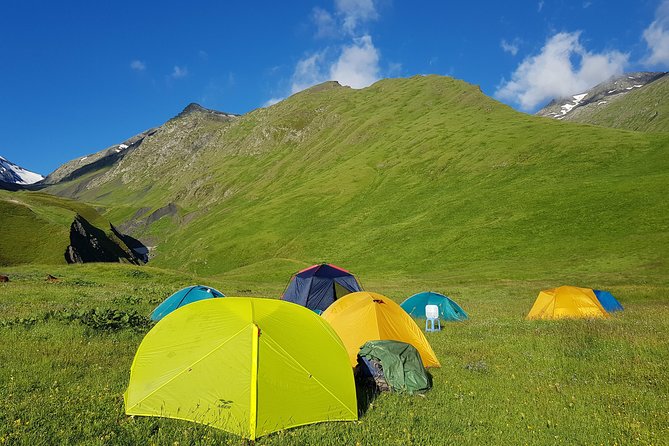
The final day begins with the road out of Tusheti. You travel by jeep to Alvani, covering about 60 kilometers of unpaved road and crossing Abano Pass, described here as the highest automobile pass in Europe.
This is not a quick exit. Mountain roads make the journey long, winding, and weather dependent. In Alvani, you change from the jeeps to a more comfortable bus, an appreciated shift after the rough road.
The trip then continues to a winery in Kakheti for a festive lunch. The meal provides a satisfying bridge between Tusheti’s mountain food and Georgia’s better-known wine country.
You are expected back in Tbilisi around 5 p.m. That arrival estimate is useful, but I would avoid booking a tight evening flight or nonrefundable connection. The route includes a long unpaved section and a high pass, so keeping your final evening flexible is the sensible choice.
What $1,190 includes, and what it does not
At $1,190 per person, this is not a cheap hiking weekend. It is also not simply seven days of guiding. The price includes a large amount of support:
- All transfers by 4×4 jeep, plus the final bus transfer
- Breakfast for six days
- Lunch for seven days
- Dinner for six days
- Snacks and drinks
- Horses to carry equipment
- A waterproof duffel bag
- Tent, sleeping pad, and sleeping bag
- Guesthouse stays and two nights of camping
That package gives the price real weight. You are paying for access to a remote route, vehicle logistics, food, camping gear, pack animals, and local accommodation. Arranging all of this independently would be difficult, especially across border checkpoints, roadless trail sections, and villages with limited services.
Beer, wine, and chacha at guesthouses are not included. Budget separately for those drinks, and do not assume every meal or stop offers a full bar.
For me, the value depends on your priorities. If you want a polished hotel tour, the price will seem high for basic accommodation. If you want a supported crossing through remote Tusheti without carrying camping gear or arranging jeeps yourself, the package is much easier to justify.
Who should book this Tusheti crossing
This route suits you if you want a real mountain trip with a clear challenge. You should be comfortable hiking for several hours, managing a high pass, and handling one 20-kilometer day.
It is a good fit for people who value remote places, traditional villages, local food, and practical support more than comfort. The small group and included horses make the route friendlier than a fully self-supported trek.
It is less suitable if you need constant phone service, dislike tents, want short walks every day, or expect hotel standards. Two days without mobile communication is a genuine feature, not a minor inconvenience.
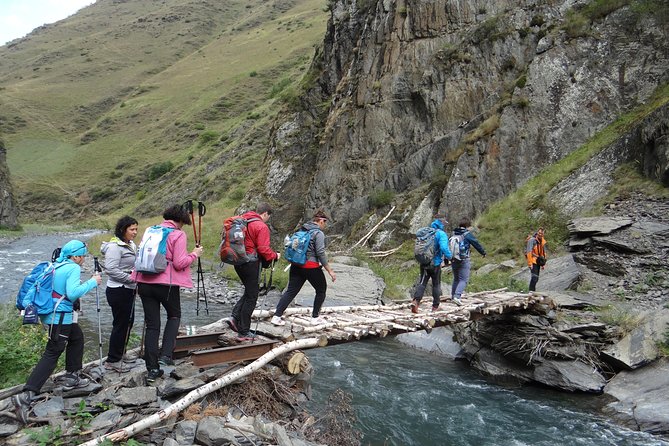
The trip also works well for a family group with suitable fitness. One family described it as worry-free because the organization, food, river crossings, and local sights were handled together. Still, the high pass and long walking day mean you should judge fitness honestly rather than rely on the word family-friendly.
Practical details to settle before departure
The tour offers pickup, uses mobile tickets, and accepts service animals. The meeting schedule lists departures on June 7, July 20, August 3, and August 17, 2025, with stated operating hours from 9 a.m. to 9 p.m.
Confirmation is sent within 48 hours, subject to availability. The minimum group size is not stated, but the activity can take a maximum of 10 people and may be canceled if the minimum is not reached.
The cancellation terms are strict close to departure. Cancel at least six full days before the start for a full refund, two to six full days before for a 50 percent refund, and less than two full days before for no refund. Changes are not accepted inside those same cutoffs.
Pack personal clothes, sturdy footwear, rain protection, sun protection, and any medicine you need. The operator supplies the main camping equipment, but the provided information does not list personal packing requirements, so ask for a full list before you leave Tbilisi.
Should you book it?
Book this tour if your idea of a good week includes a hard mountain pass, remote villages, tent nights, long 4×4 rides, local meals, and very little phone service. The route offers more than scenery: it gives you a connected journey from Khevsureti into Tusheti, with horses and local transport making the logistics manageable.
Think twice if you want easy walking, polished lodging, or a flexible itinerary. The Atsunta crossing and the 20-kilometer day are the real tests.
For the right person, $1,190 buys a rare kind of access. You get the wild route without having to organize every horse, jeep, meal, tent, and village stay yourself. That is the strongest reason to book.
FAQ
How long is the Tusheti hiking expedition?
The expedition lasts approximately seven days, beginning in Tbilisi and returning there on day seven.
What is the highest point on the route?
The route crosses Atsunta Pass at 3,431 meters. The pass divides the regions of Khevsureti and Tusheti.
How many nights are spent in tents?
You spend two nights in a tent. A tent, sleeping pad, sleeping bag, and waterproof duffel bag are included.
Are meals included?
Yes. The package includes six breakfasts, seven lunches, six dinners, snacks, and drinks. Beer, wine, and chacha at guesthouses cost extra.
Are horses provided?
Yes. Horses are included to carry equipment. Horse riding is also scheduled on day six near Omalo, Shenako, and Diklo.
How large is the group?
The maximum group size is 10 people. The activity also requires a minimum number of participants and may be canceled if that minimum is not met.
Is mobile communication available throughout the trip?
No. Mobile communication is unavailable for two days, and part of the route has no villages.
What physical fitness level is required?
The stated requirement is moderate physical fitness. You should also be prepared for the difficult Atsunta Pass day and a long 20-kilometer hiking day.
More 7-Day Experiences in Tbilisi
- Private 7-Day Tours & Transfers from Tbilisi to Top Georgia Spots
★ 5.0 · 23 reviews - The Best of Georgia 7 Days Private Jeep Tour from Tbilisi
★ 5.0 · 19 reviews - Amazing All inclusive Tour for 7 Days From Tbilisi
★ 5.0 · 16 reviews - Georgia in 7 Days: A Haven for Nature and Sea Lovers
★ 5.0 · 15 reviews
Recently added around Tbilisi
- 2-Day Private Wine Tour to Kakheti from Tbilisi★ 5.0 · 3 reviews
- 17 Day Private Tour through Georgia★ 5.0 · 3 reviews
- Tbilisi and Mtskheta cities private, cultural tour★ 5.0 · 3 reviews
- Kakheti wine region – Private Tour★ 5.0 · 3 reviews
- Kakheti With Top Destinations★ 5.0 · 3 reviews
- Tbilisi City Tour with Street Photography★ 5.0 · 3 reviews
- Jvari monastery & Mtskheta – Half day group tour from Tbilisi★ 5.0 · 3 reviews
- Tbilisi City, Jvari Monastery, Uplistsikhe caves, Mtskheta city Private Day Trip★ 4.5 · 3 reviews
Hiking Tours in Tbilisi, compared.
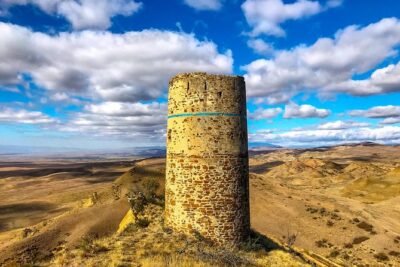
David Gareji and Real Rainbow Mountains Off-Road adventure + hike
Read our review →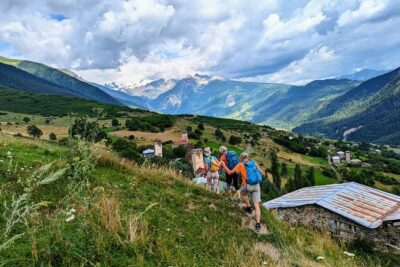
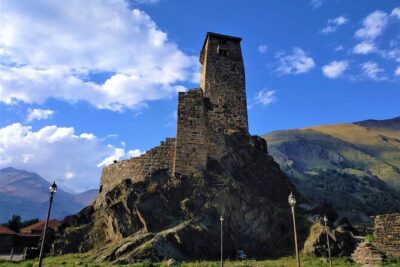
Kazbegi Tour with Gergeti Church, Waterfall Hike & Hidden Gems
Read our review →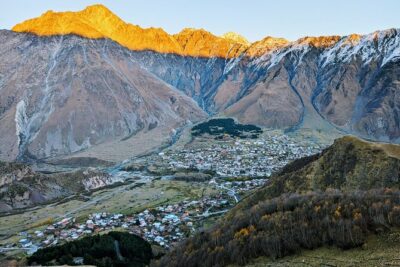
Five days tour to Khevsureti (Abudelauri lakes) & Kazbegi with hikes.
Read our review →
Kazbegi Adventure Day Trip – Hike to Gveleti waterfall plus Gergeti, Ananuri
Read our review →
Trekking Tour from Tusheti to Khevsureti via Atsunta Pass
Read our review →
Browse the lists this tour appears in