Reviewed · TBILISI TOURS
3 full day private tours in Georgia
Georgia packs a lot into a small country, and this three-day private program gives you a fast, useful introduction. You move from Tbilisi’s old streets to mountain passes, medieval churches, fortress walls, and Kakheti wine country without arranging separate cars or routes.
I like the wide variety and the privacy. You get a proper day in Tbilisi, then two full excursions that show very different sides of eastern Georgia. I also like the flexibility: the tours can be adjusted, and direct communication with the guide helps when plans need fine-tuning.
The trade-off is pace. Three long days cover a great deal, but this is an overview rather than a slow, detailed study of Georgia. Some entry fees are extra, and the mountain roads can make Day 2 tiring.
Key points to know before booking
- Tbilisi gets a full eight-hour introduction, from Freedom Square and Rustaveli Avenue to the sulfur baths, Narikala area, Sameba Cathedral, and Mtatsminda.
- Day 2 follows the Georgian Military Road, combining Jvari, Mtskheta, Zhinvali Reservoir, Ananuri Fortress, and Gudauri.
- Day 3 is Georgia’s wine-and-village day, with a winery visit, Bodbe Monastery, and Sighnaghi.
- Private transport saves time, especially on routes where public connections would be awkward or slow.
- The program suits a short stay, but you should expect early starts, long drives, and a full schedule.
- Complimentary Wi-Fi is included, useful on the road and between stops.
Why this three-day plan works in Georgia
At $150.49 per person, the value depends on how many people share your private vehicle and how much you value convenience. You are paying for three private day tours, a guide-driver, transport, and the ability to shape the schedule rather than joining a large coach group.
That matters in Georgia. Tbilisi is easy to explore on foot, but the best sights outside the capital are spread across several directions. Jvari, Ananuri, and Gudauri sit along one route, while Bodbe and Sighnaghi require a separate trip into Kakheti. Organizing taxis, drivers, and timing on your own would take work.
The strongest feature is variety. In three days, you see Georgia’s capital, an ancient religious center, a major mountain road, a Soviet-era monument, a winery, a hill town, and several important churches. You will not know the whole country afterward, but you will have a clear sense of eastern Georgia.
This is also a useful choice for a short visit. One traveler had only three days in Georgia and found the packed schedule a good way to cover a lot of ground. That is the right expectation: efficient and broad, not leisurely.
more days out of Tbilisi to compare
- Kutaisi Canyons and Caves from Tbilisi Full Day Tour
★ 5.0 · 448 reviews - Kazbegi and Gudauri Full Day Private Tour from Tbilisi
★ 5.0 · 447 reviews - Full Day Private Wine Tour in Kakheti Region with Lunch and 3 Wine Tastings
★ 5.0 · 207 reviews
Day 1: Tbilisi from grand avenues to old lanes
Your guide-driver meets you at your chosen pickup address. The first part is a driving introduction to modern Tbilisi, passing Freedom Square, Rustaveli Avenue, Heroes Square, Agmashenebeli Avenue, and the President’s House.
This opening gives you a quick sense of how the city is arranged. Rustaveli is the grand central avenue, while Agmashenebeli offers a different urban feel. Since you are in a private vehicle, you can see more of the city before spending several hours on foot.
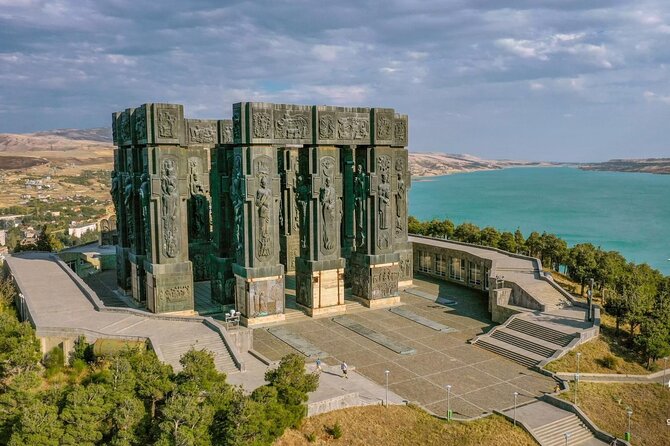
The first major stop is the Chronicles of Georgia, a huge stone monument often called the Georgian Stonehenge. Designed by Zurab Tsereteli, its 16 tall columns show scenes from roughly 3,000 years of Georgian history. The monument is free to visit and takes about 30 minutes.
I would pay attention to the scale and position of this place. It is not a delicate medieval ruin. It is a bold modern memorial, and the high setting gives you broad views over the city and water. The guide’s explanation is useful here because the carved scenes can be difficult to understand without context.
Walking old Tbilisi for three hours
The tour then shifts from vehicle to walking shoes. In Old Tbilisi, you visit the sulfur baths, the Bridge of Love, Lekhvakhevi Waterfall, Meidan Bazar Tunnel, and the Gorgasali Monument.
The sulfur baths are central to the city’s identity. Tbilisi’s name is connected with warm waters, and the bath district helps explain why the city grew here. The waterfall adds a surprising natural feature in the middle of the old quarter.
From there, the route includes the fortress area, Mother of Georgia, Rike Park, the Bridge of Peace, the Tamada Monument, Shardeni Street, and the Clock Tower by Revaz Gabriadze. The mix is appealing because it moves between old stone streets, city viewpoints, public art, and newer architecture.
The three-hour walking section is the heart of Day 1. Wear comfortable shoes and keep water handy. Some sections around the old quarter and fortress involve uneven surfaces or slopes, so the pace may feel more demanding than the driving portions.
You will also see the contrast between historic Tbilisi and its newer public spaces. Rike Park and the Bridge of Peace feel modern, while the bath district and fortress area connect you to the city’s older layers. A private guide can adjust the amount of time spent at each place, which is helpful if you care more about churches, views, architecture, or street life.
Sameba Cathedral and Mtatsminda views
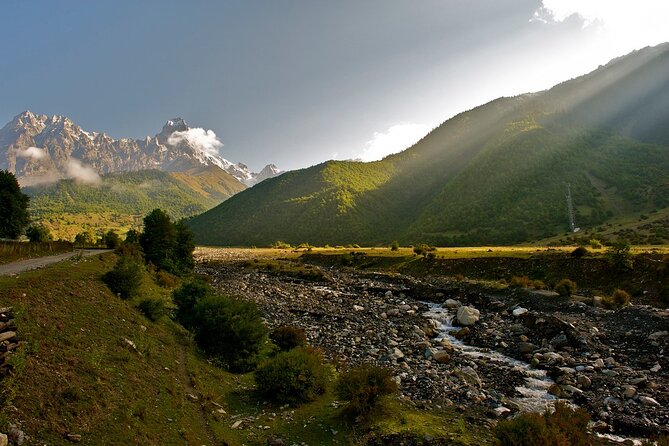
Sameba Cathedral, also called the Holy Trinity Cathedral, is one of Tbilisi’s most recognizable landmarks. Its golden dome can be seen from many points in the city, and the church rises about 101 meters on Mount St. Ilya.
The cathedral is part of a large religious complex that includes the Patriarch’s residence, a monastery, a theological school and academy, a hotel, and several chapels. Plan for about 30 minutes here. The scale is the main point: this is a modern symbol of Georgia, built with monumental proportions.
The final stop is Mount Mtatsminda, overlooking Tbilisi. A large Ferris wheel sits at the edge of the mountain, adding a distinctive feature to the city view. You have only about 20 minutes listed here, so treat it as a viewpoint rather than a long visit.
Day 1 lasts around eight hours. It is a full introduction, with a substantial walking block in the middle. I like this balance because you are not trapped in a vehicle all day, but you should not expect much unplanned time.
A different direction out of Tbilisi entirely:
- Day Trip to Kakheti Wine Region Including 9 Wine Tastings
★ 5.0 · 2,774 reviews - Highlights of Caucasus Mountains-Jinvali,Ananuri,Gudauri,Kazbegi(Group tour)
★ 5.0 · 2,682 reviews - Day Trip to Kazbegi and Gudauri
★ 5.0 · 2,009 reviews - Day Trip to Mtskheta Gori and Uplistsikhe
★ 5.0 · 1,801 reviews
Day 2: Following the Georgian Military Road
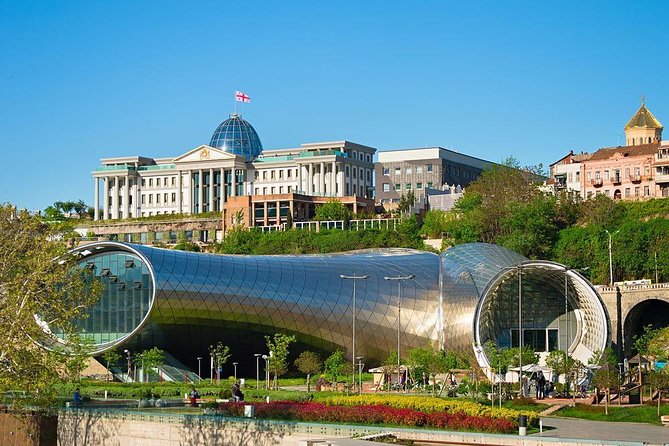
Day 2 heads north toward Gudauri along the Georgian Military Road, with the route covering about 120 kilometers from Tbilisi. This is the most scenic and road-focused day, with churches, water, fortress walls, and high mountain views.
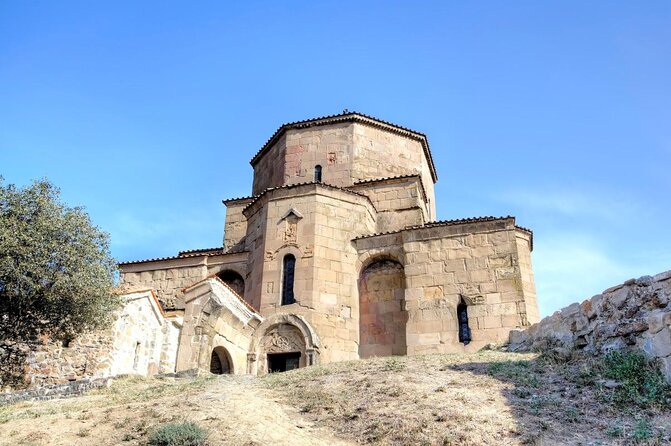
Your first stop is Jvari Monastery, a sixth-century church perched above the meeting point of the Aragvi and Kura rivers. The setting is a major reason to visit. From the hill, you can look across the river valleys and toward Mtskheta.
Jvari is a short stop of about 30 minutes, but the location makes it worthwhile. The church’s name means cross in Georgian, and the guide can explain its place in the country’s religious story. Because it sits high above the surrounding area, bring a jacket in cooler weather and take care near exposed viewpoints.
Mtskheta and the country’s early Christian center
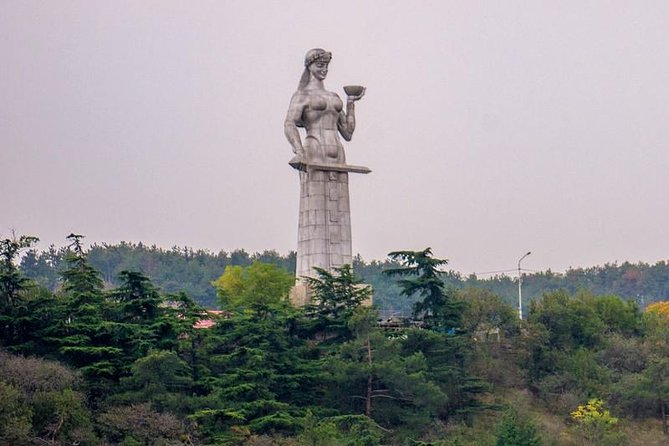
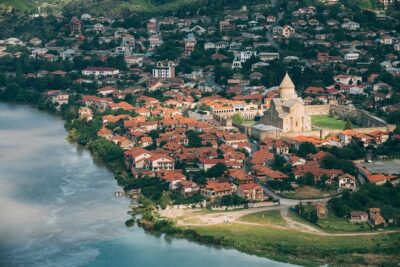
Next comes Mtskheta, a UNESCO World Heritage city inhabited for about 2,700 years. It served as Georgia’s capital until the fifth century and remains one of the country’s key religious centers.
The stop lasts around 40 minutes and includes the area around Svetitskhoveli Cathedral. The cathedral is especially important in Georgian Christianity, with tradition holding that Christ’s robe is buried there. Mtskheta also includes older remains such as Pompey’s Bridge, said to date to the first century BC, and Bebris Castle.
Forty minutes is enough for a focused visit, but not for a full archaeological tour. If historic churches matter greatly to you, ask the guide how much time can be given to Svetitskhoveli. The private format helps, though the day’s later stops still require you to keep moving.
Zhinvali Reservoir and Ananuri Fortress
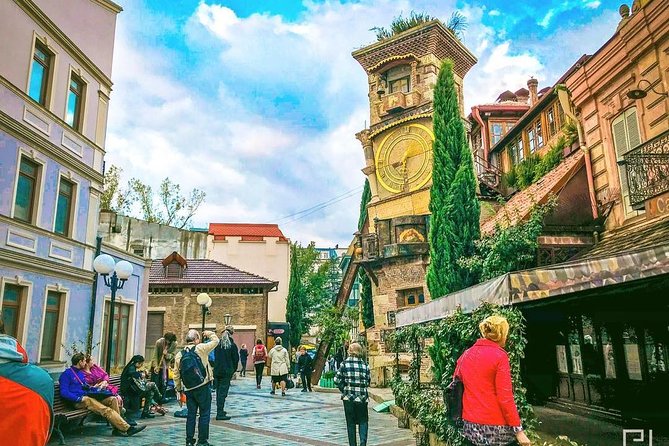
The route continues to Zhinvali Reservoir, an artificial lake on the Aragvi River. The stop is brief, about 15 minutes, but it is well placed for photographs. The turquoise water, wooded slopes, and surrounding mountains create one of the day’s most memorable views.
About 15 minutes later, you reach Ananuri Fortified Castle Ensemble. This fortress contains two churches and a defensive tower dating to the 16th century. It once served as the seat of the dukes of Aragvi and now sits above the reservoir.
Allow about 40 minutes to walk around. Ananuri works because the setting is so compact: fortress walls, church stonework, water, and mountain scenery all come together in one stop. The visit is more than a photo break, but it is still short enough that you will not study every detail.
This is one place where your guide’s explanations add real value. The buildings and defensive structures span different periods, and a quick verbal history helps turn a picturesque stop into a meaningful one.
Gudauri and the Friendship Monument
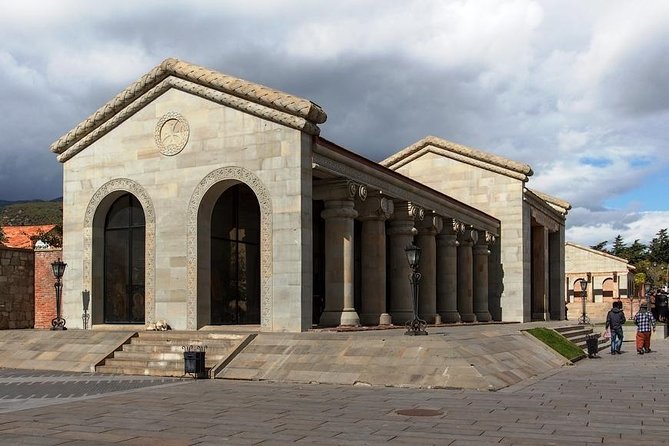
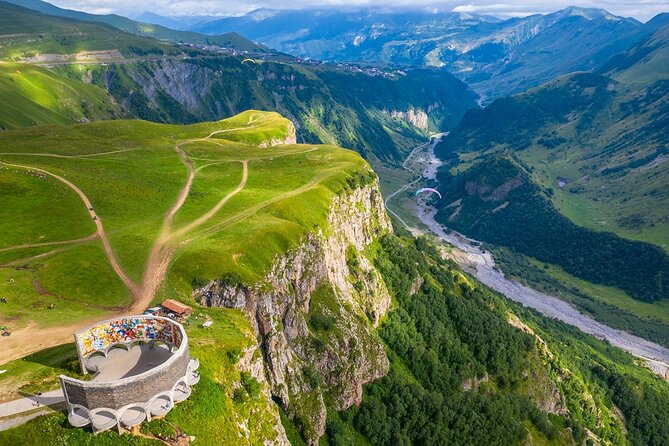
The final major stop is Gudauri, a ski resort at about 2,200 meters above sea level. The ski season is listed as running from December 25 through April 15, though this excursion is about the mountain setting rather than skiing.
You visit the Russian-Georgian Friendship Monument, also called the Gudauri Panorama. Built in 1983 during the Soviet period, it commemorates the bicentennial of the Treaty of Georgievsk and the relationship between Soviet Georgia and Soviet Russia.
The monument overlooks the Devil’s Valley and the Caucasus Mountains. Its large curved structure and colorful interior panels make it more interesting than a basic roadside viewpoint. You have about an hour here, giving you time for photographs and a closer look.
Day 2 is likely the most tiring day because of the distance and winding roads. It is also the day with the most dramatic changes in scenery. If you want a relaxed schedule, ask about possible adjustments before setting out. If your priority is seeing as much of the Georgian Military Road as possible, this route earns its place.
Day 3: Kakheti wine country and Sighnaghi
Day 3 heads east into Kakheti, Georgia’s best-known wine region. The area offers mountain scenery, villages, old churches, and a different pace from Tbilisi and the Military Road.
The first stop is the Kakhetian Traditional Winery in Patardzeuli. The visit lasts about 45 minutes and includes a look at wine production plus tastings of different varieties. Wine is not a minor extra in Georgian culture. It is one of the clearest ways to connect with the country’s food traditions and rural economy.
The winery stop is also a good reason to take this tour with a private guide. You can focus on tasting and explanation without worrying about driving afterward. The available information does not specify how many wines are included or whether food is served, so check those details before booking if they matter to you.
Bodbe Monastery and the Alazani Valley
The next stop is Bodbe Monastery of St. Nino. The church of St. George contains the tomb of St. Nino, the woman credited with preaching Christianity in Georgia about 1,700 years ago.
You have around 40 minutes here. The monastery is important for religious reasons, but its setting also makes the visit memorable. From the grounds, you can look across the Alazani Valley toward the Caucasus Mountains.
This is a quieter stop than Sighnaghi and a useful pause after the winery. Dress respectfully for the church setting. The tour description does not list a separate admission charge here, but entry costs at some stops are paid by you, so carry money for incidental fees.
Sighnaghi, the hill town known as the City of Love
Sighnaghi is the final stop and the place where you get the most free walking time on Day 3, about two hours. The town sits on a hill and is known as the City of Love, with views across Kakheti.
You can walk through the town, visit sections of its defensive wall, and try more local wine. The wall is the key historic feature, while the narrow streets and hilltop setting make Sighnaghi feel distinct from the capital.
Two hours is enough to enjoy the town without rushing from one photo stop to the next. Still, the exact balance between walking, wine tasting, and sightseeing depends on the day’s timing and your guide. If you prefer local streets to formal monuments, tell the guide early.
Day 3 gives the package a welcome change of mood. After the capital and the mountain road, Kakheti feels more rural and relaxed. It is also the day most likely to appeal to anyone who wants food and wine alongside history.
Private transport, group size, and practical value
This is a private activity, so only your group participates. Pickup is offered, and the package includes exclusive transport and complimentary Wi-Fi. Those details matter most on Day 2 and Day 3, when distances between sights are substantial.
The guide-driver arrangement keeps the plan simple. You do not need to work out separate public transport connections to Jvari, Ananuri, Gudauri, Bodbe, or Sighnaghi. The trade-off is that your experience depends heavily on the guide’s communication, driving, and ability to adapt the schedule.
The program has a group discount option, but the supplied price is listed per person. Ask how the final cost changes with your group size, and confirm which entrance fees are separate. The core stops are listed as free in the schedule, but that does not mean every possible cost is covered.
The activity is booked, on average, 119 days ahead, so reserve early if your dates are fixed. Confirmation arrives at booking, and most people can participate. Good weather is required. If poor weather forces cancellation, you are offered another date or a full refund.
For cancellations, a full refund requires at least six full days’ notice. Cancelling two to six full days ahead receives a 50 percent refund, while cancelling less than two full days ahead receives no refund. These cutoffs use local time.
Who should book these three days
I would choose this package if you have only a short stay and want to see more than Tbilisi without managing several separate excursions. It fits first-time visitors who want a clear introduction to eastern Georgia, especially those interested in churches, mountain views, old towns, and wine.
It also works well for couples, families, or friends who value a private vehicle and the ability to adjust the day. The high marks for variety, guide communication, and flexibility are important here. Those are the parts that make a packed schedule easier to handle.
I would hesitate if you want long museum visits, slow meals, serious wine study, or independent wandering. Day 1 is fairly active, Day 2 involves a long mountain-road outing, and Day 3 covers several destinations. This is a sampler with substance, not a slow retreat.
Should you book it?
Book it if your main goal is to cover a lot of eastern Georgia in three organized days. The combination of Tbilisi, Mtskheta, the Georgian Military Road, Gudauri, Kakheti, and Sighnaghi gives you a strong first look at the country.
Before paying, confirm pickup details, the exact vehicle arrangement, which entrance fees are extra, and how much flexibility you have with timing. If you accept the full days and long drives, the private format makes $150.49 per person a reasonable way to turn a short Tbilisi stay into a much broader Georgian trip.
FAQ
Where does the tour begin?
The tour begins in Tbilisi, where the guide-driver meets you at your pickup address.
How long does the experience last?
The experience lasts approximately three days. Day 1, the full Tbilisi city tour, lasts around eight hours.
Is this a private tour?
Yes. Only your group participates in the activity.
What places are visited on Day 2?
Day 2 includes Jvari Monastery, Mtskheta, Zhinvali Reservoir, Ananuri Fortified Castle Ensemble, and the Russian-Georgian Friendship Monument near Gudauri.
Does the tour include wine tasting?
Yes. Day 3 includes a visit to the Kakhetian Traditional Winery in Patardzeuli, where you can taste different Georgian wine varieties.
Are entrance fees included?
Some entry fees are at your own expense. The listed stops themselves show admission as free, but you should confirm any separate costs before the tour.
What is the cancellation policy?
You can receive a full refund if you cancel at least six full days before the start time. Cancelling two to six full days ahead provides a 50 percent refund, and cancelling less than two full days ahead is nonrefundable. Poor-weather cancellations offer a different date or a full refund.
Recently added around Tbilisi
- 2-Day Private Wine Tour to Kakheti from Tbilisi★ 5.0 · 3 reviews
- 17 Day Private Tour through Georgia★ 5.0 · 3 reviews
- Tbilisi and Mtskheta cities private, cultural tour★ 5.0 · 3 reviews
- Kakheti wine region – Private Tour★ 5.0 · 3 reviews
- Kakheti With Top Destinations★ 5.0 · 3 reviews
- Tbilisi City Tour with Street Photography★ 5.0 · 3 reviews
- Jvari monastery & Mtskheta – Half day group tour from Tbilisi★ 5.0 · 3 reviews
- Tbilisi City, Jvari Monastery, Uplistsikhe caves, Mtskheta city Private Day Trip★ 4.5 · 3 reviews
Tbilisi Tours, compared.
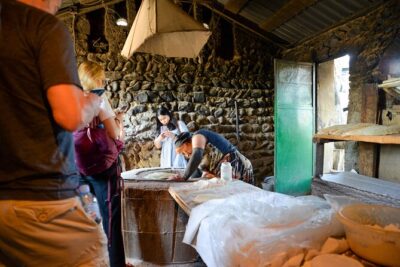
Day Trip to Kakheti Wine Region Including 9 Wine Tastings
Read our review →
Highlights of Caucasus Mountains-Jinvali,Ananuri,Gudauri,Kazbegi(Group tour)
Read our review →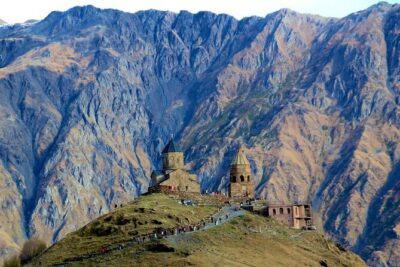
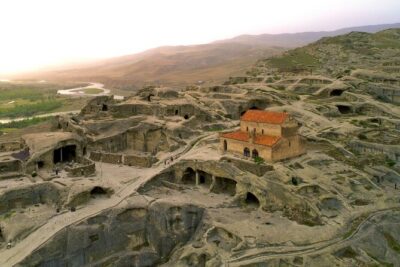
Tbilisi Walking Tour Including Cable Car and Traditional Bakery
Read our review →
Kakheti Wine Region: Signagi and Bodbe Tour with 10 Wine Tastings
Read our review →