
Reviewed · TBILISI TOURS
4 Group Tours Including Airport Transfers
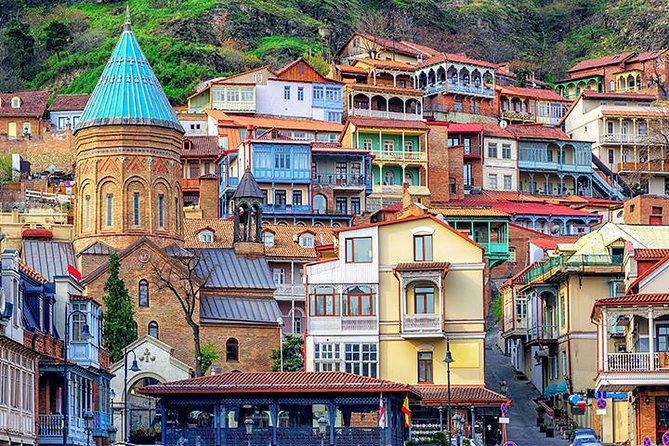
Georgia packs an astonishing amount into a small country, and this four-day tour gives you a broad sweep of it. You move from Tbilisi’s sulfur baths and hilltop fortress to the Caucasus Mountains, ancient cave settlements, royal churches, and Kakheti wine cellars. The route is the main attraction. It covers far more ground than a series of ordinary city tours.
I like the built-in airport transfers, which take away one of the first headaches after landing. I also like the balance between famous sights and local food: you taste wine in established cellars, try bread at a village bakery, and make khachapuri during lunch in Sighnaghi. Guides Zura and Katherine lead the experience, with history and local customs woven into the stops.
The tradeoff is a busy schedule. Four days is enough for a strong first look, but not enough for long, relaxed visits everywhere. You must also budget for lunches, the Gergeti 4WD vehicle, Uplistsikhe, and the Stalin Museum.
The Four Details That Matter Most
- A cross-country route: Tbilisi, Kazbegi, Gori, Uplistsikhe, Mtskheta, Sighnaghi, and Kvareli all fit into four days.
- Airport transfers included: Pickup and drop-off at Shota Rustaveli Tbilisi International Airport are part of the price.
- Small group format: The maximum group size is 18 people, large enough to keep the price down but small enough for a guide-led outing.
- Wine is not an afterthought: Tastings are included at Kindzmarauli, a local family winery, and during the Tbilisi walking tour.
- Several extras cost more: Lunches, attraction tickets, and the 4WD ride to Gergeti Trinity Church are not included.
- A guide makes the difference: Zura and Katherine are named guides for the program, so you have a clear point of contact during the four days.
What You Get for $172
At $172 per person, this is priced as a value-focused introduction to Georgia rather than a luxury tour. The price covers four days of transportation, a certified guide, private airport transfers, winery entry fees, and a large set of included tastings.
That is a useful bundle. A visitor arranging the same route alone would need to coordinate a driver, several day trips, winery visits, airport transport, and timing between distant sights. Here, you book your own hotel, then use the tour as the sightseeing framework.
The package includes four wine tastings at Kindzmarauli Winery, two tastings at a local family winery, two wine tastings during the Tbilisi walking tour, Georgian pie, and traditional Georgian lemonade. Those small food and drink inclusions help the tour feel tied to local life rather than limited to monuments.
The price does not include meals. That is important because the itinerary includes lunch and dinner opportunities, but you pay for the food yourself. You should also set aside roughly $7 per person for the 4WD ride from Kazbegi to Gergeti, about $6 for Uplistsikhe, and about $6 for the Stalin Museum.
The tour does not include pickup or drop-off at your hotel for the daily sightseeing. Airport transfers are included, but hotel transport is not. Check the exact meeting plan before booking your accommodation, especially if you stay outside central Tbilisi.
more days out of Tbilisi to compare
- Tbilisi Private Arrival Airport Transfer
★ 5.0 · 65 reviews - Transfer from Tbilisi Airport to Tbilisi
★ 5.0 · 24 reviews - From Tbilisi: 4-day Tour in Georgia with Airport Transfers
★ 5.0 · 18 reviews
Day One: Tbilisi from the Mtkvari to the Sulfur Baths
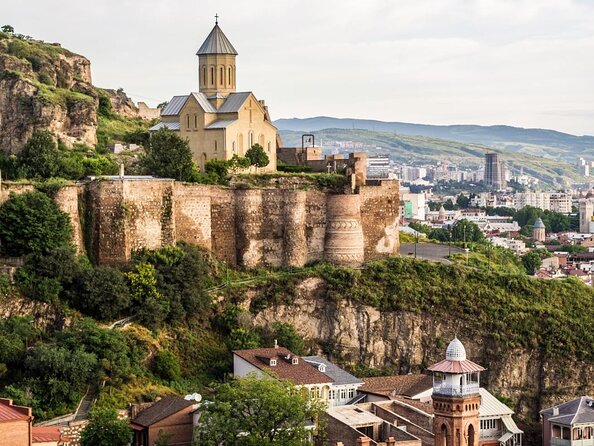
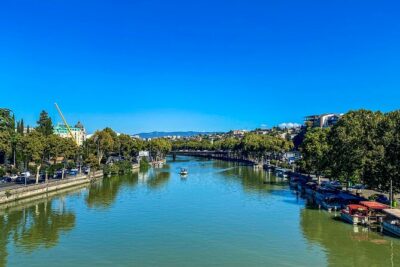
The first day is a walking tour through the capital, with a cable-car ride and many short stops. You begin at Metekhi Cathedral, perched above the Mtkvari River. The church is tied to Vakhtang Gorgasali, the king traditionally credited with founding Tbilisi, so it is a fitting place to begin.
Nearby, the monument to Vakhtang Gorgasali gives you a quick introduction to the king himself and to Georgia’s long struggle between neighboring powers. The stop is short, so do not expect a full history lecture at each site. The value is in building a picture of how the city grew around the river and its hills.
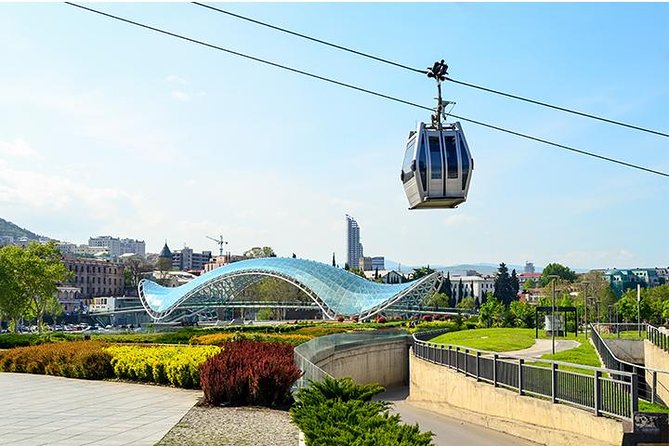
Europe Square and Rike Park follow. Europe Square provides a modern political reference point, with an explanation of Georgia’s relationship with the European Union. Rike Park is an easy place to enjoy the city’s newer public face, with the Bridge of Peace, fountains, walking paths, and the cable-car station.
The Bridge of Peace is a striking glass and steel pedestrian crossing over the Mtkvari. Its LED lights come on before sunset, so the appearance changes depending on your timing. You get only a few minutes here, but the bridge connects the newer park with the old city in a very practical way.
In the old quarter, the Rezo Gabriadze Marionette Theater and its crooked-looking clock tower make a memorable stop. An angel emerges each hour to ring the bell, and the tower has a small puppet show twice daily at noon and 7 p.m. The tour timing may not line up with either performance, so treat the tower as an exterior sight unless your schedule allows otherwise.
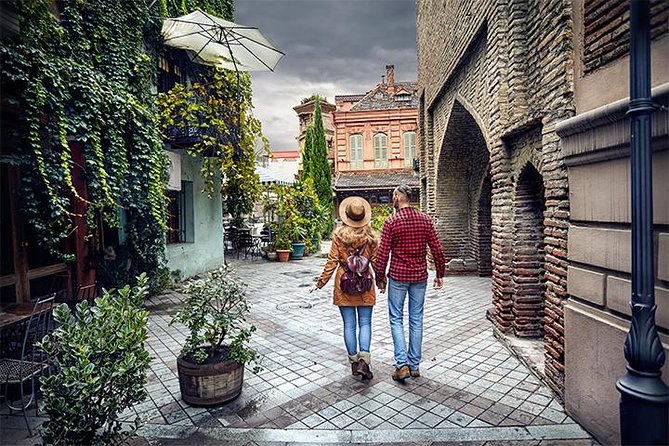
Anchiskhati Basilica, one of Tbilisi’s oldest churches, offers a quieter contrast. The sixth-century building is much less flashy than the modern bridge, but its age and setting in the old district give you a better sense of the city’s religious roots.
The route continues past the Georgian Patriarchate, Sioni Cathedral, the Tamada statue, and Jan Shardeni Street. The Tamada is especially useful as a cultural stop. In Georgia, the tamada, or toastmaster, guides a traditional meal with formal toasts, and the custom remains an important part of Georgian hospitality.
The cable car takes you uphill toward Kartlis Deda, the Mother of Georgia statue. The ride is included in the tour highlights, but the stated inclusions list separately notes that the cable-car ticket is not included, so confirm the current arrangement and carry some Georgian currency. From the hill, you get broad views over Tbilisi.
Kartlis Deda holds a bowl of wine in one hand for friends and a sword in the other for enemies. Nearby Narikala Fortress gives you the best historic viewpoint of the day. Its walls are partly ruined, but the hilltop position above the Mtkvari matters more than perfect preservation.
You then walk toward Tbilisi Juma Mosque, Leghvtakhevi Waterfall, Chreli Abano, and Abanotubani. This is one of the most appealing parts of the day because the sights sit close together and show Tbilisi’s unusual mix of churches, mosque, waterfall, and sulfur baths.
The mosque stop supports a useful discussion of religious tolerance. Leghvtakhevi is a small urban waterfall tucked into a gorge, while Abanotubani is the old bath district, known for its hot sulfur springs. Chreli Abano looks almost like a mosque from the outside, but it is a bathhouse. You can visit the district without booking a bath, and the schedule does not state that a bathing session is included.
This first day contains many five- and ten-minute stops. That keeps the route lively, but it can also feel rushed if you want extended time inside each church or museum. I see it as a well-planned orientation to Tbilisi, not a slow architectural study.
Day Two: The Military Highway and High Kazbegi
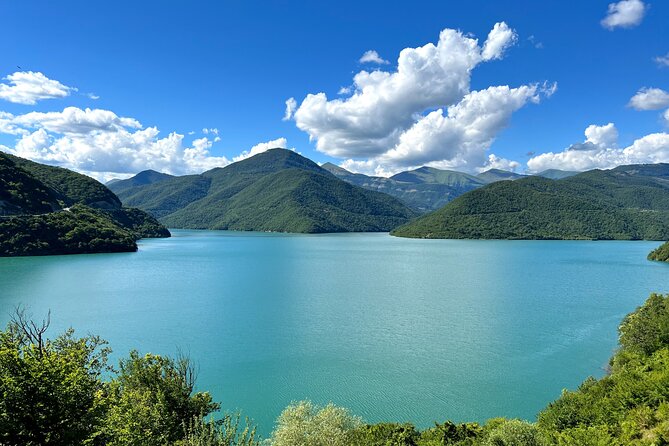
Day two heads north along the Georgian Military Highway. The first stop is the Zhinvali Reservoir, a large body of water created by a Soviet-era dam in the 1980s. The 20-minute pause is mainly for views and photographs.
Ananuri Fortified Castle Ensemble gives you more time, about an hour. The sixteenth- and seventeenth-century complex once served as the seat of the Dukes of Aragvi and saw repeated battles. Its churches, defensive walls, and position beside the reservoir make it one of the strongest stops on the route.
Lunch follows at Hotel-Restaurant Kakhaberi. The schedule allows two hours and notes that rafting may be available before lunch. The rafting option is not listed among the included services, so ask about its cost and timing before counting on it. Lunch itself is also extra, though the setting is intended for trying several Georgian dishes.
Higher in the mountains, the Russian-Georgian Friendship Monument overlooks the Devil’s Valley. The large circular structure was built in 1983 to mark the bicentennial of the Treaty of Georgievsk and the Soviet-era idea of friendship between Russia and Georgia. Its political message feels dated, but the mountain view is the real reason to stop.
The long pause here, listed as about one hour and 40 minutes, allows time for photos and a look at the monument without treating it as a rushed roadside break. Mountain weather can change quickly, and the route reaches high elevations, so bring a warm layer even during a mild Tbilisi day.
In Stepantsminda, you have the option of dinner at Rooms Hotel Kazbegi. The hotel is known for its mountain setting and has a restaurant, lobby bar, and terrace. Dinner is not part of the package, but the terrace provides a pleasant place to take in the setting.
Gergeti Trinity Church is the day’s grand finish. Built in the fourteenth century at about 2,170 meters, the church sits above the village beneath Mount Kazbegi. The road up requires a local 4WD vehicle, which is not included and costs about 20 GEL, roughly $7, per person according to the tour details.
The driver waits for 30 minutes at the church. That is enough for the church and views, but it is not a long visit. You should expect a short, focused stop rather than time for a lengthy walk around the mountain.
Day two is the most demanding day in terms of road time and altitude. It is also the day with the biggest visual payoff. If mountain scenery is high on your list, this section alone gives the tour a strong reason to book.
Day Three: Rock-Cut Uplistsikhe, Gori, and Mtskheta
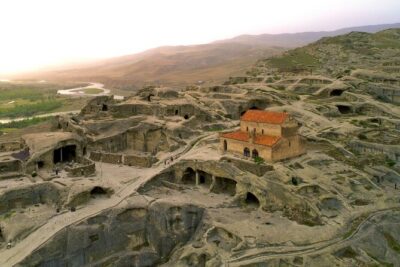
Uplistsikhe is an ancient rock-hewn town above the Mtkvari River. The site includes structures from the Early Iron Age through the Late Middle Ages, with pagan and Christian features appearing in the same settlement.
You have about 90 minutes here, which gives you time to walk among the carved chambers and open spaces. The ground can be uneven, so sturdy shoes are sensible. Entry costs about 15 GEL, roughly $6, and is not included.
Lunch in Gori is designed to feel more personal than a standard restaurant meal. You visit a local family and eat homemade Georgian food. This is one of the itinerary’s better choices because food carries so much of Georgia’s culture, and a family table can show you more than another quick roadside stop.
Gori is also the birthplace of Joseph Stalin. The Stalin Museum preserves its Soviet-era presentation, along with Stalin’s original house and railway carriage. The museum admission is extra, about 15 GEL, or roughly $6.
The museum is an unusual stop and requires some thought. It presents Stalin through a distinctly Soviet lens, so you should not expect a neutral modern biography. Still, the original house and railway carriage make the visit specific to Gori, and the stop helps explain why the city appears on many Georgian routes.
If time allows, you can see more of Gori, including its fortress. The schedule treats this as optional, so do not assume you will have a long city walk. The day continues to Jvari Church near Mtskheta.
Jvari Monastery sits on a rocky hill above the meeting point of the Mtkvari and Aragvi rivers. The sixth-century church is a UNESCO World Heritage site, and the view down to Mtskheta explains the location’s importance. This is a short 30-minute stop, but it is one of the most memorable viewpoints of the four days.
Svetitskhoveli Cathedral in Mtskheta receives about 90 minutes. Mtskheta served as the capital of the early Georgian kingdom and remained a coronation and burial center for Georgian kings. The cathedral, known as the Cathedral of the Living Pillar, is one of Georgia’s most important churches.
You should dress respectfully for the religious sites. The tour data does not set out a clothing rule, but churches and monasteries remain active religious places, not just monuments. Comfortable shoes also matter because the program combines uneven ancient sites, hilltops, old streets, and short walks.
A different direction out of Tbilisi entirely:
- Day Trip to Kakheti Wine Region Including 9 Wine Tastings
★ 5.0 · 2,774 reviews - Highlights of Caucasus Mountains-Jinvali,Ananuri,Gudauri,Kazbegi(Group tour)
★ 5.0 · 2,682 reviews - Day Trip to Kazbegi and Gudauri
★ 5.0 · 2,009 reviews - Day Trip to Mtskheta Gori and Uplistsikhe
★ 5.0 · 1,801 reviews
Day Four: Kakheti Bread, Monasteries, and Wine Tunnels
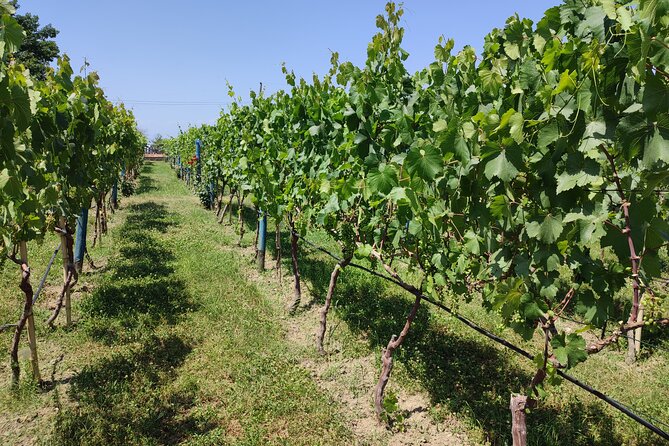
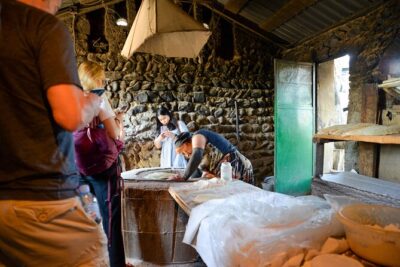
The final day heads east into Kakheti, Georgia’s main wine region. At Badiauri Bakery, you taste Georgian bread, cheese, and chacha, a strong local spirit. You may also try making traditional bread yourself, giving the stop a hands-on touch that the more formal monuments do not provide.
Bodbe Monastery of St. Nino follows. The monastery is linked by tradition to the burial place of Saint Nino, the figure associated with Georgia’s conversion to Christianity. The site has been repaired many times and remains an important religious destination.
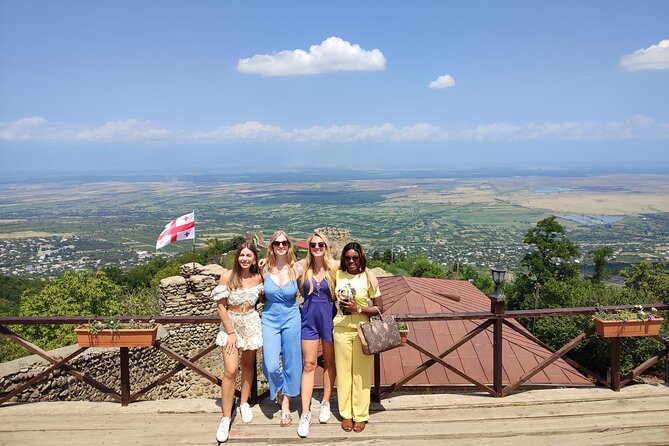
The route also pauses at a viewpoint over Sighnaghi. This is a good place for photographs before entering the town. Sighnaghi is known for pastel buildings, wooden balconies, narrow cobbled streets, and its position above the Alazani Valley.
Lunch in Sighnaghi includes a khachapuri cooking class. You make the famous cheese-filled Georgian bread, then eat it with other local dishes while looking over the valley. Lunch is not included in the $172 price, but the cooking lesson gives the meal added value.
Sighnaghi is a pleasant place to slow down, though the schedule gives you only about two and a half hours for the meal, class, and town. You may not have time to explore every street or walk the full length of the town walls. The Great Wall of Georgia, as the fortification is known locally, provides the main historical and scenic focus.
The wine portion begins at Khareba Winery. Its cellar includes 7.7 kilometers of tunnels and galleries kept at a steady temperature of about 12 to 14 degrees Celsius. You take a guided walk through the tunnels, visit the museum, and taste wine. This is a very different wine experience from sitting at a small family table, and the contrast adds interest.
The final stop is Kindzmarauli Corporation Wine House in Kvareli. Its cellar history is tied to Kvareli Fortress and wine made for royal families. The modern wine house now opens its production to a wider public, with tasting and entrance included.
The itinerary lists four tastings at Kindzmarauli and two at a local family winery. It also includes two tastings during the Tbilisi walk. You will get a broad introduction to Georgian wine, but you should pace yourself, especially on the fourth day when chacha and food are also involved.
How the Group Size Shapes the Experience
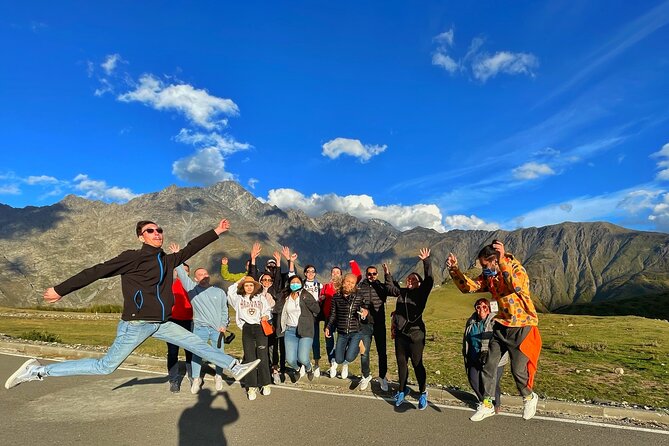
The maximum group size is 18. That is not an intimate private tour, but it is smaller and easier to manage than a large coach outing. A group of this size can still slow down at photo stops, so you should expect some waiting while people gather.
The format is best for someone who values efficient coverage over free-form wandering. You will not choose every stop or set your own pace, but you also will not need to navigate the Georgian Military Highway, find remote monasteries, or arrange separate winery appointments.
Transportation is included for the sightseeing days, and the airport pickup and drop-off are private. Hotel pickup and drop-off for the tours are not included, so your daily meeting arrangements matter. The minimum age is five, and most people can participate, but the uneven surfaces at Uplistsikhe and the hilltop sites may be tiring for some children or anyone with mobility limits.
The guides named for the experience are Zura and Katherine. Their role matters most on the walking tour, at religious sites, and during the wine and food stops, where a short explanation can turn a quick visit into something more useful.
Who Should Book This Four-Day Route?
I would choose this tour if you have limited time in Georgia and want the country’s major themes in one package: capital-city architecture, Orthodox churches, mountain roads, ancient ruins, Soviet history, Georgian food, and wine.
It suits first-time visitors who do not want to rent a car or plan a complicated route. It also suits people who enjoy moving each day and would rather collect a strong set of experiences than spend a full afternoon in one museum.
I would think twice if you want long meals, private guiding, flexible photo stops, or a slow stay in Tbilisi. The program is full, and several visits are timed in short blocks. A private trip would give you more control, but it would cost more.
For the best value, bring extra cash for meals and the stated admission fees, confirm the cable-car arrangement, and wear shoes suited to stone paths. A hotel near the agreed city meeting point will make the daily schedule easier.
Should You Book It?
Book this tour if you want a tightly packed introduction to Georgia at a low per-person price. The airport transfers, transport, guide service, wineries, cable-car access, tastings, family meal setting, and four-country-style regions covered by the route add up well for $172.
Skip it if four days of early starts, long drives, and fixed timing sound tiring. The route is ambitious, but that ambition is exactly why it works. You see Tbilisi, Kazbegi, Uplistsikhe, Mtskheta, and Kakheti without spending your trip solving transport problems.
Free cancellation is available until 24 hours before the start time. Within 24 hours, the payment is not refunded, and late changes are not accepted.
FAQ
How long is the tour?
The experience lasts approximately four days.
Where does the tour start?
The meeting point is Shota Rustaveli Tbilisi International Airport in Tbilisi, Georgia.
Are airport transfers included?
Yes. Private airport pickup and drop-off are included in the tour price.
Is hotel pickup included for the daily tours?
No. Pickup and drop-off from your hotel for the sightseeing tours are not included.
What is the maximum group size?
The group can include up to 18 people.
What is the minimum age?
The minimum age is five.
Is lunch included?
No. Lunch is not included, so you should budget separately for meals.
Is the 4WD ride to Gergeti Trinity Church included?
No. The 4WD vehicle from Kazbegi to Gergeti costs 20 GEL, approximately $7 per person according to the tour details.
Are Uplistsikhe and the Stalin Museum included?
No. Uplistsikhe costs 15 GEL, about $6, and the Stalin Museum costs 15 GEL, about $6. Both entrance fees are paid separately.
Are wine tastings included?
Yes. The package includes four tastings at Kindzmarauli Winery, two at a local family winery, and two during the Tbilisi walking tour. It also includes Georgian pie and traditional Georgian lemonade during the Tbilisi tour.
Recently added around Tbilisi
- 2-Day Private Wine Tour to Kakheti from Tbilisi★ 5.0 · 3 reviews
- Kakheti wine region – Private Tour★ 5.0 · 3 reviews
- 17 Day Private Tour through Georgia★ 5.0 · 3 reviews
- Tbilisi and Mtskheta cities private, cultural tour★ 5.0 · 3 reviews
- Tbilisi City Tour with Street Photography★ 5.0 · 3 reviews
- Kakheti With Top Destinations★ 5.0 · 3 reviews
- Jvari monastery & Mtskheta – Half day group tour from Tbilisi★ 5.0 · 3 reviews
- Tbilisi City, Jvari Monastery, Uplistsikhe caves, Mtskheta city Private Day Trip★ 4.5 · 3 reviews
Tbilisi Tours, compared.
Day Trip to Kakheti Wine Region Including 9 Wine Tastings
Read our review →
Highlights of Caucasus Mountains-Jinvali,Ananuri,Gudauri,Kazbegi(Group tour)
Read our review →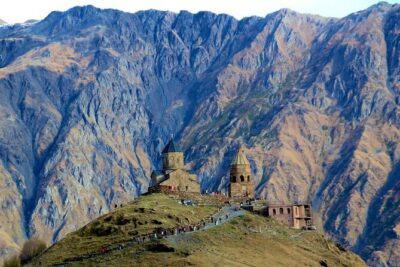
Tbilisi Walking Tour Including Cable Car and Traditional Bakery
Read our review →
Kakheti Wine Region: Signagi and Bodbe Tour with 10 Wine Tastings
Read our review →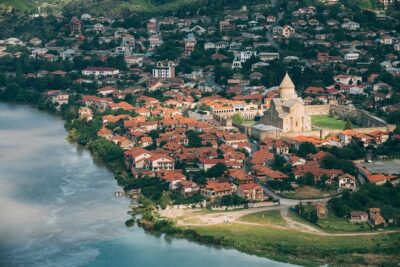
Mtskheta,Jvari,Bazaar,wine tasting,Chronicles of Georgia
Read our review →Browse the lists this tour appears in