Reviewed · TBILISI TOURS
Brutal Tbilisi: Urban exploration and untold stories
Tbilisi’s best architecture tour may be the one that takes you far from its pretty old town. Brutal Tbilisi leads you to huge concrete buildings, an abandoned museum, Soviet-era housing, and skybridges high above the city. The reward is a look at how Tbilisi changed during and after the Soviet period, told by local guides such as Alex, Khato, Khatuna, and Aleksi.
I like two things right away: the route shows parts of the city you would not easily find alone, and the guides connect architecture with daily life, displacement, politics, and Georgian history. The Nutsubidze Skybridge and its elevator operator are memorable stops, while the former Archaeology Museum offers the eerie atmosphere many urban explorers hope to find.
The main consideration is that this is not a polished sightseeing circuit. Some locations are rough, abandoned, or tied to difficult social stories. You need moderate physical fitness, weather-ready clothes, and an interest in modern history rather than only postcard views.
Five reasons this Tbilisi tour is different
- The Ministry of Highways building: See one of Tbilisi’s most recognizable brutalist structures, built from bold concrete forms and sharp angles.
- A former Archaeology Museum: Explore an abandoned site with grand architecture, an unusual mood, and a less predictable visit.
- The Nutsubidze Skybridge: Walk across elevated bridges about 70 meters above the ground and see Tbilisi from a rare angle.
- Stories of displaced families: Visit former student dormitories now used as homes by refugees from Abkhazia.
- Small-group attention: The tour is promoted for groups of up to six, though the booking information also gives a maximum of 14, so confirm the size when booking.
Why brutalist Tbilisi deserves four hours
Brutalism is often treated as a style of oversized concrete blocks. In Tbilisi, it is also a record of ambition, state power, public planning, and later decline. Soviet architects used concrete to create ministries, transport systems, dormitories, and cultural monuments that would signal progress.
That makes this tour more than a building-spotting exercise. You are looking at the physical evidence of a city that moved from Soviet rule into an independent, changing Georgia. The guide’s job is especially important here because many of these places have no formal museum signs or visitor displays.
The experience lasts about four hours. Part of that time is spent moving between districts, so the schedule feels more like a driving and walking tour than a single long architectural walk. That is a strength in Tbilisi, where the most interesting Soviet-era sites are spread across the city.
You receive bottled water and an English-speaking local guide. Admission is listed as free at each stop. Lunch is not included, so plan to eat before or after the tour rather than expecting a meal break.
Other days out of Tbilisi people book on the same trip:
- Day Trip to Kakheti Wine Region Including 9 Wine Tastings
★ 5.0 · 2,774 reviews - Highlights of Caucasus Mountains-Jinvali,Ananuri,Gudauri,Kazbegi(Group tour)
★ 5.0 · 2,682 reviews - Day Trip to Kazbegi and Gudauri
★ 5.0 · 2,009 reviews
Meeting the Ministry of Highways building
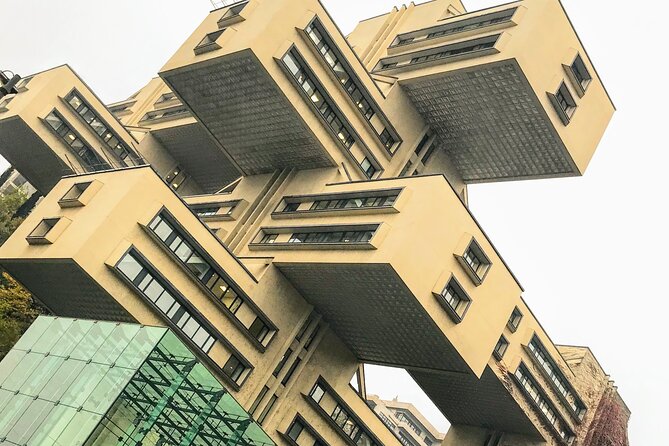
The first major stop is the former Ministry of Highways of the Georgian SSR, now associated with the Bank of Georgia building. Its stacked concrete sections make it one of the city’s clearest examples of brutalist design.
The building is visually strong from the outside. Large blocks appear to balance on one another, creating deep shadows, hard lines, and a feeling of weight. It is a useful introduction because you can immediately see how brutalism can be both practical and theatrical.
Your guide can also explain the ideas behind the architecture and the people who designed it. That context matters. Without it, you may simply see a strange concrete office block. With it, the building becomes part of the Soviet belief in bold public projects and modern engineering.
The scheduled stop lasts around 30 minutes. That is enough for photographs and an explanation without turning the visit into a technical lecture. Bring a wide-angle lens if you use one, since the building’s scale is difficult to capture from close range.
Reading Georgian stories at Chronicles of Georgia
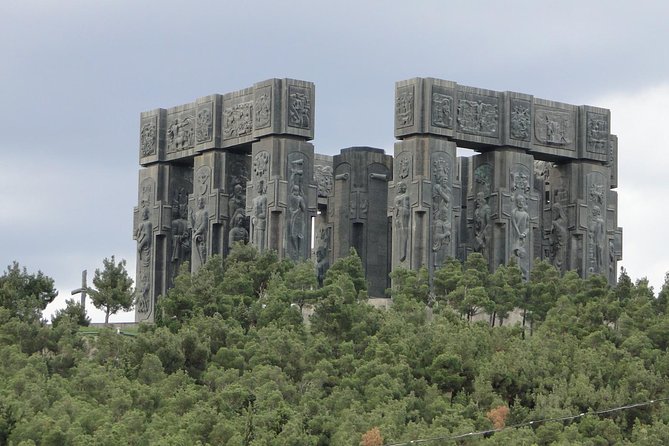
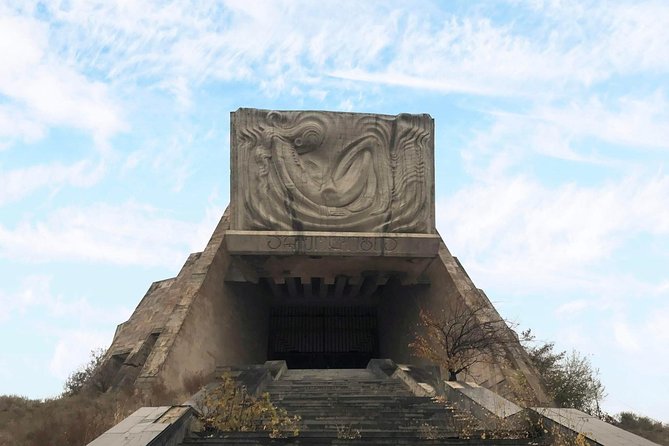
The Chronicles of Georgia, also called the Memorial History of Georgia, occupies a hill above Tbilisi. Massive stone pillars carry carved scenes from Georgian history and mythology, including the country’s conversion to Christianity and stories connected with the formation of the Georgian state.
This is not brutalism in the narrow sense, but it fits the tour’s larger theme of monumental Soviet-era thinking. The memorial uses size, stone, and elevated ground to make national history feel enormous. It also shows how Georgian identity could be presented through a Soviet public monument.
Allow about 45 minutes here. You will want time to examine the reliefs, take in the views, and listen to the stories behind the panels. The hilltop setting gives you a different view of Tbilisi from the city streets, though weather can affect visibility and comfort.
This stop adds needed balance to the tour. The concrete apartment blocks and abandoned museum show modern urban life. The Chronicles of Georgia asks you to think about national memory, religion, and the way governments choose to tell the past.
The former Archaeology Museum and its rough edges
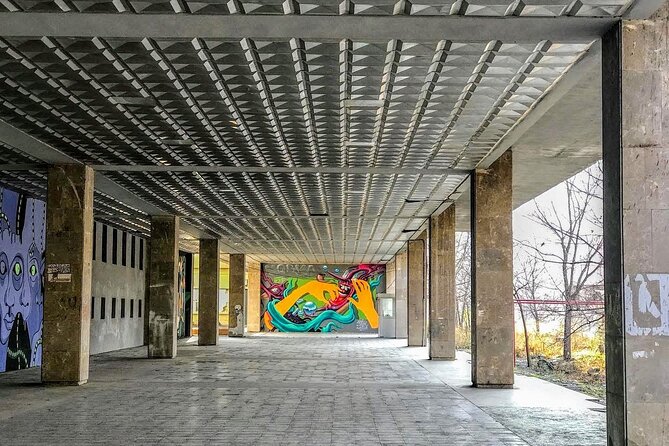
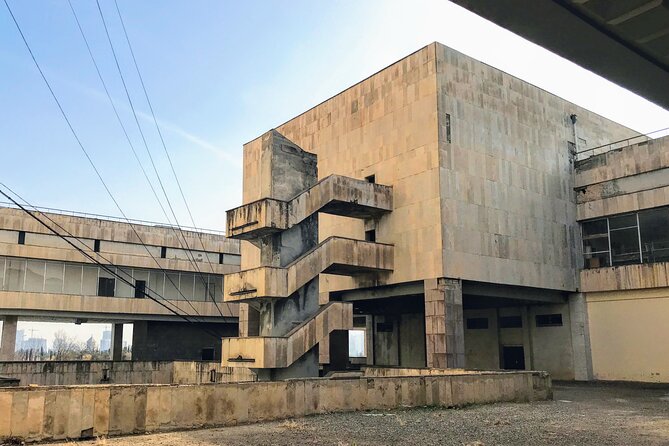
The former Archaeology Museum is one of the most unusual stops. Once a grand institution, it is now abandoned, giving the building an eerie and unsettled feel.
You might find damaged surfaces, empty rooms, and a sense that the site has been left between two lives. That atmosphere is part of the appeal, but it also means you should not expect a standard museum visit with exhibits, lighting, or polished paths.
The scheduled time is about 30 minutes. The site is best approached with care and curiosity. Listen to your guide about where to go, watch your footing, and do not treat an abandoned building like a normal public attraction.
For many people, this will be the tour’s strongest stop. It combines architecture, urban change, and the strange beauty of a place no longer serving its original purpose. It also gives you a glimpse of Tbilisi’s less tidy side, something the old town’s restored balconies and cafés cannot provide.
A different direction out of Tbilisi entirely:
- Day Trip to Mtskheta Gori and Uplistsikhe
★ 5.0 · 1,801 reviews - Tbilisi Walking Tour Including Cable Car and Traditional Bakery
★ 5.0 · 1,310 reviews - Day Trip to Armenia Including Homemade Lunch
★ 5.0 · 1,162 reviews - Kakheti Wine Region: Signagi and Bodbe Tour with 10 Wine Tastings
★ 5.0 · 1,019 reviews
Refugee housing and the human side of Soviet buildings
At Maglivi Bridge and the university district, the tour turns from grand monuments to buildings shaped by ordinary lives. Former student dormitories are now home to people displaced from Abkhazia.
This part deserves a respectful attitude. The buildings are not simply photo props. They reflect the long effects of conflict, migration, and housing pressure. A Soviet dormitory designed for student life now serves a very different purpose.
The stop lasts roughly 30 minutes. Your guide can place the buildings in the context of Soviet education and urban planning, then explain how their role changed after the Soviet period. This is where the tour’s title becomes more than a reference to concrete. The untold stories are also about people adapting to structures and circumstances they did not choose.
The route also includes an old cable car in the university district. Once a symbol of progress and modern transport, it now carries the feeling of an earlier Tbilisi. Together, the dormitories and cable car show how public infrastructure can survive while its meaning changes.
Crossing the Nutsubidze Skybridge
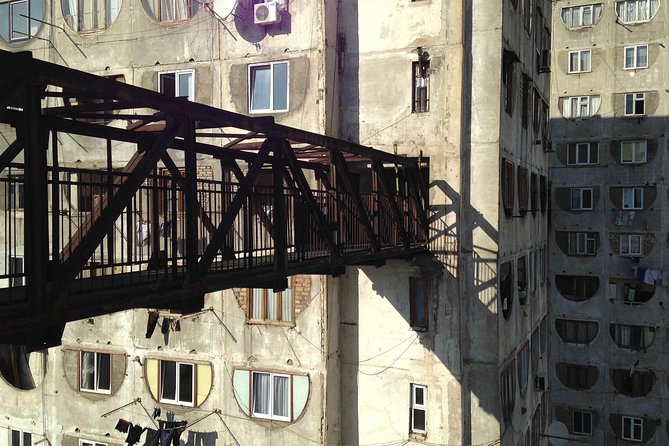
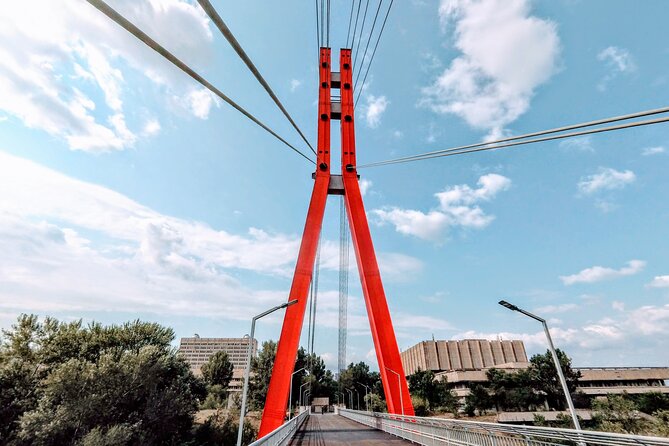
The Nutsubidze Skybridge is the tour’s most unusual architectural experience. Twin residential towers are connected by bridges high above the ground, allowing residents to move between buildings without returning to street level.
The tour description places the bridges about 70 meters above the ground. Walking across them gives you a strong sense of how Soviet architects tried to rethink apartment living. The design is practical, but it also creates a memorable visual experience, with open views across the city.
Allow about 45 minutes. This is a good place to slow down, take photographs, and notice the contrast between the towers and the surrounding neighborhoods. The bridges are not a theme-park attraction. They are part of a working residential complex, so behave as you would in someone’s home.
A particularly human detail is the chance to meet the elevator operator, often called the lift lady in tour stories. That encounter depends on timing and circumstance, so it should be treated as a possible bonus, not a guaranteed feature.
The skybridge also gives the tour a strong ending. You have moved from official buildings and monuments to homes, transport, and shared spaces. The city looks different from above, and the architecture feels less like an abstract style and more like a place where people live.
Guides who make the concrete understandable
The guide can make or break a tour like this. Buildings from the Soviet period often need explanation, especially when their original purpose has changed.
Alex is described as a guide with wide knowledge of Georgian history and a talent for answering questions. He has also been praised for careful driving arrangements and for taking time with photographs. Khato and Khatuna are noted for their energy, humor, patience, and understanding of brutalist, modernist, and Soviet architecture.
Aleksi is another guide associated with the experience. His strength is explaining the architecture while also discussing Georgia more broadly. I like that the guide is not expected to stick to concrete and dates alone. The best version of this tour links buildings to independence, displacement, national identity, and ordinary life.
One useful point comes through clearly: the guides generally allow time for photos and can adjust the pace. That helps if you are traveling with older family members or prefer to study each site instead of rushing through it.
There is one communication caution. English ability and clarity can vary by guide, and one booking described frustration when questions were answered as if they had already been covered. If something is unclear, ask again in a direct way and mention that you need a fuller explanation. Most of the feedback is strongly positive, but this is a fair reason to confirm your guide and expectations before departure.
What $75 buys you
At $75 per person, this is not the cheapest way to see Tbilisi. The value comes from access, transport between scattered districts, and interpretation rather than entrance fees, since the listed stops have no admission charge.
You are paying for a four-hour route that would be difficult to organize efficiently on your own. You would need to identify the buildings, work out the order, find the right neighborhoods, and understand what you are seeing once you arrive. An English-speaking local guide saves that effort and adds the social and historical context.
Group discounts may improve the price for several people. Private tours offer hotel pickup, while the standard meeting point is the Giant Bicycle monument at Rose Revolution Square. The tour ends back at the meeting point. One private booking also included an airport drop-off, but you should not assume that is part of every booking. Ask directly before relying on it.
The booking details describe a maximum of 14 people, while the main tour description presents it as a small group of no more than six. That is a meaningful difference. If personal attention matters to you, confirm the expected group size before paying.
Who should book this experience
I would choose this tour if you have already seen Old Tbilisi and want a stronger sense of the city’s recent past. It suits architecture fans, photographers, urban explorers, students of Soviet history, and curious visitors who prefer working districts to restored monuments.
It is also a good choice for someone who normally avoids guided tours. The route is hard to reproduce alone, and the buildings are far more interesting when someone explains their original purpose and later use.
You should think twice if you want a relaxed stroll, a family-focused activity, or a carefully restored attraction. The tour is aimed mainly at adults. Children can attend with an adult, but the operator recommends other family-friendly tours for younger children.
Wear clothes suited to the current weather and bring shoes you can comfortably use for walking and exploring uneven places. A moderate fitness level is required. The archaeology museum may not suit anyone uncomfortable with abandoned buildings.
Practical details before you reserve
The tour is offered in English and includes mobile ticketing. It is near public transportation, but the listed start point is the Giant Bicycle monument at Rose Revolution Square, not your hotel unless you book a private version with pickup.
The tour is often booked about 14 days ahead. That does not guarantee it will sell out, but it is a useful planning guide if your Tbilisi schedule is tight.
You can cancel for a full refund up to 24 hours before the local start time. Changes or cancellations inside that window are not accepted, so check your plans before the deadline.
The published rating is 5 out of 5, with 100 percent recommendation from 59 ratings. That strong result matches the main strengths of the experience: engaging guides, unusual places, good photo opportunities, and a clear look at modern Georgian history. Still, the one communication complaint and the possible group-size difference are worth keeping in mind.
Should you book Brutal Tbilisi?
Book it if you want to see the Tbilisi beyond the old town, especially if concrete architecture and Soviet history interest you. The former Archaeology Museum, refugee housing, and Nutsubidze Skybridge give the route real variety, while guides such as Alex, Khato, Khatuna, and Aleksi add the local explanation that these sites lack.
Skip it if you want a gentle sightseeing loop or a tour built around famous churches, food, and historic balconies. For everyone else, $75 is fair value for four hours of hard-to-find places and useful context. Confirm the group size, ask about pickup if needed, and come ready for a city that is sometimes rough, always layered, and far more interesting than its central postcard views.
FAQ
How long does the Brutal Tbilisi tour last?
The tour lasts approximately four hours, including visits to five locations and the time needed to move between them.
Where does the tour start?
The meeting point is the Giant Bicycle monument at Rose Revolution Square in Tbilisi, Georgia.
Where does the tour finish?
The activity ends back at the meeting point.
Is hotel pickup included?
Hotel pickup is available only for private tours.
Is the tour offered in English?
Yes. The tour is offered in English with a local guide.
What is included in the price?
Bottled water and a local guide are included. Lunch is not included, and admission at the listed stops is free.
Is the tour suitable for children?
Children may attend if accompanied by an adult, but the experience is designed mainly for adults. The operator recommends other family-friendly tours for visitors traveling with younger children.
Recently added around Tbilisi
- 2-Day Private Wine Tour to Kakheti from Tbilisi★ 5.0 · 3 reviews
- Kakheti wine region – Private Tour★ 5.0 · 3 reviews
- 17 Day Private Tour through Georgia★ 5.0 · 3 reviews
- Tbilisi and Mtskheta cities private, cultural tour★ 5.0 · 3 reviews
- Kakheti With Top Destinations★ 5.0 · 3 reviews
- Tbilisi City Tour with Street Photography★ 5.0 · 3 reviews
- Jvari monastery & Mtskheta – Half day group tour from Tbilisi★ 5.0 · 3 reviews
- Tbilisi City, Jvari Monastery, Uplistsikhe caves, Mtskheta city Private Day Trip★ 4.5 · 3 reviews
Tbilisi Tours, compared.
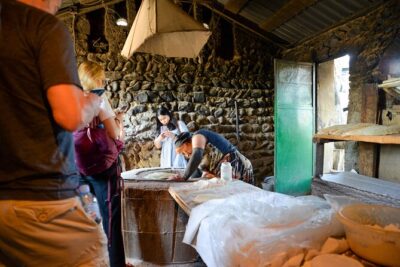
Day Trip to Kakheti Wine Region Including 9 Wine Tastings
Read our review →
Highlights of Caucasus Mountains-Jinvali,Ananuri,Gudauri,Kazbegi(Group tour)
Read our review →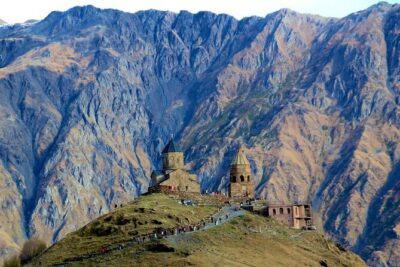
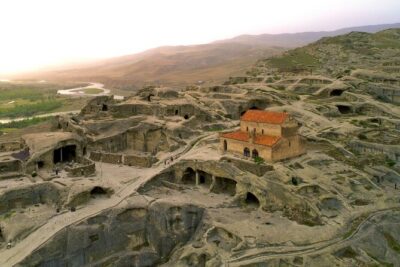

Tbilisi Walking Tour Including Cable Car and Traditional Bakery
Read our review →

Kakheti Wine Region: Signagi and Bodbe Tour with 10 Wine Tastings
Read our review →