
Reviewed · KATSKHI PILLAR TOURS
Chiatura and Katskhi Pillar One Day Urbex Tour
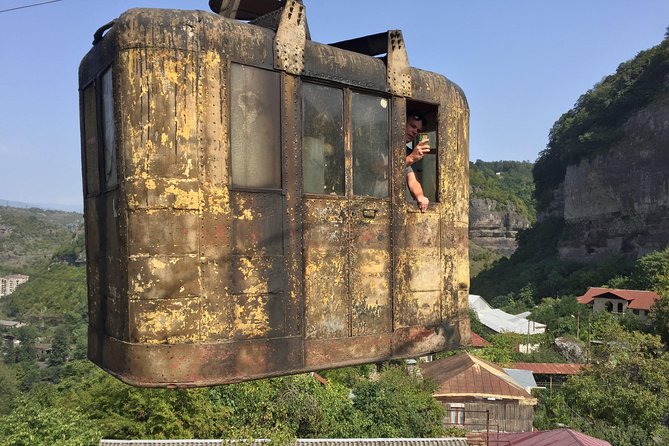
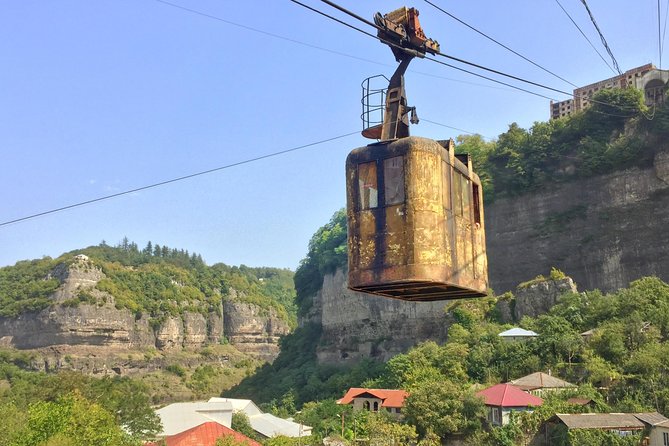
Chiatura’s old Soviet cable cars are the star here. They cross the Qvirilia River gorge and climb toward the former manganese mines in small cars that feel more like working transport than a museum piece. I like the chance to see industrial Georgia up close, not just the postcard version, and I like that Katskhi Pillar and Mgvimevi Monastery add religion, art, and local life to the day. The drawback is the long road trip: about 2.5 hours each way from Tbilisi.
I also like the personal feel. Guides Aleksy and Alex are praised for careful explanations, cultural context, and a flexible pace, especially when the tour runs privately. You should know that some cable lines may be closed or under repair, so the full aerial route is not guaranteed, and this is not a good pick if you dislike heights, enclosed cars, or rougher transport.
Key points to know before booking
- Ride Chiatura’s unusual cable cars: The old aerial system still serves the city, though some lines may be closed or under repair.
- See the remote Katskhi Pillar: This limestone monolith is linked with the solitary monk Maxime.
- Visit Mgvimevi Monastery: The cliffside complex includes old murals, a tunnel, a bell tower, and a partly carved church.
- Plan for a full day: The tour lasts about 12 hours, with roughly five hours spent on the road.
- Expect a more personal outing: Private tours include hotel pickup, and only your group participates in that format.
- Pack or budget for lunch: Bottled water is included, but lunch is not.
Why Chiatura is worth the long drive from Tbilisi
Chiatura is not a polished sightseeing town. That is exactly the point.
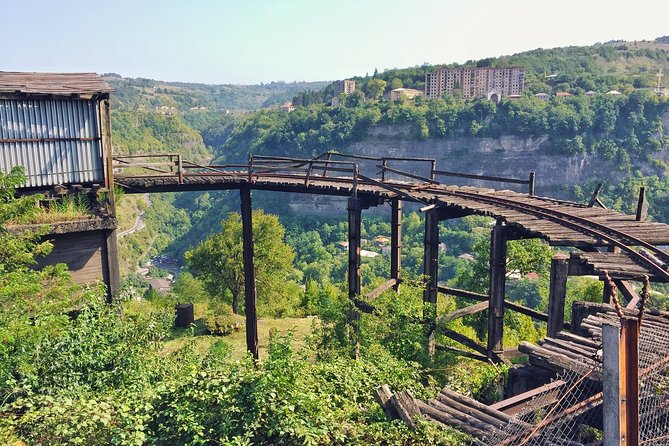
The city grew around manganese mining, and its steep gorge made ordinary roads and buses awkward. During the Soviet period, cable cars became the practical answer. The system linked the town below with work areas and settlements above, crossing more than 6 kilometers of cable in total. Ten cars carried people, while two more served manganese transport.
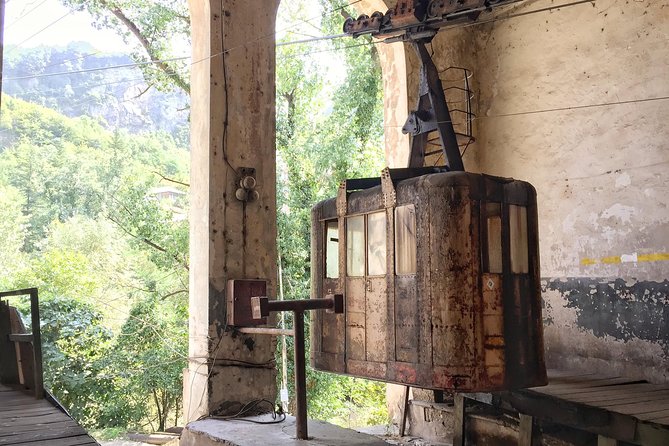
That gives the cable cars a purpose beyond simple sightseeing. You are not just looking at an old machine. You are seeing a form of transport designed around the city’s industrial shape. The cars and stations also carry Soviet-era decoration, including murals of Soviet heroes.
The system is still in use, but you need to keep your expectations sensible. This is old infrastructure, not a modern gondola built for tourists. Each car holds a maximum of four people, and some lines may be closed or undergoing repairs. Your guide will need to work with whatever is operating that day.
If you like Soviet architecture, industrial archaeology, or unusual public transport, this is the strongest reason to book. If you want a smooth sightseeing ride with wide seats, glass cabins, and a polished visitor center, you may find Chiatura too rough around the edges.
more katskhi pillar stops
- Soviet past – Private day tour to Chiatura, Katskhi pillar and Chronicles
★ 5.0 · 29 reviews - Soviet Story – Private day trip to Chiatura, Stalin’s museum and Katskhi pillar
★ 4.5 · 15 reviews - Chiatura. Soviet Past in the present. + Katskhi pillar
★ 5.0 · 9 reviews
The road west gives the day its real shape
The journey from Tbilisi takes around 2.5 hours each way. That means the drive is not a minor transfer between attractions. It takes up a large part of the day, and the total outing lasts about 12 hours.
I see this as a trade-off. You give up time in Tbilisi to reach a part of Georgia that feels far less arranged for international tourism. The reward is a day built around places that do not fit neatly into a standard city tour.
The long drive also matters if you get motion sick or have back problems. The tour information specifically advises against it for people prone to motion sickness or uncomfortable with extended driving. Bring water, keep lunch plans in mind, and use the road time to pace yourself.
Pickup depends on the booking format. Hotel pickup is offered for private tours, and the operator contacts you to settle the exact time and place. If you are booking a different group arrangement, clarify the meeting point before paying.
Mgvimevi Monastery, a quiet start in the cliffs
Mgvimevi Monastery gives the day a calmer opening before the machinery and height of Chiatura. The complex dates to the 8th century and is built against a cliff, with a small church partly carved into the rock.
Allow about 45 minutes here. That is enough time to see the main church, the cliffside elements, and the two-storey bell tower, built between the 12th and 14th centuries.
Look closely at the decoration. The facades carry crosses and ornamental borders, while the church interior preserves mural paintings from the 8th century. The southern wall has paintings from the 16th century. One old fresco shows the nobleman Rati from the Racha region with his wife and his brother, Niania Kakhaberisdze.
A long tunnel beneath the church was strengthened with arches. Two notable objects from the monastery, an engraved icon and a rare curved wooden door from the 11th century, are now held at the Georgian National Museum. You will not see those pieces here, but knowing this helps explain the site’s wider importance.
Admission is free. The visit is not long, but it gives useful context for the region. Mgvimevi is still a place used by local people, rather than a monument presented only for tour groups. That local character is part of the appeal, though it also means you should approach respectfully and follow your guide’s instructions.
Katskhi Pillar and the monk who lives above the village
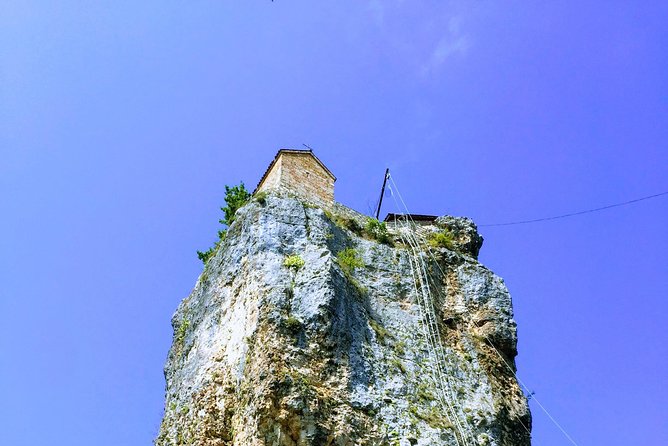
Katskhi Pillar is a natural limestone monolith near the village of Katskhi, close to Chiatura. It rises sharply from the surrounding area and is one of western Georgia’s most unusual religious sites.
The stop lasts about 45 minutes and admission is free. The key point is not a long visit inside a large complex. It is the sight of the pillar itself and the story connected with its sole resident, a monk named Maxime.
The pillar combines geology and religious tradition in a way that feels distinctly Georgian. You get a dramatic viewpoint and a story that makes the rock more than a natural curiosity. Your guide can explain the connection between the pillar and the monk, while you take time to look at the structure and surrounding area.
Do not expect the same kind of visit as Mgvimevi. Katskhi Pillar is a focused stop, not a full afternoon attraction. Its value comes from the unusual setting and the fact that it fits naturally into a day about remote places, old belief, and difficult terrain.
more soviet-era sites to see
- 1 Day Private Armenia: UNESCO, Soviet & Curated Family Lunch
★ 5.0 · 106 reviews - Tbilisi old town & soviet heritage – Private driver-guided Tour
★ 5.0 · 83 reviews - Armenia: 1 Day Soviet gems, UNESCO + Family lunch (Small group)
★ 5.0 · 68 reviews - Soviet Tbilisi Tour – Off the beaten path
★ 5.0 · 45 reviews
Riding Chiatura’s Soviet cable cars
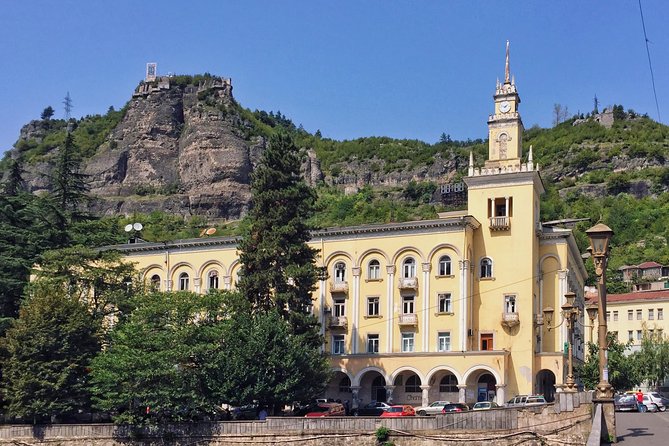
The cable cars are the part that gives this tour its urbex label. Urbex means urban exploration, and here the focus is on infrastructure, industrial decline, and Soviet design rather than conventional monuments.
The cars cross the Qvirilia River gorge and connect the lower town with the mining areas above. Some stations feature murals of Soviet heroes. The full system covers more than 6 kilometers, although the condition of individual lines can change.
The maximum capacity is four people per car. That small size can make the ride feel personal, but it also means the group may need to split or wait. A private booking helps with attention and pace, yet it cannot force a closed line to operate.
You should also be ready for height. The cars travel over a gorge, and the old equipment may feel exposed or enclosed depending on the line. The experience is not suitable for anyone with a fear of heights or serious mobility limitations. Some elevated viewpoints and old cable cars can be difficult if you need stable, modern access.
The guide matters here. Aleksy is praised for giving cultural and historical explanations while letting a private group move at its own pace. Alex is also singled out for precise guidance and strong knowledge of the subject. Since the machines and stations may not explain themselves clearly, a good guide turns a strange ride into a readable piece of city history.
Walking Chiatura beyond the cable stations
Set aside about two hours to walk around central Chiatura. The town is more than its cable cars, and the walk helps you understand how the transport network fits into daily life.
The center has Soviet-era architecture and an industrial mood. You may find worn facades, functional public buildings, and signs of a city shaped by mining rather than tourism. The atmosphere is pleasant in its own plain way, especially if you enjoy places with visible layers of use and age.
This is where the tour can feel most authentic. You are not moving from one perfect viewpoint to another. You are looking at a working town, its streets, its transport links, and its built environment. The guide can point out details that would be easy to miss on your own.
The balance is important. Chiatura is not presented as a restored open-air museum. Parts may look neglected, and the visit will appeal more to people interested in Soviet architecture and industrial change than to those seeking classic Georgian prettiness.
What the $123 price includes, and what it leaves out
At about $123 per person, this is not the cheapest day trip from Tbilisi. The value depends on what you want from your time in Georgia.
You are paying for a 12-hour outing, a local guide, transport arrangements, bottled water, and access to several widely separated places. The route would be difficult to reproduce comfortably by public transport in one day, especially if you want to combine Mgvimevi, Katskhi Pillar, the cable cars, and central Chiatura.
The price makes more sense for a small private group. A private booking means the day can move at your pace, without waiting for unrelated people. One guest described a group of three with Aleksy, where the flexible schedule allowed them to focus on what interested them. That kind of control is useful when cable-car operating times are uncertain.
Lunch is not included. Build that into your budget and ask the guide about the day’s meal arrangements. The supplied information does not promise a restaurant stop, so do not assume food will be waiting at one of the attractions.
Group discounts are available, and mobile tickets are accepted. The experience is offered in English. Confirmation arrives when you book, and the operator contacts you about pickup details.
Who will enjoy this day most
I would choose this tour if you are interested in:
- Soviet architecture and engineering
- Industrial archaeology and old transport systems
- Quiet religious sites with local importance
- Unusual photo subjects
- Places beyond Georgia’s most common routes
- A private day with a guide who can explain what you are seeing
It is less suitable if you want a short outing, dislike long drives, or prefer a carefully restored attraction. The cable cars may be closed in part, and the tour cannot promise every line will operate.
Families can participate, but children must be accompanied by an adult. Most people can take part, subject to favorable weather. Mobility limitations, back trouble, motion sickness, and fear of heights deserve serious consideration before booking.
The tour is generally described as a private activity, with only your group participating. Since the details also refer to small-group arrangements and an upgrade to private touring, check exactly which format and pickup service apply to your reservation.
Practical ways to make the day better
Wear comfortable shoes. You will walk around a monastery complex, cable-car stations, and the center of Chiatura, and the surfaces may not be as even or polished as those at a purpose-built attraction.
Bring a light layer and weather protection. The tour depends on conditions, and elevated stops can feel different from the weather in Tbilisi. Cable-car operations may also change because of repair work.
Keep your schedule flexible. A private group has more control over its pace, but the road is long and the cable system is not fully predictable. Do not plan a tight evening appointment in Tbilisi.
Use the guide’s explanations. The machines alone are striking, but the best part is understanding why they were built, how they served the mining city, and what the Soviet murals and stations reveal about the period.
Finally, plan your lunch. Bottled water is supplied, but food is not.
Should you book the Chiatura and Katskhi Pillar tour?
Book it if you want a day that feels different from Georgia’s standard church-and-viewpoint circuit. The combination of Mgvimevi’s old murals, Katskhi Pillar and monk Maxime, Chiatura’s Soviet cable cars, and the town’s industrial center gives you a strong mix of culture, religion, engineering, and local life.
I would be especially comfortable recommending it to anyone who enjoys unusual infrastructure and wants a guide like Aleksy or Alex to explain the setting. The small private format can make the long day much easier, particularly when the group wants to stop, walk, or focus on a specific part of Chiatura.
Skip it if the 2.5-hour drive each way sounds exhausting, if heights are a serious concern, or if you need dependable access to every attraction. At $123, the value is strongest when you treat the journey as part of the experience and make full use of the guide’s knowledge. Free cancellation is available up to 24 hours before the start time, which gives you some room to reassess the weather and your energy.
FAQ
How long does the Chiatura and Katskhi Pillar tour last?
The experience lasts approximately 12 hours, including the drive between Tbilisi and western Georgia.
How long is the drive from Tbilisi?
The drive takes around 2.5 hours each way, so the road portion uses a significant part of the day.
Is hotel pickup included?
Hotel pickup is available for private tours. The operator contacts you to confirm the pickup time and place.
Is lunch included?
No. Bottled water is included, but lunch is not.
Is the tour offered in English?
Yes. The tour is offered in English.
Can I ride every cable car line in Chiatura?
Not necessarily. Some cable lines may be closed or under repair, so visiting all of them may not be possible.
How many people fit in a cable car?
The maximum capacity of each cable car is four people.
Is the tour suitable for children?
Children can participate, but they must be accompanied by an adult.
Can I cancel for a full refund?
Yes, you can cancel up to 24 hours before the experience starts for a full refund. Cancellations or changes made less than 24 hours before the start time are not accepted for a refund.
More 1-Day Tours in Tbilisi
- Day Trip to Kakheti Wine Region Including 9 Wine Tastings
★ 5.0 · 2,774 reviews - Day Trip to Kazbegi and Gudauri
★ 5.0 · 2,009 reviews - Day Trip to Mtskheta Gori and Uplistsikhe
★ 5.0 · 1,801 reviews - Day Trip to Armenia Including Homemade Lunch
★ 5.0 · 1,162 reviews
Recently added around Tbilisi
- 2-Day Private Wine Tour to Kakheti from Tbilisi★ 5.0 · 3 reviews
- Kakheti wine region – Private Tour★ 5.0 · 3 reviews
- 17 Day Private Tour through Georgia★ 5.0 · 3 reviews
- Tbilisi and Mtskheta cities private, cultural tour★ 5.0 · 3 reviews
- Kakheti With Top Destinations★ 5.0 · 3 reviews
- Tbilisi City Tour with Street Photography★ 5.0 · 3 reviews
- Jvari monastery & Mtskheta – Half day group tour from Tbilisi★ 5.0 · 3 reviews
- Tbilisi City, Jvari Monastery, Uplistsikhe caves, Mtskheta city Private Day Trip★ 4.5 · 3 reviews
Katskhi Pillar Tours, compared.
Chiatura Tour with Katskhi Pillar & Cable Car Experience
Read our review →
Soviet past – Private day tour to Chiatura, Katskhi pillar and Chronicles
Read our review →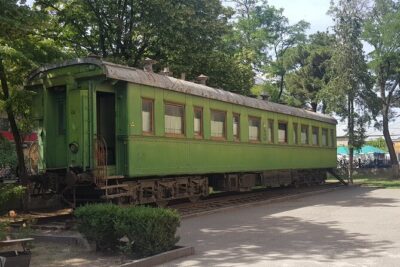
Soviet Story – Private day trip to Chiatura, Stalin’s museum and Katskhi pillar
Read our review →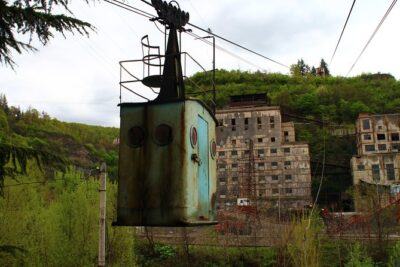
Chiatura. Soviet Past in the present. + Katskhi pillar
Read our review →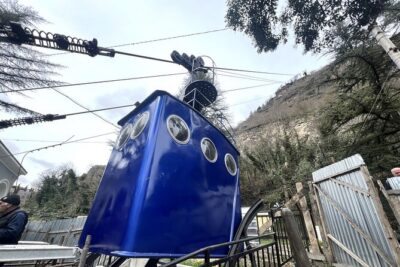
Browse the lists this tour appears in