
Reviewed · TBILISI TOURS
Private Walking Tbilisi City Tour (Day Trip)
Tbilisi’s best story is its mix of faiths, empires, legends, and old lanes packed into one walk. In a single day, you move from Narikala Fortress and the sulfur baths to Orthodox churches, a mosque, the Great Synagogue, a Catholic church, and the old theater district.
I like the way this route links landmarks to useful stories, especially the tale of King Vakhtang Gorgasali’s falcon and the hot springs. I also like the chance to see Tbilisi’s multi-faith character in person, not just admire its balconies and river views. Guides named in the feedback include Temo and Teimuraz, both praised for detailed storytelling and attentive service.
The main thing to consider is the pace. Six to seven hours on foot, with many short stops, can feel long, and transportation is not included. The tour is described as private in its title but also as a shared city tour, with up to 100 people possible, so confirm the group arrangement before booking.
Key points to know before you book
- Fourteen stops cover old and new Tbilisi, from sixth-century churches to the 2009 Bridge of Peace.
- Multi-faith heritage is central, with the Jumah Mosque area, Great Synagogue, Orthodox churches, Catholic and Gregorian churches, and the old Ateshga site.
- The sulfur-bath district explains the city’s name, since tbili means warm in Georgian.
- The six to seven hour length gives you context, but expect a full day of walking and standing.
- Bottled water is included, while transportation is not.
- Free cancellation is available up to 24 hours ahead, subject to the weather and minimum group rules.
Why this Tbilisi walk works as a first look
Tbilisi can feel confusing at first. The old town climbs sharply, roads change names, and churches, bathhouses, courtyards, and modern buildings sit close together. This route gives you a clear frame for the city.
You begin around the old center, where the main sights are close enough to connect on foot. The route then reaches Rustaveli Avenue, crosses toward Metekhi and Rike Park, climbs to Kartlis Deda, and returns through the old streets. That pattern helps you see how Tbilisi grew beyond its original walls.
I would choose this tour early in a stay. A guide can explain the city’s legends and religious mix before you return on your own for a bath, a church visit, a theater performance, or a slower walk through the old lanes.
The format needs a little caution. The title says private walking tour, but the description calls it a full-day shared city tour and allows a maximum of 100 participants. That is a very large possible group for narrow old-town streets. The actual size may be smaller, but ask for confirmation if a private guide is important to you.
more walking tours in Tbilisi
- Tbilisi Walking Tour Including Cable Car and Traditional Bakery
★ 5.0 · 1,310 reviews - Tbilisi:Evening Walking & Talking Tour with Wine & Boat Ride
★ 5.0 · 572 reviews - Old Tbilisi Highlights walking tour with wine & 10 tastings
★ 5.0 · 276 reviews
Narikala Fortress and the old city walls
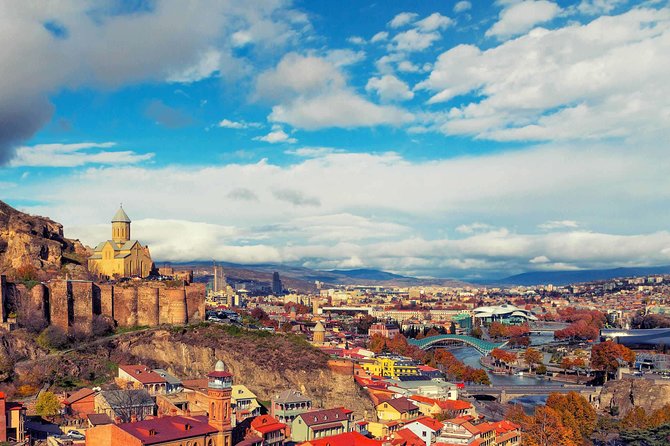
Narikala Fortress is the natural opening point because it gives the tour its sense of place. From here, Tbilisi spreads along the river, with the old town below and newer districts beyond it. The fortress also helps you understand why this hill mattered: it guarded the settlement and the approaches along the river.
The stop lasts about 50 minutes, longer than most of the later visits. That is useful because the area contains several different kinds of sights. You see typical Tbilisi houses with wooden balconies, old churches, and the remains of the city wall.
The route introduces Anchiskhati Church, the sixth-century church often described as the oldest surviving church in Georgia. It also points to Catholic and Gregorian churches, a Muslim mosque, the Great Synagogue, and Ateshga, an old pagan temple site.
This is one of the strongest parts of the day for anyone who wants more than a standard postcard view. The guide can show you how several traditions occupied the same compact quarter. You get a better sense of Tbilisi as a meeting place rather than a city built around one religious identity.
The Holy Trinity Cathedral is also part of the area’s wider sight picture, though the supplied timing does not promise a separate interior visit. Keep your expectations focused on orientation, history, and the collection of landmarks around Old Tbilisi.
Sulfur baths, Abanotubani, and the city’s founding tale

The sulfur-bath district, known as Abanotubani, is the emotional center of the tour. Its domed bathhouses sit below the old town, near the river and the narrow gorge leading to the waterfall.
The name Tbilisi comes from tbili, meaning warm. The story tells of King Vakhtang Gorgasali, whose falcon fell near the hot springs. The discovery helped inspire the founding of a new capital. You hear versions of this legend at the sulfur baths and again at Abanotubani, so the guide’s explanation matters.
The itinerary gives about 30 minutes at the sulfur baths and another 15 minutes at Abanotubani. That is enough to understand the area and take photographs, but not a long time for a bath session. No bathing experience is included, and the tour does not list a bath admission.
The practical value here is the connection between a living city service and its origin story. These are not only old buildings to photograph. They explain why Tbilisi developed where it did.
Because the area has uneven streets and slopes, comfortable walking shoes will help. You should also expect the day to include repeated short stops rather than long indoor visits.
The Great Synagogue and Tbilisi’s shared heritage
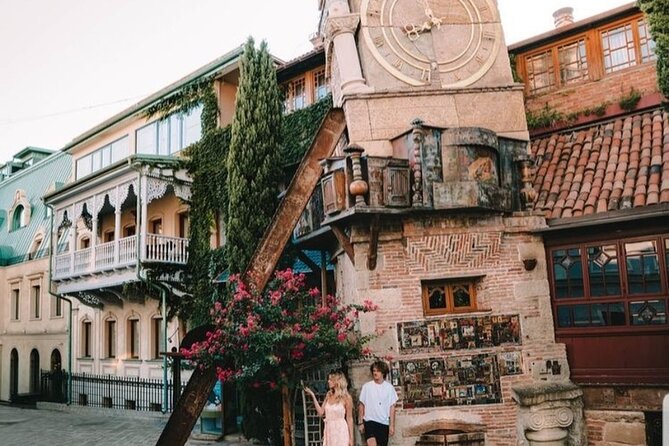
The Great Synagogue of Tbilisi is a particularly useful stop because it adds Jewish history to a route already including Orthodox, Catholic, Gregorian, and Muslim sites.
The building was constructed from 1895 to 1903 in an eclectic style by Georgian Jews from Akhaltsikhe who moved to Tbilisi in the late nineteenth century. For that reason, it is also called the synagogue of the people of Akhaltsikhe.
The visit is scheduled for about 15 minutes. That is brief, so think of it as an exterior and historical introduction unless your guide confirms access inside. The tour information does not promise an interior visit or a service.
I like this stop because it keeps the city’s story from becoming too narrow. Tbilisi is not only fortress walls and Orthodox domes. Its streets also preserve the marks of communities that lived, worshipped, traded, and built here over time.
The mosque area and the old Ateshga site add to that picture. You should not expect a long religious-tour itinerary, but you do get a useful range of traditions within a few blocks.
more days out of Tbilisi to compare
- Day Trip to Kakheti Wine Region Including 9 Wine Tastings
★ 5.0 · 2,774 reviews - Day Trip to Kazbegi and Gudauri
★ 5.0 · 2,009 reviews - Day Trip to Mtskheta Gori and Uplistsikhe
★ 5.0 · 1,801 reviews - Day Trip to Armenia Including Homemade Lunch
★ 5.0 · 1,162 reviews
Metekhi Cathedral and the Bridge of Peace
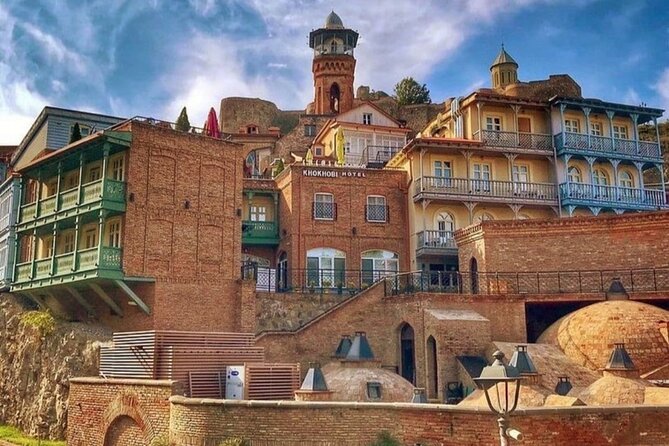
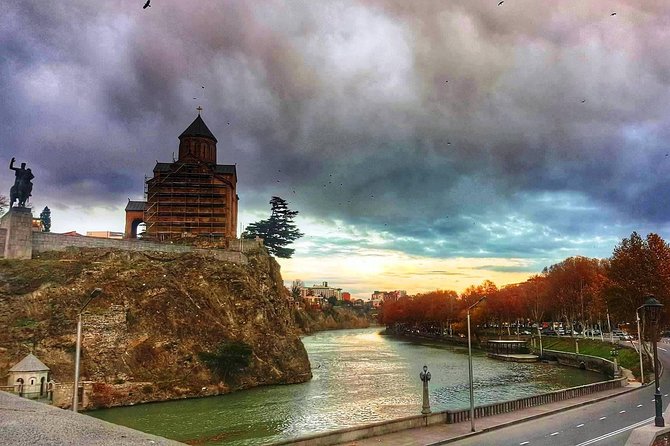
Metekhi Cathedral sits on a plateau above the river. Its setting gives it unusual visual power, but the story is just as important. King Vakhtang I Gorgasali built a church and fort here, and the name Metekhi dates back to the twelfth century, meaning the area around the palace.
The stop lasts about 15 minutes. That is enough for the guide to explain the site and its connection to the royal city. Again, the listed plan does not promise extended interior time, so allow the guide’s schedule to shape the visit.
From this older royal setting, the route moves toward the Bridge of Peace. Built in 2009 and 2010, the bridge was designed by Italian architect Michele De Lucchi, with a lighting system by French designer Philippe Martinaud. Its glass and steel form is deliberately modern.
The contrast is the point. In a short walk, you move from a medieval church site to a contemporary bridge, then into Rike Park. Tbilisi makes these contrasts part of everyday city life rather than separating old and new into distant districts.
Rike Park hosts festivals such as Tbilisoba. The stop is listed at 15 minutes, so you will have time to see the park and bridge area, but not to treat it as a long leisure break.
Kartlis Deda and the city’s memorable symbol
Kartlis Deda, or Mother of Georgia, is one of the city’s clearest symbols. She holds wine for friends and a sword for enemies. The image is simple, easy to remember, and useful for understanding how Georgia presents hospitality and independence side by side.
The visit lasts around 15 minutes. The statue is also tied to the work of Georgian sculptor Elguja Amashukeli, whose art studio was at Anchiskhati Basilica.
This is a good example of how the tour connects objects across the city. You see the statue at Kartlis Deda, then learn about the artist again at Anchiskhati. Those links make the sightseeing feel less like a checklist.
The climb and hilltop setting may be tiring for some people, particularly after several hours of walking. The tour description does not specify the exact walking route or transport between stops, so ask how the group reaches the statue. Transportation is not included.
Anchiskhati, Sioni, and old Tbilisi streets
Anchiskhati Basilica belongs to the sixth century and is described as the oldest surviving church in Georgia. Its age makes it one of the most important stops, even though the scheduled visit is only about 15 minutes.
Sioni Cathedral has a different story. It was built in the sixth and seventh centuries, destroyed and rebuilt several times by foreign invaders, and now reflects a thirteenth-century version with later changes from the seventeenth through nineteenth centuries. Before Holy Trinity Cathedral was consecrated, Sioni served as the main Georgian Orthodox cathedral and the seat of the Catholicos-Patriarch of All Georgia.
These churches show why a short explanation is valuable. Without context, you see old stone walls and religious art. With context, you understand how repeated destruction and rebuilding shaped Tbilisi’s appearance.
The walk through Leselidze adds a more ordinary city view. This street joins old and newer parts of Tbilisi, making it a useful transition rather than a single monument. You can watch the city change block by block.
Rezo Gabriadze Marionette Theater is another compact stop, scheduled for about 10 minutes. It is one of Tbilisi’s best-known sights, and its performances are associated with depth and feeling. The tour does not include a show ticket, so you should not count on seeing a performance during this walk.
Leghvtakhevi waterfall, the walk’s quiet finish
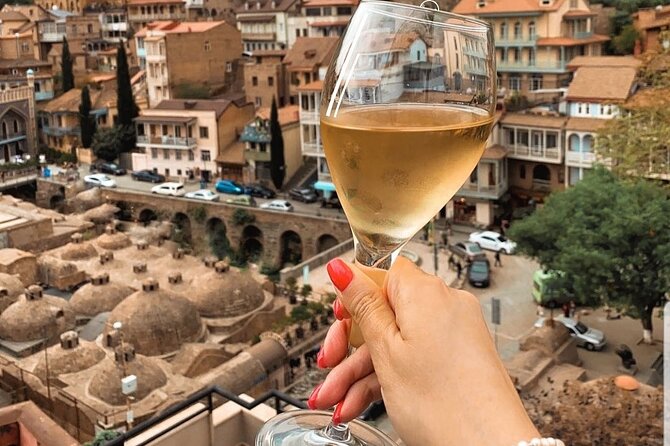
The Dzveli Tbilisi sulfur waterfall is called Leghvtakhevi and drops 22 meters. The name comes from the Georgian word leghvi, meaning fig, because fig trees once grew in the area.
This stop lasts about 20 minutes and offers a welcome change from churches, statues, and streets. You walk into a narrow natural setting close to the old bath district, where water and rock soften the city’s hard edges.
The waterfall is not a remote excursion. It is part of the old town, which makes it easy to include in a city day. Still, the path and route conditions can affect comfort, especially after several hours on foot. Good shoes and a steady pace are sensible.
For me, the waterfall gives the itinerary a satisfying shape. The day begins with a high fortress view, moves through the city’s religious and political centers, and ends near the hot springs and water that helped give Tbilisi its name.
What the $59 price really covers
At $59 per person, the value rests mainly in the guide service and the amount of ground covered. You are not paying for a string of major admission tickets. Most stops are listed as free, and transportation is not included.
That makes the price reasonable for a visitor who wants historical explanation, local legends, and an organized route through a complicated city. It is less compelling if you only want photographs and already know how to walk between the main sights.
Bottled water is included for each participant, a small but useful touch during a six to seven hour walking day. The tour is offered in English, and confirmation arrives when you book.
The feedback attached to this experience is unusually strong, with a five-star rating from 69 reviews and 100 percent recommending it. The repeated praise focuses on friendly service, punctual arrangements, professional guides, and detailed storytelling. One group described the guide as a history expert, while other comments specifically praised Temo and Teimuraz.
I would read those comments as evidence of the tour’s likely strength, not a promise that every guide will be the same. If guide personality is central to your decision, ask which guide is assigned and how the private or shared format will work.
Who should book this walking tour
This is a good match for you if you want a broad first look at Tbilisi and prefer explanations to wandering alone. It suits history-minded visitors, first-time arrivals, and anyone interested in how Orthodox, Jewish, Muslim, Catholic, Gregorian, and older pagan traditions appear within one city center.
It also works well for people who want both famous sights and less obvious context. The Bridge of Peace and Mother of Georgia are familiar symbols, while Ateshga, the Akhaltsikhe synagogue connection, and the story of the royal palace area add substance.
I would hesitate if you need a slow, relaxed day, have difficulty with extended walking, or expect a fully private experience with personal transport. The official maximum is 100 people, and the tour description does not specify how many participants are normally assigned.
The experience requires good weather and a minimum number of participants. If poor weather or low enrollment cancels it, you are offered another date or experience, or a full refund. You can cancel for a full refund up to 24 hours before the local start time. Changes or cancellations inside that window are not accepted.
Should you book it?
Book this tour if you want Tbilisi explained as a connected city, not just a collection of monuments. The multi-faith route, Narikala views, sulfur-bath legend, old churches, modern bridge, and Leghvtakhevi waterfall give you a strong overview for $59.
Before paying, confirm the actual group size and whether the tour is private or shared. If those details suit you, this is a useful first-day introduction, especially with an English-speaking guide such as Temo or Teimuraz when available. If you want bathing time, theater tickets, or private transportation, plan those separately.
FAQ
How long does the Tbilisi walking tour last?
The experience lasts approximately six to seven hours.
What language is the tour offered in?
The tour is offered in English.
Is transportation included?
No. Transportation is not included, and the tour is described as a walking experience.
Where does the tour start and finish?
It starts in Tbilisi, Georgia, and ends back at the meeting point.
Is bottled water included?
Yes. One bottle of water is included for each participant.
Does the tour visit the Great Synagogue of Tbilisi?
Yes. The Great Synagogue is scheduled as a 15-minute stop. The building was constructed between 1895 and 1903 by Georgian Jews from Akhaltsikhe.
What is the cancellation policy?
You can cancel up to 24 hours before the experience for a full refund. Cancellations or changes made less than 24 hours before the start time are not accepted.
Can the tour be canceled because of weather or low enrollment?
Yes. The experience requires good weather and a minimum number of participants. If it is canceled for either reason, you are offered another date or experience, or a full refund.
Recently added around Tbilisi
- 2-Day Private Wine Tour to Kakheti from Tbilisi★ 5.0 · 3 reviews
- Tbilisi and Mtskheta cities private, cultural tour★ 5.0 · 3 reviews
- Kakheti wine region – Private Tour★ 5.0 · 3 reviews
- 17 Day Private Tour through Georgia★ 5.0 · 3 reviews
- Kakheti With Top Destinations★ 5.0 · 3 reviews
- Tbilisi City Tour with Street Photography★ 5.0 · 3 reviews
- Jvari monastery & Mtskheta – Half day group tour from Tbilisi★ 5.0 · 3 reviews
- Tbilisi City, Jvari Monastery, Uplistsikhe caves, Mtskheta city Private Day Trip★ 4.5 · 3 reviews
Tbilisi Tours, compared.
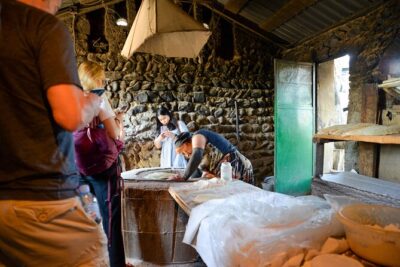
Day Trip to Kakheti Wine Region Including 9 Wine Tastings
Read our review →
Highlights of Caucasus Mountains-Jinvali,Ananuri,Gudauri,Kazbegi(Group tour)
Read our review →
Tbilisi Walking Tour Including Cable Car and Traditional Bakery
Read our review →
Kakheti Wine Region: Signagi and Bodbe Tour with 10 Wine Tastings
Read our review →
Mtskheta,Jvari,Bazaar,wine tasting,Chronicles of Georgia
Read our review →Browse the lists this tour appears in