

Reviewed · TBILISI TOURS
Soviet Tbilisi Tour – Off the beaten path
Tbilisi’s Soviet past is easiest to understand away from the postcard streets. This private tour takes you into a basement printing house linked to Stalin, up to the huge Chronicles of Georgia monument, and through concrete housing districts connected by a strange elevated bridge. It is part history lesson, part urban exploration, and part photo outing.
I like the private format, which lets you ask questions and set the pace with guides such as George, David, Temo, Zezva, and Irakli. I also like the smart route: it links distant sights that are awkward to reach on your own, while hotel pickup and drop-off remove much of the transport hassle.
The main consideration is its narrow focus. If you want churches, wine bars, and the prettiest parts of the old town, choose another tour. If you enjoy Soviet history, architecture, and unusual city views, this is a strong use of half a day.
Key points about Soviet Tbilisi
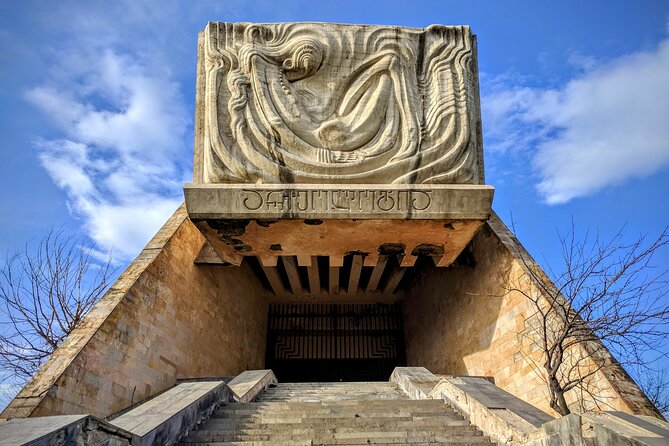
- Stalin’s underground printing house: Enter a basement museum in an old private home and see a remarkable piece of revolutionary history.
- Chronicles of Georgia: Reach a hilltop monument with vast stone panels, Soviet-era ambition, views of Tbilisi Sea, and concrete housing blocks below.
- Nutsubidze Skybridge: Walk through a surreal elevated structure linking residential towers on Tbilisi’s steep western hills.
- Private English-language guiding: Your group travels alone, so you can ask direct questions about Stalin, Georgia, architecture, and daily life.
- A city beyond the center: The tour shows parts of Tbilisi that are difficult to connect by public transport in a short visit.
- Good practical value: At $49.68 per person, the price is especially appealing for two or more people sharing a private vehicle and guide.
Why Soviet Tbilisi is worth seeing
Tbilisi is often introduced through balconies, churches, sulfur baths, and narrow streets. Those places matter, but they show only one layer of the city. This tour shifts your attention to the twentieth century, when Soviet planning reshaped Tbilisi with factories, apartment blocks, monumental sculpture, and grand public projects.
You will not get a polished museum circuit. The appeal is the contrast between official ideals and everyday surroundings. A giant monument may overlook unfinished construction. A decaying museum may sit beside an ordinary neighborhood. A concrete bridge may look bizarre to an outsider but serve as a daily route for local residents.
That contrast gives the tour its character. You are not simply looking at Soviet buildings as old objects. You are seeing how they fit into the modern city, and how Georgia continues to live with, question, preserve, and sometimes neglect this past.
The tour lasts about five hours. That is long enough to cover several distant parts of Tbilisi without turning the day into a rushed checklist. The private setup also matters here. Soviet history can raise complicated questions, and a small group gives you room to ask about politics, memory, architecture, Stalin, and Georgian identity.
Guides named in the feedback include George, David, Temo, Zezva, and Irakli. The strongest pattern is clear: the guide makes the experience. You should expect a personal explanation rather than a string of memorized dates, with room for questions, photographs, and conversation.
more soviet-era sites to see
- 1 Day Private Armenia: UNESCO, Soviet & Curated Family Lunch
★ 5.0 · 106 reviews - Tbilisi old town & soviet heritage – Private driver-guided Tour
★ 5.0 · 83 reviews - Armenia: 1 Day Soviet gems, UNESCO + Family lunch (Small group)
★ 5.0 · 68 reviews
Inside Stalin’s underground printing house

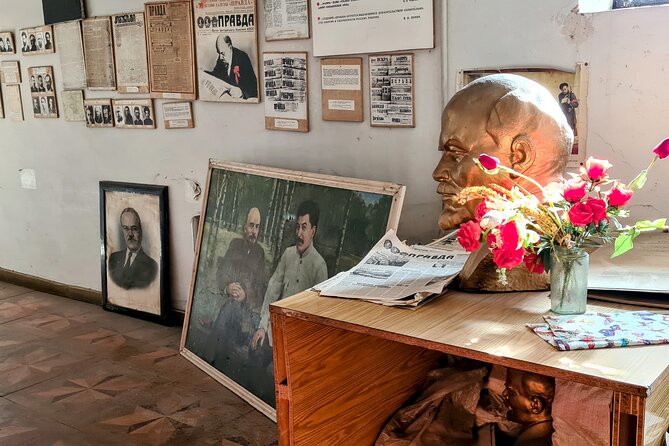
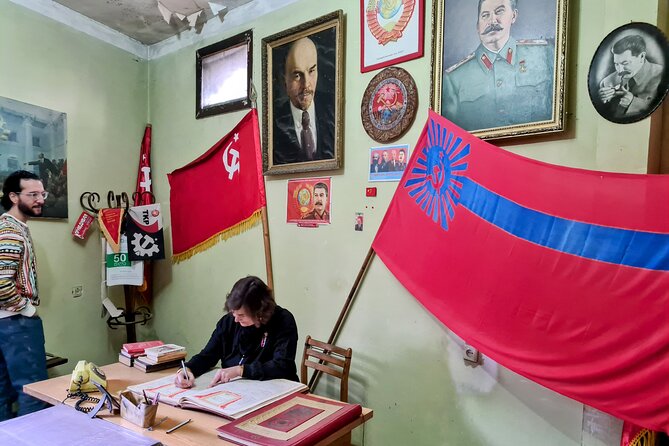
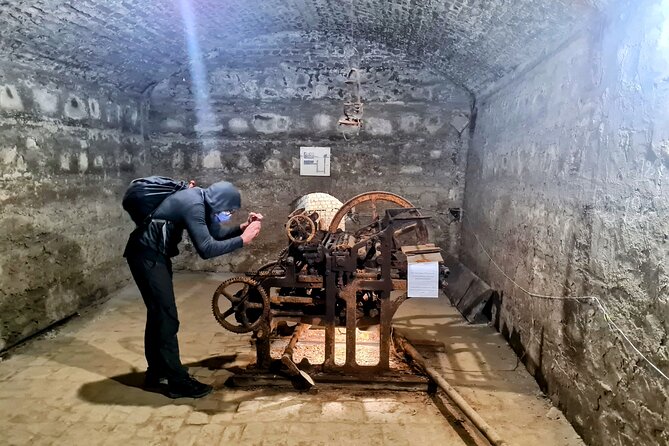
The first major stop is J. Stalin’s Underground Printing House Museum. It sits beneath an old private house, which already makes the visit feel unusual. You leave the ordinary street and enter a basement connected with the production of revolutionary material.
The museum preserves Soviet-era relics and focuses on the underground printing operation associated with Stalin. The setting is more important than polish. This is not a large national museum with bright displays and a carefully managed visitor flow. It feels intimate, odd, and closely tied to the building itself.
A dedicated communist is described as the museum’s director. That detail can shape your visit. You may encounter a strongly personal interpretation of the Soviet period rather than a neutral modern presentation. For some people, that is exactly what makes the stop worthwhile. It offers a direct encounter with living political memory, not just objects behind glass.
Allow about 30 minutes. That sounds brief, but it suits the scale of the site. The guide helps place the printing house in the broader story of Georgian and Soviet politics, while the basement provides the atmosphere. You will likely spend more time looking at the space and listening to its story than wandering through a large collection.
I would not book this tour expecting an exhaustive museum visit. The value comes from the setting, the relics, and the chance to discuss how Stalin is remembered in Georgia. The stop also establishes the tone for the rest of the day: unusual places, strong contrasts, and history that feels close to ordinary life.
The Chronicles of Georgia above Tbilisi Sea
From the underground printing house, the tour moves to the Chronicles of Georgia, sometimes called Georgia’s Stonehenge. The nickname is easy to understand once you see the scale. Huge stone columns rise on a hill above the Tbilisi reservoir, with carved scenes linked to Georgian history and religious tradition.
The monument was created by Zurab Tsereteli and remains unfinished. That unfinished quality is part of the experience, not a flaw to hide. The site combines monumental Soviet-era ambition with a distinctly Georgian subject. It is grand, rough, and isolated enough to feel separate from central Tbilisi.
You have about 30 minutes here, which should allow time to walk around, study the carved panels, and take in the setting. The monument’s position is one of its best features. Below, you can see large concrete housing settlements. Beyond them is the reservoir, known locally as Tbilisi Sea.
This is a good place to ask your guide how Soviet public art worked. The state used scale, stone, and public monuments to present a version of history. Here, that format was applied to Georgia’s own story, creating a complicated mix of local pride and Soviet monumental design.
The site is also excellent for photographs. The columns look different from each angle, and the open hill gives you views that are hard to find in the old center. Still, keep your expectations realistic. The monument is not a finished attraction with a formal visitor center or a long indoor exhibition. You come for the sculpture, the views, and the ideas it raises.
Concrete housing and the Nutsubidze Skybridge
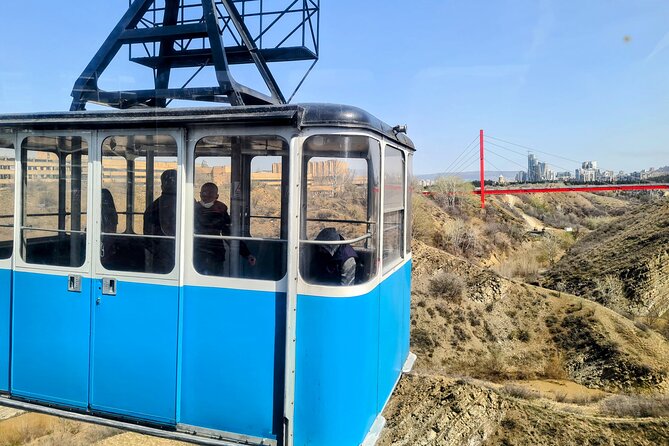
The longest part of the tour is spent around the Nutsubidze Skybridge, a two-hour stop that brings you into one of Tbilisi’s more unusual residential areas. Here, the subject is not one isolated monument. It is the wider Soviet approach to housing and urban movement.
Tbilisi’s hills made construction difficult. Soviet planners responded with large concrete apartment blocks and ambitious connections between them. The Nutsubidze Skybridge is a striking example. It links residential towers with an elevated route and incorporates a bridge or lift structure that looks more like a piece of experimental engineering than a normal neighborhood passage.
From a distance, the buildings can appear severe. Up close, the setting becomes more interesting because the structures are still part of everyday life. Residents use the connections to move through the hilly housing district, while you get a chance to see how a planned residential area works at street level.
The tour description also points to a Soviet puzzle building and a large monument dedicated to Georgian history. The exact order of the stops can vary, but the theme is consistent: concrete blocks, unusual engineering, and large public forms that are difficult to appreciate from a standard city-center tour.
This is the best section for urban photography. Rust, concrete, stairways, towers, and elevated walkways create strong lines and textures. The guide can also help you see past the dramatic appearance. These are not abandoned movie sets. They are homes and public spaces, and that distinction matters.
You should wear comfortable shoes and allow yourself time to look carefully. The tour is designed for photographs, but you are also moving through a real residential area. Be respectful when taking pictures, especially near entrances and people’s homes.
The two-hour duration is useful. A shorter stop might give you only a quick photograph before moving on. Here, you have time to see the structure from different angles, hear how residents use it, and compare the grand plans of the Soviet period with the buildings as they appear today.
A different direction out of Tbilisi entirely:
- Day Trip to Kakheti Wine Region Including 9 Wine Tastings
★ 5.0 · 2,774 reviews - Highlights of Caucasus Mountains-Jinvali,Ananuri,Gudauri,Kazbegi(Group tour)
★ 5.0 · 2,682 reviews - Day Trip to Kazbegi and Gudauri
★ 5.0 · 2,009 reviews - Day Trip to Mtskheta Gori and Uplistsikhe
★ 5.0 · 1,801 reviews
More than architecture: history, memory, and daily life
The best guides add context between the stops. George and David are repeatedly praised for bringing locations to life, while Temo is described as warm and deeply engaged with Georgian history. Irakli is noted for adding a personal touch, and other guide names include Zezva and Data.
The important point is not any one name. Guide assignments can change. What matters is the kind of guiding this tour requires. The sites are unusual, but they do not explain themselves. A concrete block can be merely ugly if you do not understand why it was built. A monument can look grand without revealing whose version of history it presents.
You will have room to ask about Soviet party members, Stalin, architecture, Georgian culture, and the changes that shaped modern Tbilisi. The strongest feedback also points to first-hand accounts and current affairs, suggesting that the tour connects old structures with the country as it is now.
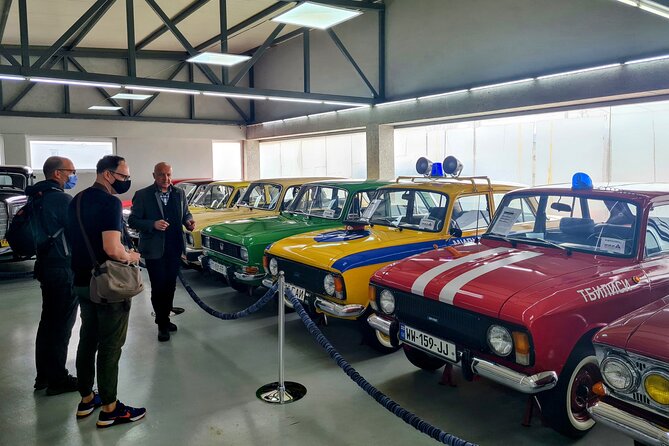
The guide may also add smaller surprises along the route, including Soviet cars, decaying museum spaces, or other historic sites. These extras appear to vary, so I would treat them as possible additions rather than guaranteed stops. The core experience is the printing house, Chronicles of Georgia, and Nutsubidze area.
Music may even become part of the ride. One guide was singled out for having good taste in music, a small detail that says something about the relaxed tone many people experience in the vehicle between sites.
Is $49.68 good value?
At $49.68 per person, this tour offers solid value if you are traveling with another person or a small group. It is a private five-hour experience with an English-speaking guide, hotel pickup, transport between spread-out locations, and included admission to the printing house and skybridge stop.
The price is less compelling for a solo visitor if the private rate does not change with group size, but the convenience still has value. Reaching the distant monuments and residential districts independently would take planning, several transport connections, and time spent working out the route.
The tour ends at the Dry Bridge Flea Market on Zviad Gamsakhurdia Right Bank. That is a useful finish, since you can continue exploring the market rather than being returned to the same starting point. Hotel pickup is available for private tours, but you need to provide your hotel or holiday apartment details.
The advertised start point is at the round fountain near Avlabari metro station. Confirm your pickup arrangement when booking, since the experience information includes both a meeting point and private hotel pickup.
The tour is offered in English, includes a mobile ticket, and is near public transport. Confirmation is provided when you book. Free cancellation is available if you cancel at least 24 hours before the local start time. A minimum number of participants is required, and if that minimum is not met, you are offered another date or experience, or a full refund.
Who should book this tour?
I would choose this tour if you have already seen, or plan to see, Tbilisi’s old town and want a different side of the city. It is especially suited to you if you like architecture, photography, twentieth-century politics, urban planning, and places that feel slightly strange.
It also works well if you have limited time. In five hours, you cover distant areas that would be difficult to combine without a car and a guide. The private format makes it suitable for couples, families, or friends who want to ask their own questions rather than follow a large group.
You may want another tour if your main interests are Georgian food, wine, medieval churches, or the classic historic center. This is not a general introduction to every part of Tbilisi. It is a focused look at Soviet influence, with enough Georgian context to make the subject meaningful.
Bring a phone or camera, comfortable footwear, and an open mind about what makes a site worthwhile. Some stops are polished. Others are worn, unfinished, or still part of an ordinary neighborhood. That unevenness is central to the experience.
My verdict on Soviet Tbilisi
Book it if you want to understand why Tbilisi looks the way it does beyond the old center. The underground printing house provides an intimate start, the Chronicles of Georgia delivers scale and views, and the Nutsubidze Skybridge shows Soviet planning at its most unusual and practical.
The guide is the key factor, so use the private setting well. Ask questions, request time for photographs, and ask how the sites fit into Georgian life today. At $49.68 per person, the combination of transport, access, and personal guiding makes this one of the better choices for an offbeat half-day in Tbilisi.
FAQ
How long does the Soviet Tbilisi Tour last?
The tour lasts approximately five hours.
Is this a private tour?
Yes. Only your group participates in the activity.
Is hotel pickup available?
Yes. Pickup and drop-off from your Tbilisi hotel or holiday apartment are offered for private tours. You need to share your accommodation details when booking.
Where does the tour end?
The tour ends at the Dry Bridge Flea Market, at 3 Zviad Gamsakhurdia Named Right Bank in Tbilisi.
What language is the tour offered in?
The tour is offered in English.
What is the price?
The listed price is $49.68 per person.
Is admission included?
Admission to J. Stalin’s Underground Printing House Museum is included. The Chronicles of Georgia has no admission charge listed.
What are the main stops?
The main stops are J. Stalin’s Underground Printing House Museum, the Chronicles of Georgia, and the Nutsubidze Skybridge area.
How far in advance is the tour usually booked?
On average, the tour is booked 28 days in advance.
Can I cancel for a full refund?
Yes. You can cancel at least 24 hours before the experience start time for a full refund. Changes or cancellations made less than 24 hours before the start time are not accepted for a refund.
Recently added around Tbilisi
- 2-Day Private Wine Tour to Kakheti from Tbilisi★ 5.0 · 3 reviews
- Kakheti wine region – Private Tour★ 5.0 · 3 reviews
- 17 Day Private Tour through Georgia★ 5.0 · 3 reviews
- Tbilisi and Mtskheta cities private, cultural tour★ 5.0 · 3 reviews
- Tbilisi City Tour with Street Photography★ 5.0 · 3 reviews
- Kakheti With Top Destinations★ 5.0 · 3 reviews
- Jvari monastery & Mtskheta – Half day group tour from Tbilisi★ 5.0 · 3 reviews
- Tbilisi City, Jvari Monastery, Uplistsikhe caves, Mtskheta city Private Day Trip★ 4.5 · 3 reviews
Tbilisi Tours, compared.

Day Trip to Kakheti Wine Region Including 9 Wine Tastings
Read our review →
Highlights of Caucasus Mountains-Jinvali,Ananuri,Gudauri,Kazbegi(Group tour)
Read our review →

Tbilisi Walking Tour Including Cable Car and Traditional Bakery
Read our review →

Kakheti Wine Region: Signagi and Bodbe Tour with 10 Wine Tastings
Read our review →
Mtskheta,Jvari,Bazaar,wine tasting,Chronicles of Georgia
Read our review →Browse the lists this tour appears in