
Reviewed · TBILISI TOURS
Tbilisi Walking Tour Including Cable Car and Wine Tasting
Tbilisi reveals itself in layers: a cliffside fortress above the old town, ancient churches tucked into narrow lanes, sulphur baths below, and a modern glass bridge spanning the river. This tour ties those pieces together with a cable-car ride and Georgian wine tasting, giving you a quick but useful introduction to the city.
I like the small-group format, advertised for up to 10 people, and the hotel pickup and drop-off, which remove some city-day guesswork. I also like the guide-led stories, especially around King Vakhtang, Saint Nino, and the origins of Tbilisi.
The main consideration is walking. The route includes hills, old streets, and fortress viewpoints, so you need moderate fitness. Also check the final group size when booking, since the additional information allows up to 40 people.
Key points before you book
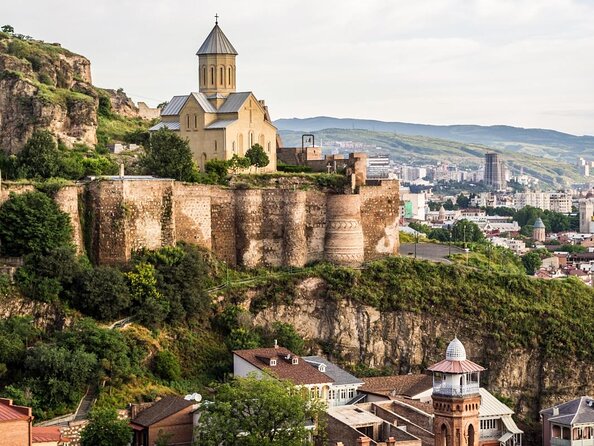
- See Tbilisi from above: Narikala Fortress gives you broad views across the old town and river.
- Ride the cable car: The trip connects the lower city with the fortress area and saves some uphill effort.
- Walk through the city’s oldest quarters: Metekhi, the bath district, Sioni Cathedral, and Anchiskhati Basilica each show a different side of Tbilisi.
- Taste Georgian wine: The wine stop adds a local food-and-drink element to what could otherwise be a church-and-monument walk.
- Learn from a local guide: Guides named Ana, Aana, Annie, and Anna have been praised for warmth, patience, historical knowledge, and practical help.
- Plan for uneven ground: This is not a passive sightseeing ride. You will walk between several stops and climb around the fortress area.
A fast introduction to Tbilisi’s old town
At $100 per person, this is priced above a simple walking tour, so the value rests on what you want from your first day. You are paying for a guide, a planned route, hotel pickup and drop-off, the cable-car element, and wine tasting. Meals and accommodation are not included.
For someone with only a short stay, the tour packs many of Tbilisi’s main sights into roughly two to four hours. That makes it useful as an orientation tour. You can learn where the old town sits, understand the city’s religious and royal past, and decide which areas deserve a slower return visit.
The schedule is fairly brisk. Thirty minutes at Metekhi Cathedral and another 30 minutes at Narikala Fortress give you time for explanations and photographs, but not a long independent visit at either site. The route works best if you want a guided overview rather than hours inside museums or churches.
more wine tastings around Tbilisi
- Day Trip to Kakheti Wine Region Including 9 Wine Tastings
★ 5.0 · 2,774 reviews - Kakheti Wine Region: Signagi and Bodbe Tour with 10 Wine Tastings
★ 5.0 · 1,019 reviews - Tbilisi:Mtskheta,Jvari,Bazaar,wine tasting,Chronicles of Georgia
★ 5.0 · 730 reviews
Metekhi Cathedral and the first view of the city
The tour begins at Avlabari, a practical starting point for reaching Metekhi Cathedral. The church sits above the Mtkvari River and is closely tied to the founding story of Tbilisi.
The first church on this site was built by King Vakhtang Gorgasali in the sixth century. He is also regarded as the builder of Tbilisi. The name Metekhi refers to the territory around the palace, a clue that royal residences once occupied this part of the city.
Your guide can help connect the church to the wider story of Tbilisi, rather than treating it as just another old building. Allow about 30 minutes here. Admission is free, so this stop adds historical weight without adding an entry fee.
The setting also helps you get your bearings. From the elevated ground near Metekhi, you begin to see how tightly the old city is arranged around the river and surrounding slopes.
Narikala Fortress and Tbilisi from above
From the lower old town, the cable car takes you toward the Narikala Fortress area. The ride is one of the tour’s most practical features because it gives you an aerial view of the city while avoiding at least part of the climb.
Narikala occupies the highest point in the old town. Its origins reach back to the sixth century, though the fortress has been damaged and rebuilt through many periods of conflict. Its changing names include the Fortress of Envy, Mother Fortress of Tbilisi, and NarinKala.
You get around 30 minutes here. That is enough to hear the main story, look across the city, and take photographs. The fortress itself is more about walls, position, and views than a polished museum visit. Wear shoes suited to uneven surfaces, and expect some walking around the site.
The view is the payoff. You can look down toward the historic lanes, the river, the bath district, and the newer parts of Tbilisi. If you want a longer fortress visit or a quiet photography session, you may need to return on your own.
The Botanical Garden, ravine, and sulphur baths
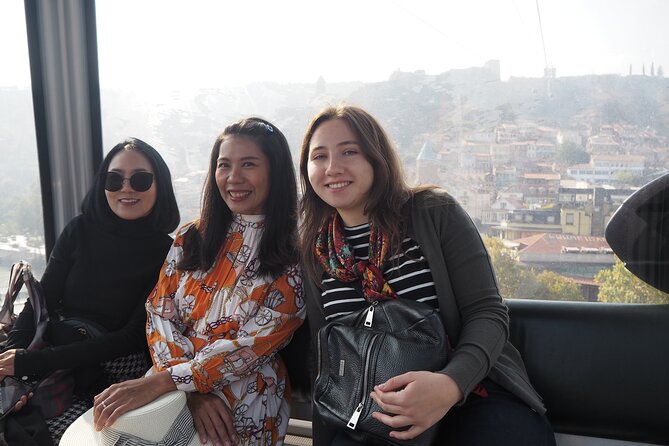
The route continues through the Botanical Garden area and the bath district. The garden began as a royal garden in the seventeenth century and now covers 97 hectares, with more than 3,500 plant species from different parts of the world.
The supplied timing does not give a separate duration for the garden, so treat this part as a passage through the area rather than a full botanical visit. If you are hoping to explore all 97 hectares, this tour will not provide enough time. Its value is in showing you the setting beside the old town and the ravine.
The bath district is one of the most important stops for understanding Tbilisi. Sulphur water flows through the gorge, and the area preserves parts of the old defensive wall. It is also linked to the famous story of King Vakhtang killing a pheasant, a tale connected with the city’s creation.
The name Tbilisi is associated with warm water, and the baths are more than a pretty old-town corner. They point to the natural feature that helped shape the city. You will also see the district where early tanners worked and where urban life developed around the water.
This is a good place to slow down mentally, even if the walking pace remains steady. Look at the relationship between the gorge, the baths, the lanes, and the old walls. That connection is easy to miss if you only visit isolated monuments.
more days out of Tbilisi to compare
- Old Tbilisi Tour: Private Walking Tour With Wine Tasting
★ 5.0 · 273 reviews - Private Tbilisi Food Tour: 9 Tastings Walk in Bohemian District
★ 5.0 · 227 reviews - Tbilisi Food Tour in a Local Family
★ 5.0 · 113 reviews - Private Wine Tasting in Prince Karalashvili Wine Cellar. Tbilisi
★ 5.0 · 63 reviews
Sioni Cathedral and the small lanes of Old Tbilisi
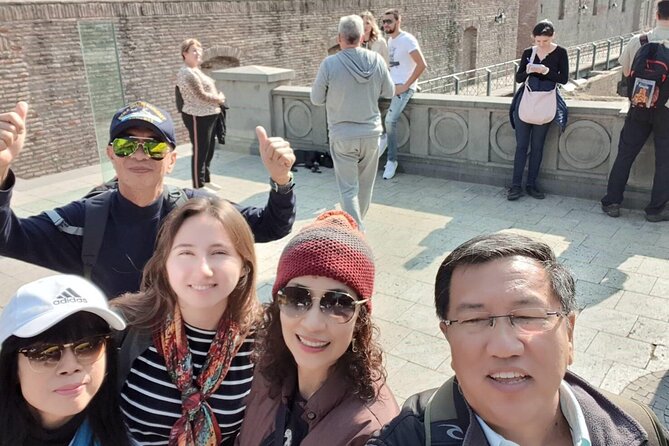
After walking through Old Tbilisi, the route reaches Sioni Cathedral. The church dates to the seventh century and contains the cross associated with Saint Nino, the enlightener of Georgia.
The stop lasts about 30 minutes and admission is included. Sioni is especially useful for showing the city’s religious importance and distinctive church architecture. Your guide can give the building context that you would likely miss if you simply stepped inside for a quick look.
Keep your clothing respectful for church visits. The provided information does not list a formal dress code, but modest clothing is a sensible choice for religious sites.
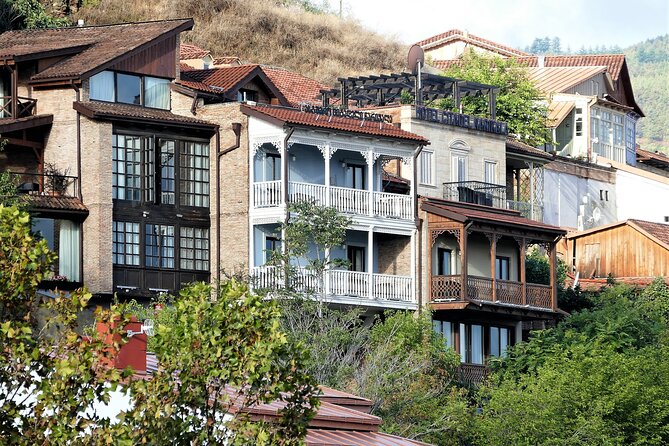
The narrow streets around Sioni are part of the appeal. Tbilisi’s old town is not arranged like a single open-air monument. It is a mix of lanes, courtyards, churches, balconies, shops, and changing elevations. A guide helps you connect these pieces and avoid spending your limited time wandering without direction.
The Bridge of Peace and modern Tbilisi
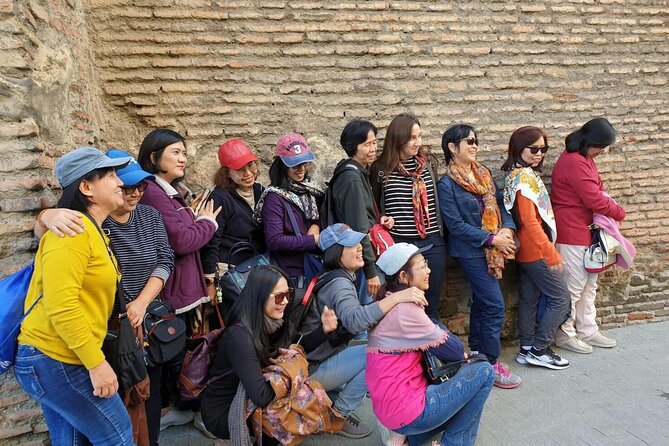
The Bridge of Peace provides a sharp change of mood. Its modern glass-and-steel design crosses the Mtkvari River and contrasts with the nearby churches, fortress walls, and older streets.
The stop lasts about 15 minutes and is free. That is enough for photographs and a short explanation, but not an extended architectural visit. The bridge is useful in this tour because it prevents the city story from becoming stuck in the distant past.
You see old Tbilisi as a living capital, not only as a collection of historic buildings. The brief stop also gives the route a visual pause before the final churches and streets.
Anchiskhati Basilica and Rezo Gabriadze Theatre
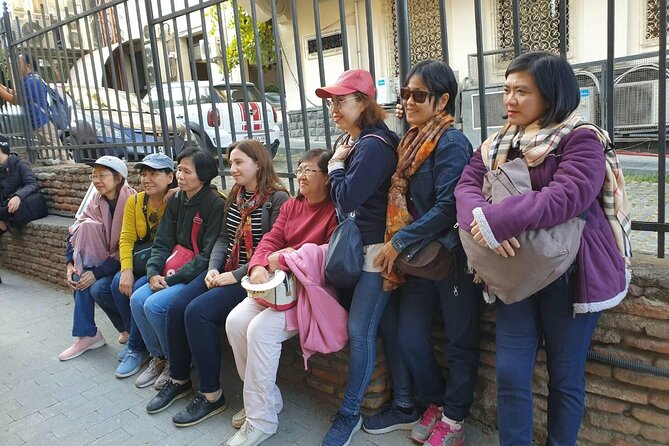
The tour finishes at Anchiskhati Basilica on Ioane Shavteli Street. It is described as the oldest church in Tbilisi and continued functioning during the Arab occupation of the city.
You have about 20 minutes here, with admission free. Anchiskhati is a fitting ending because it brings you back to the city’s early Christian foundations after the modern Bridge of Peace. The guide’s stories are important at this stop, since the building’s significance may not be obvious from its modest exterior.
Along the way, you pass the Rezo Gabriadze Puppet Theatre. Its architecture has made it popular with people exploring the old town, and it adds a playful note to a route otherwise shaped by fortresses, churches, and royal history.
The official end point is Anchiskhati Basilica rather than your hotel. The tour description also lists hotel pickup and drop-off as a feature, so confirm how that return transfer works for your selected booking. The stated meeting point is Avlabari, while the end point is at Anchiskhati.
What the wine tasting adds
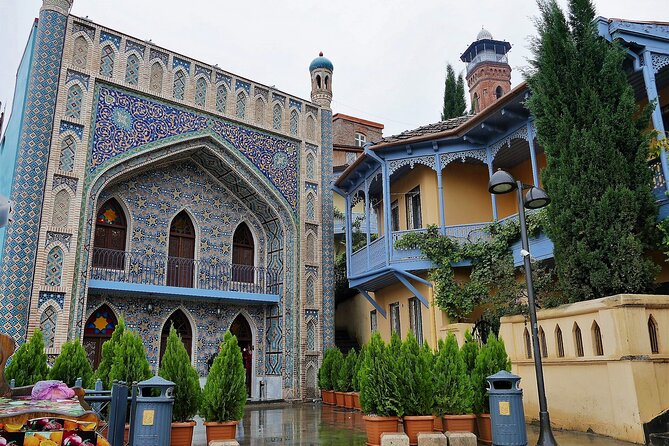
The title includes wine tasting, an important part of the experience for anyone interested in Georgian culture. The provided details do not specify the venue, number of tastings, grape varieties, or whether food is served, so you should not book this expecting a full winery visit or meal.
Instead, think of it as a short cultural tasting attached to a city tour. It gives your guide a chance to explain a part of Georgian life that does not fit neatly into a church or fortress stop. Since lunch and other meals are excluded, you should plan to eat separately.
The lack of detail is worth noting. If wine is your main reason for booking, ask the operator what the tasting includes before paying. If it is a pleasant extra after seeing the old town, it fits the tour well.
The guide can make or break the pace
The strongest pattern in the feedback is the guide. Ana, Aana, Annie, and Anna are names associated with this operator, and the comments describe guides who are friendly, patient, professional, and attentive to families.
Several comments point to strong explanations of Georgian history and culture. One family group included young children, and the guide kept them involved. Another account describes help with local vendors and shopping, while a different one notes advice about what to do during free time and help arranging extra activities.
You should treat these as useful signs, not a promise that a particular guide will lead your departure. Guide assignments can change. If you have a strong preference for a named guide, request it when booking, but expect the actual guide to depend on availability.
The guide style also seems personal rather than purely scripted. One account describes starting with a guide and ending as good friends, while others point to patience and care with children. That matters on a short walking tour, since a rushed or silent guide would make the route feel like a checklist.
One practical note from the feedback is that the guide may have evening study commitments. If you are booking a late departure, confirm the timing carefully and avoid delaying the group.
Group size, walking, and timing
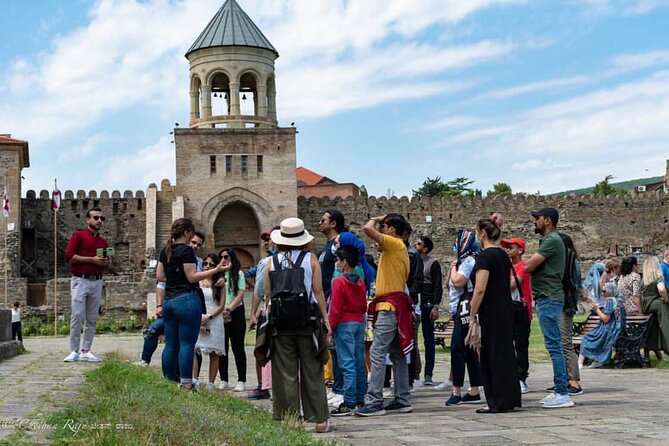
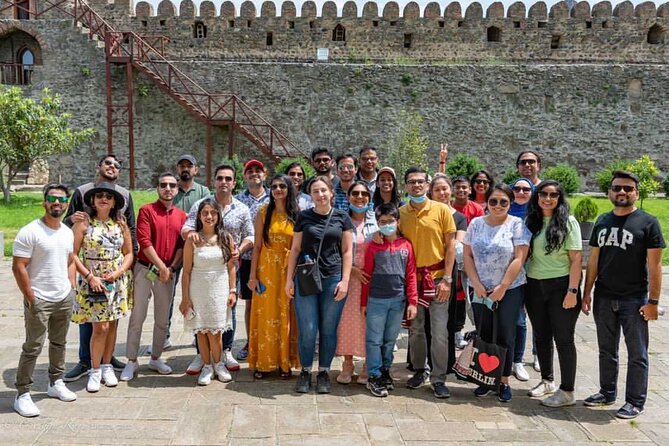
The main description presents this as a small-group tour with a maximum of 10 people. The additional information gives a maximum of 40, so there is a real discrepancy. If a small group is central to your decision, ask Travel To Georgia Tours to confirm the expected group size before booking.
A group of 10 allows easier questions and better contact with the guide. A group closer to 40 would change the feel, especially in narrow old-town streets and at busy viewpoints.
The tour lasts approximately two to four hours. The difference is wide enough to affect your plans, so leave some room before a timed meal, museum entry, or evening performance. The route includes walking between stops, hills near Narikala, and uneven historic streets.
The operator says there are no strict restrictions, but advises against taking the tour if you cannot walk. Moderate physical fitness is expected. Hotel pickup and drop-off help with transport, but they do not remove the walking involved once you reach the old town.
Is $100 a fair price?
The price is fair if you value convenience and interpretation. A self-guided visit could cover the churches, bridge, bath district, and fortress area for less, especially since several admissions are free. But arranging transport, finding the cable car, understanding the sites, and fitting everything into one short outing takes time.
At $100, the most important inclusions are the local guide, hotel service, cable-car component, and wine tasting. You are also buying a clear route through a city where the old streets can feel confusing on a first visit.
The value drops if you already know Tbilisi, prefer long independent visits, or mainly want a wine-focused outing. It also drops if the group reaches the stated maximum of 40 and you expected an intimate walk.
For a first day in Tbilisi, the tour makes the most sense when your time is limited and you want both famous sights and useful historical context. You can then return to the bath district, fortress, or old lanes at your own pace.
Who should book this Tbilisi walk?
I would choose this tour for a first-time visitor with a half-day available, especially if hotel pickup matters or you want an English-speaking guide to explain the city’s layers. Families may also find the guided structure useful, though younger children need to manage the walking and hills.
It suits people who want a broad introduction rather than a specialist visit. You will see churches, a fortress, the bath district, a garden area, a modern bridge, a theatre, and taste Georgian wine in one compact outing.
I would look elsewhere if you want a long botanical garden visit, an in-depth fortress exploration, a full meal, or a detailed wine tour. I would also confirm the group size and wine arrangements before booking.
Free cancellation is available up to 24 hours before the start time for a full refund. Changes or cancellations made less than 24 hours ahead are not accepted, and the cut-off uses Tbilisi local time.
Should you book it?
Book this tour if you want Tbilisi explained as a connected story, from the royal site at Metekhi to the old sulphur baths, hilltop Narikala, ancient churches, and modern Bridge of Peace. The route is efficient, the guide can add real value, and the cable car makes the city’s steep setting easier to grasp.
Skip it if you prefer to wander slowly or want the wine tasting to be the main event. Before booking, ask two questions: Will the group be closer to 10 or 40, and what exactly does the wine tasting include? If the answers suit you, this is a useful first look at Tbilisi with enough character to guide the rest of your stay.
FAQ
How long does the Tbilisi Walking Tour last?
The experience lasts approximately two to four hours. The exact length may depend on the pace of the group and the time spent at each stop.
Is hotel pickup and drop-off included?
Hotel pickup and drop-off are listed as features of the tour. The stated meeting point is Avlabari, and the listed end point is Anchiskhati Basilica, so confirm the exact transfer arrangement when booking.
Is the cable-car ride included?
The tour title includes the cable car, and the route takes you toward Narikala Fortress. The supplied information does not provide separate cable-car ticket details, so confirm the ticket arrangement with the operator.
Is wine tasting included?
Wine tasting is part of the experience title. The supplied details do not state the venue, quantity, grape varieties, or food pairing, so ask Travel To Georgia Tours for those specifics before booking.
How much walking is involved?
You should expect a walking-based tour through Old Tbilisi, with hills and uneven surfaces around Narikala Fortress. Moderate physical fitness is recommended, and the operator advises against taking the tour if you cannot walk.
What happens if I need to cancel?
You can receive a full refund if you cancel at least 24 hours before the experience starts. Cancellations or changes made less than 24 hours before the start time are not accepted for a refund.
More Walking Tours in Tbilisi
- Tbilisi Walking Tour Including Cable Car and Traditional Bakery
★ 5.0 · 1,310 reviews - Tbilisi:Evening Walking & Talking Tour with Wine & Boat Ride
★ 5.0 · 572 reviews - Old Tbilisi Highlights walking tour with wine & 10 tastings
★ 5.0 · 276 reviews - Tbilisi Old Town Walking Tour with a Local Guide
★ 5.0 · 168 reviews
Recently added around Tbilisi
- 2-Day Private Wine Tour to Kakheti from Tbilisi★ 5.0 · 3 reviews
- Kakheti wine region – Private Tour★ 5.0 · 3 reviews
- 17 Day Private Tour through Georgia★ 5.0 · 3 reviews
- Tbilisi and Mtskheta cities private, cultural tour★ 5.0 · 3 reviews
- Kakheti With Top Destinations★ 5.0 · 3 reviews
- Tbilisi City Tour with Street Photography★ 5.0 · 3 reviews
- Jvari monastery & Mtskheta – Half day group tour from Tbilisi★ 5.0 · 3 reviews
- Tbilisi City, Jvari Monastery, Uplistsikhe caves, Mtskheta city Private Day Trip★ 4.5 · 3 reviews
Tbilisi Tours, compared.
Day Trip to Kakheti Wine Region Including 9 Wine Tastings
Read our review →
Highlights of Caucasus Mountains-Jinvali,Ananuri,Gudauri,Kazbegi(Group tour)
Read our review →

Tbilisi Walking Tour Including Cable Car and Traditional Bakery
Read our review →

Kakheti Wine Region: Signagi and Bodbe Tour with 10 Wine Tastings
Read our review →
Mtskheta,Jvari,Bazaar,wine tasting,Chronicles of Georgia
Read our review →Browse the lists this tour appears in