

Reviewed · TBILISI TOURS
Tbilisi Walking Tour Including Cable Car and Traditional Bakery
The best part of this four-hour Tbilisi walk is the mix of old churches, modern city sights, hilltop views, and a small taste of daily Georgian life. You begin near Avlabari, ride the cable car to Mother of Georgia, then work your way through the Old Town to a traditional bakery and the sulfur-bath district.
I like the easy-to-follow route and the way it covers many major sights without requiring a full day. I also like the food stop: a Georgian pie and lemonade give the tour a local flavor that a sightseeing loop alone would miss.
The main consideration is pace. Most people find it comfortable, but you may prefer a faster walk, especially if you already know central Tbilisi. The cable car can also stop running in windy weather.
Key points to know before booking
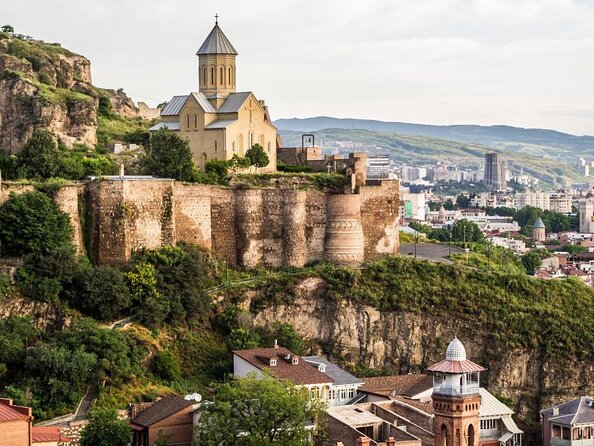
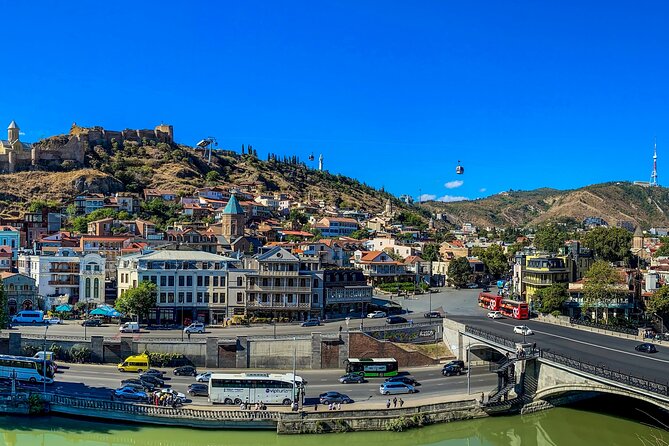
- A broad first look at Tbilisi: See Metekhi Cathedral, Rike Park, the Bridge of Peace, several churches, Abanotubani, and Leghvtakhevi Waterfall.
- The cable car adds real value: The ride from Rike Park gives you a quick climb above the city and leads to Mother of Georgia.
- Food is included: You receive a traditional Georgian pie and local lemonade at a tone bakery.
- English-speaking guides shape the experience: Guides including Soso, Ana, Nini, Shoti, Dimitri, Nika, and Elle have been praised for clear explanations, warmth, and good group management.
- The route ends in the Old Town: Finish at Meidan Bazar, well placed for independent exploring afterward.
- Plan for church dress rules: Shorts are not permitted inside churches, and women must cover their heads.
Why this is a useful first morning in Tbilisi
At $19 per person, this is priced as an accessible introduction rather than a specialist historical walk. The cable car ride and included bakery snack make the price particularly fair, since you are not paying only for a guide and a pavement tour.
I would book it near the start of a Tbilisi stay. The route gives you a working map of the center, points out places you may want to revisit, and explains the basic story behind Georgia’s capital. Afterward, you can return to a church, explore the Old Town lanes, or settle into a sulfur bath with a better sense of where you are.
The tour starts at 10:00 am near M/S Avlabari. The meeting location is connected with a social space called Traveler’s Meeting Point, where you can meet the guide and group. The exact meeting point deserves attention when you book, since one past participant needed help finding it. The company provides online support, so check the directions and contact details before setting out.
The route includes hills, steps, uneven Old Town paving, and several hours on foot. Most people aged five and above can take part, but comfortable shoes are essential. The itinerary is suitable for families, although younger children may tire during the later section.
more walking tours in Tbilisi
- Tbilisi:Evening Walking & Talking Tour with Wine & Boat Ride
★ 5.0 · 572 reviews - Old Tbilisi Highlights walking tour with wine & 10 tastings
★ 5.0 · 276 reviews - Old Tbilisi Tour: Private Walking Tour With Wine Tasting
★ 5.0 · 273 reviews
Metekhi Cathedral and Tbilisi’s founding story
The opening sightseeing section introduces Tbilisi from the left bank of the Mtkvari River. Metekhi Cathedral sits dramatically on a cliff above the water, a strong first view of the city’s old religious and royal center.
The church is linked by tradition with King Vakhtang Gorgasali, the ruler often credited with founding Tbilisi. The guide explains the legends around the site, including the story of Saint Shushanik and the church’s connection with the Virgin Mary.
Near the cathedral, the monument to Vakhtang Gorgasali adds a human figure to the setting. You hear about his long struggle with Sasanian Iran, his relationship with Byzantium, and the traditional account of his role in establishing the capital. The stop is short, but it gives the rest of the walk a useful starting point.
I like this early portion because you are not simply handed a list of dates. The guide connects the river, the cliff, the church, and the king to the shape of Tbilisi today. If you want long interior visits or detailed theological discussion, this tour will feel too brief. Its aim is orientation.
Europe Square, Rike Park, and the ride uphill
From Metekhi, the group crosses Europe Square and continues toward Rike Park. This is a good place to hear about Georgia’s relationship with the European Union, a subject that matters greatly in modern Georgian public life.
Rike Park is a newer recreational area on the left bank of the river. Its open paths, fountains, climbing walls, children’s maze, giant chess boards, restaurants, and bars make it feel quite different from the old churches behind you. The park also provides the cable car’s lower station.
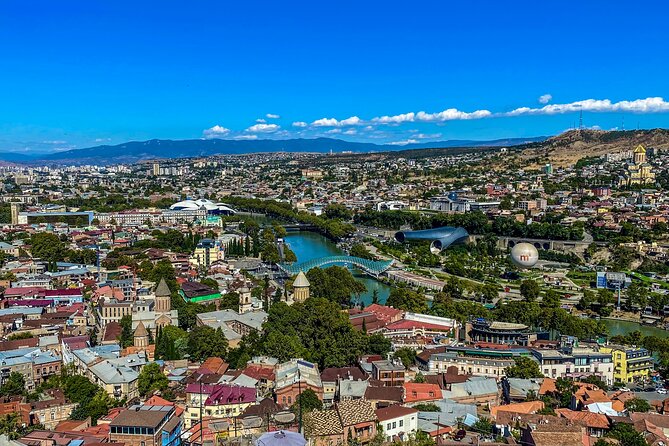
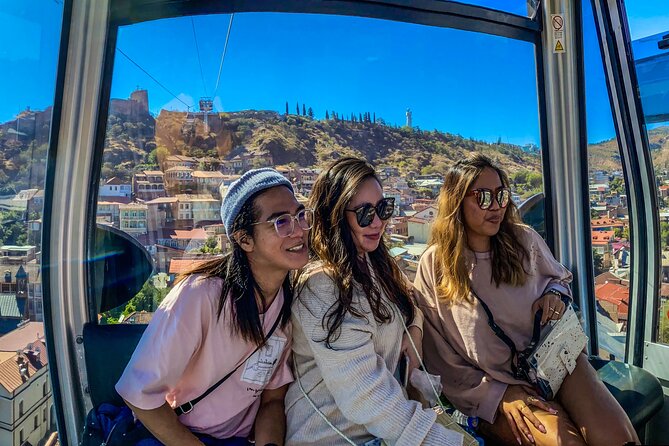
The Rike to Narikala cable car is included in the price. The ride itself takes about 10 minutes, though the full experience may depend on the line and operating conditions. From the upper station, you continue to the Mother of Georgia statue, with broad views over Tbilisi and the Mtkvari.
This is one of the tour’s strongest features. A walking tour can show you the lanes, but the cable car gives you a quick view of how the city fits together: river, hills, old roofs, modern structures, and the fortress area. Bring a camera, but keep your attention on the guide too. The viewpoint is more useful when you understand what you are seeing.
Wind is the important practical warning. The tour runs in all weather, but the cable cars do not operate during windy conditions. If that happens, the main walking route may continue, but the included ride cannot be guaranteed. Dress for the forecast, since there is no weather-based opt-out stated for the whole tour.
Mother of Georgia and the city’s two-sided welcome
Kartlis Deda, usually called Mother of Georgia, is a 20-meter aluminum statue on Sololaki Hill. Elguja Amashukeli designed the figure in 1958 for Tbilisi’s 1,500th anniversary.
Her pose carries a simple message. In one hand she holds a bowl of wine for friends. In the other she holds a sword for enemies. The image is a neat introduction to Georgian hospitality, pride, and the country’s long experience of defending its independence.
The stop lasts about 10 minutes, so do not expect a long visit around the hilltop. You will have time for views and photographs, along with the guide’s explanation, but not an extended fortress tour. That is worth knowing if Narikala is a main goal for you. This experience uses the hilltop as a viewpoint and cultural stop rather than a full fortress visit.
A different direction out of Tbilisi entirely:
- Day Trip to Kakheti Wine Region Including 9 Wine Tastings
★ 5.0 · 2,774 reviews - Highlights of Caucasus Mountains-Jinvali,Ananuri,Gudauri,Kazbegi(Group tour)
★ 5.0 · 2,682 reviews - Day Trip to Kazbegi and Gudauri
★ 5.0 · 2,009 reviews - Day Trip to Mtskheta Gori and Uplistsikhe
★ 5.0 · 1,801 reviews
The Bridge of Peace and Tbilisi’s modern face
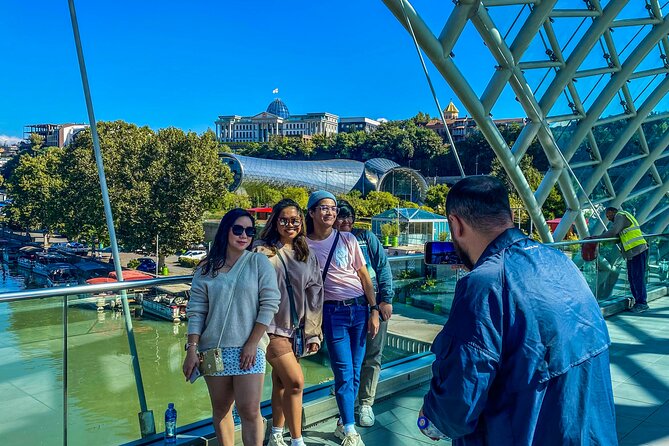
After descending, the route reaches the Bridge of Peace, a curved glass-and-steel pedestrian bridge over the Mtkvari. Opened in 2010, it was shipped from Italy in 200 unassembled sections and fitted together in Tbilisi.
More than 10,000 LED bulbs light the bridge each evening, switching on 90 minutes before sunset. Since this tour begins in the morning, you will see the structure in daylight unless you choose an evening option. The morning schedule is better for seeing details and avoiding a late finish, while an evening departure may offer a different atmosphere around the river and Old Town.
The bridge creates a useful contrast. In one direction you have Rike Park and newer architecture. In the other, you move toward narrow streets, old balconies, religious buildings, and bathhouses. I enjoy this change of mood because it shows that Tbilisi is not an open-air museum frozen in one century.
Anchiskhati, Sioni, and a living religious center
The walk continues through upper Kala, one of the oldest parts of central Tbilisi. At the Patriarchate of Georgia, you pause for an introduction to the country’s Orthodox religious leadership.
Anchiskhati Basilica is one of the most important historical stops. It dates to the sixth century and was built under Dachi Ujarmeli, according to historical sources. It originally carried the name of the Birth of the Virgin Mary. The present name came later, after an image from the Anchi church was transferred here in the seventeenth century.
The church also connects with Georgia’s tradition of manuscript writing and calligraphy through the Meskhishvili family. That detail helps you see churches not only as places of worship, but also as centers of art, copying, education, and family craft.
Sioni Cathedral follows. The church is tied by legend to Vakhtang Gorgasali and sits on a street bearing its name. The visits are short, usually around 10 minutes each. You should think of them as carefully chosen introductions, not guided church tours with every chapel and icon explained.
Dress matters here. Shorts are not allowed inside the churches, and women need to cover their heads. Carrying a scarf is the simplest solution. Modest clothing also makes it easier to enter without interrupting the group.
The leaning clock tower and Shardeni Street
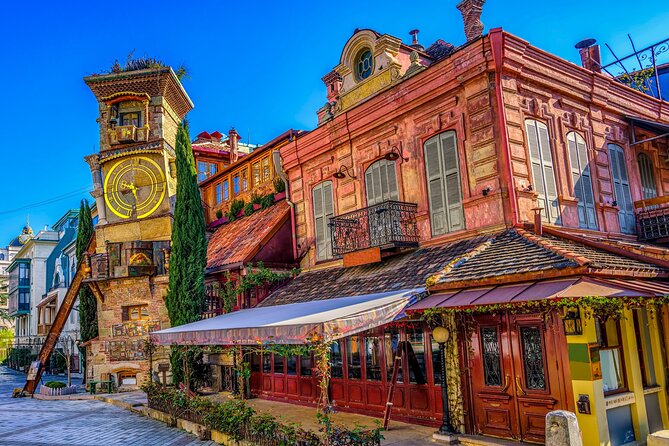
The Rezo Gabriadze Marionette Theater is one of Tbilisi’s most photographed modern attractions. Beside the theater, the clock tower looks deliberately crooked and is covered with handmade tiles designed by Rezo Gabriadze.
Every hour, an angel appears with a small hammer to ring the bell. At noon and 7:00 pm, the tower presents a short show called The Circle of Life. Because the standard tour schedule starts at 10:00 am, you may pass the tower outside a show time. The guide can still explain its design and role in the Old Town.
The route then reaches Jan Shardeni Street, a pedestrian lane lined with restaurants, cafés, and shops. It is one of the city’s best-known streets, though it is more polished and visitor-focused than some of the quieter lanes nearby. I see it as a useful orientation stop rather than a place to spend much time during the tour.
You can note a restaurant for later, but do not plan a long meal here. The group pauses only about five minutes.
Georgian bakery, pie, and the question of wine
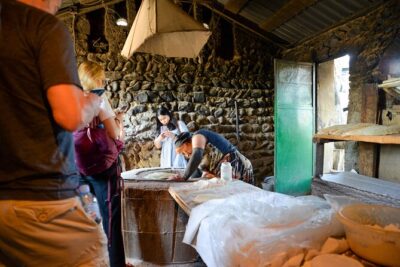
The tone bakery is the tour’s most hands-on local stop. A tone is a traditional Georgian clay oven, and the included tasting is a Georgian pie with local lemonade.
The snack is modest, but it matters. Food gives you a quick connection to Georgian life, and the break helps after the church and Old Town sections. Some descriptions of this experience also refer to wine tasting, and several participants have specifically enjoyed wine alongside the bread and lemonade. However, the formal inclusions name only the traditional pie and lemonade, not a guaranteed wine tasting. If wine is a deciding factor, confirm it directly before booking.
The food stop is not meant to replace a full Georgian meal. You may want to arrange lunch afterward, especially since the tour can finish around 2:00 pm depending on the pace and stops.
The Tamada statue adds cultural context. A tamada is the toastmaster who guides a Georgian feast through a sequence of toasts. This is not simply a person who raises a glass now and then. The role involves memory, wit, hospitality, and a sense of occasion, which is why the statue fits naturally beside the food portion of the walk.
Abanotubani and Leghvtakhevi Waterfall
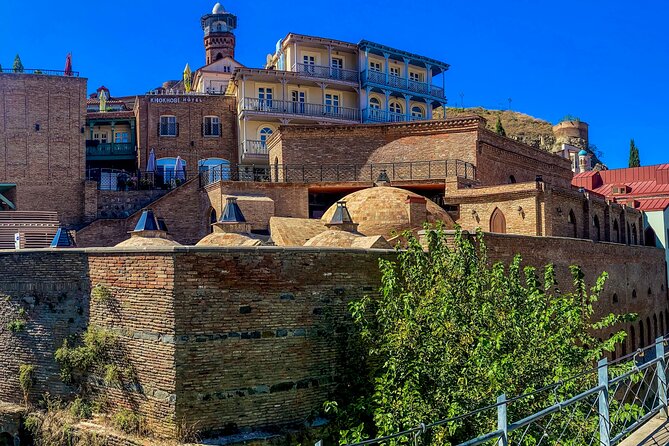
The final section enters Abanotubani, the sulfur-bath district of the Old Town. The name refers to the public bathhouses supplied by hot springs beneath the area. Their domed roofs and brick walls are among the most recognizable sights in central Tbilisi.
The guide gives you the basic story, but the five-minute stop is not a bathhouse visit. If you want to use a bath, return later and make a separate booking. This tour helps you locate the area and understand why it became important to the city.
Nearby, Leghvtakhevi Waterfall provides a surprising change of scenery. A short urban walk leads to water, stone walls, and a cooler-feeling corner inside the Old Town. The stop is brief, but it often becomes a favorite because it breaks up the churches, squares, and paved streets.
The tour ends at Meidan Bazar, in the center of the old city. This is a practical finish. You can continue toward the sulfur baths, cafés, restaurants, or more Old Town streets without needing transport back to the start.
Guides, group size, and the walking rhythm
The provider is Gamarjoba Georgia Tours, and the experience is offered in English. Guides named in guest feedback include Soso, Ana, Nini, Shoti, Dimitri, Nika, Elle, Iva, Toko, Elena, and Mika. The strongest pattern is clear speaking, friendliness, useful local stories, and careful attention to the group.
Soso is often singled out for balancing stories with free time and answering questions. Ana is praised for keeping the walk lively and well paced. Nini and Shoti are described as warm, engaging guides who add humor and cultural detail. Dimitri receives credit for patience and keeping the group together.
The maximum group size is 100, which is large enough to affect the feel of the walk. Actual groups may be smaller, but you should not assume a private or intimate tour. A larger group can make church entry, street crossings, and hearing the guide harder. The positive comments about group management are encouraging, but your experience will still depend on the day’s numbers and guide.
The pace is generally comfortable, with photo stops and time for questions. One fair criticism is that a few sections may feel slow if you prefer to keep moving. I would choose this tour for explanation and orientation, not for covering every corner of Tbilisi at speed.
Who should book this Tbilisi walk?
I would recommend it to first-time visitors, people with only a short stay, and anyone who wants a clear introduction before exploring alone. It works well for couples, families with children aged five or older, and solo visitors who like meeting a group at the start of the day.
It is also a good fit if you want several experiences bundled into one low-cost outing: viewpoints, churches, a cable car, a bakery tasting, and the Old Town’s main landmarks. The route gives you enough information to decide what deserves a second visit.
You may want another option if you dislike group tours, want lengthy time inside churches, need a wheelchair-friendly route, or care most about a guaranteed wine tasting. The supplied details do not promise full accessibility, and the route’s hills, steps, and uneven paving may be tiring.
Free cancellation is available up to 24 hours before the start time for a full refund. Changes or cancellations inside that 24-hour window are not accepted for a refund. Optional guide gratuities are not included.
Should you book it?
For $19, I think this is a strong-value way to get your bearings in Tbilisi. You see the city from above, walk through its oldest districts, visit important churches, sample Georgian food, and finish in the center where you can continue on your own.
Book it if you value a friendly English-speaking guide and a well-paced overview. Skip it if you already know the Old Town or want a deep specialist tour. For most first visits, especially on the first morning, this is a practical and enjoyable introduction with enough local flavor to make the city feel more than a collection of photo stops.
FAQ
How long does the Tbilisi walking tour last?
The tour lasts approximately four hours. It starts at 10:00 am, and the route finishes in the center of the Old Town at Meidan Bazar.
Where does the tour start?
The meeting point is near M/S Avlabari in Tbilisi, close to public transportation. The provided meeting information also identifies Traveler’s Meeting Point as the place where the group meets.
Where does the tour end?
The tour ends at Meidan Bazar in the Old Town. From there, you are already in the center of Tbilisi.
Is the cable car ride included?
Yes. The cable car from Rike Park to the upper station near Narikala is included in the tour price.
What happens if the cable car is closed?
The cable cars do not operate during windy weather. The tour operates in all weather conditions, but the information provided does not promise an alternative ride if the cable car cannot run.
Is food included?
Yes. The tour includes a traditional Georgian pie and traditional Georgian lemonade at a tone bakery.
Is wine tasting included?
The formal inclusions list the pie and lemonade but do not list wine tasting. Some descriptions of the experience refer to wine tasting, so confirm this detail with the provider if it matters to your booking.
What should I wear to enter the churches?
Shorts are not allowed inside the churches, and women need to cover their heads. Dress for the weather and carry a scarf if needed.
Can children join the tour?
The minimum age is five. Most people can participate, but you should expect several hours of walking, hills, steps, and uneven paving in the Old Town.
Recently added around Tbilisi
- 2-Day Private Wine Tour to Kakheti from Tbilisi★ 5.0 · 3 reviews
- Kakheti wine region – Private Tour★ 5.0 · 3 reviews
- 17 Day Private Tour through Georgia★ 5.0 · 3 reviews
- Tbilisi and Mtskheta cities private, cultural tour★ 5.0 · 3 reviews
- Tbilisi City Tour with Street Photography★ 5.0 · 3 reviews
- Kakheti With Top Destinations★ 5.0 · 3 reviews
- Jvari monastery & Mtskheta – Half day group tour from Tbilisi★ 5.0 · 3 reviews
- Tbilisi City, Jvari Monastery, Uplistsikhe caves, Mtskheta city Private Day Trip★ 4.5 · 3 reviews
Tbilisi Tours, compared.
Day Trip to Kakheti Wine Region Including 9 Wine Tastings
Read our review →
Highlights of Caucasus Mountains-Jinvali,Ananuri,Gudauri,Kazbegi(Group tour)
Read our review →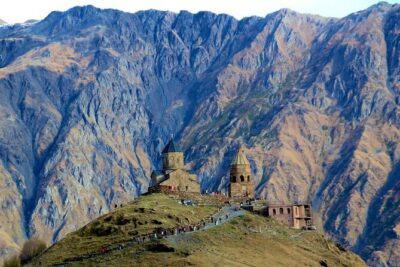
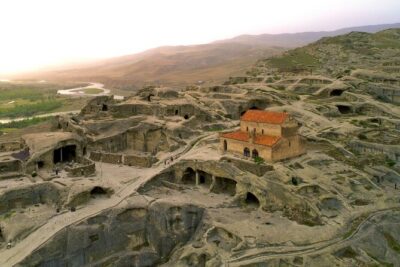
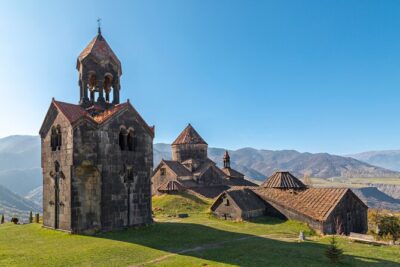

Kakheti Wine Region: Signagi and Bodbe Tour with 10 Wine Tastings
Read our review →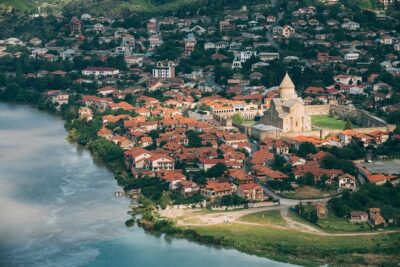
Mtskheta,Jvari,Bazaar,wine tasting,Chronicles of Georgia
Read our review →
Browse the lists this tour appears in