
Reviewed · TBILISI TOURS
Tbilisi with all its glory and originality. (group walking tour)
Tbilisi reveals itself best from above and at street level, and this tour does both. You begin at Metekhi Cathedral with views across the Old Town, then follow a route through sulfur baths, narrow lanes, balconies, the Peace Bridge, and a waterfall before finishing with Georgian wine in a 17th-century cellar. The small group limit of 15 should keep the walk personal.
I like the mix of city views and everyday culture, especially the stories about Italian courtyards, Tbilisoba, Georgian feasting, and the Tamada monument. I also like that the wine tasting is included in the $20 price. The main caution is practical: cable-car fares are extra, and one past booking was canceled on the day it was due to run, so avoid relying on this as your only plan.
Key points at a glance
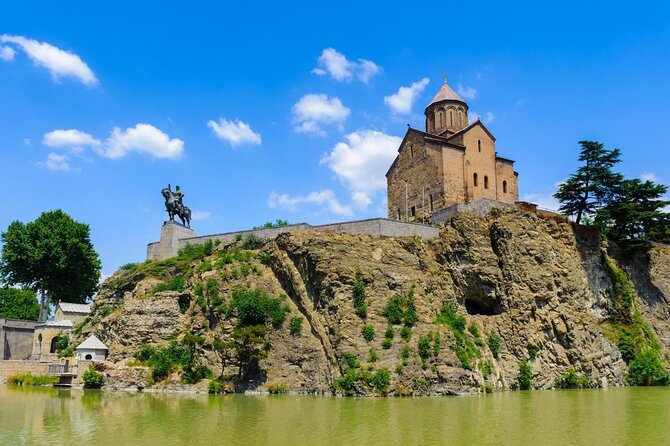
- A strong first look at Tbilisi: Metekhi Cathedral gives you an early view over the Old Town and Narikala Fortress.
- Cable-car views cost extra: Budget about $2 for the ride or rides used during the route.
- The tour covers more than monuments: Expect stories about baths, balconies, courtyards, festivals, food, and Georgian customs.
- A rare included extra: Wine tasting takes place in a 17th-century cellar, with comments from the winemaker.
- A compact group: The maximum is 15 people, a useful size for questions and street walking.
- Plan for real walking: The route includes slopes, old streets, the Fig Valley, and stops at several separated parts of central Tbilisi.
Why this tour works as a first day in Tbilisi
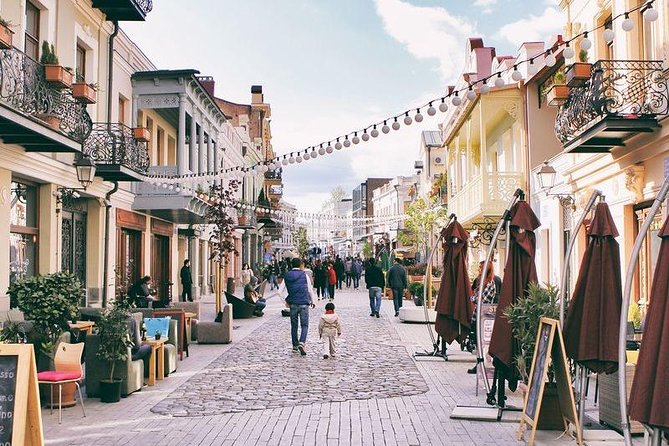
Tbilisi can feel confusing at first. The old city spreads along the river, steep hills rise on both sides, and grand churches, bathhouses, modern buildings, and worn wooden balconies sit close together. This four-hour route gives you a basic map of the center while explaining why the city looks this way.
The route begins at Alani1 on Vakhtang Gorgasali Street at 10:00 in the morning. That is a useful start time. You get the cooler part of the day for the first stretch, and you finish early enough to continue exploring, eat lunch, or return to a place that caught your eye.
This is a walking tour rather than a coach outing. That matters in Tbilisi, where the best details are often tucked into a courtyard, balcony, cellar, or side street. You should expect a fairly active morning, with some uphill or uneven walking, but the cable car helps with the steepest part of the route.
The English-speaking guide focuses on explanation rather than simply naming buildings. You hear about the city’s beginnings, Georgian legends, local habits, and the way Tbilisi residents have used their homes and public spaces over time. If you prefer a tour that gives you context as you walk, this approach should suit you.
more walking tours in Tbilisi
- Tbilisi Walking Tour Including Cable Car and Traditional Bakery
★ 5.0 · 1,310 reviews - Tbilisi:Evening Walking & Talking Tour with Wine & Boat Ride
★ 5.0 · 572 reviews - Old Tbilisi Highlights walking tour with wine & 10 tastings
★ 5.0 · 276 reviews
Metekhi Cathedral and the first view of Old Tbilisi
Metekhi Cathedral is a sensible place to begin because it gives you a quick visual introduction to Tbilisi. From the plateau, you can look across the Old Town toward Narikala Fortress and begin to understand how the river, hills, and defensive heights shaped the city.
The opening discussion covers the earliest settlement in the area, before the arrival of King Vakhtang Gorgasali, who is closely tied to the traditional story of Tbilisi’s founding. The tour also brings in ancient temples, royal affairs, and the familiar tale connected with the city’s sulfur springs.
This first stop lasts about 30 minutes, with admission included. It is not meant to be a long cathedral visit. Instead, the church and its setting provide a platform for the larger story of Tbilisi.
I like this beginning because it puts the city in front of you before you start walking through it. You are not just told that Tbilisi is old. You see the relationship between the high fortress, the river valley, and the tightly packed historic streets.
Kartlis Deda and the city from above
From the Metekhi area, the route uses the cable car to reach Kartlis Deda, the Mother of Georgia statue. The ride is an important part of the experience, since Tbilisi makes more sense when you can see its hills and rooftops from above.
Kartlis Deda holds a cup of wine in one hand and a sword in the other. The image is meant to represent welcome for friends and readiness against enemies. It gives the guide an easy way to discuss Georgian identity, hospitality, and the country’s complicated past without turning the stop into a lecture.
The viewpoint provides broad views over the Old Town and the surrounding hills. You can pick out the narrow historic streets, the red and brown roofs, the river, and the fortress area. Bring your camera, but also take a moment to use the view as a map. It helps you follow the rest of the walk.
The cable-car fare is not covered. The supplied price is about $2, so carry a little cash or make sure your payment method works locally. The route refers to cable-car travel more than once, including the ride toward the fortress from Rike Park, so you should treat the $2 as a guide rather than assume it covers every ride.
The stop itself is listed at about 30 minutes. That is enough for the ride, the viewpoint, and the guide’s explanation, but it is not a leisurely hilltop visit.
Sulfur Bath No. 5 and the story beneath Tbilisi
Tbilisi’s sulfur baths are among its most distinctive sights. The domed bathhouses sit in the Abanotubani area, where warm mineral water has shaped both the city’s name and its social life.
At Sulfur Bath No. 5, the guide explains the well-known founding legend involving a falcon and the hot springs. You also hear less familiar details about the bath district, including why only 15 of the original 65 baths remain and how the surviving baths acquired their names.
That kind of detail is useful because it turns a row of attractive domes into a working part of the city’s story. The bathhouses were not simply built for decoration. They served local residents and visitors, and their names reflect the different status or character of each establishment, from the plain No. 5 to more grandly named baths such as Royal and Variegated.
The stop lasts around 30 minutes. The tour does not list a bathing session, so do not expect time to use the baths yourself. If you want that experience, you would need to arrange it separately.
This is also a good place to ask questions about how Tbilisi’s hot springs fit into daily life. The guide’s focus on legends and lesser-known details should give you more than the usual quick photo stop.
A different direction out of Tbilisi entirely:
- Day Trip to Kakheti Wine Region Including 9 Wine Tastings
★ 5.0 · 2,774 reviews - Highlights of Caucasus Mountains-Jinvali,Ananuri,Gudauri,Kazbegi(Group tour)
★ 5.0 · 2,682 reviews - Day Trip to Kazbegi and Gudauri
★ 5.0 · 2,009 reviews - Day Trip to Mtskheta Gori and Uplistsikhe
★ 5.0 · 1,801 reviews
Fig Valley, the waterfall, and Tbilisi’s wooden balconies
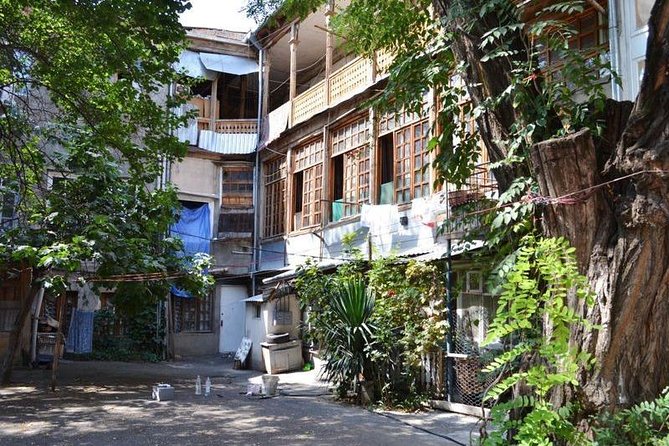
The walk continues through the Old Town and into the Fig Valley, where you reach a waterfall. This is one of the route’s pleasant changes of pace. After viewpoints and historic buildings, you get a small natural feature inside the city.
The waterfall stop is listed at about 20 minutes. That is enough to see it and continue along the valley, but the timing suggests a short visit rather than a long pause. Wear shoes that are comfortable on old streets and paths, since the route is not limited to smooth sidewalks.
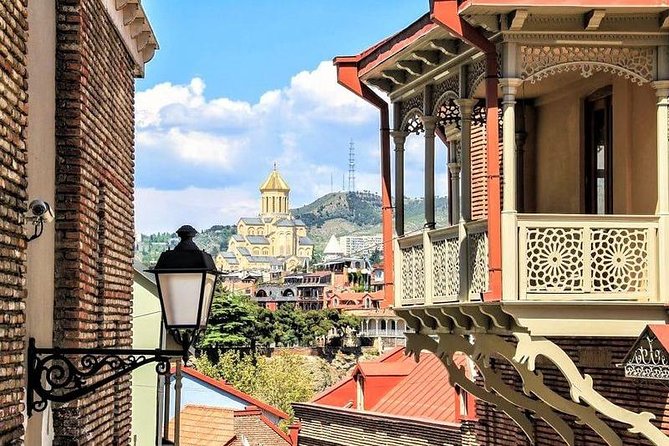
Along the way, look up at Tbilisi’s balconies. These wooden structures are one of the city’s signature details, and the guide explains how they were used in different periods. You also hear why no two balconies are exactly alike.
That point captures what makes the Old Town appealing. Tbilisi’s character is not confined to one church or fortress. It comes from the way houses were altered, repaired, extended, and decorated over time. A balcony can tell you something about family life, the street, and the city’s changing influences.
The walk here may appeal most to people who enjoy architecture without needing a formal museum visit. You are seeing the city’s private face from public streets.
The Peace Bridge, Rike Park, and the fortress ride
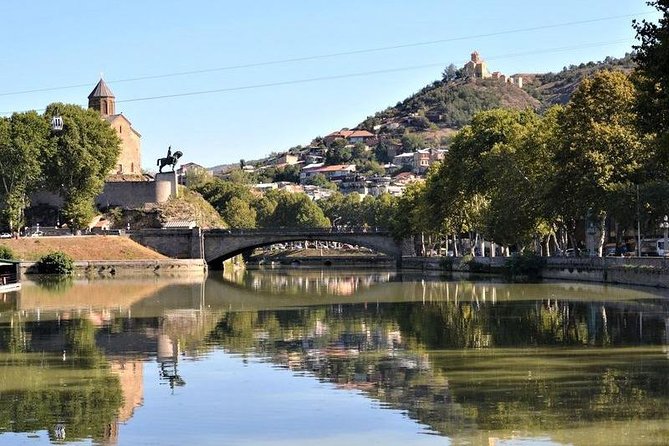
The Peace Bridge brings you into modern Tbilisi. Its glass and steel form contrast sharply with the old houses and bath domes nearby, which makes it a useful stop for talking about the city’s recent development.
The guide discusses the bridge’s symbolism and the opinions it has prompted among local people. That balance is welcome. A city tour should not treat every new structure as automatically beloved, especially in a historic center where modern design can provoke strong reactions.
You also hear about the unusual pipe-like structures in Rike Park. Their shape and purpose may seem puzzling at first, so the explanation gives the park more context than a simple walk across it.
From Rike Park, the route uses the cable car toward Tbilisi Fortress. This is another chance to see the small houses and narrow streets of the Old Town from above. The view helps connect the sections of the walk: the fortress, bath district, river, bridge, and residential lanes all begin to fit into one picture.
The Peace Bridge and Rike Park portion is listed at about 30 minutes. As with the earlier ride, the cable-car fare is extra. If you are watching your budget closely, add this cost before comparing the tour with other walking tours.
Old Town courtyards, Tbilisoba, and the Georgian feast
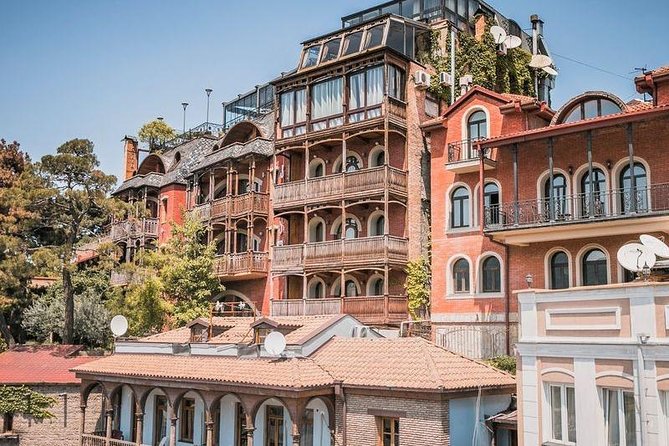
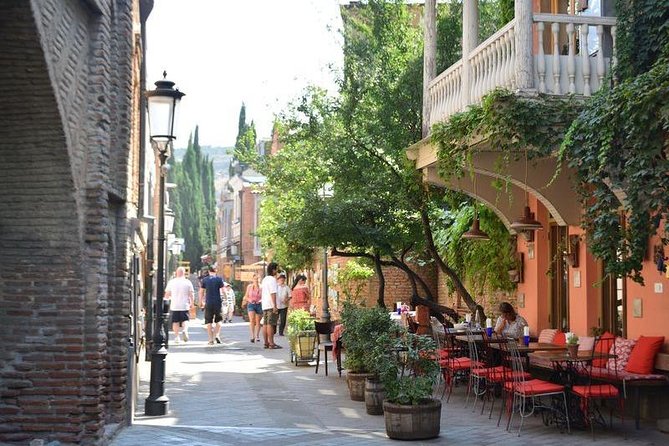
The final section moves away from big views and toward daily life. You visit Italian courtyards, hear about Tbilisi residents and local attitudes, and learn about Tbilisoba, the city’s colorful festival.
Italian courtyards are a particularly useful subject because they show how people lived in dense parts of the Old Town. These shared spaces are easy to miss if you are moving quickly from monument to monument. The guide’s attention to them gives you a better sense of the neighborhood as a place where people lived, not just a historic district for photographs.
The route also includes the Rezo Gabriadze theater, known for its distinctive tower and its small written jokes. Those details add humor to the walk and show a lighter side of Tbilisi’s public culture.
At the Tamada monument, the guide explains the Georgian feast. The tamada is the toastmaster, and the Georgian table has its own rules, rhythms, and expectations. This is more than a food stop. It gives you a way to understand the importance of hospitality, speeches, wine, and shared time in Georgian social life.
The tour description lists this part at 30 minutes, but it also says the wine tasting lasts an hour without restrictions and includes comments from the winemaker. The timing is not perfectly clear, so plan for the full experience to take roughly four hours, possibly a little longer if the tasting receives the time described.
The 17th-century cellar wine tasting
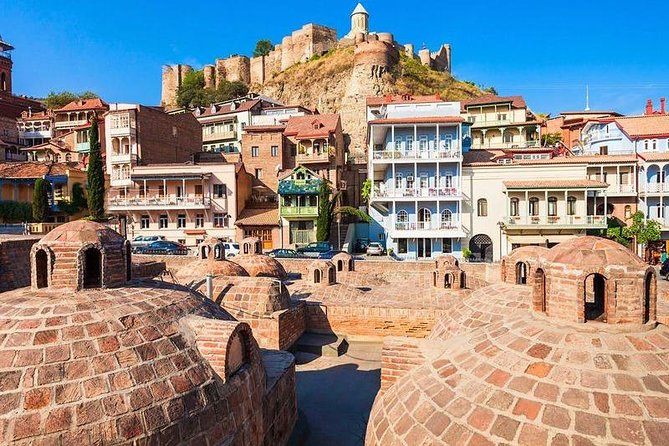
Wine is one of the strongest parts of this experience because it connects the tour’s history and culture in one place. The tasting takes place in a 17th-century cellar, where exclusive wines are stored, and it is included for people on the tour.
The winemaker provides commentary during the tasting. That makes it more useful than simply receiving a glass and moving on. You can listen for explanations of the wines and ask questions while the guide’s earlier discussion of Georgian hospitality is still fresh.
The tasting is described as lasting an hour without restrictions. Since the exact number of wines is not specified, you should not assume a particular lineup or quantity. The practical point is that this is not a rushed sample at the end of a long walk. It is intended as a proper pause.
You should also remember that dinner is not included. The tasting may help you understand Georgian wine, but it is not a replacement for a meal. Plan to eat separately after the tour, especially since the 10:00 start and four-hour duration put you near lunchtime when you finish.
Is $20 a fair price?
At $20 per person, the value is good if you want a guided introduction rather than a simple walk between sights. You are paying for about four hours of explanation, a route through several central districts, a small group capped at 15, and an included wine tasting in a historic cellar.
The extra cable-car fare keeps the headline price low, but it also means the true cost is slightly higher. The listed estimate is $2, and you should budget for that separately. Dinner is also not part of the price.
The group size is one of the better features. Fifteen people is small enough for the guide to manage questions and keep the group together in narrow streets, though it is not a private tour. If you want a quiet, highly flexible walk, a private guide would offer more control. If you want a low-cost orientation with room for interaction, this group size is sensible.
The overall rating supplied for the experience is 4.4 from 9 ratings. That is a positive but still small sample, so I would treat it as a useful signal rather than a guarantee.
What to know before you book
The meeting point is Alani1, 1 Vakhtang Gorgasali Street, and the tour starts at 10:00. It ends back at the meeting point, which makes planning the rest of your day easier.
Confirmation is provided at booking, and most people can take part. The route does require walking through the Old Town and Fig Valley, so choose practical shoes and be ready for some uneven ground or slopes.
The tour requires good weather and a minimum number of participants. If poor weather or low enrollment cancels it, you are offered another date or experience, or a full refund.
The standard cancellation rule allows a full refund when you cancel at least 24 hours before the start. Changes or cancellations inside that window are not accepted for a refund.
There was also a reported problem involving a same-day cancellation and taxi costs. The operator’s response was that the booking was canceled and refunded, but the episode shows why you should not book this as your only fixed plan when you have tight transport arrangements. Book ahead when possible, arrive at the meeting point with the address saved, and keep the day after the tour flexible enough to handle a change.
Who should book this Tbilisi walk?
I would choose this tour for a first visit to Tbilisi, especially if you want the basic geography of the center explained in one morning. It suits people who enjoy combining historic sights, viewpoints, architecture, folklore, and food culture.
It is also a good fit if you want a group experience without a large crowd. The limit of 15 keeps the format more personal than a standard city walk, while the $20 price remains modest.
You may want another option if you dislike walking, want a private pace, or care more about spending time inside individual churches and museums. This tour visits and explains several places, but it is designed as a broad city introduction, not a detailed inspection of every interior.
Should you book it?
Book it if you want a compact, story-filled introduction to Tbilisi with excellent city views and an included wine tasting. The mix of Metekhi Cathedral, Kartlis Deda, sulfur baths, the Fig Valley waterfall, Peace Bridge, Old Town courtyards, and Georgian feast customs gives you a useful first-day framework.
Skip it if you need a guaranteed departure on a very tight schedule, since the experience can depend on weather and minimum enrollment. For most visitors with a flexible morning, the $20 price plus roughly $2 for cable-car travel is a fair deal, and the cellar tasting adds something you will not get from a monument-only walk.
FAQ
Where does the Tbilisi walking tour start?
The tour starts at Alani1, 1 Vakhtang Gorgasali Street, Tbilisi, at 10:00 am.
Where does the tour finish?
The activity ends back at the starting meeting point.
How long does the tour last?
The tour lasts approximately four hours.
Is the cable-car fare included?
No. Cable-car travel costs about $2 and is paid separately.
Is wine tasting included in the tour price?
Yes. The wine tasting is free for participants and takes place in a 17th-century cellar with comments from the winemaker.
What is the maximum group size?
The tour accepts a maximum of 15 people.
Recently added around Tbilisi
- 2-Day Private Wine Tour to Kakheti from Tbilisi★ 5.0 · 3 reviews
- Tbilisi and Mtskheta cities private, cultural tour★ 5.0 · 3 reviews
- Kakheti wine region – Private Tour★ 5.0 · 3 reviews
- 17 Day Private Tour through Georgia★ 5.0 · 3 reviews
- Kakheti With Top Destinations★ 5.0 · 3 reviews
- Tbilisi City Tour with Street Photography★ 5.0 · 3 reviews
- Jvari monastery & Mtskheta – Half day group tour from Tbilisi★ 5.0 · 3 reviews
- Tbilisi City, Jvari Monastery, Uplistsikhe caves, Mtskheta city Private Day Trip★ 4.5 · 3 reviews
Tbilisi Tours, compared.
Day Trip to Kakheti Wine Region Including 9 Wine Tastings
Read our review →
Highlights of Caucasus Mountains-Jinvali,Ananuri,Gudauri,Kazbegi(Group tour)
Read our review →

Tbilisi Walking Tour Including Cable Car and Traditional Bakery
Read our review →

Kakheti Wine Region: Signagi and Bodbe Tour with 10 Wine Tastings
Read our review →
Mtskheta,Jvari,Bazaar,wine tasting,Chronicles of Georgia
Read our review →Browse the lists this tour appears in