
Reviewed · TBILISI TOURS
Old Tbilisi Tour: Private Walking Tour With Wine Tasting
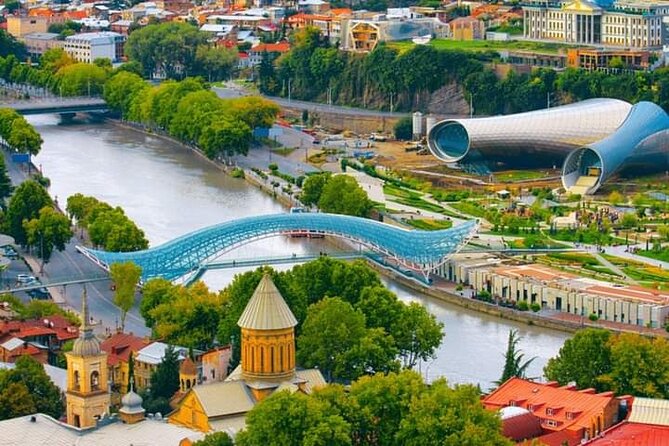
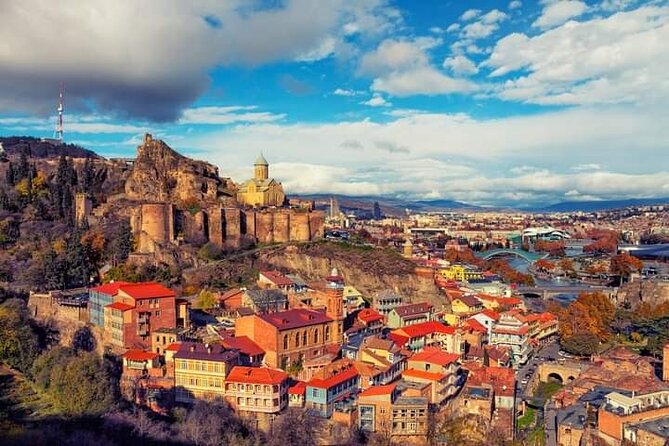
Tbilisi makes a strong first impression from above, and this tour begins with one of the city’s best views. You ride the cable car up to Narikala Fortress, look across the rooftops and Mtkvari River, then walk downhill through sulfur-bath streets, a gorge, churches, and modern Rike Park before finishing with Georgian wine.
I like the private format, since guides such as Luka, Lela, Mirian, Mariam, and Khatia have been praised for adjusting the pace and explaining details in a natural way. I also like the mix of major sights and small cultural details, from the Mother of Georgia statue’s bowl and sword to local wine and chacha.
The main consideration is physical effort. This is a walking tour with a fortress visit, a downhill route, and several stops, so it is best for you if two to three hours on foot sounds comfortable. Summer heat can also make morning or evening a better choice.
Key points to know before booking
- Cable car ride to Narikala Fortress: Your ticket is included, along with time to explore the old citadel and take in views of both city and forest.
- Private English-language guiding: Only your group takes part, with room to ask questions and request a slower or faster pace.
- A compact Old Tbilisi route: The walk links eight important sights in roughly 2 to 3 hours.
- Georgian wine tasting included: The tasting adds a genuine local-food connection rather than leaving the tour as a sightseeing checklist.
- Good early-trip orientation: The route covers central landmarks and can help you choose restaurants and activities for the rest of your stay.
- Free cancellation up to 24 hours ahead: Poor weather may lead to a new date or a full refund.
Why this route works as a first look at Tbilisi

Old Tbilisi is not a museum quarter sealed away from daily life. It is a mix of balconies, churches, bathhouses, modern design, traffic, cafés, river views, and quiet corners. A guide helps connect these pieces, especially when the city’s long past is not obvious from the street.
The route also has a useful shape. You start high at Narikala, then make your way down through Abanotubani and the old center before crossing toward Metekhi Cathedral. That gives you a broad view first and street-level detail afterward.
At $39 per person, the price is a good value if you want a private introduction rather than a large group walk. The cost includes the guide, cable car ticket, and wine tasting. It does not include hotel pickup, drop-off, or a tip for the guide. Group discounts are available, so the per-person value may improve for a larger private party.
The tour is offered in English and is booked, on average, about 19 days ahead. That does not mean you must reserve that far out, but it is a useful sign that popular dates can fill.
more wine tastings around Tbilisi
- Day Trip to Kakheti Wine Region Including 9 Wine Tastings
★ 5.0 · 2,774 reviews - Kakheti Wine Region: Signagi and Bodbe Tour with 10 Wine Tastings
★ 5.0 · 1,019 reviews - Tbilisi:Mtskheta,Jvari,Bazaar,wine tasting,Chronicles of Georgia
★ 5.0 · 730 reviews
Narikala Fortress and the cable-car view
The cable car is more than simple transport. It quickly lifts you above Old Tbilisi and gives you a clear sense of how the city sits around the Mtkvari River. Once at Narikala, you can walk around the surviving fortifications and examine the old stonework.
Narikala began in the 4th century as a Sasanian citadel called Shuris-tsikhe, meaning Invidious Fort. The Umayyads enlarged it in the 7th century, and King David the Builder added to it in the medieval period. The Mongols later gave it the name Narin Qala, or Little Fortress.
Much of what you see today dates from the 16th and 17th centuries. An earthquake damaged parts of the fortress in 1827, and some sections were later demolished. That mixture of surviving walls and missing pieces is part of the site’s character. You are not walking through a perfectly restored castle, but through a rough, open historic place with a long military past.
The viewpoint gives you two very different Tbilisi scenes. One side looks toward the city, with its dense streets and layered buildings. The other faces the peaceful forest of the Botanical Garden. I find that contrast useful because it shows how quickly Tbilisi changes from urban streets to wooded hills.
The fortress visit is listed at about 20 minutes. That is enough for a look around and photographs, though not enough for a slow archaeological study. Wear comfortable shoes, and be ready for a walking route rather than a quick stop beside the cable-car station.
Kartlis Deda, the Mother of Georgia
A short stop at Kartlis Deda follows the fortress. The 20-meter aluminum statue was designed by Georgian sculptor Elguja Amashukeli and erected in 1958 for Tbilisi’s 1,500th anniversary.
The figure holds a bowl of wine in her left hand for friends and a sword in her right hand for enemies. It is a simple image, but it gives you a memorable way to understand a part of Georgian identity: hospitality is important, but so is independence and defense.
You spend about 10 minutes here. The statue itself is the focus, and the hilltop setting adds to the view. This is not a long museum visit or an extended monument stop. It works best as a quick cultural explanation between the fortress and the old streets below.
Abanotubani and the sulfur-bath quarter
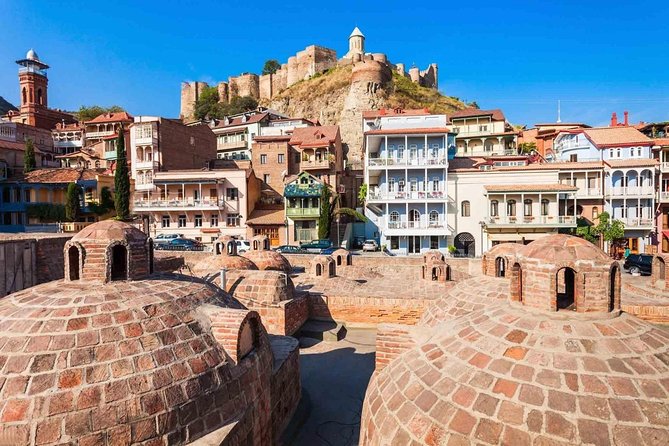
From Narikala, the route heads down to Abanotubani, the district associated with Tbilisi’s founding. According to local legend, sulfur springs here helped inspire the city’s name and its development in the 5th century.
The area still receives naturally heated sulfur water. The stated average temperature is 47 degrees Celsius, and the springs supply about 3 million liters of water each day. Those figures help explain why bathhouses became such a central part of the old city.
This is one of the places where a guide adds real value. Without context, you might see domed bathhouse roofs and move on. With an explanation of the hot springs and the founding legend, the district becomes easier to place in Tbilisi’s story.
The stop lasts about 20 minutes and is free to enter as part of the walking route. The tour does not include a bath session, so you should not expect time for bathing. Instead, you get an introduction to the quarter and its place in local culture.
more days out of Tbilisi to compare
- Private Tbilisi Food Tour: 9 Tastings Walk in Bohemian District
★ 5.0 · 227 reviews - Tbilisi Food Tour in a Local Family
★ 5.0 · 113 reviews - Private Wine Tasting in Prince Karalashvili Wine Cellar. Tbilisi
★ 5.0 · 63 reviews - Private Tour From Tbilisi to Kakheti Sighnaghi with Wine Tasting
★ 5.0 · 35 reviews
Leghvtakhevi Gorge and its small waterfall
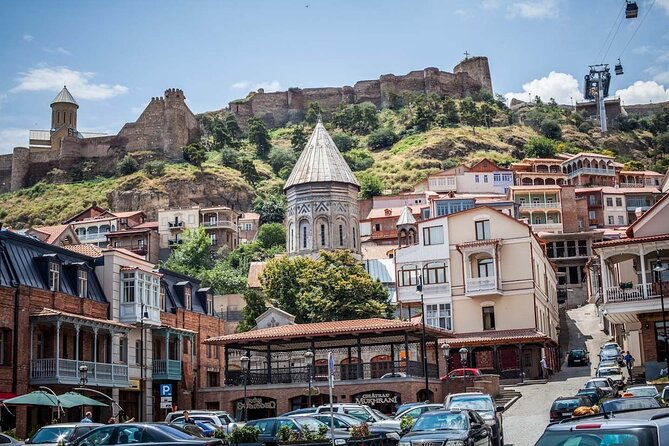
A narrow gorge in the middle of the capital leads to Leghvtakhevi Waterfall. The path is accessible to visitors and crosses the area near Tbilisi’s Lock Bridge. In hot weather, the cooler air around the gorge is a welcome change from the open streets.
The waterfall is not enormous, and that is worth knowing before you arrive. Its appeal comes from the setting: a small natural feature tucked inside the old city, reached by a short path rather than a long excursion outside town.
You spend about 10 minutes here. It is enough to enjoy the gorge, take photographs, and hear how the city’s natural features fit into its urban center. The path also gives the tour a change of pace after the bath district.
Jan Shardeni Street and Sioni Cathedral

Jan Shardeni Street, often called Chardin Street, is named for Jean Chardin, an 18th-century French traveler who visited Georgia. Today the street is associated with restaurants, bars, and late-night activity that can continue until about 5 a.m.
The stop is brief, around 10 minutes. I would treat it as a street introduction rather than a full nightlife tour. You get a feel for one of the old town’s social centers, but the daytime visit will not show the same mood as the evening hours.
Next comes Sioni Cathedral, one of Georgia’s holiest places. The first church on this site was built in the 5th century under Vakhtang Gorgasali. The present building dates from the 17th century and preserves the original cross associated with St. Nino from the 4th century.
The cathedral stop also lasts about 10 minutes. Dress and behave respectfully inside religious buildings. Your guide can provide the historical setting, while the visit itself gives you a quieter counterpoint to the busy streets outside.
The Bridge of Peace and Rike Park
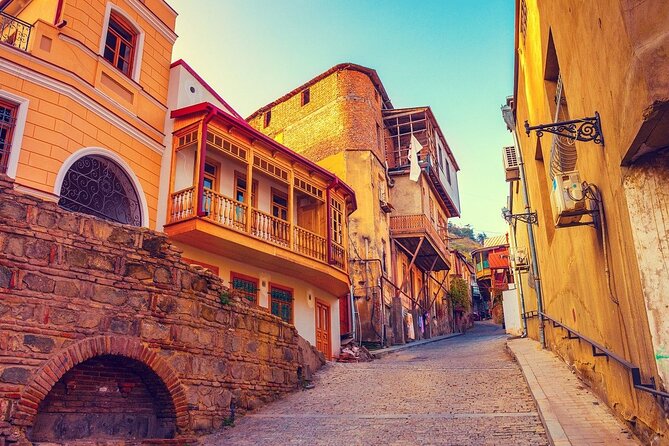
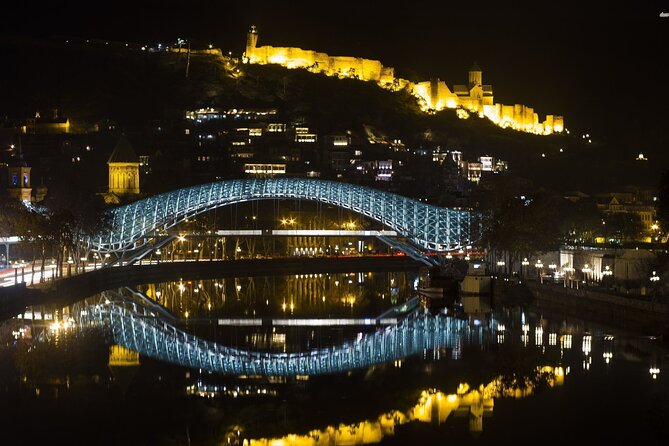
The Bridge of Peace is Tbilisi’s modern architectural statement. Opened in 2010, the glass-and-steel pedestrian bridge stretches 156 meters across the Mtkvari River and uses about 10,000 lamps.
It looks very different from Narikala, the bathhouses, and the old churches. That contrast is exactly why it belongs on a first Tbilisi route. The city is not only about medieval walls and traditional architecture. It also presents a modern, polished face along the river.
You have around 20 minutes here, including time around Rike Park. This is a good place for broad city photographs and a view back toward the older districts. The bridge is free, and the tour keeps moving rather than turning the park into a long separate visit.
Metekhi Cathedral and the finish near the river

The route continues through Rike Park to Metekhi Cathedral, officially the Church of the Nativity of the Mother of God. It sits on the left bank of the Mtkvari and is tied to several important Georgian stories.
Local tradition connects the site with the remains of St. Shushanik. In the churchyard, a statue of Vakhtang Gorgasali gives you another link to Tbilisi’s early history. The stop is planned for about 20 minutes.
Metekhi is also the meeting point, at Metekhi Church of the Nativity of the Mother of God on Metekhi Street. The activity ends back at this point, so you should plan your onward transport from there rather than expecting a hotel return.
Georgian wine gives the walk a local finish
Wine tasting is included, and it is one of the strongest parts of the experience for anyone curious about Georgian food and drink. Georgia has an old wine culture, and the tasting gives you a direct way to connect the country’s traditions with your time in Tbilisi.
The exact number of samples is not fixed in the tour details. One account described eight or nine wines, along with chacha, while another noted both wine and juice. I would expect a tasting rather than a full meal, and you should not assume every session offers the same number of pours.
The tasting venue can also become a useful recommendation point. One participant returned afterward to buy a bottle and enjoy it on a rooftop patio. Guides have also suggested good Georgian restaurants at reasonable prices, which is especially helpful on your first day in town.
If you do not drink alcohol, the mention of juice tasting is encouraging, but you should confirm the available nonalcoholic option when booking. The tour’s main focus remains wine, so this matters if you are avoiding alcohol completely.
What the private guide adds
The strongest feature here is not any single monument. It is the guide’s ability to adjust the experience. Luka has been praised for a relaxed manner, clear explanations, and suggestions for Georgian food. Lela is known for warm storytelling and for adding extra places when time and interest allow. Mirian has been singled out for his depth of knowledge and easy style, while Mariam has offered useful timing advice for the cable car.
Those guides are not necessarily assigned on request, so you should not treat a particular name as guaranteed. Still, the pattern is clear: this is intended to be conversational and flexible, not a speech delivered at fixed points.
That flexibility matters in a private tour. You can ask about ancient history, current life, architecture, wine, food, or local customs. You can also ask the guide to slow down, shorten explanations, or spend more time at a particular sight.
One especially useful example is cable-car timing. In summer, 7:30 p.m. was recommended for cooler air and attractive evening light. Morning was also suggested as a comfortable choice. Since the walk depends on good weather, timing can make a real difference.
Practical limits, fitness, and weather
The tour lasts about 2 to 3 hours and requires moderate physical fitness. You will walk between several sights, visit the fortress, and move downhill through the old town. The route is not suitable if you want a vehicle-based overview with minimal walking.
Summer heat is the biggest practical issue mentioned in the experience details. Book a morning or evening start if you can, especially if you find warm weather tiring. Bring water and sun protection, although these are general walking-tour precautions rather than included services.
The tour requires good weather. If poor conditions force a cancellation, you are offered another date or a full refund. For your own plans, remember that changes or cancellations made less than 24 hours before the start time are not accepted for a refund.
Confirmation arrives when you book. Service animals are allowed, and the meeting point is near public transportation. Hotel pickup and drop-off are not included.
Who will get the most from this Tbilisi tour
I would choose this for a first visit, especially if you want a quick sense of how the city fits together. The cable car, fortress, bath district, cathedral, river, modern bridge, and wine tasting cover a lot without requiring a full-day commitment.
It also suits couples, families with adults, coworkers, and small private groups who value conversation over a fixed group schedule. Group discounts may make it more attractive for several people sharing the experience.
You may want something else if you prefer a slow architectural study, a dedicated food tour, a long wine excursion, or extensive time inside religious buildings. The stops are necessarily short, and the tour aims to introduce Old Tbilisi rather than examine every site in detail.
Should you book the Old Tbilisi private walk?
I would book it if you want an efficient and personal introduction to central Tbilisi. At $39 per person, the included cable-car ride and wine tasting make the price reasonable, while the private guide gives you the chance to shape the pace and ask questions.
Book it early if your dates are fixed, and ask about guide availability if you have a preference for Luka, Lela, Mirian, Mariam, or Khatia. Choose a cool morning or evening in summer, wear walking shoes, and leave room afterward for a meal recommendation or a second drink at the tasting spot.
Skip it only if you want very little walking or a specialized tour. For most first-time visitors, this is a well-shaped way to get your bearings, see the essential sights, and meet Tbilisi through both its monuments and its wine.
FAQ
How long does the Old Tbilisi tour last?
The tour lasts approximately 2 to 3 hours.
How much does the tour cost?
The listed price is $39 per person. Group discounts are available.
Is the tour private?
Yes. Only your group participates in the activity.
Is the tour offered in English?
Yes. English-language guide service is offered.
Where does the tour start?
The meeting point is Metekhi Church of the Nativity of the Mother of God, at Metekhi Street, Tbilisi.
Where does the tour end?
The activity ends back at the meeting point.
Is the cable-car ticket included?
Yes. The cable-car ticket is included in the tour price.
Is wine tasting included?
Yes. Wine tasting is included. One account also noted chacha, and another mentioned juice, but the exact tasting selection is not specified.
Is hotel pickup included?
No. Hotel pickup and drop-off are not included.
Can I cancel for a full refund?
Yes, if you cancel at least 24 hours before the experience start time. Cancellations made less than 24 hours ahead are not refunded.
What happens if bad weather cancels the tour?
You are offered a different date or a full refund if poor weather causes the cancellation.
More Walking Tours in Tbilisi
- Tbilisi Walking Tour Including Cable Car and Traditional Bakery
★ 5.0 · 1,310 reviews - Tbilisi:Evening Walking & Talking Tour with Wine & Boat Ride
★ 5.0 · 572 reviews - Old Tbilisi Highlights walking tour with wine & 10 tastings
★ 5.0 · 276 reviews - Tbilisi Old Town Walking Tour with a Local Guide
★ 5.0 · 168 reviews
Recently added around Tbilisi
- 2-Day Private Wine Tour to Kakheti from Tbilisi★ 5.0 · 3 reviews
- Kakheti wine region – Private Tour★ 5.0 · 3 reviews
- 17 Day Private Tour through Georgia★ 5.0 · 3 reviews
- Tbilisi and Mtskheta cities private, cultural tour★ 5.0 · 3 reviews
- Tbilisi City Tour with Street Photography★ 5.0 · 3 reviews
- Kakheti With Top Destinations★ 5.0 · 3 reviews
- Tbilisi City, Jvari Monastery, Uplistsikhe caves, Mtskheta city Private Day Trip★ 4.5 · 3 reviews
- Jvari monastery & Mtskheta – Half day group tour from Tbilisi★ 5.0 · 3 reviews
Tbilisi Tours, compared.
Day Trip to Kakheti Wine Region Including 9 Wine Tastings
Read our review →
Highlights of Caucasus Mountains-Jinvali,Ananuri,Gudauri,Kazbegi(Group tour)
Read our review →
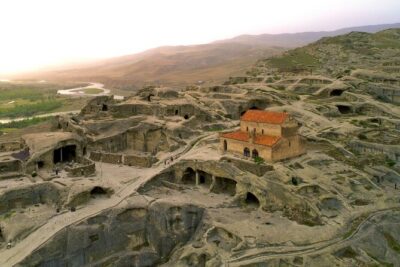

Tbilisi Walking Tour Including Cable Car and Traditional Bakery
Read our review →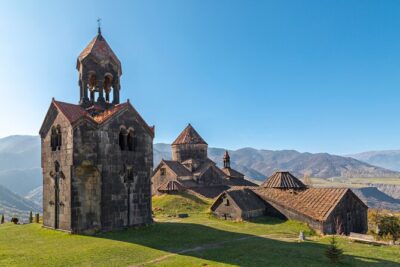

Kakheti Wine Region: Signagi and Bodbe Tour with 10 Wine Tastings
Read our review →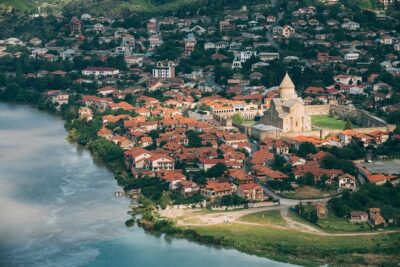
Mtskheta,Jvari,Bazaar,wine tasting,Chronicles of Georgia
Read our review →Browse the lists this tour appears in