
Reviewed · TBILISI TOURS
Georgian Essence: Cultural Immersion in a week
Georgia packs an astonishing amount into a small country: ancient monasteries, wine villages, Soviet relics, Black Sea resorts, and high Caucasus valleys. This private eight-day route makes that variety its main attraction. I especially like the private vehicle and flexible pace, plus the chance to meet a local family for a cooking class rather than simply looking at monuments through a car window.
I also like the food and wine stops, from hot shotis puri and aged cheese in Badiauri to qvevri pottery in Vardisubani. The main drawback is the ambitious schedule. Long drives, mountain roads, and brief stops mean you will see a great deal, but some places deserve more time than this route allows.
Key points at a glance
- A true cross-country route: Travel from Tbilisi and eastern Georgia to the Caucasus, the Black Sea coast, and western Georgia.
- Private touring with personal attention: Only your group participates, and guides such as Irakli are available to handle driving, timing, and local explanations.
- Strong food and wine focus: Enjoy Georgian cooking with a local family, taste village bread and cheese, and see traditional qvevri being made.
- Excellent range of sights: The route includes cave monasteries, fortresses, cathedrals, canyons, waterfalls, a Soviet cable-car town, and mountain passes.
- Hotels, meals, and admissions included: Breakfasts, lunches, selected entrance fees, and private transport are built into the package.
- Best for active sightseers: Expect walking on uneven ground, stairs, cliff paths, and long road days rather than a slow city break.
What this Georgian tour is really offering
At $2,200 per person, this is not a bargain-basement bus tour. It is a private road trip with accommodation, breakfasts, lunches, transport, guide service, and many admission fees included. The value depends on how much you want handled for you.
I see the price as reasonable for a private eight-day journey covering so much ground. You are not paying only for monuments. You are also paying for a driver, route planning, hotel arrangements, local contacts, and the freedom to pause for photographs or adjust the pace. That matters in Georgia, where mountain roads and remote sites can make independent planning slow.
The private format is a major advantage for couples, families, and small groups. You do not have to wait for a large coach or follow a fixed group timetable. Guides named in the feedback, especially Irakli, are praised for calm driving, friendly support, frequent photo stops, and a home-like approach. Harkley is also singled out as an attentive driver with a comfortable car.
Still, you should know what kind of private tour this is. It is not a relaxed stay in Tbilisi with a few day trips. It is a full road itinerary. You will often leave one impressive place and continue to another before the day is over.
more days out of Tbilisi to compare
- Private 7-Day Tours & Transfers from Tbilisi to Top Georgia Spots
★ 5.0 · 23 reviews - The Best of Georgia 7 Days Private Jeep Tour from Tbilisi
★ 5.0 · 19 reviews - Amazing All inclusive Tour for 7 Days From Tbilisi
★ 5.0 · 16 reviews
Day 1: From David Gareja to Kakheti wine country
The first day opens with David Gareja, a sixth-century monastic complex cut into the dry hills near the Georgian and Azerbaijani border. The caves, rock churches, and old religious spaces give this stop a stark feel that differs sharply from the forested mountains later in the week.
You have about an hour here, with admission included. Wear sensible shoes. The terrain is rugged, and the site is more about rock paths, silence, and broad views than polished interiors. Frescoes and cave rooms reward attention, but the visit may feel short if you are drawn to archaeology.
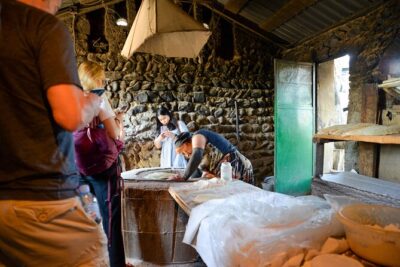
Badiauri provides a welcome change of mood. In only 15 minutes, you stop for shotis puri, the long, canoe-shaped Georgian bread baked in a clay oven, along with aged cheese. This is a small stop, but it gives you a direct taste of village life and makes a better travel memory than another roadside photograph.
Bodbe Monastery follows. Associated with Saint Nino, the figure credited with bringing Christianity to Georgia, it is an important pilgrimage site in a peaceful setting. The visit lasts about 30 minutes and includes admission. Look for the quiet courtyards and surrounding views rather than rushing only to the main church.
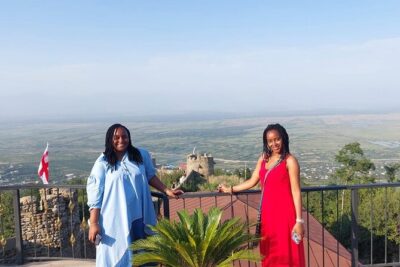
Two hours in Signagi give you time to walk its cobblestone streets and admire the terracotta roofs and carved balconies. The hilltop town overlooks Kakheti’s Alazani Valley and the Caucasus Mountains. Its romantic nickname, the City of Love, is not the only reason to visit. The setting, old defensive walls, and compact center make it one of the easiest places on the route for an unhurried stroll.
The day ends in Telavi, the main town of Kakheti. The stop is listed as 30 minutes, so treat it as a short orientation rather than a full town visit. Telavi is linked with Georgian wine, the Batonis Tsikhe fortress, King Erekle II’s palace, food markets, and regional culture.
Day 2: Qvevri pottery and remote Khevsureti

Vardisubani is one of the most distinctive cultural stops. Here you can see a qvevri maker at work. Qvevri are large clay vessels used in Georgia’s traditional winemaking method, and the craft has UNESCO recognition for its cultural value.
This is more useful than a standard tasting because you see the object behind the tradition. Watch how the clay vessel is shaped and learn how the craft passes between generations. The visit lasts about an hour and is free of an extra admission charge.
Kvetera Church, dating from the tenth century, offers a quieter architectural stop. Its stone carvings and frescoes show the style of Georgian religious buildings outside the better-known pilgrimage centers. You have about 40 minutes here, with admission included.
The schedule then lists Shatili Medieval Fortress Village, a remote settlement of stone houses and defensive towers in Khevsureti. Its mountain setting and unusual construction are the main draw. The visit is listed as one hour, with admission included.
This is also one of the points where you should ask for a clear road plan before booking. Shatili is in a remote mountain region, and the route is ambitious when combined with Kakheti in the same day. Road conditions and weather can affect timing. The private format helps, but it does not remove the distance.
Day 3: Ananuri and the high road to Gergeti
Ananuri Fortified Castle Ensemble is one of Georgia’s most photogenic historical sites. It sits beside the Aragvi River Valley, with decorated church facades, frescoes, towers, and views toward the water. The one-hour stop gives you enough time to walk through the complex and see why this is a favorite on the military road north.
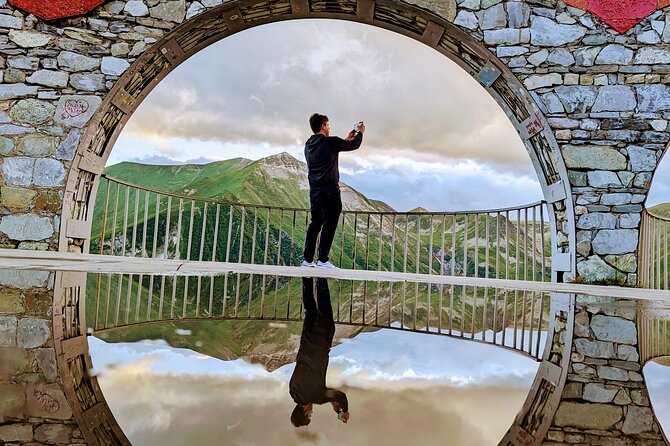
The Russian Georgian Friendship Monument near Gudauri is a quick scenic pause. Its large mosaic panels commemorate the Treaty of Georgievsk and offer wide mountain views. The political message is more complicated than the cheerful name suggests, so I would treat this primarily as a viewpoint and a piece of late Soviet monumental art.
Gergeti Trinity Church is the day’s main prize. Built in the fourteenth century, it sits high above the mountain town of Stepantsminda. The church itself is modest, but its setting is extraordinary, with the Caucasus rising around it.
You have one hour here, including admission. The road and weather can shape the experience, so keep a layer handy and expect uneven walking. This is one of the places where a private guide earns his keep by helping with timing and photo stops.
A different direction out of Tbilisi entirely:
- Day Trip to Kakheti Wine Region Including 9 Wine Tastings
★ 5.0 · 2,774 reviews - Highlights of Caucasus Mountains-Jinvali,Ananuri,Gudauri,Kazbegi(Group tour)
★ 5.0 · 2,682 reviews - Day Trip to Kazbegi and Gudauri
★ 5.0 · 2,009 reviews - Day Trip to Mtskheta Gori and Uplistsikhe
★ 5.0 · 1,801 reviews
Day 4: Georgia’s Christian roots and Soviet past
Jvari Church looks down from a hill above Mtskheta, Georgia’s old religious center. The fourth-century connection with Saint Nino gives the site national and spiritual importance. Its simple stone design and broad view over the river junction make it a good early stop before the busier historical sites.
In Gori, the Stalin Museum presents the life and rule of Joseph Stalin, who was born in Georgia. The collection includes personal objects, photographs, documents, and material about the Soviet period. This is a worthwhile stop if you want political context, but it can feel uncomfortable and heavily shaped by museum interpretation. Allow an hour and approach it as a place for reflection, not celebration.
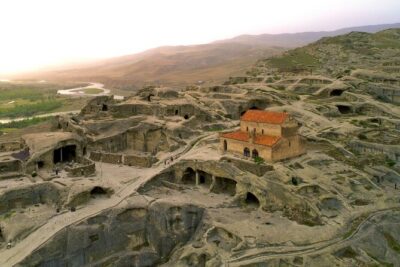
Uplistsikhe Cave Town is more physically demanding. This ancient rock-cut settlement includes chambers, streets, stairways, churches, and dwellings carved into the hillside. The visit lasts about 90 minutes and includes admission.
Bring shoes with a firm grip. The appeal comes from wandering through the exposed rock rather than following a single indoor route. You will climb and step over uneven surfaces, and the site offers little shade.
Svetitskhoveli Cathedral in Mtskheta is among Georgia’s most important churches. The eleventh-century building is associated with royal burials and the robe of Jesus Christ. Inside, carved stone, frescoes, and the central dome create a solemn atmosphere.
The best part of this day is the cooking class with a local family. You help prepare Georgian dishes, including khinkali, stews, and desserts, then eat lunch together. This two-hour visit gives the tour a human scale that monuments alone cannot provide.
The Chronicles of Georgia closes the day with a very different kind of history. Huge carved figures rise above Tbilisi, showing key people and events from the country’s past. The visit lasts only 30 minutes, but the monument is dramatic and easy to photograph.
Day 5: Diamond Bridge, Vardzia, and Rabati Castle
Dashbashi Canyon begins the southern section of the journey. The Diamond Bridge crosses the canyon and gives you views of the cliffs and river below. The stop lasts about an hour and includes admission.
The bridge is the attraction, but it may not suit anyone uneasy with height. Ask your guide about the walking route and weather before setting out. The stop is short, so you will get the main view rather than a long hike through the canyon.
Vardzia is one of Georgia’s great sights. This twelfth-century cave monastery was carved into a cliff and includes chapels, living spaces, passageways, and painted interiors. Two hours is a sensible amount of time, though the site involves stairs and uneven paths.
Look closely at the remaining frescoes and imagine the complex as a working religious and defensive center rather than a collection of empty caves. The setting is powerful, but you should not expect every passage to be easy to reach.
Rabati Castle in Akhaltsikhe gives you another layer of Georgia’s past. The fortress combines medieval, Ottoman, and European design, with walls, towers, a mosque, a church, museum spaces, and courtyards. The one-hour visit includes admission.
Rabati is more restored and formal than Vardzia. That makes it easy to explore, but some people may prefer the raw, weathered character of the cave sites.
Day 6: Goderdzi Pass and the Black Sea
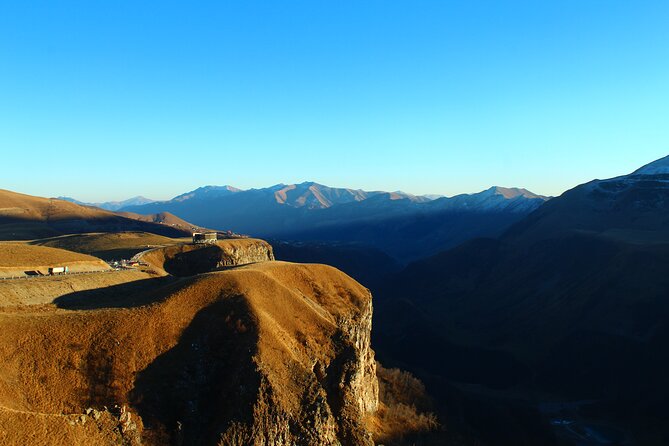
Goderdzi Pass brings a sharp change in scenery. At roughly 2,025 meters, it offers views of mountain peaks, forests, and valleys. The listed stop is only 20 minutes, so this is a photo break rather than a hiking outing.
Weather matters here. The pass can feel entirely different in summer and winter, and the route may take longer than expected in poor conditions. The tour requires good weather, so a change of date may be offered if conditions make the journey unsafe.
Makhuntseti Waterfall and King Tamar’s Bridge provide a pleasant one-hour combination of nature and medieval engineering. You can see the waterfall, walk across the old stone bridge, and enjoy a slower pause before reaching the coast.
Batumi is listed for only one minute, which is almost certainly a timing error or a simple arrival marker. Do not book this expecting a proper city tour unless the operator confirms additional time. Batumi deserves more than a roadside glance, with its Black Sea promenade, old streets, modern buildings, restaurants, museums, and beaches.
Day 7: Canyons, caves, and Kutaisi
Shekvetili Dendrological Park is listed for two minutes, another timing detail worth checking before you pay. The park covers more than 100 hectares and contains plants from around the world, ponds, paths, gazebos, and viewpoints. A two-minute stop would not meaningfully cover it.
Martvili Canyon offers one of the route’s most scenic nature visits. Turquoise water, cliffs, greenery, waterfalls, and a boat ride through the gorge create a strong contrast with the dry hills around David Gareja. You have about an hour, including admission, so confirm whether the boat ride is part of the operating schedule when you travel.
Prometheus Cave is an hour underground, with stalactites, stalagmites, rivers, and lit chambers. It is an easy way to see Georgia’s geology without a full-day hike. The lighting creates a theatrical mood, though you may prefer the more natural feel of Martvili.
Bagrati Cathedral rises above Kutaisi and offers views over the city. The eleventh-century building has been partly rebuilt after damage, and its Byzantine and Georgian features make it a useful stop for architecture fans. You have 30 minutes with admission included.
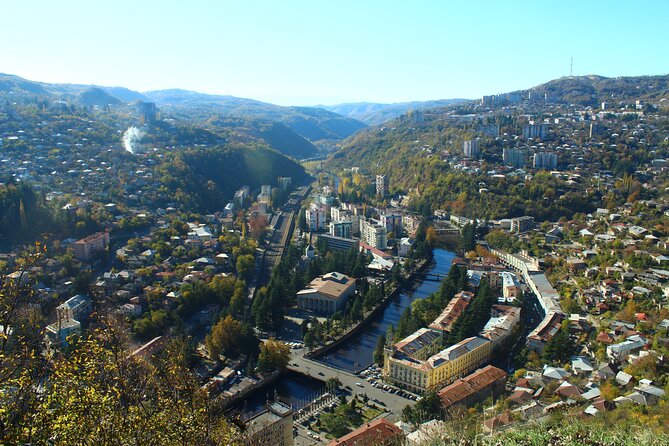
The day ends in Kutaisi, Georgia’s second-largest city. The one-hour visit gives you a taste of its cafes, markets, shops, and old center, but not enough for every major attraction. Gelati Monastery is saved for the following day.
Day 8: Gelati, Motsameta, Chiatura, and Mgvimevi
Gelati Monastery was founded in the twelfth century by King David the Builder. Its churches, academy, gardens, and Byzantine-style frescoes make it one of Georgia’s essential cultural sites.
The listed visit is only one minute, so confirm the intended duration. If that figure is accurate, it is far too short. The same issue appears at several stops, and a private tour should allow the guide to explain the real timing.
Motsameta Monastery sits on a cliff above the Rioni River. Its name refers to martyrs, and the church remains an active spiritual place. Thirty minutes lets you see the setting and interior, though the approach may take longer than the stop itself.
Katskhi Pillar is one of Georgia’s most unusual sights: a roughly 40-meter limestone column topped by a small medieval monastery. The top is reached by a narrow ladder, and the stop is mainly about viewing the pillar and its striking setting. Do not assume you will climb it. The itinerary provides 40 minutes.
Chiatura brings you into a former mining town known for Soviet-era cable cars, once used to move miners and goods over the valleys. The rope roads and industrial setting make this unlike the monasteries elsewhere on the route. The visit lasts about an hour, but the available cable-car operation should be confirmed.
Mgvimevi Monastery finishes the sightseeing portion. Cut into limestone cliffs, the thirteenth-century complex includes cave spaces and chapels. An hour gives you time to appreciate its quiet setting before the final return toward Tbilisi.
Who will get the most from this route
I would recommend this tour to someone who wants maximum variety in one week and prefers a driver and guide to arranging difficult intercity transport. It suits people who enjoy history, Orthodox churches, food, wine, mountain views, and unusual places such as Chiatura.
It is less suitable if you want long hotel mornings, extended time in Batumi, or slow exploration of each town. The route includes rough ground, stairs, mountain roads, and several long transfers. Most people can participate, but you should be comfortable walking at each site.
Pickup is offered, mobile tickets are available, and group discounts may apply. Since this is a private activity, only your own party takes part. Free cancellation is available up to 24 hours before the start time. Within 24 hours, refunds are not provided, and poor weather can lead to a new date or full refund.
Should you book Georgian Essence?
Book it if you want Georgia presented as a connected story: wine in Kakheti, Christianity in Mtskheta, mountain life near Kazbegi, cliff monasteries in the south, the Black Sea around Batumi, and western Georgia’s caves and canyons.
Before booking, ask the operator to confirm the real visit lengths for Batumi, Shekvetili Dendrological Park, Gelati Monastery, and the final return to Tbilisi. Those entries appear too brief to describe a normal visit. Also ask for the hotel names, vehicle details, and the exact route on the most demanding mountain days.
At $2,200 per person, the tour makes the most sense for two or more people who value privacy and convenience. If you are ready for full days on the road and want a broad first look at Georgia, it offers a strong introduction. If your priority is leisurely time in just one region, choose a shorter, slower program instead.
FAQ
How long is Georgian Essence?
The tour lasts approximately eight days.
Where does the tour take place?
The journey is centered on Tbilisi, Georgia, and includes eastern Georgia, the Caucasus Mountains, southern Georgia, the Black Sea coast, and western Georgia.
Is this a private tour?
Yes. Only your group participates in the activity.
Is pickup available?
Yes. Pickup is offered.
What meals are included?
Hand-picked hotel stays, breakfasts, and lunches are included. The itinerary also includes a cooking class and lunch with a local family in Mtskheta.
Are admission tickets included?
Admission is included at many listed sites, including David Gareja, Bodbe Monastery, Kvetera Church, Shatili, Ananuri, Gergeti Trinity Church, the Stalin Museum, Uplistsikhe, Svetitskhoveli Cathedral, Dashbashi Canyon, Vardzia, Rabati Castle, Martvili Canyon, Prometheus Cave, Bagrati Cathedral, Gelati Monastery, Motsameta Monastery, Katskhi Pillar, and Mgvimevi Monastery.
Who is the guide for the tour?
The tour uses local guides and private drivers. Irakli is named as a guide, and Harkley is identified as an attentive driver in the available tour information.
What is the cancellation policy?
You can cancel at least 24 hours before the start time for a full refund. Cancellations or changes made within 24 hours are not accepted for a refund. If poor weather causes cancellation, you may receive a different date or a full refund.
Recently added around Tbilisi
- 2-Day Private Wine Tour to Kakheti from Tbilisi★ 5.0 · 3 reviews
- Tbilisi and Mtskheta cities private, cultural tour★ 5.0 · 3 reviews
- Kakheti wine region – Private Tour★ 5.0 · 3 reviews
- 17 Day Private Tour through Georgia★ 5.0 · 3 reviews
- Kakheti With Top Destinations★ 5.0 · 3 reviews
- Tbilisi City Tour with Street Photography★ 5.0 · 3 reviews
- Jvari monastery & Mtskheta – Half day group tour from Tbilisi★ 5.0 · 3 reviews
- Tbilisi City, Jvari Monastery, Uplistsikhe caves, Mtskheta city Private Day Trip★ 4.5 · 3 reviews
Tbilisi Tours, compared.
Day Trip to Kakheti Wine Region Including 9 Wine Tastings
Read our review →
Highlights of Caucasus Mountains-Jinvali,Ananuri,Gudauri,Kazbegi(Group tour)
Read our review →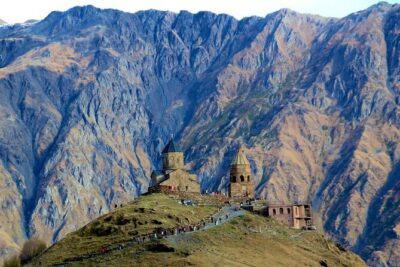
Tbilisi Walking Tour Including Cable Car and Traditional Bakery
Read our review →
Kakheti Wine Region: Signagi and Bodbe Tour with 10 Wine Tastings
Read our review →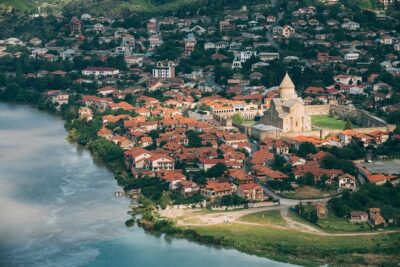
Mtskheta,Jvari,Bazaar,wine tasting,Chronicles of Georgia
Read our review →Browse the lists this tour appears in