
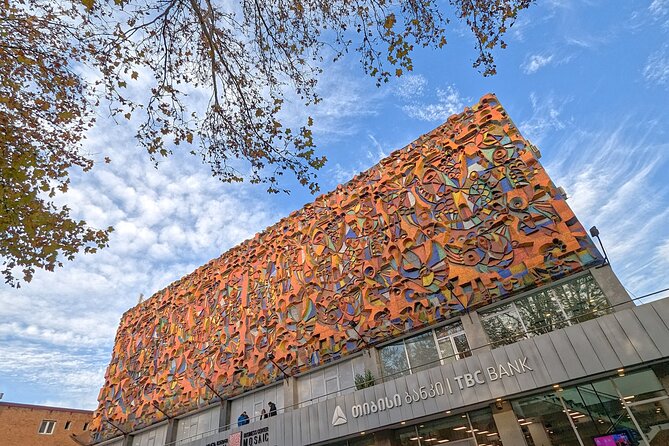
Reviewed · TBILISI TOURS
Alternative walking tour New Tiflis and backstreets
Tbilisi’s best stories are not all packed into the Old Town. This three-hour walk from Liberty Square to Marjanishvili takes you through New Tiflis, where flower stalls, Soviet memorabilia, art-covered walls, theatres, and ordinary residential streets show how the city lives today.
I like the route for two clear reasons: it visits places you might skip on your own, especially Dry Bridge Market and Roses Park, and it links architecture with daily life rather than treating Tbilisi as an open-air museum. Guides such as Oksana add plenty of background on history, art, and local customs.
The main tradeoff is simple: this is a real walking tour, about 3 kilometers at an easy pace, with some traffic noise and busy streets. It is not an Old Town tour, and you will get more from it if you want a broader look at Tbilisi rather than a greatest-hits introduction.
Key points at a glance
- New Tiflis instead of the Old Town: Follow a route through Agmashenebeli Avenue, Marjanishvili, and lesser-known side streets.
- Dry Bridge Market: Browse Soviet-era objects, vintage goods, handmade work, jewelry, and unusual souvenirs.
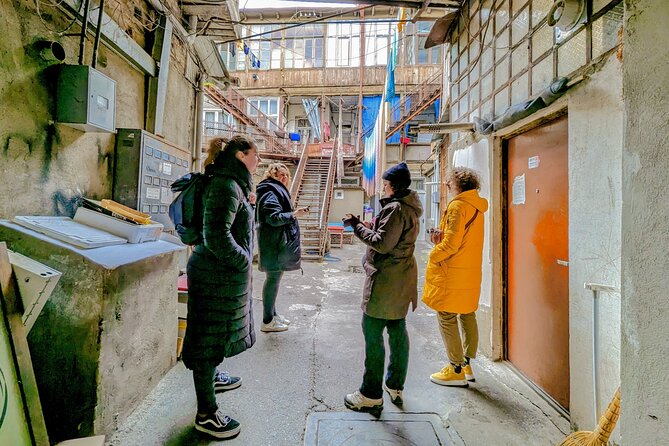
- Fabrika’s creative courtyard: See how a former Soviet sewing factory became a social and artistic meeting place.
- A useful mix of city life: The walk includes a flower market, rose garden, Catholic church, theatres, cafes, and metro access.
- Small-group format: The maximum group size is 10 people, which should make questions and conversation easier.
- Practical walking pace: Expect around 3 kilometers over three hours, with comfortable shoes essential.
Why New Tiflis makes a better second walk
If you have already seen Tbilisi’s Old Town, this route gives you a useful change of scene. New Tiflis grew through later phases of the city’s development, and its streets show a mix of late 19th-century architecture, Soviet-era planning, religious buildings, urban renewal, and modern cafe culture.
The tour begins at Liberty Square, a natural central meeting point beside the Burberry shop. The square is also called Tavisuplebis Moedani, and its central statue shows St. George defeating a dragon. The image reflects Georgia’s long struggle for freedom and independence, while the surrounding city buildings place you right in the middle of modern Tbilisi.
You will not spend long here, about 10 minutes, but it is a sensible place to begin. Liberty Square has a metro station, the Georgian National Museum is nearby, and Tbilisi City Hall faces the area. Arrive early, since the guide waits only up to 10 minutes after the scheduled start.
more walking tours in Tbilisi
- Tbilisi Walking Tour Including Cable Car and Traditional Bakery
★ 5.0 · 1,310 reviews - Tbilisi:Evening Walking & Talking Tour with Wine & Boat Ride
★ 5.0 · 572 reviews - Old Tbilisi Highlights walking tour with wine & 10 tastings
★ 5.0 · 276 reviews
Orbeliani Square and the flower market
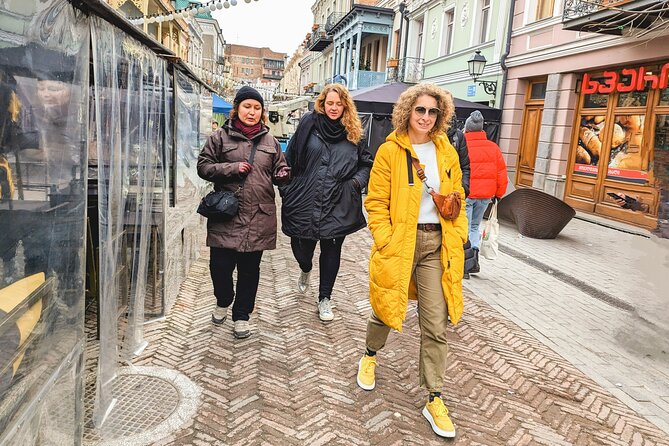
From Liberty Square, the route continues to Orbeliani Square for about 25 minutes. This is one of the more attractive stops for anyone who enjoys small urban details. The square has cafes and restaurants, along with a flower market full of bright blooms and fragrant herbs.
The nearby Orbeliani Palace is the official residence of the President of Georgia. You will view it from outside, not enter, so think of this stop as an architectural and street-life pause rather than a palace visit.
I like the balance here. You get a grand civic building, then a more informal look at local commerce only a few steps away. The flower market also gives you a good photo stop without the solemn feel of a formal monument.
The area can be a pleasant place to return after the tour for coffee or a meal. The tour does not include a hotel transfer, so you are free to continue on foot or use public transport once the walk ends.
Dry Bridge Market: objects with stories
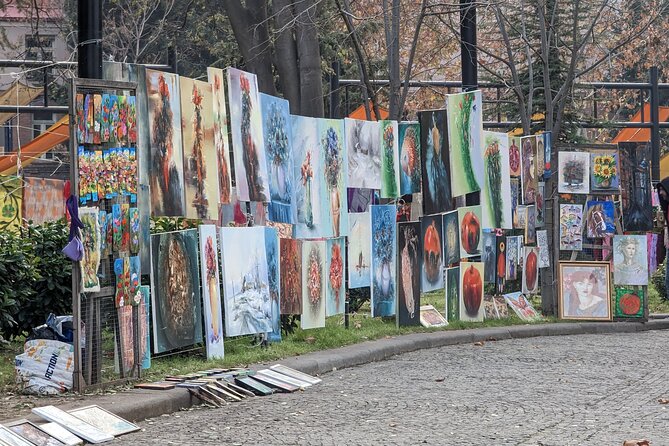
The 30-minute visit to Dry Bridge Market is likely to be one of the route’s most memorable sections. This open-air flea market carries antique goods, vintage clothing, jewelry, furniture, Soviet-era memorabilia, and handmade items.
The market is not just a place to buy souvenirs. It gives you a direct look at the objects people have collected, kept, repaired, and brought back into circulation. Many sellers are artists or craftspeople, so the stalls can shift from old household pieces to original work.
Take your time here, but keep your expectations sensible. A flea market is changeable, and not every item will appeal to you. The value of the stop is in the stories and variety, not in a guarantee that you will find a perfect purchase.
Your guide can help place some objects in context, especially Soviet-era items that may otherwise look like random curiosities. If you plan to buy something, ask about prices and inspect the item carefully. The tour provides access and context, but purchases are not part of the $30 fee.
Agmashenebeli Avenue and old facades
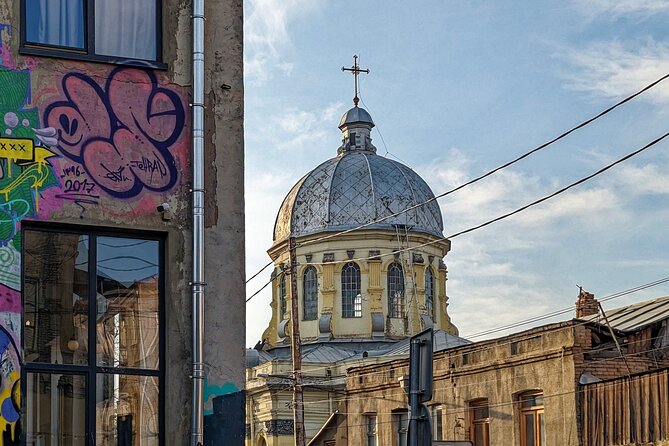
Agmashenebeli Avenue brings a different mood. The route spends about 25 minutes walking past ornate buildings from the late 19th and early 20th centuries. Their facades show Art Nouveau and Neo-Renaissance influences, giving the street a distinct look from Tbilisi’s older stone lanes.
This is a good section for architecture fans, but it also helps explain the city’s changing identity. The street has older buildings, modern businesses, restaurants, and cultural venues sharing the same corridor. Look up as you walk. Decorative balconies, arches, and facade details are easy to miss when you focus only on the traffic and pavement.
The Marjanishvili Theatre is one of the key landmarks along the route. The Tbilisi Opera and Ballet Theatre is at the northern end of the avenue, although the tour’s focus is on the street and its architecture rather than an interior performance.
The avenue can be busy, and the tour information warns that some parts of the walk include traffic noise. If you are sensitive to urban sound, this is worth considering before you book.
A different direction out of Tbilisi entirely:
- Day Trip to Kakheti Wine Region Including 9 Wine Tastings
★ 5.0 · 2,774 reviews - Highlights of Caucasus Mountains-Jinvali,Ananuri,Gudauri,Kazbegi(Group tour)
★ 5.0 · 2,682 reviews - Day Trip to Kazbegi and Gudauri
★ 5.0 · 2,009 reviews - Day Trip to Mtskheta Gori and Uplistsikhe
★ 5.0 · 1,801 reviews
Roses Park and a pause from the traffic
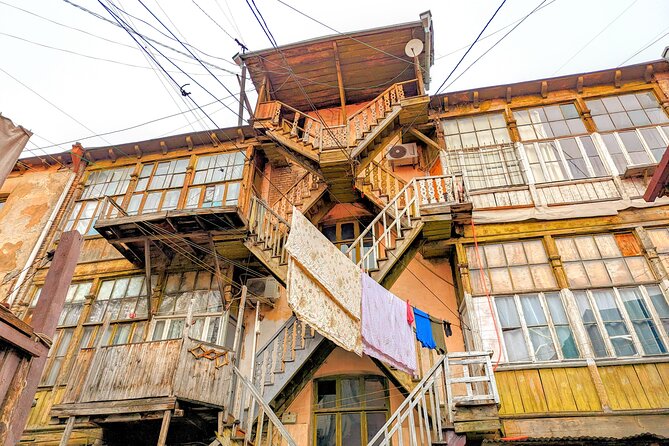
After the avenue, the walk turns toward Roses Park for about 20 minutes. The park is tucked into the backstreets and offers a quieter look at everyday Tbilisi.
Its rose garden contains more than 200 varieties. In summer, the flowers are in bloom and the garden carries their scent, making this one of the route’s gentler stops. It is also a useful reminder that Tbilisi is more than busy avenues, monuments, and cafes.
The park will be most rewarding in the warmer months when the roses are flowering. In winter, you should expect a less colorful visit, especially since Tbilisi can be cold, windy, and rainy. The stop remains part of the route, but the garden’s main appeal is seasonal.
I like this pause because it breaks up the architecture and market stops. You get a chance to walk slowly, take photographs, and notice how residential neighborhoods fit around public green space.
Fabrika and Tbilisi’s street art

Fabrika is one of the most distinctive stops, with about 25 minutes to look around. The building was once a Soviet sewing factory. It has since been converted into a mixed-use space for culture, art, entertainment, and local social life.
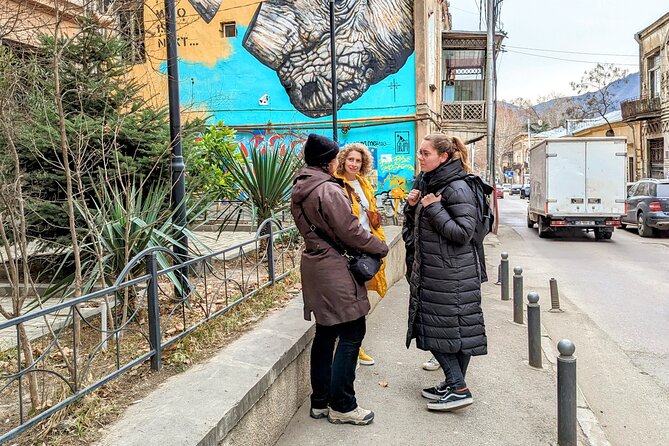
The walls and nearby streets feature large murals and other street art. Tbilisi has a strong street-art identity, and Fabrika is one of the clearest places to see it in person. The contrast is part of the appeal: an old industrial building now serves as a meeting point for creative work and city life.
This stop also gives the guide room to explain urban renewal in practical terms. Rather than simply admiring a renovated building, you can see how an old factory has been given a new purpose.
Fabrika is a good place to linger after the tour if you want to look around at your own pace, though the scheduled visit itself is brief. The walk does not promise a long break there, so save any extended cafe time for after the official route.
St. Peter and St. Paul Church
The 15-minute stop at St. Peter and St. Paul Roman Catholic Church adds a religious and architectural layer to the afternoon. Built between 1870 and 1877, the church was commissioned through Georgia’s Catholic community and designed by architect Albert Zaltsman.
Its strong Baroque character is easy to spot. The facade uses pilasters and arches in different shades of yellow, and the west-facing entrance has a rose window decorated with floral patterns and a dove. The building was painted yellow and altered after 2000, when the rose window was added above the transformed entrance.
Pope John Paul II celebrated Mass here during his visit to Georgia in October 1999. That detail gives the church a wider place in the country’s modern religious story.
The visit is short, so do not expect a long interior tour or a service. It is best understood as a quick architectural stop with historical context, especially useful if you appreciate the mix of Georgian, European, and Catholic influences in Tbilisi.
Marjanishvili Theatre and the final square
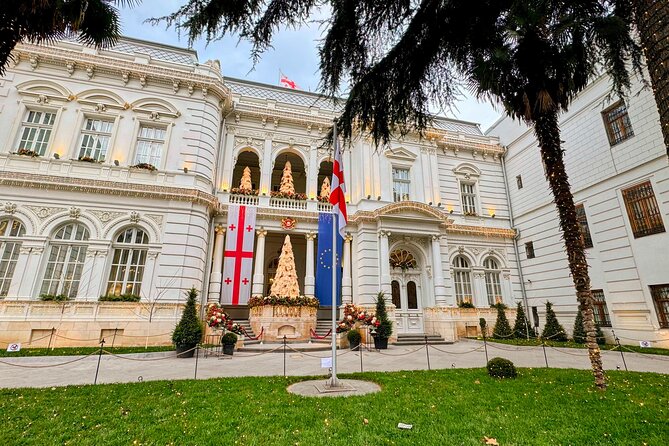
The route then gives another 15 minutes to the Kote Marjanishvili State Drama Theatre. Founded by Kote Marjanishvili in Kutaisi in 1928, the theatre moved to Tbilisi in 1930 and has remained in the same building.
The structure is an Art Nouveau edifice, thoroughly renovated before reopening in 2006 with a production of Bertolt Brecht’s The Threepenny Opera. It presents plays, musicals, and operas, making it one of the city’s important cultural institutions.
You will see the theatre as part of the walking route, not attend a performance. If you want to return for a show, check the schedule separately and plan another evening.
The final stop is Marjanishvili Square, where you have about 15 minutes to finish the tour. Restaurants, cafes, and shops surround the square, so it is a practical place to continue your evening.
The nearby Marjanishvili metro station opened in 1966. Inside, look for the high-relief bust of Kote Marjanishvili, the theatrical director who gives both the square and station their name. The tour ends at or near the station, which makes onward travel easy.
What the $30 price gives you
At $30 per person, the tour is priced as a compact guided city walk rather than a transport-based sightseeing trip. Your fee covers the English-speaking guide and a complementary wine tasting, along with the guide’s interpretation of the streets, buildings, art, and local customs.
The value depends on how you use it. If you simply want landmarks and photographs, you can visit several of these areas independently. But fitting Liberty Square, Orbeliani Square, Dry Bridge Market, Agmashenebeli Avenue, Roses Park, Fabrika, the Catholic church, two theatre landmarks, and Marjanishvili into a coherent three-hour route is more useful when you want context and a clear sense of direction.
A maximum of 10 people keeps the group relatively small. That matters at Dry Bridge Market, where you may want to ask about objects, and in the backstreets, where a guide can point out details without the group becoming unwieldy.
Group discounts are available. The tour is offered in English and uses a mobile ticket, so it is a straightforward option for an independent trip.
Who will enjoy this walk most
I would choose this experience if you:
- Want to see Tbilisi beyond the Old Town
- Like architecture, street art, markets, and local neighborhoods
- Prefer walking to riding between attractions
- Enjoy asking a guide about history, art, and daily life
- Have already covered the city’s main historic center
- Want recommendations for places to eat or continue exploring
I would be more cautious if you have significant mobility problems, a recent injury, or difficulty walking several kilometers. Most people can take part, but the route is still a 3-kilometer walk over city streets.
Wear comfortable, non-slip shoes. In summer, bring water, sun protection, and a hat if useful. Winter conditions can be cold, wet, and windy, so dress warmly and do not rely on a light sightseeing outfit.
This is not the best choice for someone seeking a quiet garden walk or a fully indoor experience. Several sections run through active streets, and the weather can affect the tour. Poor conditions may lead to a new date or a full refund.
A guide-led way to see Tbilisi’s everyday side
The strongest part of this tour is its range. In three hours, you move from a national symbol at Liberty Square to flower sellers, flea-market stalls, ornate facades, a rose garden, a former factory, street art, a Catholic church, and Georgian theatre.
The guide makes the difference. Oksana has been praised for explaining Tbilisi, Georgia, history, art, and ordinary life, while also offering practical recommendations. That kind of conversation is especially useful early in a trip, when you can still use advice about where to eat and what to see next.
The route also avoids pretending that every part of Tbilisi is polished. You will encounter traffic, busy streets, and buildings in different states of repair. That is a useful part of the experience, not a flaw to hide. New Tiflis is a city district with layers, and the walk lets you see those layers at a human pace.
Book this tour if you want a small-group introduction to the parts of Tbilisi that sit outside the usual Old Town circuit. At $30, it is a fair buy for the guide’s context, the wide range of stops, and the efficient route. Skip it if your main goal is a deep Old Town history tour, a short walk, or a fully indoor activity.
Free cancellation is available up to 24 hours before the start time. Changes or cancellations inside that window are not refunded, so plan carefully.
FAQ
Is this an Old Town walking tour?
No. The route focuses on New Tiflis, backstreets, markets, cultural spaces, and less touristy neighborhoods rather than Tbilisi’s Old Town.
How long is the tour?
The walk lasts approximately three hours and covers about 3 kilometers at a relaxed pace.
Where does the tour start and finish?
It starts at the entrance of the Burberry shop at Liberty Square. It finishes at Marjanishvili Square, near Marjanishvili metro station.
Is the tour offered in English?
Yes. The tour is offered in English and includes guide service.
Is wine included?
Yes. A complementary wine tasting is included, listed with the included alcoholic beverages.
How large is the group?
The tour has a maximum of 10 travelers. Participants should be able to walk around 3 kilometers comfortably and should wear suitable shoes.
Recently added around Tbilisi
- 2-Day Private Wine Tour to Kakheti from Tbilisi★ 5.0 · 3 reviews
- 17 Day Private Tour through Georgia★ 5.0 · 3 reviews
- Tbilisi and Mtskheta cities private, cultural tour★ 5.0 · 3 reviews
- Kakheti wine region – Private Tour★ 5.0 · 3 reviews
- Kakheti With Top Destinations★ 5.0 · 3 reviews
- Tbilisi City Tour with Street Photography★ 5.0 · 3 reviews
- Jvari monastery & Mtskheta – Half day group tour from Tbilisi★ 5.0 · 3 reviews
- Tbilisi City, Jvari Monastery, Uplistsikhe caves, Mtskheta city Private Day Trip★ 4.5 · 3 reviews
Tbilisi Tours, compared.
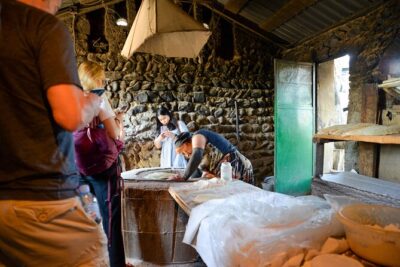
Day Trip to Kakheti Wine Region Including 9 Wine Tastings
Read our review →
Highlights of Caucasus Mountains-Jinvali,Ananuri,Gudauri,Kazbegi(Group tour)
Read our review →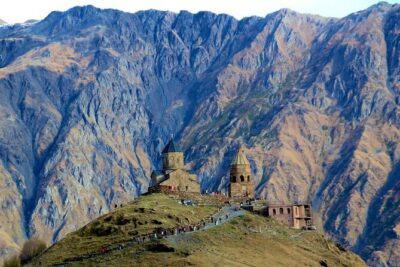
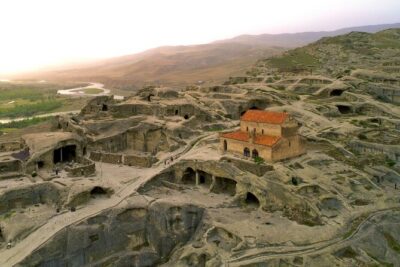

Tbilisi Walking Tour Including Cable Car and Traditional Bakery
Read our review →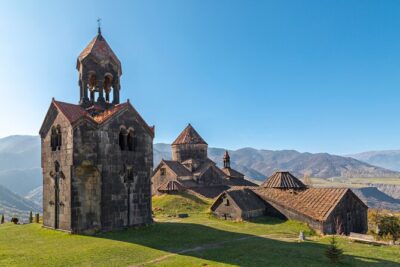

Kakheti Wine Region: Signagi and Bodbe Tour with 10 Wine Tastings
Read our review →
Mtskheta,Jvari,Bazaar,wine tasting,Chronicles of Georgia
Read our review →Browse the lists this tour appears in