
Reviewed · TBILISI TOURS
Discover Tbilisi: Hidden Gems and Iconic Sights Walking Tour
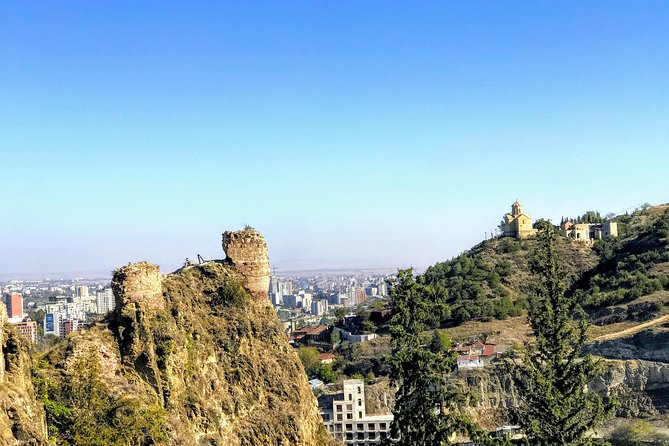
Tbilisi’s best introduction may be a walk through its old center, where a sixth-century church, a modern glass bridge, a working mosque, a synagogue, courtyards, monuments, and a city waterfall all sit within a compact area. This tour connects those sights with stories from local guides such as Jonah, Oksana, Tamara, Nini, and Koba.
I like the low $9 price and the way the route mixes famous landmarks with easily missed corners. I also like the small-group format, which allows time for questions and practical tips about Georgian food, wine, and places to return later. The main consideration is the pace: up to three and a half hours on foot, with hills and uneven streets, and the cable car ticket is not included.
Key points to know before you book
- Twenty stops in one walk: You cover major sights and smaller monuments across Old Tbilisi.
- A local guide shapes the experience: Guides including Jonah, Salomea, Oksana, Tamara, and Nini are praised for clear stories, patience, and useful restaurant suggestions.
- The route offers strong photo stops: Expect views from the Old Town, Rike Park, the Bridge of Peace, and near Kartlis Deda.
- Religious sites require modest clothing: Knees and shoulders must be covered for men and women.
- The cable car costs extra: The aerial tramway connects Rike Park with Narikala, but its admission is not part of the tour price.
- Allow around three hours: The advertised duration ranges from two and a half to three and a half hours, depending on the group and guide.
Starting at Freedom Square
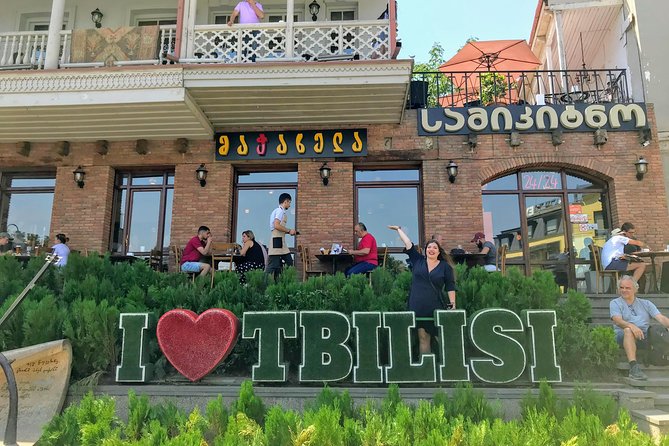
The walk begins at Freedom Square, at the eastern end of Rustaveli Avenue. This is one of Tbilisi’s main central spaces, and its changing names tell a compact story of the city’s political past.
Under Imperial Russia, it was known as Erivansky or Paskevich-Erivansky Square. During the Soviet period, it became Beria Square and later Lenin Square. Today, it is Freedom Square, a useful place to begin understanding how Tbilisi has moved through different eras.
You meet near Burberry on Shalva Dadiani Street. Be there on time. The waiting period is limited to 10 minutes, and missing the group may mean booking again. Since hotel pickup is not included, plan your own way to Freedom Square using public transportation or a taxi.
The square is also a practical orientation point. From here, streets lead toward Rustaveli Avenue, the Old Town, and the river. Your guide can help you see how the modern center links with the older neighborhoods.
more walking tours in Tbilisi
- Tbilisi Walking Tour Including Cable Car and Traditional Bakery
★ 5.0 · 1,310 reviews - Tbilisi:Evening Walking & Talking Tour with Wine & Boat Ride
★ 5.0 · 572 reviews - Old Tbilisi Highlights walking tour with wine & 10 tastings
★ 5.0 · 276 reviews
Wall ruins and the oldest surviving church
A short walk brings you to the remains of Tbilisi’s old city walls. These fragments are easy to overlook if you are walking alone, but they help explain the compact, defended character of Old Tbilisi.
The next stop is Anchiskhati Basilica of St. Mary, often dated to the sixth century. It is the oldest surviving church in Tbilisi and belongs to the Georgian Orthodox Church.
This is one of the most valuable stops for a first visit because it gives you a sense of the city before the grander modern sights appear. The building is not a huge cathedral. Its appeal is age, simplicity, and continuity. Your guide can place it within Georgia’s long Christian tradition and explain details that you might otherwise pass without noticing.
Dress carefully from the start. Shorts and sleeveless tops are not accepted at places of worship, and both men and women must cover their knees and shoulders. You may be refused entry if your clothing does not meet the rules.
The Bridge of Peace and the Mtkvari River
The Bridge of Peace opened in 2010 over the Mtkvari River, also called the Kura. Its sweeping glass-and-steel form is one of Tbilisi’s clearest modern landmarks.
This is a good point for photographs, especially when you frame the bridge against the older buildings and hills. The contrast is the point: Tbilisi is not preserved as a single historic quarter. Old stone churches, balconies, fortress walls, contemporary architecture, and renovated public spaces all share the same city.
The bridge leads toward Rike Park, which you visit later. Your guide may explain how the river divides the central districts and why the parks and bridges along it matter to modern Tbilisi.
Shardeni Street and the lanes of Old Town
Shardeni Street is a pedestrian lane lined with restaurants, cafés, and places to stop for a drink. It is one of the city’s most popular streets, but the tour does not treat it as the whole of Old Tbilisi.
The longer Old Town portion lasts about an hour. This is where the walk becomes less about checking off monuments and more about understanding the city’s shape. You’ll pass old buildings, eateries, theaters, and streets where details can be easy to miss.
I especially value this part because a guide can point out courtyards and architectural features that are not obvious from the main road. Oksana is praised for showing courtyards and overlooked details, while Nini is noted for explaining sights and giving suggestions for the rest of your stay. Tamara and Jonah are also frequently singled out for lively storytelling and clear answers.
The Old Town is not a polished open-air museum. Some buildings are worn, streets can be uneven, and the mix of restoration and decay is part of what you see. Wear firm shoes and expect to spend much of the time standing while your guide explains the setting.
A different direction out of Tbilisi entirely:
- Day Trip to Kakheti Wine Region Including 9 Wine Tastings
★ 5.0 · 2,774 reviews - Highlights of Caucasus Mountains-Jinvali,Ananuri,Gudauri,Kazbegi(Group tour)
★ 5.0 · 2,682 reviews - Day Trip to Kazbegi and Gudauri
★ 5.0 · 2,009 reviews - Day Trip to Mtskheta Gori and Uplistsikhe
★ 5.0 · 1,801 reviews
Gabriadze Theater and Tbilisi’s artistic side
The Rezo Gabriadze Marionette Theater opened in 1981 and has become an important part of Tbilisi’s cultural life. Even if you do not attend a performance, the theater gives the walk a different mood from the churches and fortifications.
The stop is brief, around 15 minutes, but it adds a touch of the city’s creative character. This is followed by the monument to filmmaker Sergey Parajanov, whose films include Shadows of Forgotten Ancestors and The Colour of Pomegranates.
Parajanov’s work drew on Armenian, Eastern, and European artistic traditions. His monument is a reminder that Tbilisi’s cultural story crosses modern national borders. Georgian, Armenian, Jewish, Muslim, and other communities have all shaped the city.
Nearby, the Monument of Sayat-Nova honors the Armenian poet and musician. The statue sits near the northern wall of St. Kevork Armenian Church. Sayat-Nova was killed at the church during the 1795 attack by Shah Aga Mohammad Khan Qajar and is buried there.
These two stops are small, but they add depth to the walk. You are not seeing only palaces and viewpoints. You are also meeting the artists, musicians, and communities connected with Tbilisi.
Going uphill toward Narikala and Kartlis Deda
The aerial tramway links Rike Park with Narikala Fortress, high above the river. The tour includes a 30-minute stop at the tramway, but the cable car ticket is not included in the $9 price.
Check with your guide on the day about how this part is handled. Some experiences describe reaching the Mother of Georgia statue by cable car, while the published details clearly state that you pay for the ride separately. Bring extra money if you want to use it.
The ride itself is one of the best ways to see Tbilisi from above, but it also changes the cost and timing. If you are watching your budget, you can ask whether the guide will continue on foot or explain the viewpoint without a ride. The route includes hills, so this is not a completely flat city walk.
At the top, you see Kartlis Deda, the 20-meter aluminum figure of a woman in Georgian national dress. Erected in 1958 for Tbilisi’s 1,500th anniversary, the statue holds a bowl of wine for friends and a sword for enemies.
The monument is both a city symbol and a strong photo stop. From this side of Tbilisi, you can better grasp the relationship between the river, Old Town, Rike Park, and the hills. Narikala itself is one of the city’s key historic landmarks, though the supplied tour details do not promise a separate fortress visit or entry ticket.
Sioni Cathedral and the city’s shared religious life
Sioni Cathedral of the Dormition is named after Mount Zion in Jerusalem, following a Georgian tradition of naming churches after places in the Holy Land.
The cathedral is another chance to see Georgian Orthodox architecture within the wider mix of Old Tbilisi. The tour’s religious stops work best when taken together: Anchiskhati Basilica shows the city’s early Christian foundations, Sioni presents a major cathedral, and the next stops introduce Muslim and Jewish communities.
The Jumah Mosque is particularly unusual. It is open to visitors of all religions and beliefs, and Shia and Sunni Muslims pray there together. Its architecture may not immediately reveal that it is a mosque, which makes the stop more interesting than a quick exterior photograph.
You need suitable clothing at religious sites. The rule is simple: cover shoulders and knees. It is worth carrying a light layer even in warm weather.
Rike Park, the synagogue, and the Tamada
Rike Park is a public recreation area beside the Mtkvari. Families, residents, and visitors use it for walks, and its open setting provides a break after the tighter lanes of Old Town.
The Great Synagogue of Tbilisi, also called the Georgian Synagogue, was built between 1895 and 1903 by Georgian Jews from Akhaltsikhe. Its eclectic style and community connection add another piece to the city’s religious and social history.
The nearby Tamada sculpture shows a man holding a drinking horn. It is based on an ancient Colchian statuette and represents the traditional Georgian toastmaster.
This is a useful place to ask your guide about Georgian wine culture and the role of the tamada at a supra, or Georgian feast. Several guides, including Gio and Koba, are praised for restaurant suggestions and practical food advice. Some tours have also included wine tasting, but it is not listed as an inclusion, so treat that as an occasional extra rather than a promise.
Film, markets, legends, and a city waterfall
The Monument to Sofiko Chiaureli honors the Soviet Georgian actress. Like the Parajanov monument, it gives the walk a film connection and reflects Tbilisi’s importance in the cultural life of the region.
Meidan Bazaar is a convenient stop if you want souvenirs but do not want to spend time searching. It is a compact option for browsing local products, though you should compare prices and remember that the stop itself does not include purchases.
The Fountain Falcon and Pheasant refers to the legend of Tbilisi’s founding in the fifth century by King Vakhtang Gorgasali. The story connects with the city’s famous sulfur springs and gives the next stop a little more meaning.
Dzveli Tbilisi Sulphur Waterfall is one of the tour’s most surprising sights. It is a real waterfall in the center of the city, tucked into the historic area near the sulfur bath district. This stop is a fine example of why a local guide helps. You might walk through Tbilisi’s lanes and never expect running water and a natural feature so close to the main streets.
The route also includes Pushkin Street, one of six roads radiating from Freedom Square. The published details do not assign a fixed stop time to it, but it forms part of the central streetscape before the tour returns to its meeting point.
What the $9 price really gives you
At $9 per person, this is unusually inexpensive for a guided three-hour walk through Tbilisi. The value comes from the guide’s explanations, route planning, local suggestions, and the number of sights covered, not from included admissions or transport.
Almost every listed stop is free. The main added cost is the aerial tramway, and meals, drinks, souvenirs, and any wine tasting are also separate. Even after adding a cable car ticket, the tour remains a low-cost way to orient yourself.
The small-group format is another plus. The tour is advertised for a maximum of 12 people, while the additional booking information allows up to 15. Either way, it is designed to be more personal than a large coach excursion, but you should confirm the expected group size when booking if that matters to you.
The English-speaking guides are the heart of the experience. Names praised for warmth, patience, and strong explanations include Jonah, Salomea, Oksana, Tamara, Nini, Koba, Gio, Sofia, Khato, Liza, and Aleksi. Guide quality can vary from one departure to another, but the range of positive comments suggests a strong guiding team.
Who will enjoy this walk most?
I would book this tour early in a Tbilisi visit. It gives you a map in your head, shows where the Old Town connects to the river and Freedom Square, and leaves you with practical ideas for restaurants and later walks.
It suits first-time visitors, solo travelers, couples, families with older children, and anyone who wants history explained without sitting through a formal lecture. One guide was especially attentive to children, and another helped a participant find the correct Metro station afterward.
It is less suitable if you have limited mobility, dislike hills, or want a slow photography tour. The group covers many stops, and the duration can reach three and a half hours. Hot weather can also make the uphill portions tiring, so carry water and choose comfortable shoes.
Confirmation arrives at booking. The tour needs good weather and a minimum number of participants. You can cancel for a full refund up to 24 hours before the start time, but late cancellations and late changes are not accepted. If poor weather or low numbers cancel the walk, you are offered another date, another experience, or a full refund.
Should you book Discover Tbilisi?
Yes, if you want a low-cost, information-packed first look at Tbilisi. The mix is unusually good: an ancient basilica, a modern bridge, a fortress viewpoint, a mosque, a synagogue, artists’ monuments, a market, Georgian wine culture, and a waterfall in the Old Town.
Book it early in your stay, arrive at Freedom Square before the 10-minute waiting limit, dress for religious sites, and budget separately for the cable car. If you prefer a quiet, slow walk with long visits inside each landmark, choose something more focused. If you want to understand how Tbilisi fits together before exploring on your own, this is a smart buy for $9.
FAQ
How long does the Tbilisi walking tour last?
The tour lasts approximately two and a half to three and a half hours. The exact duration can depend on the group and the guide.
Where does the tour start and finish?
It starts near Burberry at Freedom Square on Shalva Dadiani Street in Tbilisi. The activity ends back at the meeting point.
Is the cable car included in the price?
No. The aerial tramway ticket is not included, so you must pay separately if you use the cable car between Rike Park and Narikala.
What clothing is required?
You must cover your knees and shoulders at places of worship and selected museums. Shorts and sleeveless tops are not allowed for men or women.
Is hotel pickup provided?
No. Hotel pickup is not included. You need to make your own way to Freedom Square.
Can I cancel for a full refund?
Yes. You can cancel up to 24 hours before the experience start time for a full refund. Cancellations or changes made less than 24 hours before the start time are not accepted.
Recently added around Tbilisi
- 2-Day Private Wine Tour to Kakheti from Tbilisi★ 5.0 · 3 reviews
- Kakheti wine region – Private Tour★ 5.0 · 3 reviews
- 17 Day Private Tour through Georgia★ 5.0 · 3 reviews
- Tbilisi and Mtskheta cities private, cultural tour★ 5.0 · 3 reviews
- Tbilisi City Tour with Street Photography★ 5.0 · 3 reviews
- Kakheti With Top Destinations★ 5.0 · 3 reviews
- Jvari monastery & Mtskheta – Half day group tour from Tbilisi★ 5.0 · 3 reviews
- Tbilisi City, Jvari Monastery, Uplistsikhe caves, Mtskheta city Private Day Trip★ 4.5 · 3 reviews
Tbilisi Tours, compared.
Day Trip to Kakheti Wine Region Including 9 Wine Tastings
Read our review →
Highlights of Caucasus Mountains-Jinvali,Ananuri,Gudauri,Kazbegi(Group tour)
Read our review →
Tbilisi Walking Tour Including Cable Car and Traditional Bakery
Read our review →

Kakheti Wine Region: Signagi and Bodbe Tour with 10 Wine Tastings
Read our review →
Mtskheta,Jvari,Bazaar,wine tasting,Chronicles of Georgia
Read our review →Browse the lists this tour appears in