
Reviewed · TBILISI TOURS
Half-Day Food Tour of Tbilisi Dezerter’s Bazaar
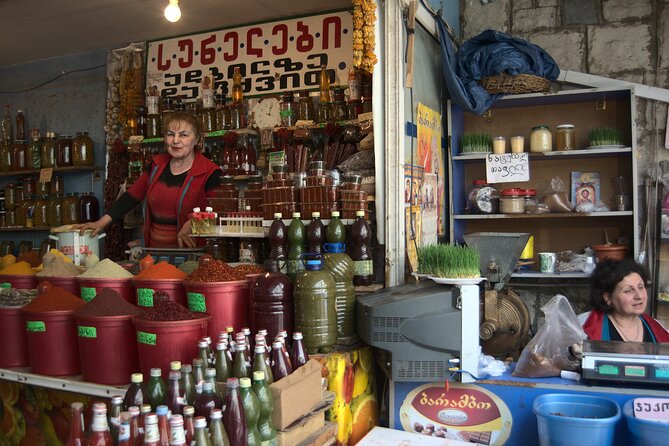
Tbilisi’s Dezerter’s Bazaar is the heart of this experience, but the real treat is meeting the vendors Paul knows by name. You’ll taste Georgian food at its source, then sit down for regional dishes and finish with a focused wine tasting.
I like the personal access to market characters such as the Spice Girl, the honey lady, and the bakers. I also like the clear food progression: market samples first, a proper meal next, and Georgian wine afterward. The main drawback is the price, $125 per person, and the five-and-a-half-hour schedule may feel long if you only want a quick market walk.
Key points at a glance
- Dezerter’s Bazaar comes first: Explore Tbilisi’s central farmer’s market with a guide who has longstanding ties to its vendors.
- Paul leads the day: His local connections and stories provide context that a self-guided market visit may miss.
- The food keeps coming: Expect pkhali, jonjoli, Georgian cheeses, corn bread, lobiani, and homemade tkemali.
- Lunch is part of the lesson: A notable local restaurant serves regional specialties, including a large ghobi platter.
- Wine gets its own finale: Finish at a renowned wine bar with a select tasting of artisanal Georgian wines.
- Private and in English: Only your group participates, with a 10:00 am start and return to the meeting point.
Why the Dezerter’s Bazaar is the right starting point

The Dezerter’s Bazaar gives you a useful first look at Georgian food before you sit down for lunch. This is not simply a walk past stalls. The plan is to meet vendors, sample products, and learn how everyday Georgian cooking begins with market ingredients.
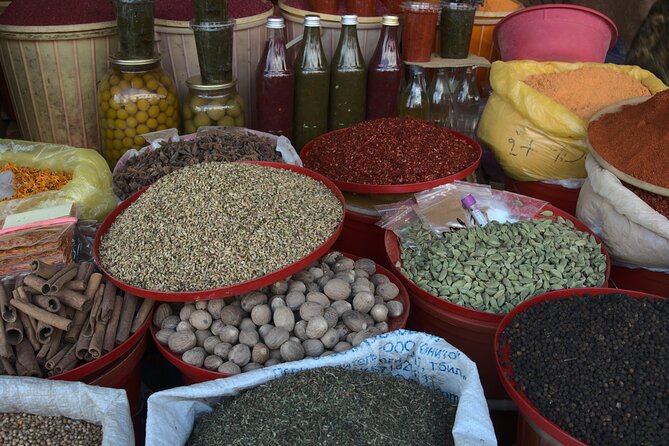
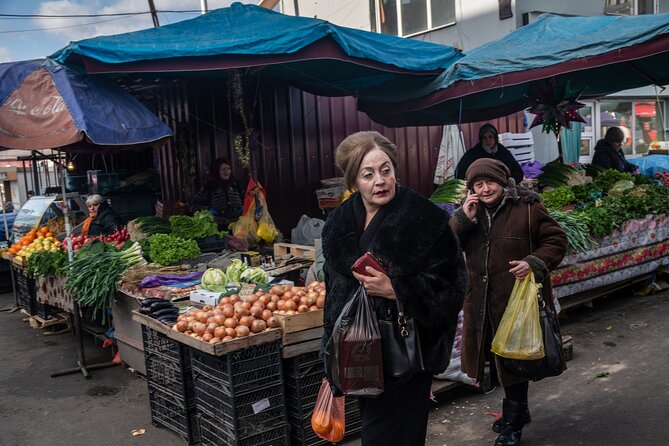
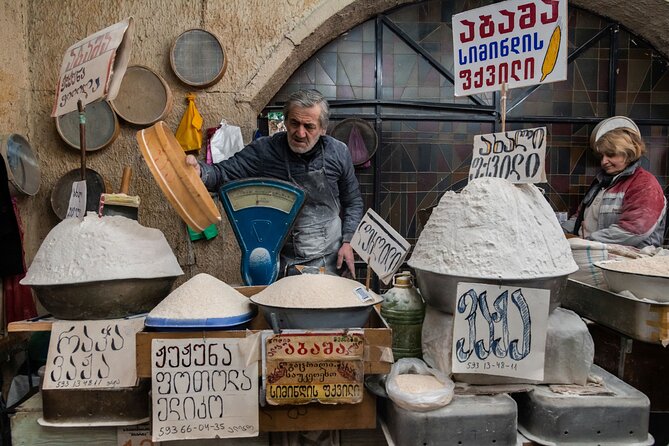
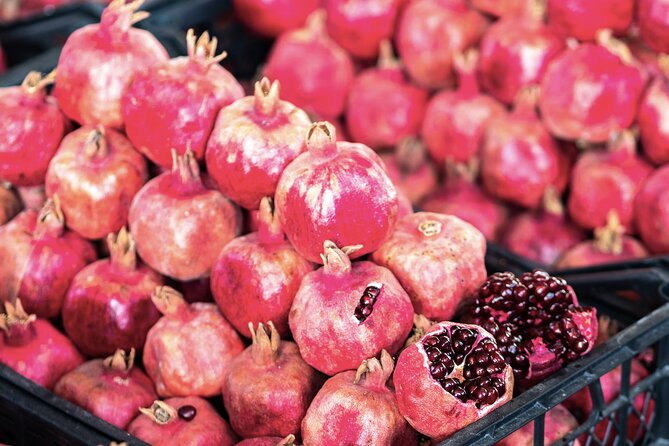
The setting matters. A central farmer’s market brings together the practical side of Tbilisi’s food culture: produce, spices, cheeses, bread, sauces, honey, and other local staples. You can expect a sensory stop, with plenty to look at and taste, rather than a polished food hall designed only for visitors.
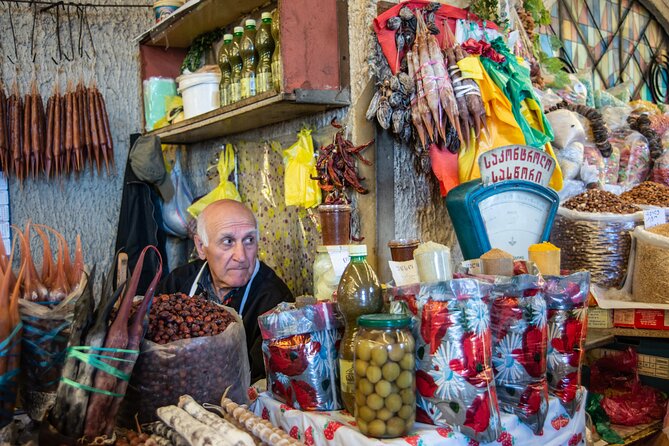
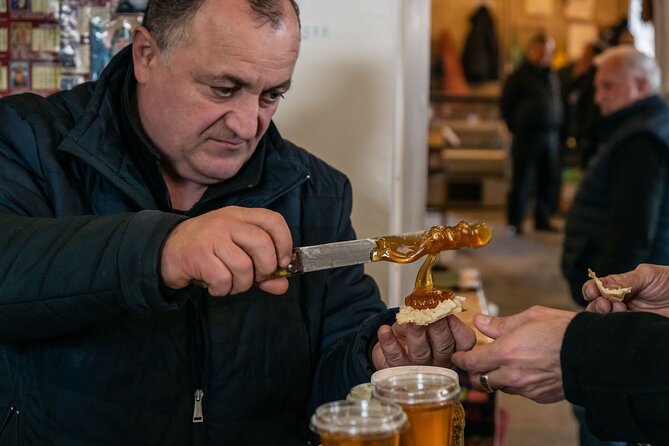
Paul’s relationships are a major part of the experience. You may meet the vendor known as the Spice Girl, the honey lady, and bakers who work with traditional methods. Those encounters give the market a human face, and they help explain why certain ingredients matter in Georgian kitchens.
The market visit also gives you a better way to ask questions. You can learn what is seasonal, how products are used, and which foods are meant to be eaten as snacks, side dishes, or part of a larger table. The supplied details do not promise a fixed list of every sample, so the exact tasting lineup may change with the market and the season.
more days out of Tbilisi to compare
- Tbilisi:Mtskheta,Jvari,Bazaar,wine tasting,Chronicles of Georgia
★ 5.0 · 730 reviews - Old Tbilisi Tour: Private Walking Tour With Wine Tasting
★ 5.0 · 273 reviews - Private Tbilisi Food Tour: 9 Tastings Walk in Bohemian District
★ 5.0 · 227 reviews
Following Paul through Tbilisi’s food culture
Paul is the named guide associated with this experience, and his role seems to go well beyond pointing out stalls. He connects the food to Tbilisi and Georgia, explains local customs, and answers questions about the country’s culinary traditions.
That context is important in Georgia, where a meal often carries social meaning. The food is only one part of the experience. Toasts, shared plates, hospitality, and wine all belong to the same cultural picture. The day may include celebratory toasts of wine and chacha, according to the experience details, so you should be ready for more than a quiet tasting.
I like this format for a first day in Tbilisi because it gives you a set of reference points. After the tour, you’ll recognize familiar foods on restaurant menus and understand more about the products you see in shops. You are not just collecting tastes. You are learning how to read the city’s food scene.
The private format helps here. Only your group participates, so questions do not have to compete with a large crowd. It can also make the pace more flexible within the planned five-and-a-half-hour schedule, though the supplied information does not promise a fully customized itinerary.
Tasting the market: spices, honey, bread, and cheese
The strongest part of this tour is likely the variety of market stops. The food details point to a broad introduction rather than one narrow specialty, with vendors offering products that later make sense on the lunch table.
Spices bring one kind of lesson. Honey brings another. Bakers show how bread remains a central part of Georgian meals. These are simple foods, but they help you understand the building blocks of the cuisine.
The market is also a good place to try foods that can seem unfamiliar on a menu. A guide can explain how a sauce is used, what makes a cheese local, or how a vegetable preparation fits into a Georgian meal. You get the chance to taste before deciding what you want to order later in your trip.
The bakery stop deserves special attention. Georgian bread baked in a tone oven has a distinct place in the country’s food culture, and the sample menu includes tonis lobiani, bean-filled bread baked in one of these traditional ovens. Lobiani is substantial enough to count as a small meal, but it also works as a practical introduction to Georgian baking.
You should arrive ready to sample several foods close together. This is not the ideal outing if you prefer a light breakfast followed by a short stroll. The food arrives in stages, and lunch follows the market, so pace yourself early.
Understanding the sample menu
The sample menu gives a good sense of the tour’s style. It is built around shared Georgian foods rather than individual plated courses.
The main dish is ghobi, described as a large bowl of seasonal starters. It includes pkhali, jonjoli, a cheese assortment, and corn bread. This is a useful combination because it shows several sides of Georgian food at once.
Pkhali is a vegetable-based preparation commonly associated with walnuts, herbs, and seasoning. Jonjoli is a pickled flower bud used as a distinctive Georgian starter. The provided information does not specify every ingredient in each portion, but the inclusion of these dishes signals a focus on small plates and strong flavors.
The cheese assortment adds a simple comparison point. Georgian cheeses vary in texture and saltiness, and tasting more than one beside bread and vegetable dishes is more instructive than trying a single cheese on its own.
Corn bread rounds out the ghobi. It is a modest food, but it fits the meal well and gives you a base for the sharper flavors on the table.
The menu also lists homemade tkemali, a spur plum sauce. Tkemali is tart and lively, and it is one of the sauces that can make Georgian food taste immediately different from familiar European cooking. You might find it served with other foods during the meal, but the supplied menu does not specify its exact presentation.
Because the ghobi includes seasonal starters, you should not treat this as a rigid menu. The core style is clear, but particular produce and preparations may shift.
A different direction out of Tbilisi entirely:
- Day Trip to Kakheti Wine Region Including 9 Wine Tastings
★ 5.0 · 2,774 reviews - Highlights of Caucasus Mountains-Jinvali,Ananuri,Gudauri,Kazbegi(Group tour)
★ 5.0 · 2,682 reviews - Day Trip to Kazbegi and Gudauri
★ 5.0 · 2,009 reviews - Day Trip to Mtskheta Gori and Uplistsikhe
★ 5.0 · 1,801 reviews
Lunch at a notable local restaurant
After the market, the tour moves from standing tastings to a proper meal at a notable local restaurant. This change of pace matters. Five hours of food sampling can become tiring if the entire outing stays on its feet, so a sit-down meal gives the day a natural middle section.
Lunch is also where the market lessons come together. You have already seen ingredients and met vendors. Now you can taste Georgian food in a restaurant setting, with Paul explaining what is on the table and how the dishes fit into a larger meal.
The meal appears designed for sharing. Ghobi, bread, cheese, sauces, and seasonal starters are foods meant to be placed in the middle and passed around. That makes the private format especially useful for couples, families, and small groups who enjoy eating together.
You should check your comfort with the menu before booking if you have dietary restrictions. The available information specifically says the tour is not recommended for people with nut allergies. That warning is important because pkhali and other Georgian preparations may involve nuts, and substitutions are not promised.
There is no stated menu for every lunch course beyond the listed foods. That is not necessarily a weakness, but it means you should book this for a guided regional tasting rather than for a guaranteed fine-dining menu.
Georgian wine at the final stop
The final wine-bar visit gives the day a clear ending. You’ll learn about artisanal Georgian wines through a select tasting at a renowned wine bar.
Georgia has a strong wine identity, and wine is closely tied to food, hospitality, and the custom of making toasts. A guided tasting can help you understand the difference between simply drinking wine and learning why a particular bottle matters.
The wording suggests a focused tasting rather than an unlimited drinking session. That is a good fit after a full morning of food. You can concentrate on the character of the wines and their place in Georgian culture without turning the final stop into a rushed bar crawl.
The experience details also refer to wine and chacha toasts. Chacha is a Georgian spirit, so you should expect the possibility of stronger alcohol as part of the social side of the day. If you do not drink, confirm what alternatives are available before booking, since nonalcoholic options are not stated.
I like the order of the itinerary. Food comes first, lunch settles the day, and wine closes the experience. It feels more thoughtful than scattering random tastings across five hours.
Is $125 a fair price?
At $125 per person, this is not a bargain market tour. It is a private, five-and-a-half-hour experience with a named guide, market tastings, a restaurant meal, and a wine-bar tasting. The value rests on the personal access and the amount of food and explanation packed into the day.
For a couple or small group, the price may make sense if you want a strong introduction to Tbilisi’s cuisine without having to plan each stop. You are paying for the guide’s connections, the private format, and the ease of moving from vendors to restaurant to wine bar.
A cheaper self-guided visit would let you browse the market and choose your own food. But it would not necessarily give you access to Paul’s vendor contacts, the same background on ingredients, or a planned restaurant and wine tasting. If those details are central to your trip, the higher price has a practical reason.
The price is less appealing if you already know Georgian food well, have a tight budget, or want only a short market visit. It is also a poor fit if you cannot eat nuts or do not want a food-and-alcohol-focused day.
Timing, meeting point, and group size
The tour starts at 10:00 am at the Shota Rustaveli Monument, located at 2 Mikheil Zandukeli Street in Tbilisi. The activity ends back at the same meeting point.
That return arrangement is useful. You do not need to plan a separate pickup after lunch or the wine tasting, and you can schedule another activity from a known location afterward. The total duration is about five hours and 30 minutes, so leave the rest of the day open rather than booking a fixed early afternoon appointment.
The tour is offered in English and uses a mobile ticket. It is near public transportation, which makes the starting point practical for visitors staying elsewhere in central Tbilisi.
Only your group participates. The available information does not state the maximum group size, so you should not assume it is designed for a particular number of people. Still, the private format should make the conversations with Paul more direct than on a large group outing.
Confirmation is received at booking. Free cancellation is available if you cancel at least 24 hours before the 10:00 am start time. Cancellations or changes made less than 24 hours ahead are not accepted for a refund.
Who will enjoy this Tbilisi food tour?
I would choose this for someone visiting Tbilisi for the first time who wants food, local contact, and cultural background in one outing. It is also a good fit for couples and small private groups who prefer a planned day to choosing every stop themselves.
Food-minded visitors will get the most from it. The menu covers bread, cheese, sauces, vegetables, pickled foods, wine, and a regional restaurant meal, so you get a broad first taste of Georgia rather than a single specialty.
It also suits curious drinkers who want an introduction to Georgian wine. The wine-bar stop adds structure and gives the day a clear final lesson.
I would hesitate to recommend it to anyone with a nut allergy, since the experience is specifically not recommended for that group. I would also think twice if you want a short, inexpensive outing or if a five-and-a-half-hour schedule feels too long.
Should you book it?
Book this tour if you want Tbilisi explained through food, and if meeting real vendors matters as much as eating at a restaurant. Paul’s contacts, the Dezerter’s Bazaar, the bread and spice stops, shared ghobi, and the final wine tasting create a well-shaped introduction to Georgian cuisine.
Skip it if you mainly want to browse the market on your own, need a low-cost activity, or must avoid nuts. At $125, the tour earns its price through its private format, food stops, meal, wine tasting, and local connections. For the right visitor, that is a fair trade for a full morning and early afternoon of guided eating.
FAQ
Where does the tour begin?
It begins at the Shota Rustaveli Monument, 2 Mikheil Zandukeli Street, Tbilisi, Georgia.
What time does the tour start?
The start time is 10:00 am.
Where does the tour end?
The activity ends back at the meeting point.
How long does the tour last?
The tour lasts approximately five hours and 30 minutes.
What language is the tour offered in?
The tour is offered in English.
Is this a private tour?
Yes. Only your group participates in the activity.
Is the tour suitable for people with nut allergies?
No. The experience is specifically not recommended for people with nut allergies.
Can I cancel for a full refund?
Yes, if you cancel at least 24 hours before the experience starts. Cancellations or changes made less than 24 hours before the start time are not accepted for a refund.
More Half-Day in Tbilisi
- Half-Day Famous Georgian Supra Feast
★ 5.0 · 13 reviews
More Markets in Tbilisi
- Join a Local for a Market Tour, Cooking Class and Meal in her Tbilisi Home
★ 5.0 · 15 reviews - New Year in Tbilisi: Christmas Market and Hidden Gems Tour
★ 5.0 · 3 reviews
Recently added around Tbilisi
- 2-Day Private Wine Tour to Kakheti from Tbilisi★ 5.0 · 3 reviews
- Kakheti wine region – Private Tour★ 5.0 · 3 reviews
- 17 Day Private Tour through Georgia★ 5.0 · 3 reviews
- Tbilisi and Mtskheta cities private, cultural tour★ 5.0 · 3 reviews
- Tbilisi City Tour with Street Photography★ 5.0 · 3 reviews
- Kakheti With Top Destinations★ 5.0 · 3 reviews
- Jvari monastery & Mtskheta – Half day group tour from Tbilisi★ 5.0 · 3 reviews
- Tbilisi City, Jvari Monastery, Uplistsikhe caves, Mtskheta city Private Day Trip★ 4.5 · 3 reviews
Tbilisi Tours, compared.
Day Trip to Kakheti Wine Region Including 9 Wine Tastings
Read our review →
Highlights of Caucasus Mountains-Jinvali,Ananuri,Gudauri,Kazbegi(Group tour)
Read our review →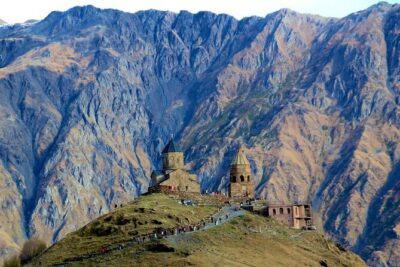
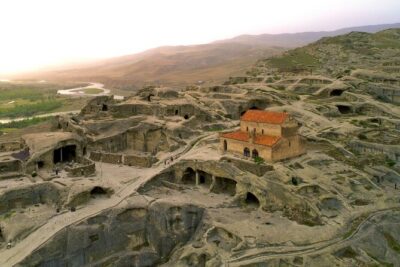

Tbilisi Walking Tour Including Cable Car and Traditional Bakery
Read our review →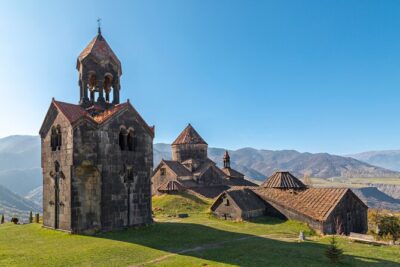

Kakheti Wine Region: Signagi and Bodbe Tour with 10 Wine Tastings
Read our review →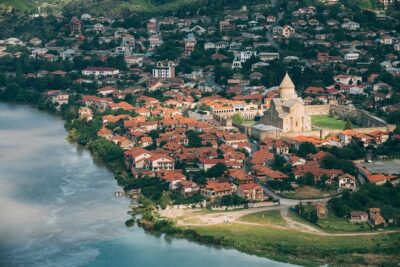
Mtskheta,Jvari,Bazaar,wine tasting,Chronicles of Georgia
Read our review →Browse the lists this tour appears in