
Reviewed · TBILISI TOURS
Tbilisi by Night Walking Tour
Tbilisi looks made for evening wandering. This three-hour walk links its old churches, glowing bridges, fortress walls, sulfur baths, and hilltop views, giving you a quick feel for both the ancient city and its modern face. I especially like the small-group limit of 15 and the mix of walking with a one-way cable-car ride.
I also like the local touches: Berikaoba folk theater, the angel clock at Rezo Gabriadze Theater, and the chance to ask about Georgian food and nightlife. The main consideration is the price, $72.25, which is fairly high for a walking tour, especially since food, drinks, transportation, and the funicular ride are not included.
Key points before you book
- Seven o’clock start: Begin beside the Berikaoba sculpture group, then head into the Old Town as the lights come on.
- One cable-car ride included: Ride from Rike to Narikala for broad views over the Kura River and central Tbilisi.
- A strong first look at the city: You see churches, bridges, a fortress, a waterfall, sulfur baths, Liberty Square, and Mtatsminda.
- Guides make a difference: Anya and Zora are names associated with especially warm, informative tours.
- Expect plenty of walking: Wear comfortable shoes and be ready for hills, bridges, and uneven Old Town streets.
- Funicular cost is extra: The tour ends at the lower station, and the round-trip funicular is not included.
Tbilisi after sunset: what this tour is really about
This is not a food tour or a museum tour. It is a moving introduction to Tbilisi, built around city views and short explanations at many stops.
You begin at 7 pm near the Berikaoba sculpture group. Berikaoba comes from an improvised Georgian folk theater tradition linked to older fertility and rebirth festivals. It is an unusual place to start, since it gives you a bit of local culture before the familiar sights appear.
The route then moves through the Old Town and across the river before climbing toward the hills. You get a useful sense of Tbilisi’s unusual setting: old churches and bathhouses below, modern bridges in the center, and fortress slopes and observation points above.
I would treat this as a good first-evening orientation. You will not spend long inside any one attraction, but you will see enough to decide where you want to return during the rest of your stay.
more walking tours in Tbilisi
- Tbilisi Walking Tour Including Cable Car and Traditional Bakery
★ 5.0 · 1,310 reviews - Tbilisi:Evening Walking & Talking Tour with Wine & Boat Ride
★ 5.0 · 572 reviews - Old Tbilisi Highlights walking tour with wine & 10 tastings
★ 5.0 · 276 reviews
Berikaoba and the clock tower
The Berikaoba stop lasts about 10 minutes and has no admission charge. Your guide explains the masked folk theater and its connection to older Georgian celebrations.
From there, you walk for about 20 minutes toward the Rezo Gabriadze Marionette Theater. The theater’s clock tower is one of Tbilisi’s most photographed small sights. Built beside the theater in 2010, it has an angel that comes out to ring the bell every hour.
There is also a short puppet presentation called The Circle of Life at 7 pm. Here is the practical catch: the tour also starts at 7 pm, so you should not assume you will catch the show. Ask the provider in advance if seeing it matters to you. The clock tower itself is still worth seeing, especially when illuminated.
This part of the route works well because it combines a simple visual attraction with a story about Georgian performance traditions. It is more memorable than simply ticking off another church or square.
Anchiskhati Basilica and Baratashvili Bridge
As you continue, you pass Anchiskhati Basilica of St. Mary. It is the oldest surviving church in Tbilisi and dates from the sixth century.
The tour does not list an interior visit, so think of this as an exterior sight with a short explanation. After dark, the lit stonework gives the church a quiet presence amid the Old Town streets. You can pause for pictures, but the guide’s commentary is the main value here.
Next comes Baratashvili Bridge, built in 1966 where the earlier Mukhrani Bridge once stood. You cross the bridge and stop at a viewpoint for pictures of the Old Town.
This is one of the tour’s useful transitions. Instead of viewing the historic center only from narrow lanes, you get a wider look back toward the buildings and hills. The stop lasts about 20 minutes, followed by roughly 15 minutes of walking to the next area.
The Bridge of Peace and the Kura River
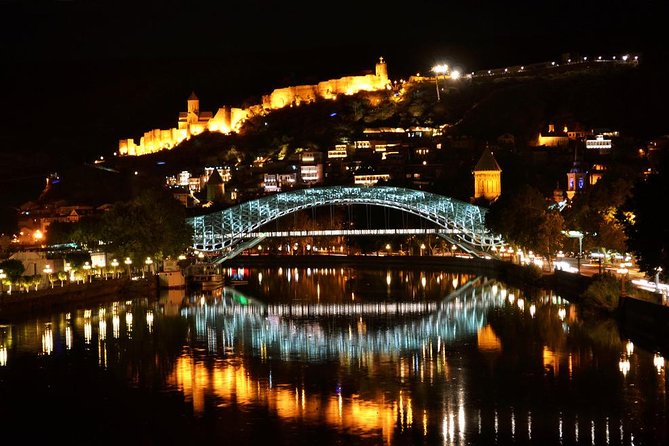
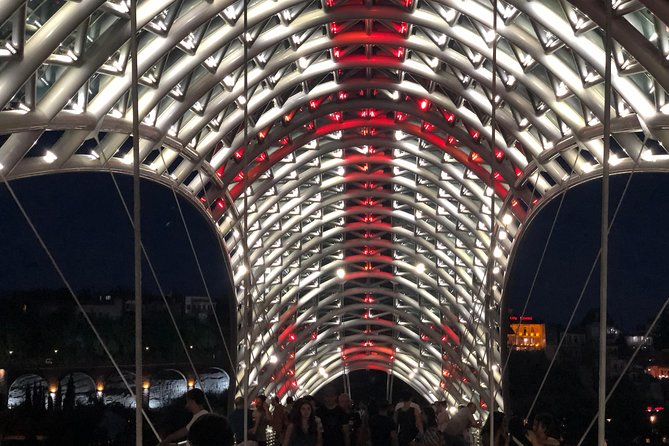
The Bridge of Peace is one of Tbilisi’s sharpest contrasts. Its steel and glass structure crosses the Kura River, and numerous LEDs light it after dark.
You spend about 30 minutes around the bridge. This is a good place for photos because the modern structure frames the older parts of the city. It also helps explain Tbilisi’s present-day identity. The city is not a preserved medieval quarter frozen in time. New architecture sits directly beside old churches, balconies, and fortress slopes.
If you prefer historic buildings to contemporary design, this may be a less important stop for you. I still think it earns its place on a night route because the lighting changes the bridge completely from its daytime appearance.
more days out of Tbilisi to compare
- Batumi Guided Night Walking Tour With Welcome Drinks
★ 5.0 · 16 reviews
Narikala Fortress and the cable-car ride
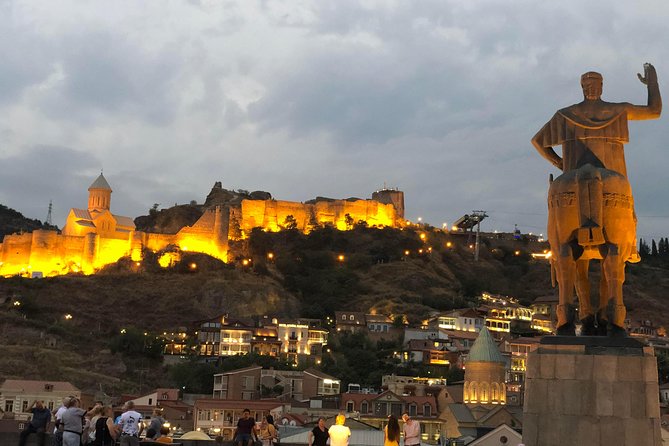
The next major stop is Narikala Fortress, seen lit up above the city. Your guide explains its historical role and architecture, while you spend about 30 minutes around the area.
The route then reaches the lower station of the Rike-Narikala Cable Car. One ride is included in the tour price. The ride takes you uphill and gives you views over the Old Town, the river, and the surrounding slopes.
This is an important value point. A walking tour that includes a cable-car ride feels more varied than three straight hours on pavement. It also saves you from walking every uphill section. The supplied timing gives about 50 minutes for reaching the area and walking around, followed by roughly 30 minutes connected with the cable-car stop.
The included ticket is one way, not a return ticket. The tour information also says transportation to and from attractions is not included, so you should not read the cable-car inclusion as a general transport pass.
Botanical Garden, Jumah Mosque, and Leghvtakhevi
From the high side of the route, your guide gives information about the National Botanical Garden of Georgia. The garden lies in the Tsavkisis-Tskali Gorge on the southern foothills of the Sololaki Range.
You do not have a listed garden entry or garden visit, so this is background rather than a full stop. That is still useful if you plan to return during daylight. A night tour cannot show you the garden at its best, but the location helps you understand the steep natural setting behind the city.
You also pass the Jumah Mosque, lit at night. It is notable because Sunni and Shia Muslims pray there side by side. The stop is brief, yet it adds an important social and religious detail to the route. Tbilisi’s story is not limited to Georgian Orthodox churches.
Leghvtakhevi Waterfall comes next. The waterfall sits in a cliff-lined area in the center of the city and is lit in the evening. You have about 10 minutes there.
The waterfall is a nice surprise because it shows how quickly Tbilisi can shift from urban streets to a narrow natural ravine. Do not expect a long nature walk. This is a short photo and explanation stop within a packed city route.
Chreli Abano and the sulfur-bath district
At Chreli Abano, your guide takes you to a less obvious viewpoint for photographs. From there, you can fit Tbilisi’s balconies, mosque, church, fortress, and sulfur baths into one frame.
This is one of the strongest photo stops on the tour. It also ties several parts of the evening together. You have already seen the fortress and mosque from different angles, but here you can understand how close these landmarks are to one another.
You then walk through Abanotubani, the sulfur-bath district, and hear about its importance while taking pictures of the small streets. The area is especially atmospheric at night, when the lamps pick out the domed bath roofs and the narrow lanes.
The tour does not include a bath visit, food, or drinks. If you want to try a sulfur bath, ask your guide for practical advice, but plan that as a separate activity.
Liberty Square and the climb toward Mtatsminda
The route continues to Liberty Square, also called Freedom Square. You spend about seven minutes seeing the illuminated Monument of St. George.
This is a quick stop rather than a major part of the evening. It gives you a look at one of central Tbilisi’s best-known civic spaces before the tour turns uphill again.
At the lower station of the Tbilisi Funicular, you begin the final section toward Mtatsminda. The guide talks about the history of the place while you capture video and photos of the city lights.
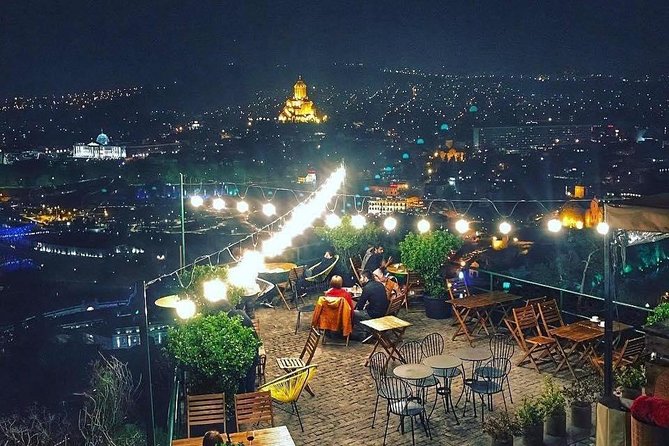
Mtatsminda Park provides the final viewpoint. From the observation deck, you can see Tbilisi’s older and newer buildings glowing below. It is a fitting finish because the evening has gradually moved from street-level details to broad city views.
The funicular ride itself is not included. The information specifically excludes a round-trip funicular ticket, and the tour ends beside the lower station at 22 Daniel Chonqadze Street. Clarify with the guide how the group reaches the observation deck on your chosen departure, since the listed inclusions do not cover a funicular return.
Is $72.25 good value?
At $72.25 per person, this is not a budget walk. The price makes more sense if you value a guide who can connect many sights, the small-group format, and the included one-way cable-car ride.
You are paying for about three to three and a half hours, a guide, all taxes and fees, and a route that covers a large part of central Tbilisi. The maximum group size is 15, though some departures may be smaller. One person was accommodated on a departure, which suggests the tour may still operate with a very small group, but you should not treat that as a guarantee.
The price is harder to justify if you mainly want photographs and already know the city. You can walk around many of these public sights without an admission fee. In that case, the guide’s local knowledge is the part that needs to matter to you.
It is also important to budget for anything else you choose to do afterward. Food, drinks, hotel pickup, hotel drop-off, general transportation, and the funicular round trip are not included.
What the guide adds
The best part of this experience depends on the guide. Anya has been singled out for explaining Tbilisi and Georgian history with warmth and care. Zora has also led an excellent introduction to both the old and modern sides of the city.
Another guide was praised for answering questions, taking photographs, and moving at a comfortable pace. That matters on a route with many short stops. You need someone who can keep the evening organized without turning it into a rushed list of dates and names.
The tour is offered in English, though the guide may be multilingual. The guide can also suggest places to eat Georgian food and recommend other things to do in Tbilisi when the walk ends.
Walking, timing, and practical comfort
Plan on walking for most of the three to three and a half hours. The route includes bridges, Old Town streets, the area around the waterfall, and uphill sections near Narikala and Mtatsminda.
Comfortable shoes are the obvious advice, but it matters here. One person specifically found the route easy to enjoy with proper shoes, while noting that the walk goes from the Old Town up toward the hills.
The start time is fixed at 7 pm. Darkness is part of the experience, not a minor detail. The lights on the Peace Bridge, Narikala, Leghvtakhevi Waterfall, Liberty Square, and Mtatsminda are central to the appeal.
The meeting point is next to the Berikaoba sculpture group at MRW4+HPC in Tbilisi. The end point is the lower station of the Tbilisi Funicular. Hotel pickup and drop-off are not provided, but the meeting point is near public transportation.
Confirmation is received at booking. Service animals are allowed, and most people can take part according to the supplied details. Free cancellation is available if you cancel at least 24 hours before the start time. Changes or cancellations made inside that window are not accepted for a refund.
Who should book this evening walk?
I would recommend it most strongly for a first visit to Tbilisi. The route gives you enough landmarks to get your bearings fast, while the guide’s explanations add cultural details you might miss on your own.
It also suits solo visitors who prefer not to walk an unfamiliar city alone after dark. The group limit keeps the experience from becoming a large procession, and the route includes both major sights and smaller details.
Couples and friends who want night photographs will like the bridges, fortress, bath district, and Mtatsminda view. You should book with realistic expectations, though. This is not a slow architecture seminar, a full history course, or a dinner outing.
Should you book the Tbilisi by Night Walking Tour?
Book it if you want a guided first look at Tbilisi after dark, prefer a small group, and like covering many sights in one evening. The mix of Old Town lanes, illuminated landmarks, cable-car views, and a final hilltop panorama gives you a useful introduction.
Skip it if $72.25 feels too steep for mostly free public sights, or if you want long visits inside churches, museums, or baths. Also check the timing of the 7 pm puppet show and ask how the Mtatsminda section works, since the funicular cost is separate.
For the right visitor, the tour’s real value is not admission tickets. It is having Anya, Zora, or another capable local guide turn a spread-out city into one clear evening, then point you toward good food and further exploring.
FAQ
Where does the Tbilisi by Night Walking Tour start?
It starts next to the Berikaoba sculpture group at MRW4+HPC in Tbilisi, Georgia.
What time does the tour begin?
The tour begins at 7:00 pm.
How long does the tour last?
The tour lasts approximately three to three and a half hours.
Where does the tour end?
It ends beside the main entrance of the lower station of the Tbilisi Funicular at 22 Daniel Chonqadze Street.
Is the tour offered in English?
Yes. The tour is offered in English, though the guide may be multilingual.
Is the cable-car ride included?
Yes. One cable-car ride from the Rike-Narikala Cable Car is included.
Is the funicular ride included?
No. The round-trip funicular ticket is not included.
Is food included in the price?
No. Food and drinks are not included.
How many people can join the tour?
The maximum group size is 15 people.
Can I cancel for a full refund?
Yes, if you cancel at least 24 hours before the experience begins. Cancellations made less than 24 hours before the start time are not refunded.
Recently added around Tbilisi
- 2-Day Private Wine Tour to Kakheti from Tbilisi★ 5.0 · 3 reviews
- Kakheti wine region – Private Tour★ 5.0 · 3 reviews
- 17 Day Private Tour through Georgia★ 5.0 · 3 reviews
- Tbilisi and Mtskheta cities private, cultural tour★ 5.0 · 3 reviews
- Tbilisi City Tour with Street Photography★ 5.0 · 3 reviews
- Kakheti With Top Destinations★ 5.0 · 3 reviews
- Jvari monastery & Mtskheta – Half day group tour from Tbilisi★ 5.0 · 3 reviews
- Tbilisi City, Jvari Monastery, Uplistsikhe caves, Mtskheta city Private Day Trip★ 4.5 · 3 reviews
Tbilisi Tours, compared.
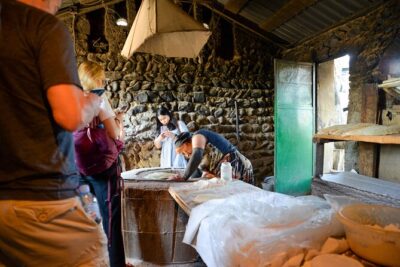
Day Trip to Kakheti Wine Region Including 9 Wine Tastings
Read our review →
Highlights of Caucasus Mountains-Jinvali,Ananuri,Gudauri,Kazbegi(Group tour)
Read our review →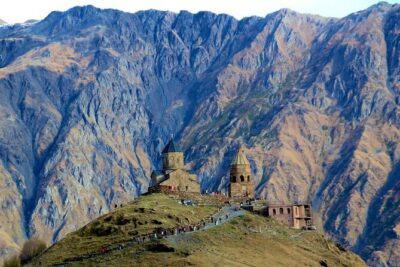
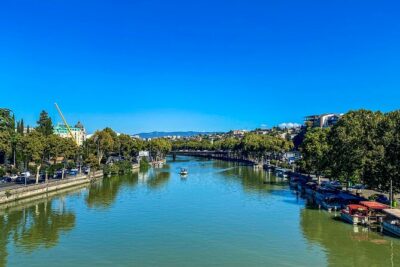
Tbilisi Walking Tour Including Cable Car and Traditional Bakery
Read our review →

Kakheti Wine Region: Signagi and Bodbe Tour with 10 Wine Tastings
Read our review →
Mtskheta,Jvari,Bazaar,wine tasting,Chronicles of Georgia
Read our review →Browse the lists this tour appears in