
Reviewed · TBILISI TOURS
Tbilisi City Private Tour
Tbilisi is easiest to understand when you combine its steep Old Town lanes with a drive along the city’s broad avenues. This private tour does exactly that: you walk among sulphur baths, waterfalls, churches, and market stalls, then rest in an air-conditioned car while your guide connects the sights.
I like the hotel pickup and drop-off, especially if you are staying outside the Old Town, and I like the freedom of a private vehicle with WiFi and water. Guides named George, Giorgi, Jeko, Goga, and Gogi have all led this experience, and the strongest reports praise their English, patience, local knowledge, and willingness to adjust the pace.
The main concern is consistency. Most of the feedback is excellent, but one unhappy party received little historical explanation and felt they had hired a driver rather than a guide. Traffic can also force the car portion to skip streets, and the cable car costs an extra $2 per person.
Key points to know before booking
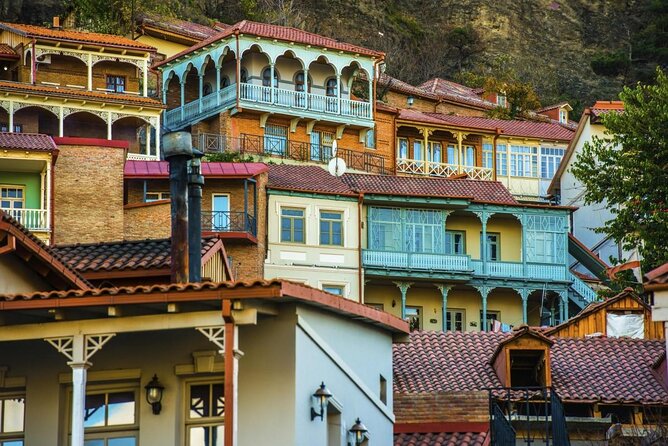
- Old Town is the heart of the day: Expect roughly three hours on foot around the sulphur baths, Leghvtakhevi Waterfall, Rike Park, historic churches, and the Bridge of Peace.
- You get both walking and driving: The car ride covers Freedom Square, Rustaveli Avenue, Heroes Square, Agmashenebeli Avenue, and other central areas without tiring your legs.
- The cable car is extra: The ride to the Mother of Georgia area costs $2 per person and is not included in the tour price.
- Private guiding allows changes: Guides have slowed the pace for guests with mobility problems and rearranged the day when needed.
- Dry Bridge Market adds local character: Set aside time for Soviet-era objects, art, antiques, and unusual souvenirs.
- Sameba Cathedral provides a grand finale: The Holy Trinity Cathedral gives you a quiet, impressive look at modern Georgian religious architecture.
Why this half-day tour works well on a first day
At $33.04 per person, this is priced attractively for a private five to six-hour outing, particularly if two or more people share the vehicle. You are not paying for a long list of entrance tickets, since nearly all stops are viewed from outside, but you are paying for transport, planning, an English-speaking guide, and the ability to set the pace for your own group.
I see the tour as an orientation day rather than a deep visit to every monument. You will see many places quickly, learn where they are, and decide which ones deserve a return visit. That is useful in Tbilisi, where the old lanes, steep hills, riverfront parks, and central boulevards do not always fit neatly into one self-guided route.
The timing is fairly full. The planned stops add up to about four hours and forty minutes, before hotel transfers, traffic, conversation, and any pauses for photos or food. One guide reportedly made time for a meal, while another moved quickly because there was so much to cover. Tell your guide early if you prefer a slower day with fewer stops.
This is a private activity, so only your party participates. That matters if you want to ask questions, stop for photos, or request extra help. It also means you do not have to match the walking speed or interests of a larger group.
more days out of Tbilisi to compare
- Kazbegi and Gudauri Full Day Private Tour from Tbilisi
★ 5.0 · 447 reviews - Old Tbilisi Tour: Private Walking Tour With Wine Tasting
★ 5.0 · 273 reviews - Private Tbilisi Food Tour: 9 Tastings Walk in Bohemian District
★ 5.0 · 227 reviews
Walking through Old Tbilisi for three hours
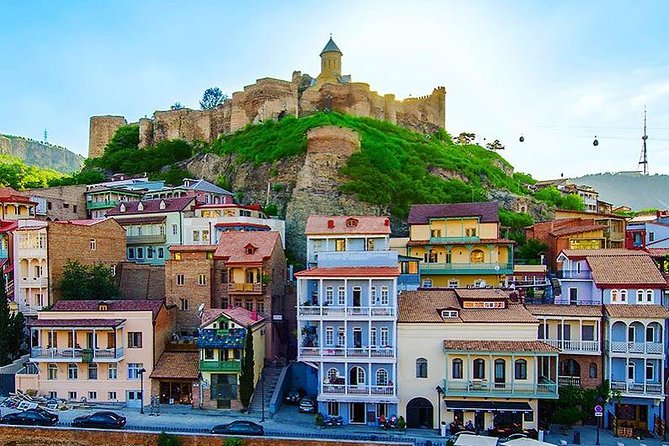
The best part of the experience is the extended walk through Old Town. Your driver parks the car, and the tour shifts from sightseeing through windows to exploring the city at street level. Allow yourself to notice the mix of balconies, narrow passages, old religious buildings, river views, and modern additions.
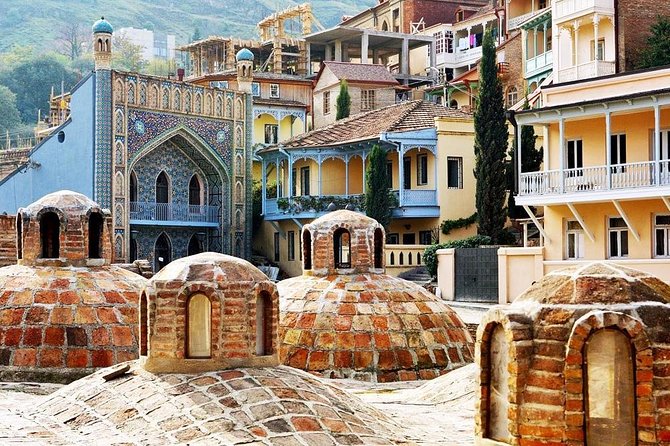
The Tbilisi Sulphur Baths introduce one of the city’s defining traditions. The baths sit in the Abanotubani area, where domed roofs and warm mineral springs help explain why the city developed here. The tour does not include a bathing session, so think of this as a chance to see the district and hear its background rather than use the facilities.
Nearby, Leghvtakhevi Waterfall gives Old Town an unexpected change of mood. You leave the street and follow a narrow route toward falling water enclosed by the city’s rocky slopes. It is a pleasant photo stop, though the walking surface and inclines may require care if your knees or back are troublesome.
The Bridge of Love is a small, playful stop rather than a major monument. It adds a personal touch to the route, and one guest with a slow-moving knee injury appreciated that the guide allowed extra time and patience. If you have a mobility concern, say so before the walk begins, not after the route is underway.
The Meidan Bazaar Tunnel offers a look at the commercial side of Old Town. You can browse Georgian crafts, food products, and small gifts, though the value of individual items will vary. The Tamada, or toastmaster, monument is another quick but memorable stop, tied to Georgia’s famous culture of feasting and formal toasts.
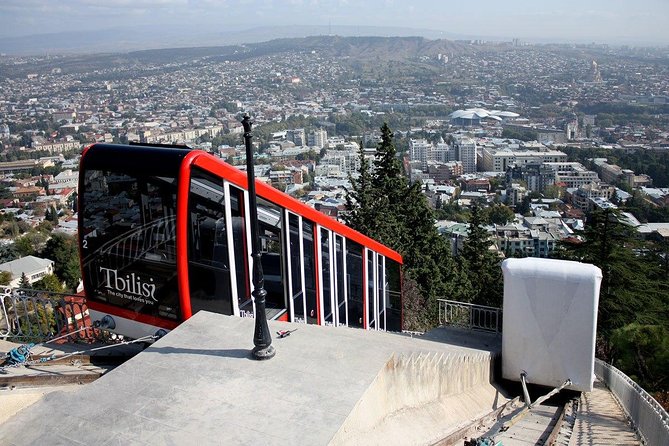
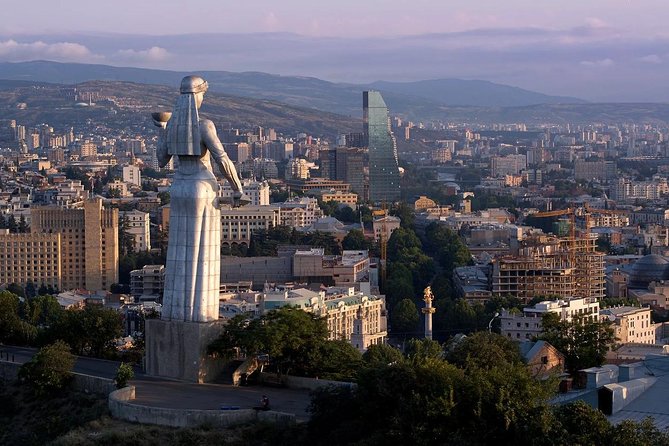
The King Gorgasali Monument helps place the old city within the story of its founding. From this area, you also gain access to the cable car route toward the Mother of Georgia statue and the upper parts of the city. The ride is optional in practical terms because it costs an extra $2 per person, but it can save energy on the climb and provide fine views over the roofs and river.
The cable car fee is the only stated entrance cost. Clarify with your guide how the ride fits your schedule, since the supplied plan lists the Old Town walk, the cable car area, Mother of Georgia, and Rike Park together. The experience includes the sights, but not a separate ticket for the cable car.
Rike Park and the Bridge of Peace
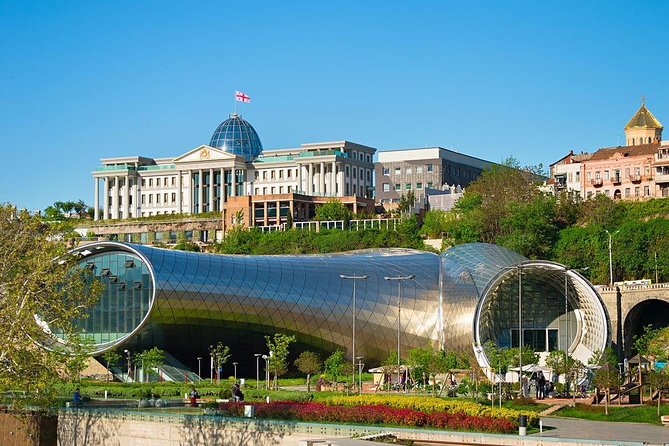
Rike Park gives the Old Town section a more open, modern setting. It sits beside the Mtkvari River and connects the older districts with contemporary Tbilisi. The Bridge of Peace, with its curved glass and steel form, creates a sharp contrast with the baths and churches you have just seen.
This change in style is one reason a guided route helps. Tbilisi is not a city where every important sight belongs to the same architectural period. You will move from medieval religious buildings to 19th-century streets and bold modern projects within a short distance.
The Old Tbilisi Cable Car is also part of the visual story. Even if you choose not to ride, you can see how the city links the riverfront with the hill above. If you do ride, remember to budget the additional $2 per person.
The Anchiskhati Basilica is especially important because it is identified as the oldest church in Tbilisi. It is smaller and quieter in feel than Sameba Cathedral, making the two churches a useful comparison. The guide’s explanation can make the difference here. A quick exterior look is pleasant, but a strong guide can explain why this modest building matters.
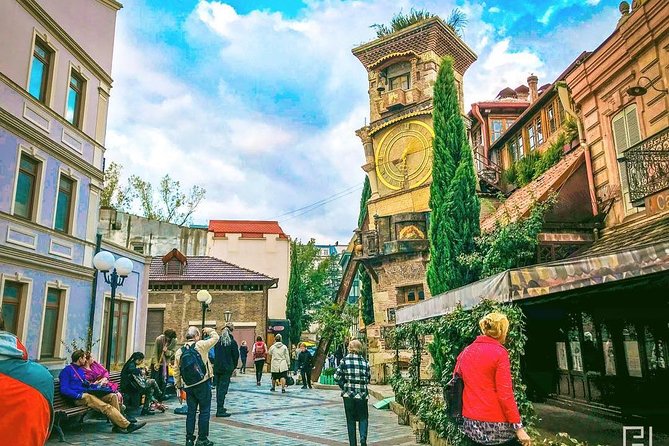
The Rezo Gabriadze Clock Tower adds a whimsical note. Its irregular shape and theatrical design make it one of the city’s most recognizable modern curiosities. One guide timed the group’s arrival with the opening of the small performance at the clock tower, which is a useful reminder that timing can improve a short stop.
Shardeni Street completes the Old Town loop with cafés, shops, and evening activity. It is one of the livelier parts of the center, but the route is still mainly about seeing the street and nearby landmarks rather than spending a long period in a restaurant.
Seeing central Tbilisi from the private car
After the walking section, the vehicle becomes useful. Tbilisi’s main streets spread beyond the compact old center, and the drive lets you cover more ground without turning the day into a long march.
At Freedom Square, you see the statue of Saint George defeating the dragon. It is a national symbol of victory and freedom, and the square is a natural reference point for understanding the city center. The car may pause briefly, but this is primarily a drive-by view.
Rustaveli Avenue offers a concentrated look at public life and Georgian culture. Along the boulevard, you pass the National Museum, Art Museum, Georgian National Opera and Ballet Theater, Parliament, Rustaveli Theatre, and other older buildings. If a particular museum or theater interests you, make a note of it for a later visit. This tour does not include extended interior visits.
First Republic Square features the Bicycle Monument, while Heroes Square is tied to a memorial for Georgians who died for the country’s independence. These stops are more meaningful with explanation, since the monuments can pass quickly from a car window.
Agmashenebeli Avenue brings a different architectural mood. Its restored 19th-century façades and colorful fronts make it one of the city’s most attractive streets. The avenue also has a lively feel, but heavy traffic may limit how much of it you see.
The drive also passes the Orbeliani Presidential Palace. Since the plan allows about forty minutes for this city section, do not expect a long stop at every square and building. Traffic is a real factor. The operator notes that some streets may be skipped during serious jams, so the car circuit should be treated as flexible rather than fixed.
more city tours in Tbilisi
- Kakheti;City of Love Sighnaghi, Bodbe. KTW. Wine House Group tour
★ 5.0 · 376 reviews - Tbilisi: Old and New City Guided Tour with 2 Cable Car Rides
★ 5.0 · 176 reviews - City tour Tbilisi on red bus
★ 4.5 · 139 reviews - Tbilisi – Mtskheta – Jvari. Full City Tour on Hop On Hop Off Bus
★ 4.5 · 91 reviews
Dry Bridge Market and the search for a Georgian souvenir
Dry Bridge Market is given about thirty minutes, but you may want more if you enjoy browsing. It is a flea market with art, vintage items, antiques, and objects from the Soviet period. The appeal is the hunt: you might find something personal and odd rather than another standard shop souvenir.
The short time allocation means you should decide how to use it. If you want to shop, move directly to the stalls that catch your eye. If you are more interested in the atmosphere, use the stop to see the range of objects and ask your guide about items you do not recognize.
This is also a good place to tell the guide what interests you. One past participant specifically enjoyed the Soviet relics, while the tour’s general appeal is broader, from art to old collectibles. Prices and authenticity can vary, so inspect objects carefully and buy because you like them, not because a seller claims they are rare.
Sameba Cathedral on St. Ilya Hill
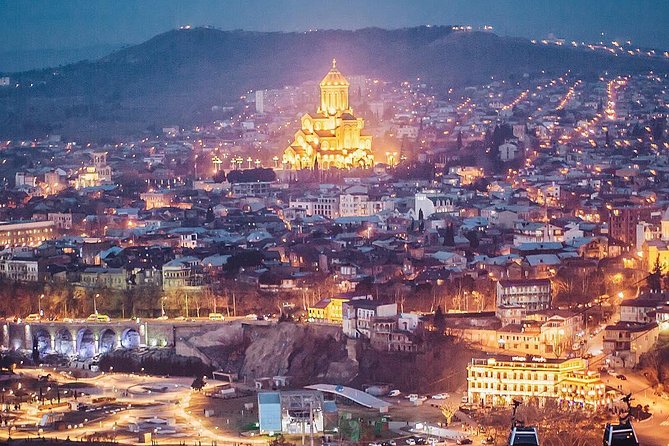
The final stop is Sameba, or the Holy Trinity Cathedral, on St. Ilya Hill. At 101 meters, it is described as the tallest church in Georgia, and its golden dome can be seen from much of Tbilisi.
The cathedral is part of a large religious complex, not just a single building. It includes the Patriarch’s residence, a monastery, a theological school and academy, and nine chapels. Five of those chapels are underground, adding another layer to the site even if your visit is brief.
Give yourself time to absorb the scale. After the tight lanes of Old Town and the busy central roads, the cathedral grounds provide a more spacious and reflective ending. Dress and behave respectfully, since this is an active religious place. The tour includes the visit, but no separate admission fee is listed.
This stop also shows why the guide matters. A guide who can explain Georgia’s religious and national story will give the building more meaning than a quick photo stop. One negative experience specifically involved a driver who could not answer questions about Sameba, so I would ask at the start how much background your guide plans to provide at each site.
Guides, pace, and the private advantage
The most praised guides are George, Giorgi, Jeko, Goga, and Gogi. George appears repeatedly in the supplied feedback, with strong marks for punctuality, friendly conversation, English, historical explanation, and flexibility. Jeko was praised for discussing both older rural customs and modern city life, while Giorgi was credited with patient guiding and confident driving through congested streets.
Those details matter because this is not just a sightseeing transfer. The best version of the experience gives you stories during the drives, context at the churches and monuments, and practical suggestions about where to eat or walk afterward. Several people also valued being able to ask questions about Georgia’s geography and recent past.
The private format helps with real-life problems. A guide rearranged the day for a person with severe sciatica, reducing long walks and adding more drive-by stops. Another guide kept a slower pace for someone with a knee injury. Bad weather has also been handled with flexibility, although the experience requires good weather and may be moved or refunded if conditions force cancellation.
Still, you should set expectations. Guide quality can vary, and the tour’s success depends heavily on who leads it. At booking or pickup, tell the guide whether you want history, architecture, markets, food advice, photography, or a gentle walking pace. One positive comment specifically advised telling the guide what interests you.
The vehicle is air-conditioned, has WiFi, and provides water. That is a practical comfort during a warm day or after walking the hills. One party of five found its car cramped, so larger groups should confirm the vehicle size before committing. The tour is private, but private does not always mean spacious.
Who should book this Tbilisi tour?
I would choose it for a first full day or first morning in Tbilisi, especially if you want a broad introduction before exploring independently. It suits solo visitors, couples, families, and small groups who value door-to-door service and do not want to work out the city’s hills and scattered sights alone.
It is also a good fit if you have limited time. In five to six hours, you can see the old center, major avenues, a flea market, and Sameba Cathedral. You will not thoroughly tour every museum or spend long inside each church, but you will leave with a useful map of the city in your head.
I would be more cautious if your main goal is a slow architectural study or a long shopping session at Dry Bridge. The schedule covers a lot, and one person found the pace hurried. If you want depth, agree to drop a few stops and spend longer at the places that interest you most.
The price is strongest for two or more people sharing the private vehicle. Solo visitors still gain convenience and a personal guide, but the per-person cost is naturally less favorable. Since hotel pickup and drop-off are included, you also avoid arranging separate taxis at the beginning and end of the day.
Cancellation is free up to 24 hours before the start time for a full refund. Changes made within 24 hours are not accepted, and poor weather may lead to another date or a full refund.
Should you book it?
Book this tour if you want an efficient introduction to Tbilisi with a mix of walking, driving, local markets, religious sites, and city views. The strong overall score of 4.7 from 46 ratings and a 93 percent recommendation rate support the value, especially when you receive a guide such as George or Jeko who adds real context and adjusts the route to your needs.
Before setting off, ask about the walking pace, the cable car, and how much time you will spend at each stop. If your group is large, check the vehicle space. With those points settled, this is a sensible way to get your bearings fast, then return to the sulphur baths, Old Town lanes, museums, or markets that deserve more time.
FAQ
How long does the Tbilisi City Private Tour last?
The experience lasts approximately five to six hours, including the walking tour, city drive, Dry Bridge Market, Sameba Cathedral, and hotel transfers.
What is the price of the tour?
The listed price is $33.04 per person. Group discounts are offered.
Is hotel pickup included?
Yes. Pickup and drop-off are available from any hotel or address in Tbilisi.
Is the tour private?
Yes. Only your group participates in the activity.
What language is the tour offered in?
The tour is offered in English.
Is the cable car included in the price?
No. The cable car costs $2 per person and is listed as an additional expense.
What transportation is provided?
You travel in a private, air-conditioned vehicle with WiFi on board. Water is also provided in the vehicle.
What happens if the weather is poor?
The experience requires good weather. If it is canceled because of poor weather, you will be offered a different date or a full refund.
Recently added around Tbilisi
- 2-Day Private Wine Tour to Kakheti from Tbilisi★ 5.0 · 3 reviews
- Kakheti wine region – Private Tour★ 5.0 · 3 reviews
- 17 Day Private Tour through Georgia★ 5.0 · 3 reviews
- Tbilisi and Mtskheta cities private, cultural tour★ 5.0 · 3 reviews
- Tbilisi City Tour with Street Photography★ 5.0 · 3 reviews
- Kakheti With Top Destinations★ 5.0 · 3 reviews
- Jvari monastery & Mtskheta – Half day group tour from Tbilisi★ 5.0 · 3 reviews
- Tbilisi City, Jvari Monastery, Uplistsikhe caves, Mtskheta city Private Day Trip★ 4.5 · 3 reviews
Tbilisi Tours, compared.
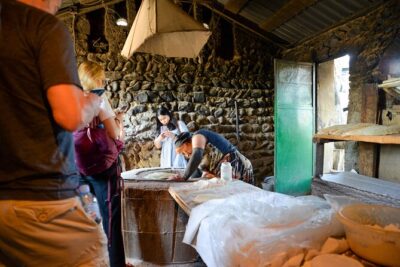
Day Trip to Kakheti Wine Region Including 9 Wine Tastings
Read our review →
Highlights of Caucasus Mountains-Jinvali,Ananuri,Gudauri,Kazbegi(Group tour)
Read our review →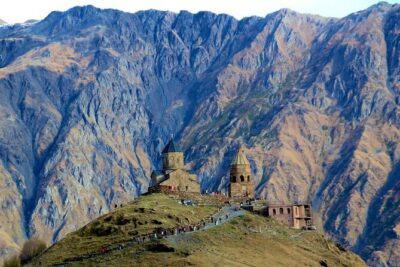
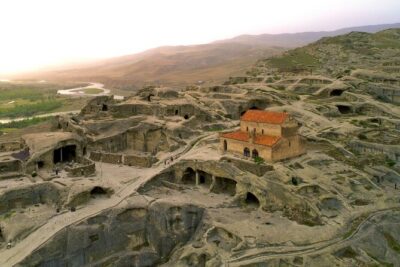

Tbilisi Walking Tour Including Cable Car and Traditional Bakery
Read our review →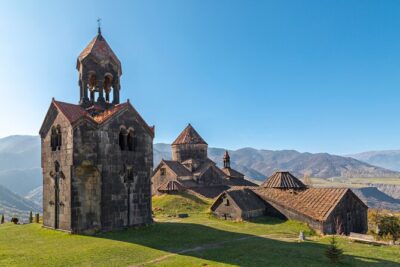

Kakheti Wine Region: Signagi and Bodbe Tour with 10 Wine Tastings
Read our review →
Mtskheta,Jvari,Bazaar,wine tasting,Chronicles of Georgia
Read our review →Browse the lists this tour appears in