

Reviewed · TBILISI TOURS
Walking City Tour in Tbilisi
Tbilisi reveals itself quickly on this private two-hour walk. You move from sulfur baths and narrow lanes to Narikala Fortress, then finish at Liberty Square, tracing Georgian, Persian, Orthodox, and Russian influences in one compact route. Guide Alesia Aliakseichyk also brings food advice into the experience, including help choosing Georgian dishes that may sound unfamiliar at first.
I like the small-group format, since your guide can adjust the pace and decide whether to use the cable car or walk uphill. I also like the mix of postcard sights and less obvious history, especially the Ateshgah Zoroastrian Temple and the links between Tbilisi’s old districts and its 19th-century aristocratic quarter. The main consideration is physical effort: steep streets and fortress access call for moderate fitness, and the cable-car fare is extra.
Key points at a glance
- Private route with Alesia Aliakseichyk: Your group receives a certified guide rather than joining a large walking crowd.
- Ten central stops in about two hours: The route covers baths, churches, fortress views, monuments, theater, and major civic spaces.
- Flexible Narikala access: You can pay for the cable car, listed at 2 EUR per person, or walk up and down.
- A strong first look at Tbilisi: The route connects the old city with Georgian, Persian, Christian, and Russian influences.
- Food guidance adds local value: Alesia can help you approach Georgian dishes that might otherwise be easy to skip.
- Free entry to the sights: The only stated extra cost is the optional cable car, plus any snacks you choose to buy.
Why this short Tbilisi walk works
Tbilisi is a city of layers. Its old quarter has carved wooden balconies and narrow streets, but nearby you find sulfur baths, Orthodox churches, a Zoroastrian temple, a Soviet-era civic story, and a fortress above the river. A two-hour private walk cannot explain every corner, but it can give you a useful map of how the city fits together.
I see the route as a good first-day choice. You get the main visual landmarks without spending half a day on transport, and you can ask questions as you go. Since the activity is private, Alesia can keep the walk focused on what interests you most, within the time available.
The tour costs $23.27 per person. That is a fair price if you want context rather than a checklist of photographs. The value comes from having a guide connect the stops, explain Georgian customs and history, and offer practical food suggestions. You are not paying entrance fees at the listed sights, so the optional cable car is the main added expense.
The route begins at Orbeliani Baths on Abano Street and normally ends at Freedom Square. A different ending can be arranged, which is useful if your next stop is elsewhere in central Tbilisi. Confirmation arrives at booking, and the activity is available as a mobile ticket.
more walking tours in Tbilisi
- Tbilisi Walking Tour Including Cable Car and Traditional Bakery
★ 5.0 · 1,310 reviews - Tbilisi:Evening Walking & Talking Tour with Wine & Boat Ride
★ 5.0 · 572 reviews - Old Tbilisi Highlights walking tour with wine & 10 tastings
★ 5.0 · 276 reviews
Starting among Tbilisi’s sulfur baths
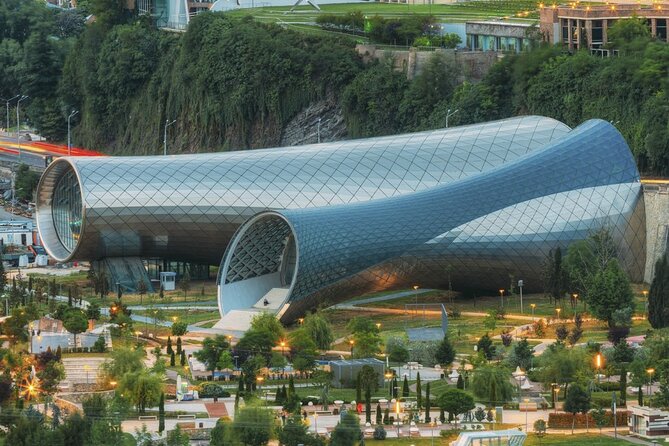
The first two stops, Orbeliani Baths and Abanotubani, establish one of Tbilisi’s defining features. Orbeliani Baths is also known as Pushkin Bath or Dumas Bath, names that point to the neighborhood’s long appeal to writers and visitors. You spend about five minutes here, enough for an introduction rather than a full bathing session.
Abanotubani is the old sulfur-bath district, with oriental-style bathhouses close together. This is not a bathing appointment, and no admission is included because there is no listed entrance charge for the walking stop. Instead, Alesia can give recommendations if you want to return later for a soak.
That advice may be one of the most practical parts of the opening. You can see the bath quarter first, hear how it fits into Tbilisi’s identity, and then decide if you want to make a separate visit. If you want to bathe during the tour itself, allow extra time and confirm arrangements directly, since the scheduled stop is only about five minutes.
Old Town lanes and carved balconies
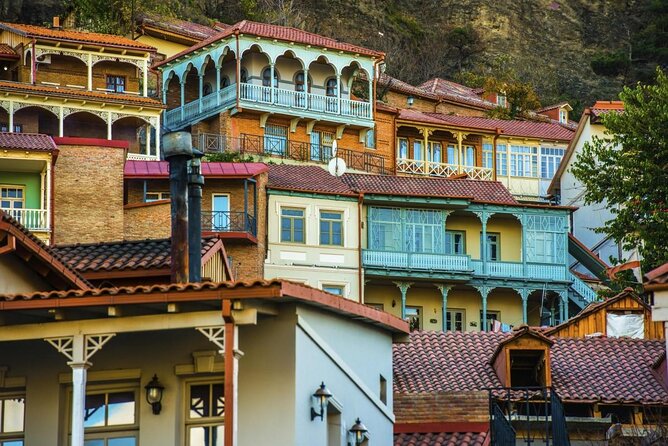
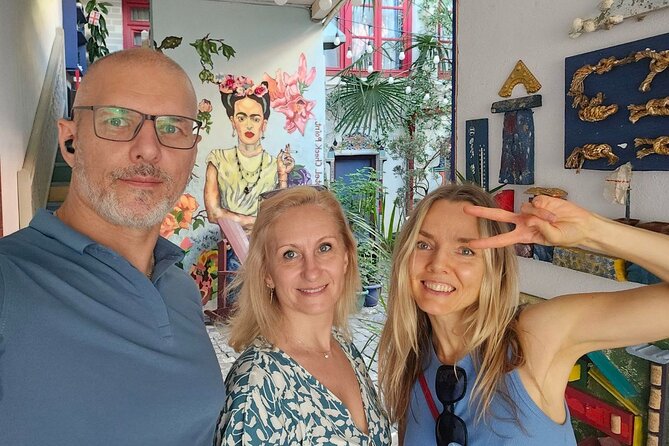
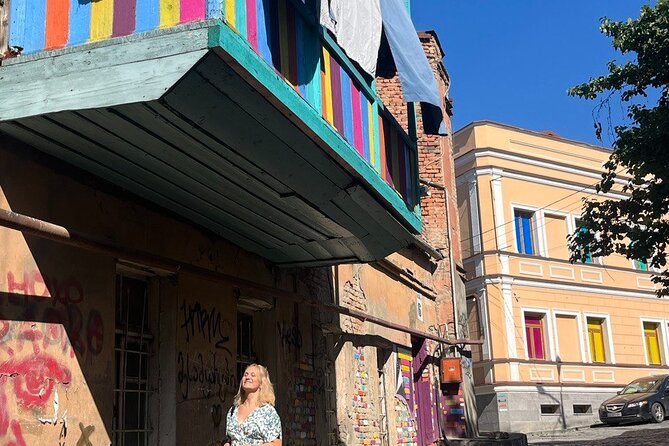
The old city receives about 20 minutes, the longest single stop on the walking portion. This is where Tbilisi becomes especially photogenic, with tight lanes, uneven streets, and carved balconies projecting over the façades. Alesia points out well-known photo locations, including Frida’s Cafe.
The value here is not just taking pictures. Tbilisi’s old streets make more sense when someone explains how the city’s traditions grew at the meeting point of Europe and Asia. The route description frames the tour around Georgian culture and customs, so you can expect the old town to be used as a starting point for that wider story.
Twenty minutes is enough for an introduction, but not enough to explore every lane at leisure. If you like stopping often for photos, your pace may feel brisk. The private format helps, since your group can communicate its priorities instead of trying to keep up with a fixed crowd.
Wear shoes suited to walking on old streets. The tour requires moderate physical fitness, and the later climb toward Narikala adds another test. The supplied details do not promise a fully level route, so anyone concerned about hills should ask Alesia about the pace before setting out.
Choosing the route to Narikala Fortress
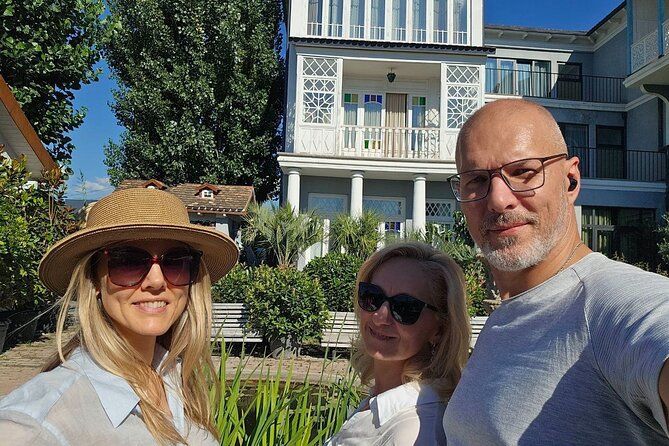
The Tbilisi Cable Car is the route’s main choice point. You can use it to go up, come down, or continue on foot through the old streets. The fare is not included and is listed as 2 EUR per person.
That flexibility matters. If you want to save your legs for sightseeing, the cable car gives you a practical option. If you prefer to walk and have the energy, the uphill route lets you spend more time among the old streets. The guide can adapt the plan, but the exact decision depends on your group and the conditions on the day.
The cable car is not the main attraction of the experience. It is a transport choice that can protect the short schedule from being consumed by a steep climb. Since the entire tour lasts about two hours, saving time on one section may leave more room for the fortress and city views.
Remember that the price shown for the cable car is separate from the tour price. The listed sights themselves are free to enter, but snacks are also excluded. Bring funds for anything you want to eat or drink during or after the walk.
more city tours in Tbilisi
- Kakheti;City of Love Sighnaghi, Bodbe. KTW. Wine House Group tour
★ 5.0 · 376 reviews - Tbilisi: Old and New City Guided Tour with 2 Cable Car Rides
★ 5.0 · 176 reviews - City tour Tbilisi on red bus
★ 4.5 · 139 reviews - Tbilisi – Mtskheta – Jvari. Full City Tour on Hop On Hop Off Bus
★ 4.5 · 91 reviews
Narikala’s wide view over Tbilisi
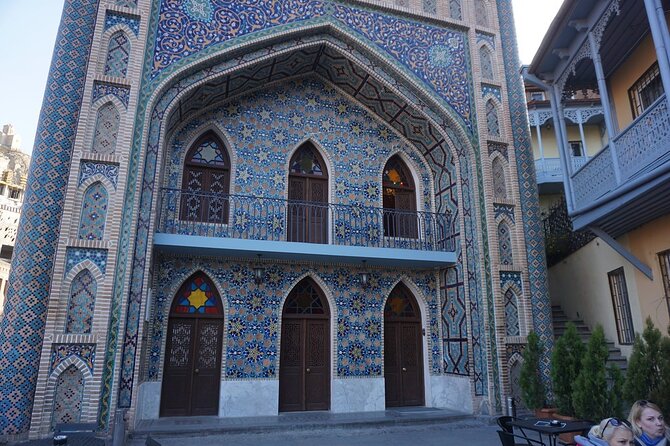
Narikala Fortress is the high point of the tour, both in elevation and in visual impact. You spend about ten minutes here, looking out across the city from above. The stop is brief, but it gives you the kind of broad view that helps orient the tighter streets visited earlier.
I like having this viewpoint placed in the middle of the route rather than treating it as an isolated lookout. After seeing the old baths and lanes below, you can understand Tbilisi’s shape more clearly from the fortress. It also gives the tour a strong visual center.
Ten minutes will not suit everyone. If you want a long photography session or a slower look at the fortress area, the schedule may feel limited. The private arrangement gives you some control, but the tour still has several stops to cover before it reaches Liberty Square.
The fortress section is also where physical effort matters most. You may use the cable car or walk, but you should still expect some walking around the hilltop. Moderate fitness is specifically requested, so this is not the best match for someone seeking a completely effortless city outing.
Betlemi churches and Georgia’s Christian story
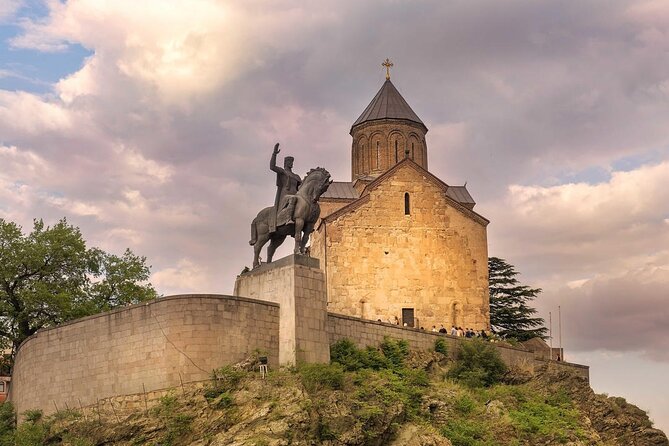
The Lower and Upper Betlemi Churches provide a shift from panoramic views to religious history. These old Orthodox churches are scheduled for about five minutes, so the emphasis is on explanation and orientation rather than an extended interior visit.
The useful question here is when Georgia became a Christian country. That subject gives the route more substance than a quick look at façades. You get a chance to connect Tbilisi’s churches with Georgian identity and understand why religious buildings remain such an important part of the city’s story.
A short stop cannot cover every church tradition or architectural detail. Still, the placement is smart: after the fortress and before the older Persian trace, it shows how different cultural forces sit close together in Tbilisi. If churches are a major interest for you, tell Alesia early so you can use the private time well.
Dress and behavior should suit an Orthodox church visit. The supplied details do not specify a dress code, so ask the guide if you need clear guidance before entering.
Mother of Georgia and the Persian trace
Kartlis Deda, the giant monument known as Mother of Georgia, is another five-minute stop. The monument gives you a recognizable symbol of the city and a chance to discuss how Georgia presents itself through national imagery.
The nearby Ateshgah Zoroastrian Temple adds a different layer. It is described as a trace of the Persian Empire, which makes it one of the most distinctive stops on the route. Many first-time city walks focus only on churches and fortress walls. This stop reminds you that Tbilisi’s past includes Persian influence as well.
Neither stop is designed for a long visit. Think of them as compact history lessons that work best when Alesia explains their place in the city’s story. The private format lets you ask what you want to know instead of receiving only a standard speech.
These two stops also reinforce the tour’s central idea: Tbilisi cannot be understood through one tradition alone. Georgian national identity, Orthodox Christianity, Persian influence, and later imperial rule all appear within a small central area.
Liberty Square and the Russian Empire
Liberty Square is the scheduled endpoint and receives about ten minutes. The tour uses the square to explain Georgia’s relationship with the Russian Empire, giving the route a modern political and historical direction after the older religious and cultural stops.
That progression is useful. You begin with baths and old streets, move through churches and imperial traces, and finish in a major civic space. The square helps connect the city’s older past with the forces that shaped more recent Georgia.
The standard ending is at Freedom Square, but a different endpoint can be arranged. This makes the tour easier to fit into a first day of sightseeing. You can ask to finish closer to another central destination if that works better for your plans.
The marionette theater and a small clock-tower moment
The Rezo Gabriadze Marionette Theater is listed as the final sightseeing stop, with about ten minutes set aside for it. The theater is known for its clock tower and a small performance every hour.
Timing matters here. The experience lasts about two hours, and the performance is hourly, so you may or may not arrive at the right moment. The provided details do not promise that the hourly show will line up with your tour. Ask Alesia about the timing if seeing it is important to you.
Even without the small performance, the theater adds a playful finish to a route filled with serious history. It also gives you a clear landmark near the end of the walk, before or around the move toward Liberty Square.
Food help that makes Georgian dining easier
One especially useful part of the experience is Alesia’s food guidance. A five-star German-language review praises her for introducing the group to Georgian cuisine and helping them choose dishes whose names initially sounded unfamiliar.
That detail matters because Georgian menus can be new territory. If you are unsure what to order, a guide who can explain local dishes may help you move beyond the safest choices. The tour itself does not include snacks or a meal, so this is advice rather than a food tasting.
You should not book this as a culinary tour. Its main purpose is city history and sightseeing. But if you tell Alesia that food is important to you, the private setting gives you a chance to ask for recommendations during the walk or for later dining.
Who will get the most from this tour
I would choose this walk if you have only a short time in Tbilisi and want a broad introduction. It suits first-time visitors who want the major old-city sights, a fortress viewpoint, and enough context to explore on their own afterward.
It also fits you if you prefer a private guide to a fixed large group. Alesia can adjust the cable-car choice, answer questions, and discuss food in a more personal way. The four available ratings are all five-star, and the strongest praise focuses on her competence, warm contact, and helpful introduction to Georgian cuisine.
The tour is less suitable if you want long visits inside monuments, a relaxed photography walk, or a full bathing experience. The schedule moves quickly, several stops last only five minutes, and the route includes hills. Visitors needing an easy, level walk should ask about the path before booking.
The experience is also a good fit for independent planners. You receive a quick orientation, then can return later to the bathhouses, old streets, churches, or theater at your own speed. In that sense, the tour works as a city primer rather than a complete account of Tbilisi.
Practical details before you book
The meeting point is Orbeliani Baths, 31 Abano Street, in Tbilisi. The normal ending is Liberty Square, 2 Freedom Square, though another ending can be arranged. The location is near public transportation, which makes both the start and finish practical for a city visit.
This is a private activity for your group only. A mobile ticket is provided, and confirmation is received at the time of booking. The average booking time is eight days ahead, which suggests that planning a little early is sensible if your dates are fixed.
The price is $23.27 per person. Since the listed sights are free, judge the cost by the guide service and the efficient route rather than by included admissions. Add the optional cable-car fare, listed at 2 EUR per person, and budget separately for snacks.
Free cancellation is available if you cancel at least 24 hours before the local start time. Changes or cancellations made inside that window are not accepted for a refund. Keep that deadline in mind when arranging a private tour around flights or other plans.
Should you book this Tbilisi walk?
Book it if you want a focused first look at Tbilisi, a private guide, and a route that combines the old city with less expected cultural history. The price is reasonable for a personalized two-hour introduction, especially when Alesia’s food advice and flexible cable-car choice are useful to you.
Skip it if you want to linger at every stop, bathe during the outing, or avoid hills. For most first-time visitors with moderate fitness, though, this is a sensible way to get oriented quickly, see Narikala’s city view, and finish with a better sense of how Georgian, Persian, Christian, and Russian influences meet in Tbilisi.
FAQ
How long does the Walking City Tour in Tbilisi last?
The tour lasts approximately two hours.
Is this a private tour?
Yes. Only your group participates in the activity.
Who is the guide?
The experience is provided by Alesia Aliakseichyk, who is described as a certified guide.
Where does the tour start?
The meeting point is Orbeliani Baths at 31 Abano Street, Tbilisi, Georgia.
Where does the tour end?
The usual ending point is Liberty Square at 2 Freedom Square, Tbilisi, Georgia. A different ending can be arranged.
Is the Tbilisi Cable Car included?
No. The cable car is optional and listed at 2 EUR per person. You can also walk to or from Narikala Fortress.
Are entrance fees included?
The listed sights are free to enter. Snacks are not included.
Can I cancel for a full refund?
Yes, if you cancel at least 24 hours before the experience start time. Cancellations or changes made less than 24 hours in advance are not accepted for a refund.
Recently added around Tbilisi
- 2-Day Private Wine Tour to Kakheti from Tbilisi★ 5.0 · 3 reviews
- Kakheti wine region – Private Tour★ 5.0 · 3 reviews
- 17 Day Private Tour through Georgia★ 5.0 · 3 reviews
- Tbilisi and Mtskheta cities private, cultural tour★ 5.0 · 3 reviews
- Tbilisi City Tour with Street Photography★ 5.0 · 3 reviews
- Kakheti With Top Destinations★ 5.0 · 3 reviews
- Jvari monastery & Mtskheta – Half day group tour from Tbilisi★ 5.0 · 3 reviews
- Tbilisi City, Jvari Monastery, Uplistsikhe caves, Mtskheta city Private Day Trip★ 4.5 · 3 reviews
Tbilisi Tours, compared.
Day Trip to Kakheti Wine Region Including 9 Wine Tastings
Read our review →
Highlights of Caucasus Mountains-Jinvali,Ananuri,Gudauri,Kazbegi(Group tour)
Read our review →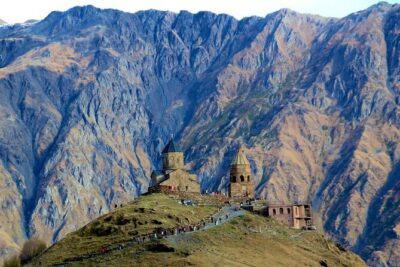
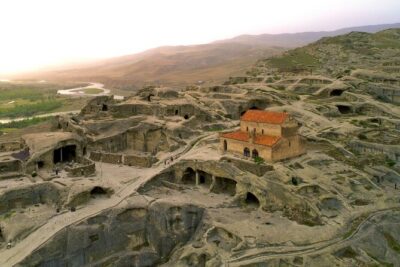

Tbilisi Walking Tour Including Cable Car and Traditional Bakery
Read our review →

Kakheti Wine Region: Signagi and Bodbe Tour with 10 Wine Tastings
Read our review →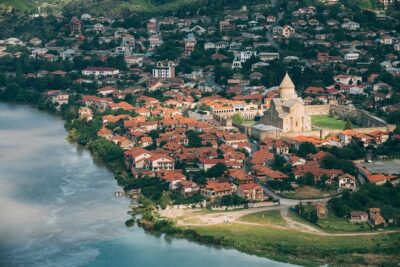
Mtskheta,Jvari,Bazaar,wine tasting,Chronicles of Georgia
Read our review →Browse the lists this tour appears in