
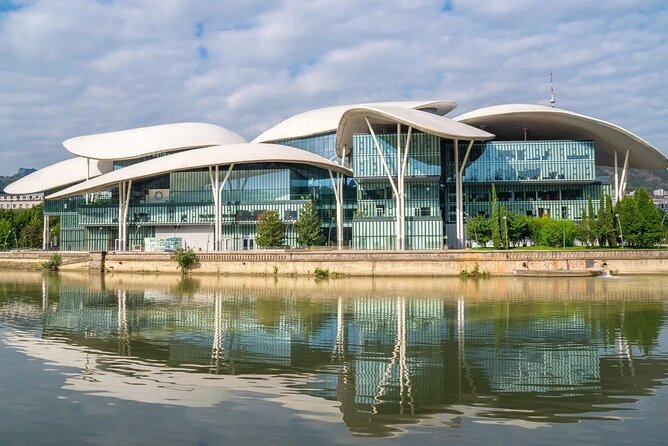
Reviewed · TBILISI TOURS
Walking Tour Tbilisi: From the USSR to the 1st Female President
Georgia’s recent political story unfolds along a short walk from Parliament of Georgia to the House of Justice. With guide Irakli, you connect Soviet rule, the April 9, 1989 tragedy, Georgia’s move toward independence, and the country’s first female president. It is a focused way to put Tbilisi’s government buildings into context.
I like the tour’s efficient design and its small, private format. I also like that it tackles modern Georgia rather than stopping with medieval churches and old balconies. The main consideration is that the walk lasts only 45 minutes to one hour, so this is an introduction, not a full political history course. You also see the buildings from outside.
Key points about this short Tbilisi walk
- Parliament starts the story: Meet at 8 Shota Rustaveli Avenue, in front of one of Georgia’s main symbols of public power.
- April 9 gets its own place: A scenic park helps explain the events of April 9, 1989, a key moment in Georgia’s road out of the Soviet Union.
- Two presidential palaces are part of the lesson: You’ll learn why Georgia has two and why the first female president moved to Orbeliani Palace in 2018.
- Irakli leads a discussion, not just a photo stop: Expect explanations, questions, and room to ask about Georgia’s political structure.
- The route ends at the House of Justice: The final stop links law, public services, and today’s political system.
- It suits curious first-time visitors: The compact route works well when you want political context before exploring more of Tbilisi.
Why this short tour matters in Tbilisi
Many first visits to Tbilisi focus on the Old Town, churches, sulfur baths, and hilltop views. Those places are worthwhile, but they do not fully explain how modern Georgia works. This walk takes you into the civic center, where the country’s political story is easier to see in physical form.
The route is especially useful if you know little about Georgia after the Soviet period. You do not need to arrive with a detailed grasp of Georgian politics. Irakli builds the story around a few visible places and explains how they relate to major changes in the country.
That focus is the tour’s strength. In less than an hour, you get a clear framework rather than a long list of dates. You can then look at later sights, news stories, and conversations in Georgia with a better sense of what shaped the country.
The private format also matters. Only your group takes part, so the pace can stay flexible. If you want to ask about the presidency, independence, the legal system, or the meaning of April 9, you have a better chance to do so than on a large group walk.
more walking tours in Tbilisi
- Tbilisi Walking Tour Including Cable Car and Traditional Bakery
★ 5.0 · 1,310 reviews - Tbilisi:Evening Walking & Talking Tour with Wine & Boat Ride
★ 5.0 · 572 reviews - Old Tbilisi Highlights walking tour with wine & 10 tastings
★ 5.0 · 276 reviews
Starting at Parliament on Rustaveli Avenue
The meeting point is in front of the Parliament of Georgia at 8 Shota Rustaveli Avenue. This gives the walk a fitting beginning: you start beside the country’s main legislative institution, not at a general sightseeing landmark.
Parliament lets Irakli introduce the basic structure of Georgian democracy and the political changes that followed the collapse of the Soviet Union. The exact discussion can respond to your questions, but the central idea is clear: the places around you are tied to decisions that affected the whole country.
Do not expect an inside visit. The experience is an outdoor walking tour, and the buildings are viewed from the street. That keeps the route quick and practical, though anyone hoping for parliamentary chambers or formal interiors should adjust expectations before booking.
The setting on Rustaveli Avenue also makes the first stop easy to combine with other sightseeing. The tour begins near one of central Tbilisi’s best-known avenues, so you can continue exploring after the walk without needing a separate transfer.
The April 9 story in a scenic park
A walk through a scenic park provides the setting for the discussion of April 9, 1989. This date is one of the most important reference points in modern Georgian history, and the tour gives it a dedicated stop rather than treating it as a passing detail.
The value here is the connection between a calm public space and a painful political event. You are not simply hearing that Georgia opposed Soviet rule. You are learning about one of the moments that helped shape the country’s memory of independence and state power.
The stop also gives the tour emotional and historical balance. Parliament represents formal government. The park helps bring the story back to people and public action. That change of setting makes the route feel less like a list of institutions and more like a short explanation of how political change affects ordinary life.
Because the whole tour is compact, Irakli cannot cover every detail of April 9 or every stage of Georgian independence. If this is the period you most want to study, treat the stop as a starting point and ask questions while you are there.
Orbeliani Palace and Georgia’s first female president
The Presidential Palace section is the most distinctive part of the walk. You learn why Georgia has two presidential palaces and why the country’s first female president moved to Orbeliani Palace in 2018.
That detail gives you a useful way to understand Georgia’s political structure. A presidential residence is not just an attractive building. Its location, use, and relationship with other state institutions can reflect how a country organizes power and presents its government.
The tour does not take you inside either palace. You should think of this stop as a guided reading of the exterior and its political meaning. Irakli’s role is important here because the buildings alone do not explain why there are two palaces or why Orbeliani Palace became associated with the first female presidency.
The topic also adds a modern human element to the route. You are not only discussing Soviet rule and institutions. You are looking at a specific change in public leadership and the symbolism of a woman becoming Georgia’s first female president.
For many people, this will be the most memorable stop because it joins architecture, constitutional questions, and a notable moment in Georgia’s public life. It is also a good place to ask for clarification if you are unsure how the presidency fits with Georgia’s wider political system.
A different direction out of Tbilisi entirely:
- Day Trip to Kakheti Wine Region Including 9 Wine Tastings
★ 5.0 · 2,774 reviews - Highlights of Caucasus Mountains-Jinvali,Ananuri,Gudauri,Kazbegi(Group tour)
★ 5.0 · 2,682 reviews - Day Trip to Kazbegi and Gudauri
★ 5.0 · 2,009 reviews - Day Trip to Mtskheta Gori and Uplistsikhe
★ 5.0 · 1,801 reviews
Finishing at the House of Justice
The walk ends at the House of Justice on the right bank of the Mtkvari River, at 1 Zviad Gamsakhurdia Named Right Bank. This is more than a final address. The stop shifts the conversation from presidents and public demonstrations to law and everyday government service.
You learn about key parts of Georgia’s legal system and its role in shaping the country’s present political reality. That gives the tour a useful ending because it connects big political events with the institutions people use in daily life.
As with the other stops, you do not go inside the building. The House of Justice is an exterior stop and a place for explanation. If you want a tour centered on interiors, exhibits, or formal access to government buildings, this experience will not provide that.
The ending is practical for planning the rest of your day. You finish on the right bank rather than returning to Parliament, so check your next destination before you start. The route is short, but it crosses a meaningful part of central Tbilisi’s civic core.
What Irakli adds to the experience
A strong guide makes a major difference on a subject like modern politics. Irakli is described as attentive, committed, and clear in his storytelling. He also makes time for questions, which matters because Georgia’s political structure can be unfamiliar if you are visiting from abroad.
You should expect a conversation rather than a memorized speech. The route has only a few stops, but each one carries several layers: Soviet rule, independence, public protest, presidential authority, legal institutions, and the country’s changing political identity.
The limited time works best when you arrive ready to participate. Ask about anything that seems unclear. The private setup means the tour can respond to your interests instead of forcing you to listen to a fixed presentation for a large crowd.
The available feedback describes Irakli as a pleasant interlocutor and a strong storyteller. That fits the design of the tour. The experience depends on explanation, since the buildings are seen from outside and the walk itself is not long.
Timing, walking, and practical comfort
The advertised duration is approximately 45 minutes to one hour. That makes this one of the easier activities to fit between major sights, a meal, or an arrival day in Tbilisi.
You still need a moderate level of physical fitness. This is a walking tour, so wear comfortable shoes and be ready to remain outdoors. The exact pace may depend on your group and the questions you ask.
The tour requires good weather. If poor conditions lead to cancellation, you can choose another date or receive a full refund. For the best experience, check the forecast and avoid scheduling it as the one activity you cannot move.
The meeting point is near public transportation, which is useful if you are staying outside the central area. The walk ends at the House of Justice, not back at Parliament, so allow time for the onward journey.
A mobile ticket keeps the arrival process simple. Confirmation is provided at booking, and service animals are allowed. These details are modest, but they remove a few common points of friction on a short city activity.
Who gets the best value
This tour makes the most sense for you if you want to understand Georgia beyond its older monuments. It is particularly useful on a first visit, when the country’s modern political story may feel harder to place than its architecture and food.
I would also recommend it to anyone interested in post-Soviet countries, democratic change, presidential systems, or the relationship between public memory and government. The route gives you a compact base for later conversations and sightseeing.
It may be less suitable if you want a broad tour of Tbilisi. You will not cover the Old Town, major churches, food traditions, or the city’s full architectural story. This is a specialized walk with a civic and political focus.
It is also not the right pick if you need long visits inside important buildings. Parliament, the presidential palaces, and the House of Justice are all exterior stops. The reward comes from the guide’s explanation, not from access behind the doors.
Is the price worth it?
No price is provided here, so I cannot judge the exact cost in currency. I can still explain what you are paying for. The value rests on the private format, Irakli’s guidance, and the ability to ask questions during a concentrated route.
For a short tour, the amount of information covered is substantial. You visit a small number of places, but each one helps explain a different part of modern Georgia. If you would otherwise spend an hour walking through the civic center without understanding what you were seeing, the guided context can be worthwhile.
The value is strongest when you care about the subject. If you are mainly looking for pretty views and famous photo stops, a general city tour may give you more variety. If you want to understand the country’s recent political development, this focused walk uses your time well.
Because it is private, the cost may make more sense for a couple, family, or small group that can share the booking. Compare the total price with the number of people in your party, not only with the short duration.
Booking and cancellation details
You receive confirmation at the time of booking. Free cancellation is available if you cancel at least 24 hours before the start time, based on local time.
A cancellation made less than 24 hours before the experience does not qualify for a refund, and changes within that window are not accepted. Since good weather is required, leave some flexibility in your schedule if possible.
The tour is offered in English. If you have a particular question about Georgia’s political system, prepare it in advance so you can use the short route well.
Should you book this Tbilisi political walk?
Book it if you want a sharp introduction to modern Georgia and prefer a focused conversation to a broad city checklist. The route from Parliament to the House of Justice gives you a useful sequence: legislative power, public memory, the presidency, and the legal system.
I especially like it for a first or second day in Tbilisi. It can give the rest of your sightseeing more meaning, particularly when you later encounter references to independence, Soviet rule, or Georgian state institutions.
Skip it if you need indoor access, a long walking route, or a general overview of all Tbilisi’s major sights. The short duration is both its advantage and its limit.
For the right audience, this is a smart use of one hour. You see a civic side of Tbilisi that many sightseeing routes leave out, and Irakli’s explanations help turn official buildings into readable parts of Georgia’s recent story.
FAQ
How long does the walking tour last?
The tour lasts approximately 45 minutes to one hour.
Where does the tour begin?
It begins in front of the Parliament of Georgia at 8 Shota Rustaveli Avenue in Tbilisi.
Where does the tour end?
The walk ends at the House of Justice, located at 1 Zviad Gamsakhurdia Named Right Bank.
Do you go inside the Parliament, palaces, or House of Justice?
No. The tour views the buildings from outside.
Is the tour private?
Yes. Only your group participates in the activity.
What happens if the weather is poor?
The experience requires good weather. If it is canceled because of poor conditions, you can choose another date or receive a full refund.
Recently added around Tbilisi
- 2-Day Private Wine Tour to Kakheti from Tbilisi★ 5.0 · 3 reviews
- 17 Day Private Tour through Georgia★ 5.0 · 3 reviews
- Tbilisi and Mtskheta cities private, cultural tour★ 5.0 · 3 reviews
- Kakheti wine region – Private Tour★ 5.0 · 3 reviews
- Kakheti With Top Destinations★ 5.0 · 3 reviews
- Tbilisi City Tour with Street Photography★ 5.0 · 3 reviews
- Jvari monastery & Mtskheta – Half day group tour from Tbilisi★ 5.0 · 3 reviews
- Tbilisi City, Jvari Monastery, Uplistsikhe caves, Mtskheta city Private Day Trip★ 4.5 · 3 reviews
Tbilisi Tours, compared.
Day Trip to Kakheti Wine Region Including 9 Wine Tastings
Read our review →
Highlights of Caucasus Mountains-Jinvali,Ananuri,Gudauri,Kazbegi(Group tour)
Read our review →
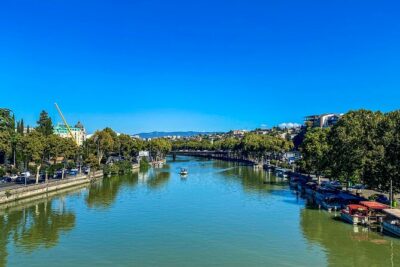
Tbilisi Walking Tour Including Cable Car and Traditional Bakery
Read our review →

Kakheti Wine Region: Signagi and Bodbe Tour with 10 Wine Tastings
Read our review →
Mtskheta,Jvari,Bazaar,wine tasting,Chronicles of Georgia
Read our review →Browse the lists this tour appears in