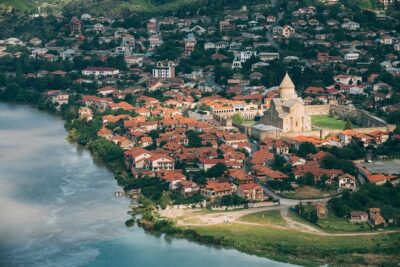
Reviewed · TBILISI TOURS
Half-Day Famous Georgian Supra Feast
Georgia’s famous supra is far more than a meal. It is a social ritual led by a tamada, or toastmaster, with food arriving in generous waves, wine passed around, and toasts giving the evening its rhythm. This experience adds a cooking lesson, an old Tbilisi walk, folk dancing, and Georgian polyphony, all in one four-hour evening. I especially like the family-hosted setting and the chance to make khinkali and khachapuri before eating them. I also like that private transport links the city sights with the meal.
The main caution is language. The advertised service is in English, and one English-speaking couple had an excellent translator, but another account found that Russian was used for much of the event with only limited English translation. Ask about the evening’s language mix before you book if clear explanations matter to you.
Key points to know before booking
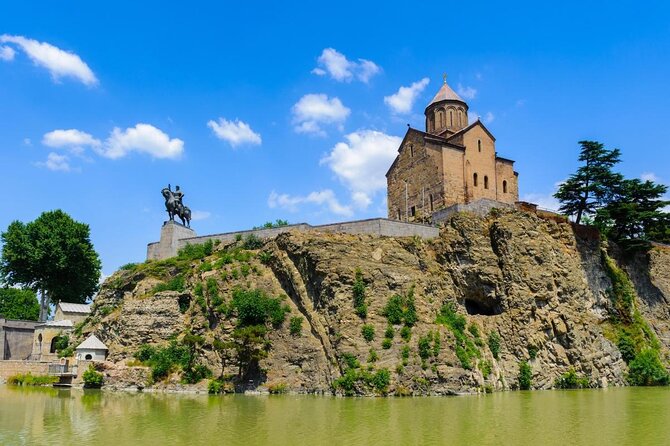
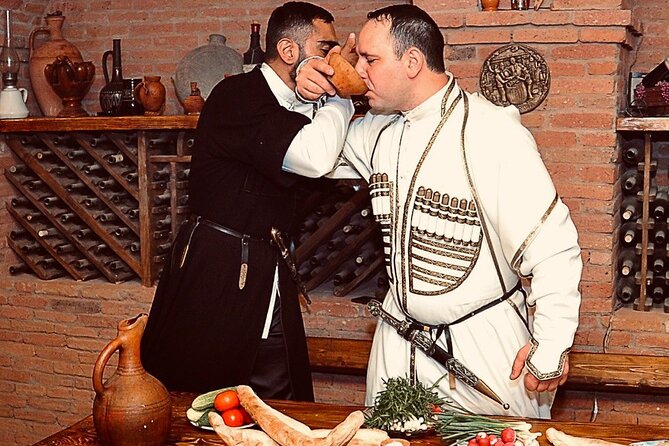
- A supra with a real social ritual: Learn the order of toasts, the role of the tamada, and how to drink from a traditional horn.
- Hands-on cooking: Prepare Georgian khinkali and Adjarian khachapuri before sitting down to dinner.
- Old Tbilisi in the early evening: See Meidan Bazaar, Metekhi Cathedral, Rike Park, and Holy Trinity Cathedral.
- Family winemaking connection: The meal takes place with a Georgian family known for winemaking and cooking.
- Music and movement: Expect Georgian folk songs, UNESCO-listed polyphonic singing, and a basic dance lesson.
- Small advertised group: The experience is capped at eight people, though language arrangements are worth confirming.
Why this four-hour evening feels different
Many food tours stop at a restaurant and hand you a plate. This one tries to explain what the meal means. You begin with Tbilisi’s old quarter, then move into a family setting where food, wine, music, and conversation work together.
The experience starts at 5:30 pm at the I Love Tbilisi sign. That timing is useful. You get some sightseeing while the city is moving from afternoon into evening, then reach the feast at the right hour for dinner. The activity ends back at the meeting point, with private transportation included along the way.
I like the shape of the evening because it gives you context before the table fills up. You hear about Georgian customs during the city walk, see important sights, and then encounter those customs in practice. You are not simply told that a supra matters. You take part in one.
The experience is also a good match for a first visit to Tbilisi. It covers major central sights, introduces several signature foods, and gives you a taste of Georgian hospitality without requiring you to plan separate tours, restaurant bookings, and transport.
more days out of Tbilisi to compare
- Half-Day Food Tour of Tbilisi Dezerter’s Bazaar
★ 5.0 · 4 reviews
Walking through old Tbilisi before dinner
The first part follows a compact selection of Tbilisi landmarks. The exact walking order may vary, but the planned stops include Meidan Bazaar, Metekhi Cathedral, Rike Park, and Tbilisi Holy Trinity Cathedral.
Meidan Bazaar gives you a useful starting point in old Tbilisi. This is the kind of place where a guide can connect the city’s old streets with Georgian legends, traditions, and daily life. The stop should help you get oriented before the evening turns toward food.
Metekhi Cathedral brings the city’s religious and historic side into view. Its position above the Mtkvari River is one of the memorable settings in central Tbilisi. You can expect the guide to explain local stories and the place of the cathedral in Georgian culture rather than simply point out the building.
At Rike Park, the pace changes. This modern riverside park offers a different face of the capital, and it helps show how old Tbilisi and newer public spaces sit close together. It is also a natural place for photographs during the transition between sightseeing and dinner.
The final listed stop is Tbilisi Holy Trinity Cathedral, commonly called Sameba. This is one of the city’s major religious landmarks and gives the tour a broad view of Georgian Christian tradition. Since the entire city section is only part of a four-hour experience, you should think of these stops as an introduction, not a full guided tour of each site.
That distinction matters. If your priority is detailed architecture, museum time, or long visits inside churches, you will need a separate Tbilisi sightseeing tour. Here, the walk sets the scene for the supra.
A family kitchen and two Georgian classics
After the city walk, private transport takes you to a Georgian family of hereditary winemakers and cooks. The setting is meant to feel like a visit to friends rather than a formal restaurant meal. You can look around the property and take photographs while the hosts prepare the cooking lesson.
The views from the house are described as especially striking, so bring a phone or camera if pictures matter to you. The information does not specify the exact location or whether the grounds are extensive, so keep expectations sensible: you are visiting for the family meal and food lesson, with the setting as an added pleasure.
The cooking class focuses on khinkali and khachapuri, two foods you should know before arriving.
Khinkali are Georgian soup dumplings, usually filled with meat, though mushroom and cheese versions are also included in the menu. You will learn how they are shaped and prepared. The proper eating method is part of the fun: hold the top knot, bite carefully, and deal with the hot juices inside.
Adjarian khachapuri is a boat-shaped bread filled with cheese and topped with egg. It arrives hot, and the egg and cheese are mixed into the center before eating. Making it yourself gives you a better sense of why this dish is so filling and why it is best shared at the table.
The cooking portion is not a professional culinary course. It is a social lesson designed to lead into the feast. You should expect practical participation, friendly instruction, and plenty of time to eat, not a technical study of dough fermentation or Georgian regional cuisine.
What arrives at the Georgian supra

The menu is substantial. It begins with a Georgian salad of cucumbers, tomatoes, and herbs, followed by pickles that can include cucumbers, tomatoes, sauerkraut, and Colchis klekachka.
The table then moves into hot dishes. Khinkali may be prepared with meat, mushrooms, or cheese. Aubergine is also included, though the details of its preparation are not specified. The Adjarian khachapuri is served hot, which is exactly how you want it.
Georgian shashlik, called mtsvadi, brings skewered meat cooked over coals. The smoky, grilled dish provides a useful contrast to the soft bread, dumplings, cheese, and pickles. I like that the menu has both familiar entry points and foods that may be new to you.
The meal finishes with Imeretian cheese and churchkhela. Churchkhela is made from grape juice and walnuts, formed into a firm, chewy sweet. It is a distinctly Georgian way to finish dinner and gives you something different from a standard cake or pastry.
The menu is fixed enough to give you a clear idea of the meal, but the provided details do not say how substitutions work. If you have dietary restrictions, ask before booking rather than assuming the meat, dairy, bread, or walnut dishes can be changed.
A different direction out of Tbilisi entirely:
- Day Trip to Kakheti Wine Region Including 9 Wine Tastings
★ 5.0 · 2,774 reviews - Highlights of Caucasus Mountains-Jinvali,Ananuri,Gudauri,Kazbegi(Group tour)
★ 5.0 · 2,682 reviews - Day Trip to Kazbegi and Gudauri
★ 5.0 · 2,009 reviews - Day Trip to Mtskheta Gori and Uplistsikhe
★ 5.0 · 1,801 reviews
Learning to drink, toast, and join the table

The tamada, or toastmaster, is central to the evening. You are taught the order and meaning of Georgian toasts, along with the basic rules of the feast. The aim is not to make you memorize a script. It is to show why a Georgian meal can feel ceremonial even when the mood is relaxed.
You will also learn how to drink from a horn. This is a memorable detail, but it comes with a practical warning: the experience includes homemade wine and chacha, Georgia’s strong grape spirit. Alcoholic drinks are part of the package, and the description refers to the wine as generous or unlimited in the meal setting.
You do not need to match anyone else’s pace. You can take small pours, skip a toast, or ask for tea or coffee, both of which are included. If you do not drink alcohol, confirm the available alternatives before booking, since the supplied details do not spell out a nonalcoholic arrangement.
The social structure is one of the strongest reasons to choose this experience. An English-speaking couple found that the host created a welcoming atmosphere and helped the group connect. They left with new international friends, which makes sense for a long shared meal built around repeated toasts and conversation.
Still, the language issue deserves attention. The service is offered in English, and an English translator has been arranged successfully for at least one group. But another English-speaking participant found that Russian dominated the evening because of the group makeup. If you want every toast and cultural explanation translated, contact Georgian Promenade ahead of time and ask who will lead the event in your language.
Folk dance and Georgian polyphony after dinner

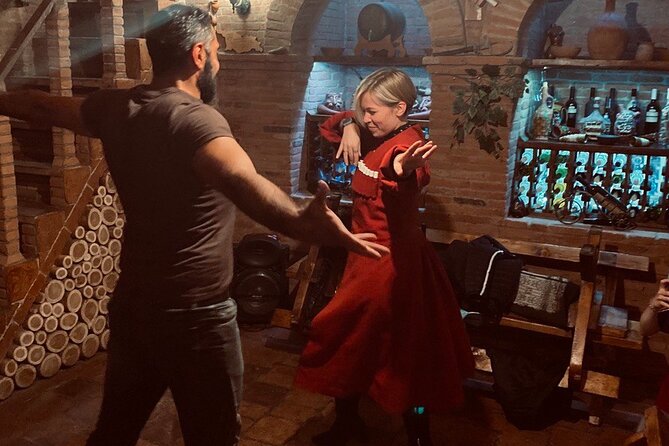
The evening continues with Georgian dancing and singing. Professional dancers teach you basic movements, so you do not need prior experience. This is participation, not a stage show where you sit quietly for the final hour.
Expect the lesson to be light and social. Georgian dance can be energetic and precise, but the information promises basic movements rather than a full training session. Wear something comfortable enough for a little movement, especially after a large meal.
You will also hear Georgian polyphony, the country’s traditional multi-part singing style. Georgian polyphonic singing is included on UNESCO’s list of intangible cultural heritage. Hearing it in a family feast setting gives the music a clear cultural place, connected to food, celebration, and community rather than presented as an isolated concert item.
The dancing and music are valuable because they round out the evening. You learn food preparation with your hands, toast traditions at the table, and music through listening and movement. That combination gives you more to remember than a restaurant meal alone.
Is the $150 price fair?

At $150 per person, this is not a bargain dinner. The value depends on how you would otherwise spend your evening in Tbilisi.
The price includes the old-city introduction, private transportation, the family visit, the khinkali and khachapuri lesson, dinner, alcoholic drinks, coffee or tea, dancing, and singing. With a maximum advertised group of eight, the experience also offers a more personal setting than a large coach excursion.
If you only want to eat Georgian food, you can do that for much less. Tbilisi has plenty of restaurants where you can order khachapuri, khinkali, mtsvadi, and wine without paying for a guided event.
I think the price makes more sense if you value the complete evening: transport, instruction, a family setting, the tamada’s guidance, and cultural performance. It is also useful if you have limited time and want several Georgian experiences combined without arranging the pieces yourself.
The small-group limit is important here. A group of up to eight can make it easier to ask questions, shape dumplings, and join the toasts. One account describes a larger Russian-speaking presence, so confirm the expected group size and language before paying if those details are central to your decision.
Timing, meeting point, and practical details
You meet at the I Love Tbilisi sign, listed at MRQ5+WG9 in Tbilisi, at 5:30 pm. The activity returns to that same meeting point, which makes it easier to plan the rest of your evening.
Private transportation is included. That matters because the program combines central city stops with a family home outside the normal sightseeing route, though the exact driving distance and transfer times are not provided.
The tour lasts about four hours. That is long enough for a proper meal and cultural program, but the schedule will need to move along if it includes four city stops, transport, cooking, dinner, music, and dancing. If you dislike structured evenings, this may feel busy.
Mobile tickets are accepted, confirmation is sent at booking, and service animals are allowed. The meeting point is near public transportation. Free cancellation is available up to 24 hours before the 5:30 pm start time. Cancellations or changes made less than 24 hours before the start are not accepted for a refund.
The listed inclusions cover dinner, alcoholic beverages, coffee or tea, and private transport. Breakfast is not included, though that is not relevant to an evening activity and appears as a standard exclusion.
Who will enjoy this supra most?
I would choose this for a first-time visitor who wants an easy introduction to Georgian food and hospitality. It suits you if you enjoy shared meals, hands-on cooking, folk culture, and a little organized participation.
It is also a strong choice for couples and small groups who want a social evening rather than a quiet dinner. The cooking lesson gives you an activity before the meal, while the toasts and dancing keep the night moving.
Families may enjoy it, but the alcohol-centered format and late dinner rhythm may not suit every child. The supplied information does not give a minimum age, so ask before booking if you are traveling with children.
I would be more cautious if you need strict dietary control, dislike group interaction, or want an entirely English-language cultural explanation. The food includes meat, cheese, bread, walnuts, and alcohol, and the language experience can depend on the group.
Should you book this Georgian feast?
Book it if you want to understand Georgian hospitality by taking part in it. The strongest features are the family setting, the khinkali and khachapuri lesson, the tamada-led toast tradition, and the combination of song and dance after dinner.
Skip it if your goal is simply a cheap meal or a detailed historical tour of Tbilisi. Before booking, confirm the language arrangements, expected group size, and dietary options. For the right visitor, the $150 cost pays for a full cultural evening, not just a plate of food.
FAQ
Where does the experience start?
It starts at the I Love Tbilisi sign at MRQ5+WG9 in Tbilisi, Georgia.
What time does the activity begin?
The start time is 5:30 pm.
How long does the experience last?
It lasts approximately four hours.
Where does the activity end?
It ends back at the meeting point.
What sights are included during the Tbilisi walk?
The planned stops are Meidan Bazaar, Metekhi Cathedral, Rike Park, and Tbilisi Holy Trinity Cathedral.
Is transportation included?
Yes. Private transportation is included.
What food is served?
The menu includes Georgian salad, pickles, khinkali, aubergine, Adjarian khachapuri, mtsvadi, Imeretian cheese, and churchkhela.
Are drinks included?
Yes. Alcoholic beverages, coffee, and tea are included. The experience specifically features homemade wine and chacha.
Can I cancel for a refund?
Yes, if you cancel at least 24 hours before the local start time. Cancellations or changes made less than 24 hours before the start are not accepted for a refund.
Recently added around Tbilisi
- 2-Day Private Wine Tour to Kakheti from Tbilisi★ 5.0 · 3 reviews
- Kakheti wine region – Private Tour★ 5.0 · 3 reviews
- 17 Day Private Tour through Georgia★ 5.0 · 3 reviews
- Tbilisi and Mtskheta cities private, cultural tour★ 5.0 · 3 reviews
- Tbilisi City Tour with Street Photography★ 5.0 · 3 reviews
- Kakheti With Top Destinations★ 5.0 · 3 reviews
- Tbilisi City, Jvari Monastery, Uplistsikhe caves, Mtskheta city Private Day Trip★ 4.5 · 3 reviews
- Jvari monastery & Mtskheta – Half day group tour from Tbilisi★ 5.0 · 3 reviews
Tbilisi Tours, compared.
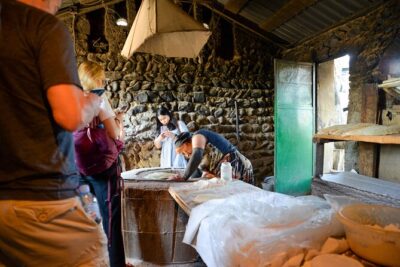
Day Trip to Kakheti Wine Region Including 9 Wine Tastings
Read our review →
Highlights of Caucasus Mountains-Jinvali,Ananuri,Gudauri,Kazbegi(Group tour)
Read our review →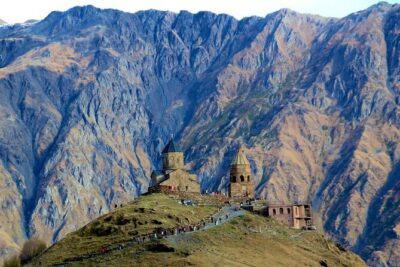
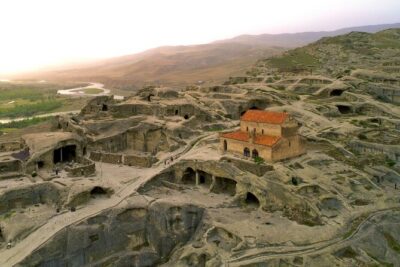

Tbilisi Walking Tour Including Cable Car and Traditional Bakery
Read our review →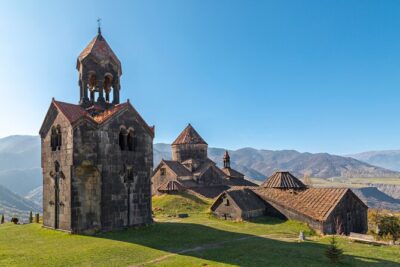

Kakheti Wine Region: Signagi and Bodbe Tour with 10 Wine Tastings
Read our review →