
Reviewed · MTSKHETA AND JVARI TOURS
Sacred Sites and Ancient Wonders: Jvari, Mtskheta and Uplistsikhe
Georgia packs a surprising amount of history into the roads west of Tbilisi. In about seven hours, this private tour takes you from Jvari Monastery’s hilltop view to the cathedral at Mtskheta, then on to Stalin’s birthplace in Gori and the ancient rock-cut town of Uplistsikhe.
I like the strong mix of sacred sites and political history, and I like having a private vehicle with hotel pickup and drop-off. Guides Irakli and Davit are specifically praised for clear stories and considerate handling of changing plans. The main drawback is pace: four major stops, plus driving, leave limited time at each place.
Key points to know before booking
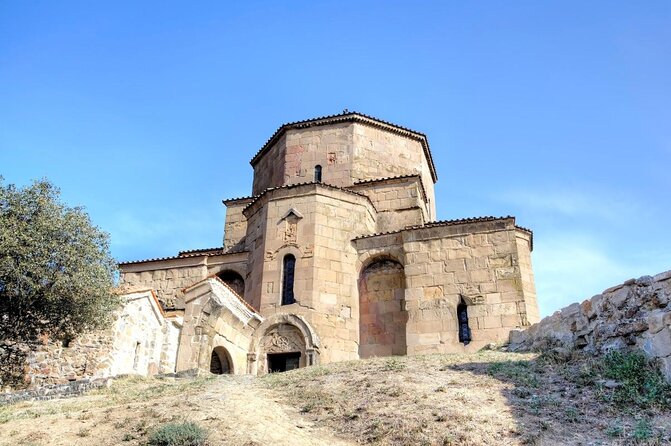
- Jvari gives you the best opening view: The sixth-century monastery looks across Mtskheta and the meeting point of the Aragvi and Mtkvari rivers.
- Mtskheta is Georgia’s old royal center: Svetitskhoveli Cathedral is a UNESCO World Heritage site and a key place in Georgian religious history.
- Gori adds a difficult political chapter: The Stalin Museum includes the house where he was born and raised, plus his armored train.
- Uplistsikhe is the most unusual stop: The ancient town was cut into rock beside the old Silk Road.
- The private format changes the day: Only your group rides in the vehicle, with hotel pickup and return included.
- Budget for two entrance fees: The Stalin Museum and Uplistsikhe each cost 15 GEL per person and are not included in the $100 price.
Four major sites on one road from Tbilisi
This is a full day by Georgian standards, though the advertised duration is about seven hours. The scheduled visits total roughly three and a half hours, so the rest of the day goes to driving between sites. That makes the route efficient, but it also means you should not expect long, leisurely visits at every stop.
The private vehicle is a real advantage. You are not working around a large group or waiting for people who have wandered off. If your group wants to spend more time at the cathedral and less time at the museum, you can discuss the balance with your guide. The exact flexibility of the schedule is not guaranteed, but the private setup gives you a better chance of shaping the day.
Pickup and drop-off in Tbilisi are included. The start time is 10:00 a.m., and the tour ends back at the meeting point. Fuel and a driver-guide are also covered, so the main extra costs are the two entry fees and anything you eat or drink.
more mtskheta and jvari stops
- Day Trip to Mtskheta Gori and Uplistsikhe
★ 5.0 · 1,801 reviews - Tbilisi:Mtskheta,Jvari,Bazaar,wine tasting,Chronicles of Georgia
★ 5.0 · 730 reviews - Mtskheta-Gori-Uplistsikhe
★ 5.0 · 112 reviews
Jvari Monastery and the meeting of two rivers
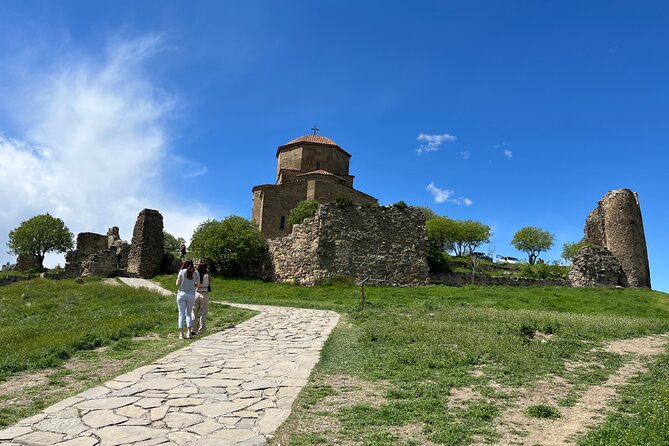
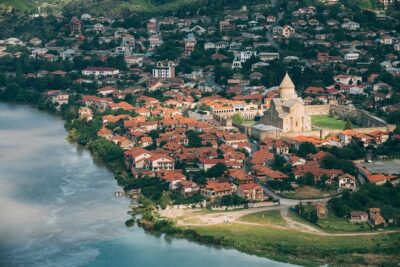
The first stop is Jvari Monastery, about 30 minutes from Tbilisi by the stated route. The church dates from the sixth century and sits above Mtskheta, with a wide view toward the meeting of the Aragvi and Mtkvari rivers.
I like starting here because the view explains the importance of the next stop. From above, Mtskheta is not just another town on the road. Its position at the river junction helped make it a major center in early Georgia.
The monastery itself is compact, so the 30-minute visit is sensible. You have time to see the church and take in the setting without turning the stop into a long formal tour. Admission is free.
The tradeoff is weather. Jvari’s appeal depends heavily on the view, and clouds or haze can reduce what you see. Even so, the church provides a strong first taste of Georgia’s Orthodox tradition and its habit of placing important religious buildings in dramatic high locations.
Mtskheta and Svetitskhoveli Cathedral
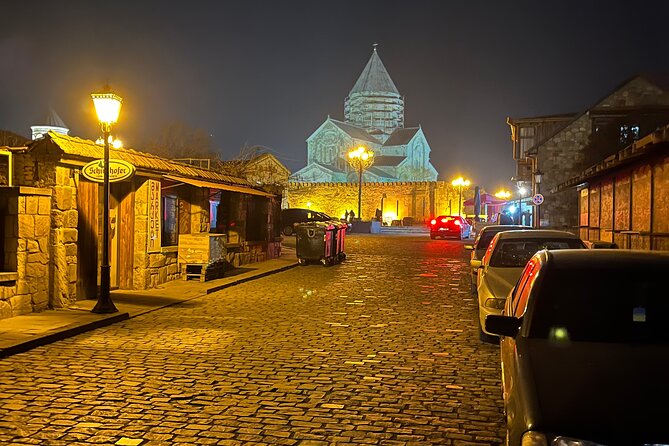
The route then drops into Mtskheta, founded in the fifth century BC. It served as the capital of the early Georgian Kingdom of Iberia from the third century BC until the fifth century AD, when the capital moved to Tbilisi.
Mtskheta remained important after losing its political role. It continued as a coronation and burial place for many Georgian kings, and it remains one of the country’s most important religious centers. You get about an hour here, with the focus on Svetitskhoveli Cathedral.
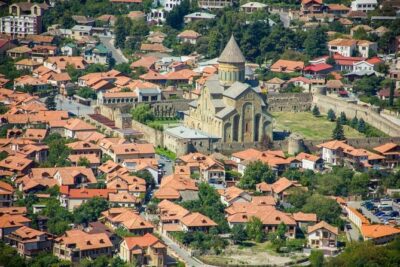
Svetitskhoveli is an Early Medieval masterpiece and a UNESCO World Heritage site. Georgian tradition holds that Christ’s robe lies beneath the cathedral. That belief gives the building special spiritual weight, even for visitors who are more interested in architecture than religious history.
I would use the hour carefully. Let your guide explain the cathedral’s place in Georgian Christianity, then give yourself time to look closely at the stonework and the interior. This is not a stop to rush through for a quick photograph.
Admission is free, which helps the value of the tour. Still, the visit is not a full exploration of Mtskheta. The town has more to offer than one cathedral, but the schedule gives you a focused introduction rather than a complete day in the former capital.
Gori and the Stalin Museum
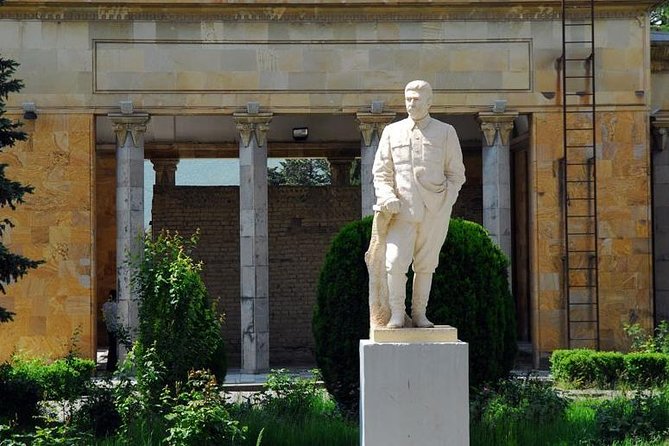
Gori changes the mood. This is the birthplace of Joseph Stalin, the Soviet leader, and the tour includes a visit to the museum devoted to him. You spend about an hour at the site.
The museum includes the house where Stalin was born and grew up. You can also see his armored train. Those details make the stop more concrete than a basic portrait gallery. You are looking at places and objects tied directly to his early life and public image.
I find this part valuable because it adds a complicated chapter to the day. Jvari and Mtskheta present Georgia through faith, kingship, and medieval culture. Gori brings in the Soviet period and the legacy of one of the twentieth century’s most controversial figures.
The museum ticket costs 15 GEL per person and is not included in the tour price. Bring this amount in addition to the $100 tour cost, along with money for food and drinks. The supplied information does not specify the exact museum exhibits beyond the birthplace and armored train, so your guide will be important in helping you understand what you are seeing.
An hour is enough for a focused visit, but it may feel short if you want to study every display. If Gori is your main reason for booking, tell the guide at the start. One traveler booked the day mainly to visit Gori and found that the guide added several other worthwhile stops, which is exactly the strength of this route: Gori does not have to carry the whole day by itself.
more gori and uplistsikhe visits
- Mtskheta, Jvari, gori, uflistsikhe, history and panorama (group tours)
★ 4.5 · 107 reviews - Day tour to Chronicles of Georgia, Gori city, Uplistsikhe cave
★ 5.0 · 86 reviews - Ancient Georgia Group Tour: Mtskheta,Jvari, Gori, Uplistsikhe
★ 4.5 · 73 reviews - Mtskheta – Jvari + Gori – Uplistsikhe Tour
★ 5.0 · 49 reviews
Uplistsikhe, the rock-cut Silk Road town
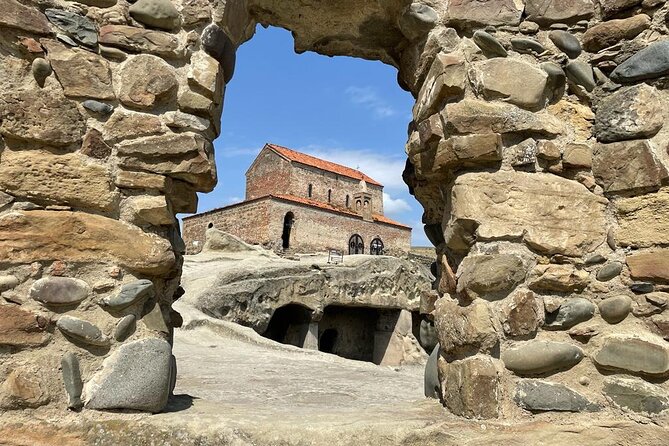
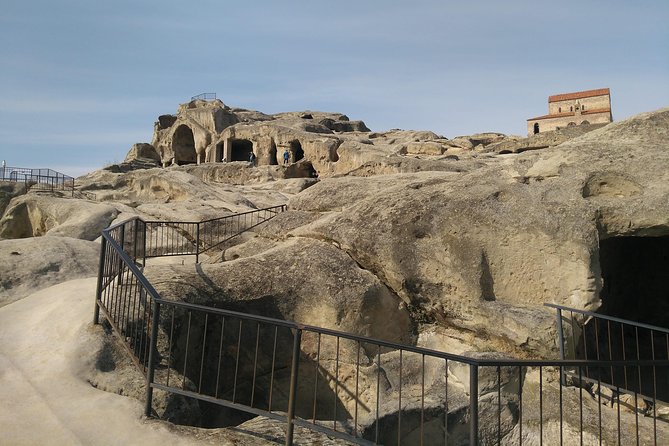
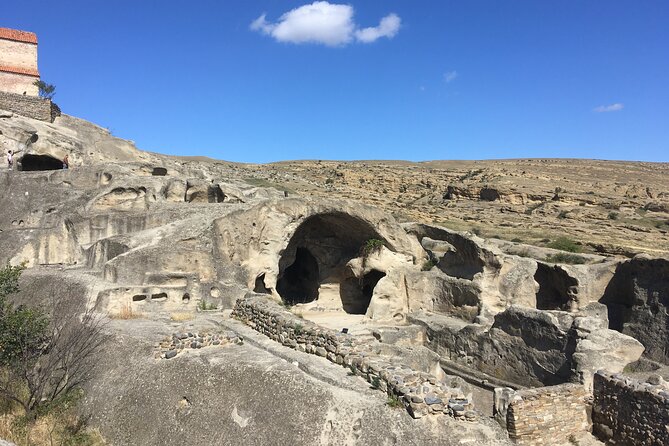
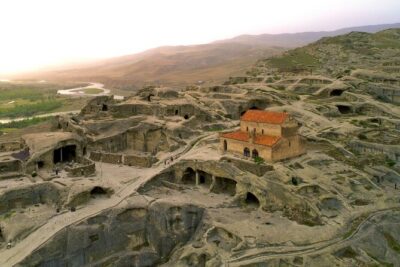
The final major stop is Uplistsikhe, translated as Fortress of the Lord. This ancient town was cut directly into rock and sat on the route of the old Silk Road.
Uplistsikhe was both a strategic point and a commercial center. At its height, the town had a population of about 20,000. That figure helps you picture the site as more than a few caves. It was once a working settlement with a serious role in regional trade.
The rock-cut setting is the reason this stop feels so different from the churches and museum earlier in the day. You move through an ancient urban site shaped out of stone, with rooms and structures spread across the complex. The provided schedule allows one hour.
Wear practical shoes if you have them. The tour information does not specify the condition of the paths, but a rock-hewn site naturally calls for more care than a paved cathedral visit. You should also expect the experience to be more open and exposed than the indoor stops.
Admission costs 15 GEL per person and is not included. If you are choosing where to spend extra time, Uplistsikhe may be the place that benefits most from a few additional minutes, especially if you enjoy ancient architecture and unusual archaeological sites.
What the $100 price really covers
At $100 per person, this is not the cheapest way to see the western sights around Tbilisi. The price becomes easier to justify if you value privacy, hotel transport, and a guide who can connect four very different places.
The fee includes:
- Private vehicle
- Driver-guide
- Fuel surcharge
- Hotel pickup and drop-off
It does not include lunch, food, drinks, or entrance tickets. The two listed tickets add 30 GEL per person in total: 15 GEL for the Stalin Museum and 15 GEL for Uplistsikhe. Jvari and Svetitskhoveli have free admission.
The private format matters most for couples, families, and small groups who do not want to spend the day with strangers. Since only your group participates, you can ask questions freely and avoid the stop-and-start feel that often comes with a large coach.
For a solo visitor, the price may feel high because there is no shared group to spread the transport cost across. For two or more people, the convenience becomes more attractive. Group discounts are available, though the supplied information does not state the discount amount, so check the final price before booking.
The guide can shape the day
A good guide matters on this route because the sights span religion, medieval statehood, Soviet politics, and ancient trade. The feedback attached to the experience gives particular credit to Irakli and Davit for pleasant communication, strong explanations, and helpful service.
That matters most at places where the stones do not explain themselves. At Jvari, a guide can connect the view to Mtskheta’s location. At Svetitskhoveli, the religious traditions and royal history add meaning to the architecture. At Gori, a guide can help you place the museum in its wider political setting. At Uplistsikhe, the Silk Road connection makes the rock-cut rooms easier to picture as part of a living town.
Guide availability can vary by date, so you should not assume Irakli or Davit will lead your particular departure. The important point is the private guide format. Ask questions, state your priorities, and use the driving time to request context rather than waiting for a formal speech at every stop.
One practical strength is flexibility when plans change. Feedback about the service describes a company that handled a change without complaint. That does not mean every request can be granted, but it suggests that clear communication is worthwhile if your timing shifts.
Pace, comfort, and what to bring
The tour begins at 10:00 a.m. and lasts about seven hours. You spend part of that time in the vehicle, linking Tbilisi with Mtskheta, Gori, and Uplistsikhe. The private car gives you more comfort and control than a large bus, but this is still a busy sightseeing day.
I would bring water and a snack even though food and drinks are excluded. The details do not specify a lunch stop, and the schedule leaves limited room for a long meal. You can ask about lunch planning at the beginning, but do not book this expecting a relaxed food tour.
Bring some Georgian currency for the two tickets. The stated prices are in GEL, not dollars, and the tour price does not cover them. A phone is useful for the mobile ticket arrangement and for photos, though the ticket details do not say exactly which admission documents are delivered digitally.
The tour is listed as suitable for most people and near public transportation. Since hotel pickup and drop-off are included, you may not need public transport for the excursion itself. The available details do not give specific information about wheelchair access, walking distances, or the exact surfaces at Uplistsikhe, so ask the provider if mobility is a concern.
Who will enjoy this route most
I would recommend this trip to you if you want a broad introduction to the history west of Tbilisi without changing hotels. It works particularly well for a first visit when you want to see sacred buildings, an old capital, a Soviet-era museum, and an ancient settlement in one day.
It also suits you if you prefer a private outing. Families can keep the group together, couples can set their own rhythm, and friends can use the car time to talk or ask questions. The route is also useful for visitors with only a few days in Tbilisi who want to reach Gori and Uplistsikhe efficiently.
You may want another plan if you prefer slow travel. An hour at Svetitskhoveli and an hour at Uplistsikhe provide a good introduction, but neither allows unlimited wandering. If your priority is a long museum visit, extended archaeological study, or a leisurely meal, consider a tour focused on fewer sites.
You should also think about the emotional balance of the day. Jvari and Mtskheta are spiritual and monumental. Gori can be politically uncomfortable and requires a more critical eye. Uplistsikhe is architectural and archaeological. That contrast is a strength, but it is not a single-theme outing.
Should you book Sacred Sites and Ancient Wonders?
Book this tour if you want to cover Jvari, Mtskheta, Gori, and Uplistsikhe from Tbilisi in one organized day, with a private vehicle and guide handling the transport. The combination is unusually varied, and the included hotel service keeps the logistics simple.
At $100 per person, the value rests on privacy and convenience rather than low cost. Add 30 GEL per person for the two listed tickets, and remember that lunch and drinks are extra. I would choose it for a small group that wants context and a wide sample of Georgian history.
Skip it if you want to linger at one site or spend most of the day eating and exploring slowly. For everyone else, this is a practical way to see four important places, provided you accept a brisk schedule and plan for the extra admission fees.
FAQ
Where does the tour start and end?
The tour starts in Tbilisi, Georgia, at 10:00 a.m. Hotel pickup and hotel drop-off are included, and the activity ends back at the meeting point.
How long does the tour last?
The tour lasts approximately seven hours.
Is this a private tour?
Yes. Only your group participates, and transportation is provided in a private vehicle.
Are the entrance fees included?
No. Jvari Monastery and Svetitskhoveli Cathedral have no admission fee listed. The Stalin Museum costs 15 GEL per person, and Uplistsikhe costs 15 GEL per person. These tickets are extra.
Is lunch included?
No. Lunch, food, and drinks are not included in the tour price.
Which places does the tour visit?
The route includes Jvari Monastery, Svetitskhoveli Cathedral in Mtskheta, the Stalin Museum in Gori, and Uplistsikhe Cave Town.
Can I cancel for a full refund?
Yes, if you cancel at least 24 hours before the experience start time. Cancellations made less than 24 hours before the start time are not refunded, and changes within that period are not accepted.
Recently added around Tbilisi
- 2-Day Private Wine Tour to Kakheti from Tbilisi★ 5.0 · 3 reviews
- 17 Day Private Tour through Georgia★ 5.0 · 3 reviews
- Tbilisi and Mtskheta cities private, cultural tour★ 5.0 · 3 reviews
- Kakheti wine region – Private Tour★ 5.0 · 3 reviews
- Kakheti With Top Destinations★ 5.0 · 3 reviews
- Tbilisi City Tour with Street Photography★ 5.0 · 3 reviews
- Jvari monastery & Mtskheta – Half day group tour from Tbilisi★ 5.0 · 3 reviews
- Tbilisi City, Jvari Monastery, Uplistsikhe caves, Mtskheta city Private Day Trip★ 4.5 · 3 reviews
Mtskheta and Jvari Tours, compared.
Mtskheta,Jvari,Bazaar,wine tasting,Chronicles of Georgia
Read our review →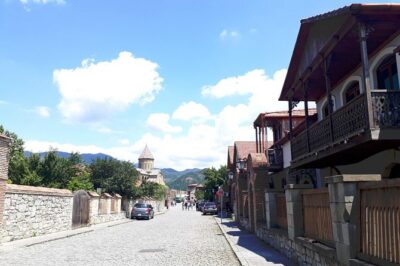
Mtskheta, Jvari, gori, uflistsikhe, history and panorama (group tours)
Read our review →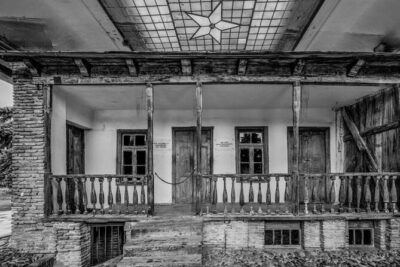
Jvari-Uplistsike-Chronicle of Georgia, PRIVATE Trip
Read our review →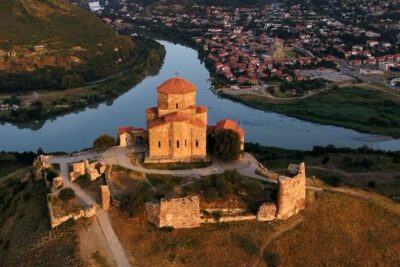
Ancient Georgia Group Tour: Mtskheta,Jvari, Gori, Uplistsikhe
Read our review →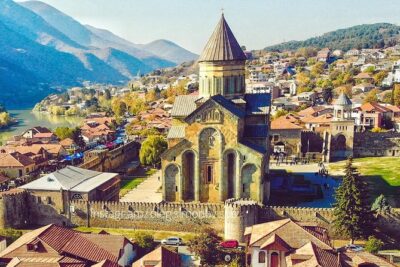
Ancient Mtskheta and Chronicle of Georgia half day tour
Read our review →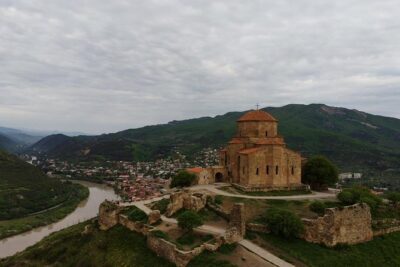
Private Day Trip to Gudauri and Kazbegi from Tbilisi via Jvari and Mtskheta
Read our review →Browse the lists this tour appears in