
Reviewed · MTSKHETA AND JVARI TOURS
Tbilisi and Mtskheta cities private, cultural tour
Tbilisi and Mtskheta make a smart pairing: one is Georgia’s lively capital, the other its old spiritual center. I like the way this private tour links city views with major churches, and I like having Koba as a dedicated guide, rather than trying to piece together Georgia’s past from plaques and guidebooks.
The main trade-off is pace. Six listed stops fit into about eight hours, with roughly three and a half hours at the sights before driving time and a meal break. You will see a lot, but some visits may feel brief, especially if you prefer slow photography or quiet church time.
Key points at a glance
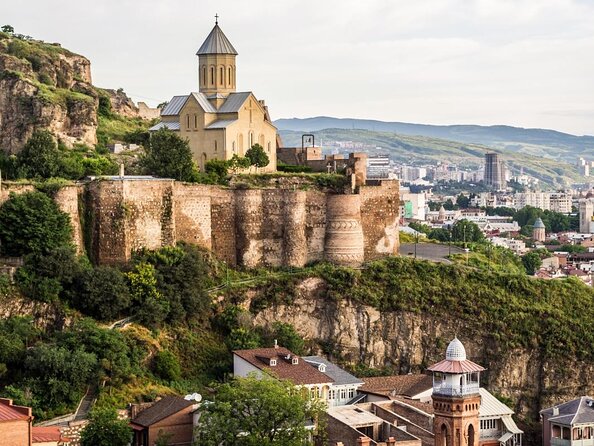
- Metekhi Cathedral begins the day with a fine view: The cliffside church looks across the river toward Tbilisi’s Old Town and Narikala Fortress.
- Narikala gives you the city from above: Allow 45 minutes to take in the old center and the Botanical Garden.
- Jvari and Mtskheta carry the day’s strongest historical weight: Jvari is linked to Georgia’s early Christian tradition, while Mtskheta holds major churches and religious relics.
- The private format keeps the day flexible: Your group alone travels in the vehicle, with pickup and drop-off at your Tbilisi hotel.
- Guide Koba is a major part of the appeal: His warmth, humor, care for group safety, and personal pride in Georgia come through strongly.
- The price works best for a small group: At $165 for up to seven people, the per-person cost drops sharply when shared by four or more.
Why Tbilisi and Mtskheta belong in one day
This tour works because it puts two very different Georgian settings together. Tbilisi gives you the capital’s old streets, river cliffs, fortress views, and national memory. Mtskheta brings quieter religious sites and the story of Georgia’s conversion to Christianity.
You start at 9:30 a.m., which gives you a full day without requiring an early dawn departure. Hotel pickup in Tbilisi is included, as is the ride back. That matters in a city where hills, narrow streets, and scattered sights can make a self-guided day awkward.
The vehicle is private and air-conditioned. Your group can be as large as seven, but the experience will feel most spacious with fewer people. A larger family or friend group gets good value from the fixed price, while a solo visitor pays more for the same arrangement.
Food is not included, and lunch is not provided. Plan to ask Koba about a meal stop or budget separately for food and drinks. Alcoholic drinks are available to buy, but they are not part of the tour price.
more mtskheta and jvari stops
- Day Trip to Mtskheta Gori and Uplistsikhe
★ 5.0 · 1,801 reviews - Tbilisi:Mtskheta,Jvari,Bazaar,wine tasting,Chronicles of Georgia
★ 5.0 · 730 reviews - Mtskheta-Gori-Uplistsikhe
★ 5.0 · 112 reviews
Metekhi Cathedral and the first look at old Tbilisi
The first stop is Metekhi Cathedral, a 13th-century church placed dramatically on cliffs above the river. You have about 25 minutes here, enough to look around and take in the view toward the old center and Narikala.
This is a good opening stop because it gives you a quick sense of Tbilisi’s shape. The church sits opposite the historic core, so the view does much of the work. You can see how the old settlement rises from the river toward the fortress.
The short visit is also the first sign of the tour’s rhythm. Metekhi is more about position and atmosphere than a long interior visit. If you want extended time for church details or photographs, 25 minutes may pass quickly.
Ask your guide to point out the relationship between Metekhi, the Old Town, and Narikala. That simple explanation helps you understand the rest of the Tbilisi portion instead of seeing each stop as an isolated monument.
Narikala Fortress above the Old Town
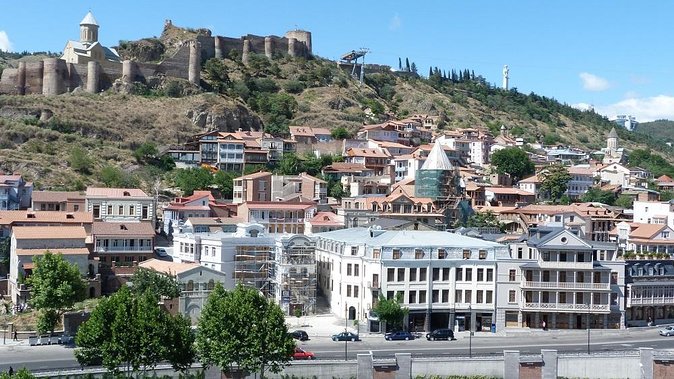
Narikala is the longest Tbilisi stop, with 45 minutes scheduled. The fortress sits on a hillside above the Old Town and offers broad views across central Tbilisi and the Botanical Garden.
I like this stop for its sense of place. From Narikala, you are not just looking at a single monument. You are looking over the capital’s historic center and seeing the city’s hills, river corridor, and old defensive position in one sweep.
The fortress is also called the heart of the Old Town, and its location explains why. It has watched over the settlement for centuries. The visit is mainly about the ruins, the views, and the way the fortress connects the city below with the surrounding hills.
Wear comfortable shoes and be ready for uneven ground. The tour details do not promise a specific cable car ride or walking route, so do not assume those are included. Your guide and private vehicle make the stop easier to reach, but Narikala itself still requires walking.
If you enjoy city photography, this is likely one of the day’s best chances. The Botanical Garden is visible from the hillside, and the central part of Tbilisi opens out below you. Keep some time for simply looking rather than rushing from one viewpoint to the next.
Jvari Church, Georgia’s hilltop symbol
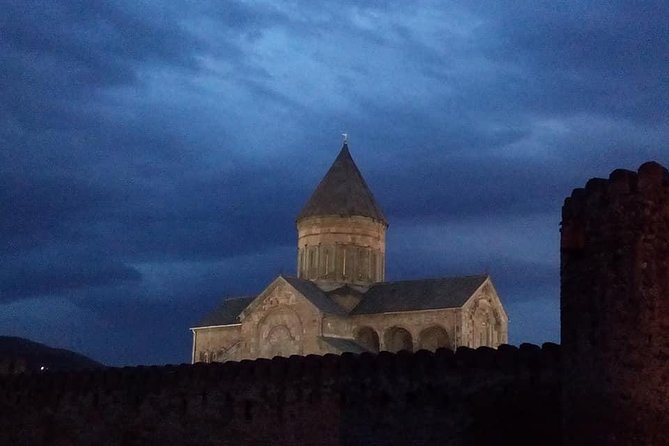
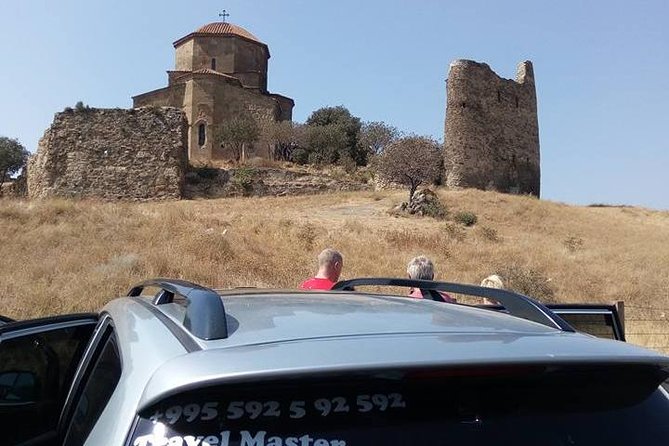
The drive to Mtskheta changes the mood. Jvari Church sits above the old capital and is linked to the cross said to have been raised in Georgia at the beginning of the fourth century. The present cross-cupola church dates from the sixth century and is part of a UNESCO World Heritage site.
You have about 40 minutes at Jvari. That is enough to enter the church, hear the story of its early Christian role, and study its setting above Mtskheta. The hilltop position is central to the experience.
Jvari is especially valuable if you want context for Georgian Christianity. The site connects an early religious tradition with a remarkably enduring stone church. Your guide can help separate the fourth-century story of the first cross from the sixth-century building you see today.
The stop also rewards patience. The church is important, but the view toward Mtskheta and the surrounding area helps explain why this location mattered. If weather or visibility is poor, the exterior outlook may have less impact, but the church’s age and form remain the main draw.
As with Narikala, comfortable footwear helps. The tour is private, so you can ask for a little more explanation here if the subject interests you, though the overall schedule still requires moving on.
more days out of Tbilisi to compare
- Mtskheta, Jvari, gori, uflistsikhe, history and panorama (group tours)
★ 4.5 · 107 reviews - Tbilisi old town & soviet heritage – Private driver-guided Tour
★ 5.0 · 83 reviews - A 6-Day Private Expedition into Rich Heritage
★ 5.0 · 34 reviews - Jewish Heritage Walking Tour with Kosher Wine Tasting
★ 5.0 · 15 reviews
Svetitskhoveli Cathedral in Mtskheta
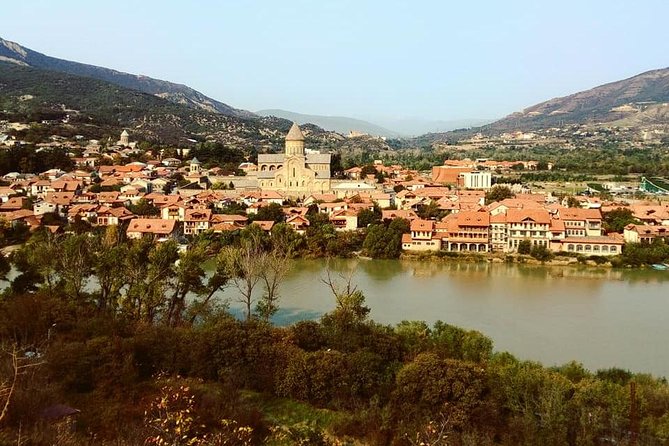
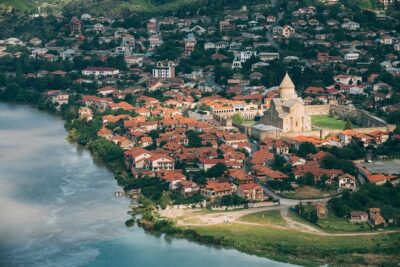
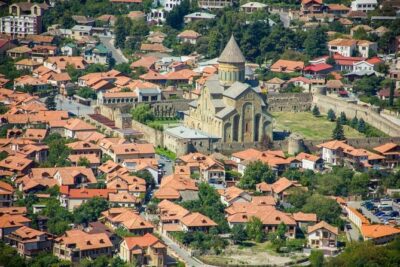
Back in the center of Mtskheta, Svetitskhoveli Cathedral receives about 40 minutes. This is one of the day’s most important church visits and a natural centerpiece for the old capital.
The cathedral dates to the early 11th century, while Christian tradition connects the site with Christ’s robe, said to have been buried there in the first century. Several Christian relics are kept in the church. Those claims and traditions are a major part of what your guide will explain.
You should give this stop your full attention. Look at the exterior stonework, the church interior, and the way the cathedral anchors Mtskheta’s old center. The setting is more urban and enclosed than Jvari, so the two churches complement one another well.
Forty minutes is a sensible amount of time for a guided visit, though it may not satisfy you if you want to sit quietly or inspect every detail. Religious sites can also have rules about behavior and photography, so follow your guide’s instructions and dress respectfully.
Svetitskhoveli is where the day’s historical threads come together most clearly. Mtskheta was Georgia’s old capital, and the cathedral remains a central religious place. You are seeing more than a pretty church. You are seeing a building tied to the country’s early Christian identity.
Samtavro Church and the story of Saint Nino
Samtavro Church is another Mtskheta stop, with about 30 minutes scheduled. The convent church was built in the 11th century, but the site was already important in the early fourth century.
The location is associated with the tombs of Georgia’s first Christian king and queen. It is also linked with Saint Nino, who lived and preached Christianity here. Those connections make Samtavro a useful companion to Jvari and Svetitskhoveli.
The site also holds the remains of Saint Gabriel, a Georgian monk who died in 1994. That gives Samtavro a more recent religious connection than the older churches you visit earlier in the day.
Thirty minutes is enough for an introduction, a look inside, and some explanation from Koba. It is not a long devotional visit. If your main interest is medieval architecture, you may find Svetitskhoveli more visually commanding. If you care about living religious traditions and personalities, Samtavro may hold more interest.
The sequence is well chosen. Instead of visiting one church and leaving Mtskheta, you see several places that explain why the town remains so important to Georgia.
St. David Mamadaviti’s Church and Tbilisi’s Pantheon
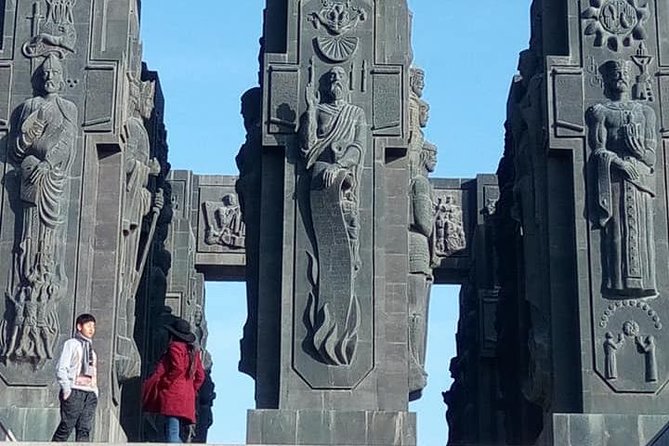
The final listed stop is St. David Mamadaviti’s Church, with about 35 minutes. The site includes Tbilisi’s Pantheon and carries a strong connection to the city’s past.
The Pantheon is the reason this stop adds something different to the day. After fortresses and ancient churches, you turn toward the people remembered in Tbilisi’s national story. The supplied details do not list individual figures buried there, so ask Koba to explain whose graves and memorials matter most during your visit.
This is a useful closing stop because it returns you to Tbilisi and broadens the subject beyond medieval rulers and saints. You get a sense of how the capital remembers its cultural and historical figures.
The schedule leaves 35 minutes here. That should work for a focused visit, but the day may feel full by this point. If you have spent extra time taking photographs earlier, you may need to keep moving.
What guide Koba adds to the day
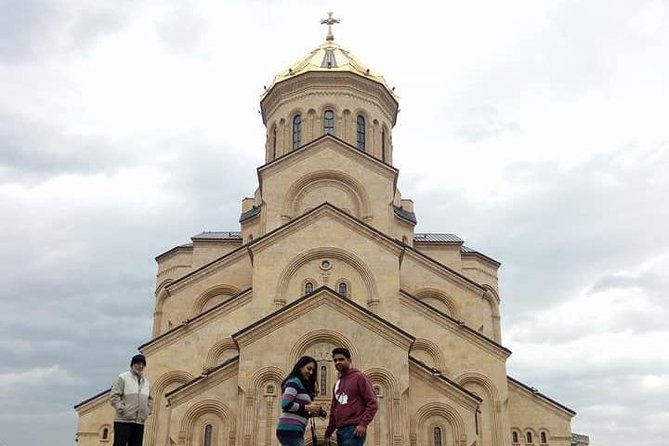
Guide quality matters more on a tour built around churches and long historical time periods. Koba is the named guide associated with this experience, and his strongest qualities are personal attention, humor, responsibility, and clear pride in Georgia.
He has led multi-day journeys through northern and eastern Georgia as well as shorter sightseeing days. That wider experience may help him place Tbilisi and Mtskheta within the country’s larger story, although this specific tour remains focused on the capital and old capital.
I especially value the practical side of his approach. Koba is described as taking care of the group and making sure people are safe from the first person picked up to the last person returned. That is useful on a day with hills, old stone surfaces, and several stops.
His humor should also help keep the subject from becoming too heavy. Georgia’s church history includes layers of tradition, royal stories, relics, and changing dates. A guide who can explain those details in a warm way makes the day easier to follow.
Still, a private guide is not a guarantee that every stop will match your interests. Tell Koba early if you want more architecture, religious history, photography time, or local context. The private format gives you the best chance of shaping the explanations around your group.
Is $165 good value for a private group?
The fixed price is $165 per group of up to seven people. That is the key number to use when judging value.
For seven people, the cost works out to about $24 per person. For four people, it is about $41 each. For two people, it is $82.50 each, and a solo visitor pays the full group rate unless the operator offers a different arrangement.
That price includes the private vehicle, hotel pickup, hotel drop-off, and guide service. It does not include lunch, food, drinks, or alcoholic drinks. Admission is listed as included for the stops, so you should not expect a second round of standard entry charges during the day.
The private vehicle is worth more than simple comfort. You avoid building your day around public transport connections between hilltop Narikala, Tbilisi’s central sights, and Mtskheta. You also avoid sharing the guide’s attention with strangers.
For a family, two couples, or a small group of friends, this is a strong value. For one person or two people on a tight budget, a shared tour could cost less, though it would not offer the same privacy or control.
Who will enjoy this tour most?
I would choose this tour if you want a clear first look at Tbilisi and Mtskheta in one day. It suits people who prefer a guide to explain dates, religious traditions, and local importance rather than simply dropping them at monuments.
It is also a good fit for families and mixed-age groups. Children must be accompanied by an adult, and most people can participate, but the day includes several historic sites and some walking. A private group can move at a more comfortable pace than a large coach tour.
You will get the most from it if you care about:
- Georgia’s early Christian story
- Hilltop views over Tbilisi and Mtskheta
- Historic churches and religious traditions
- A private guide rather than a self-guided day
- Transport between separate sights
- A full but organized day outside your hotel
You may want another format if you want a slow food-focused day, extensive shopping time, or long unscheduled walks through the Old Town. Lunch is not included, and the schedule gives each monument a set window.
The tour is also less suited to anyone who wants to explore only one location in depth. Six stops create variety, but variety always means compromise.
Practical advice for making the day work
Start with comfortable shoes. Narikala, Jvari, and church grounds may involve uneven surfaces or uphill walking, even though the vehicle handles the longer distances.
Bring water and plan for lunch. Food and drinks are not included, and there is no stated meal included in the eight-hour schedule. Ask about the timing of a meal stop at the start of the day so you know how much time remains at each sight.
Dress respectfully for the churches. The tour includes several active religious sites, and modest clothing is the sensible choice. Follow local instructions about photography and behavior inside.
Keep your phone charged. Mobile ticketing is supported, and you will likely want to photograph the city views, fortresses, churches, and Mtskheta. The tour’s strongest visual moments come from the elevated locations at Metekhi, Narikala, and Jvari.
Use the private format. Ask questions, request clarification, and tell Koba what interests you most. A private tour is most valuable when you treat it as a conversation, not just a ride between monuments.
Free cancellation is available if you cancel at least 24 hours before the 9:30 a.m. start time. Changes or cancellations made less than 24 hours before departure are not accepted for a refund.
Should you book the Tbilisi and Mtskheta day?
I would book it for a first visit, especially if you are traveling with family or a small group and want one well-packed day without arranging transport yourself. The strongest features are the private vehicle, the pairing of Tbilisi with Mtskheta, and Koba’s attentive, good-humored guiding style.
I would hesitate only if your priority is a long lunch, independent wandering, or detailed study of each church. The day covers a lot, and the stop lengths are fixed.
For a group of four to seven, $165 is a fair price for the transport, guide, and range of sights. You get fortress views, the Old Town from above, Mtskheta’s major churches, and Tbilisi’s Pantheon in a single outing. That makes this a practical introduction to Georgia’s capital and its old spiritual center.
FAQ
How long does the tour last?
The tour lasts about eight hours.
What time does the tour start?
The stated start time is 9:30 a.m.
Is hotel pickup included?
Yes. Pickup from your Tbilisi hotel is included.
Is hotel drop-off included?
Yes. Return transportation to your Tbilisi hotel is included.
Is the tour private?
Yes. Only your group participates, with a maximum group size of seven people.
What sights are included?
The day includes Metekhi Cathedral, Narikala Fortress, Jvari Church, Svetitskhoveli Cathedral, Samtavro Church, and St. David Mamadaviti’s Church with the Pantheon of Tbilisi.
Is lunch included?
No. Lunch, food, and drinks are not included. Alcoholic drinks can be purchased separately.
Can I cancel for a full refund?
Yes, if you cancel at least 24 hours before the experience starts. Cancellations or changes made less than 24 hours before the start time are not accepted for a refund.
Recently added around Tbilisi
- 2-Day Private Wine Tour to Kakheti from Tbilisi★ 5.0 · 3 reviews
- Kakheti wine region – Private Tour★ 5.0 · 3 reviews
- 17 Day Private Tour through Georgia★ 5.0 · 3 reviews
- Tbilisi City Tour with Street Photography★ 5.0 · 3 reviews
- Kakheti With Top Destinations★ 5.0 · 3 reviews
- Tbilisi City, Jvari Monastery, Uplistsikhe caves, Mtskheta city Private Day Trip★ 4.5 · 3 reviews
- Jvari monastery & Mtskheta – Half day group tour from Tbilisi★ 5.0 · 3 reviews
- Instagrammable sites of Tbilisi private tour★ 5.0 · 3 reviews
Mtskheta and Jvari Tours, compared.
Mtskheta,Jvari,Bazaar,wine tasting,Chronicles of Georgia
Read our review →
Mtskheta, Jvari, gori, uflistsikhe, history and panorama (group tours)
Read our review →
Jvari-Uplistsike-Chronicle of Georgia, PRIVATE Trip
Read our review →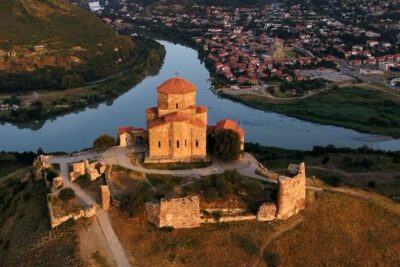
Ancient Georgia Group Tour: Mtskheta,Jvari, Gori, Uplistsikhe
Read our review →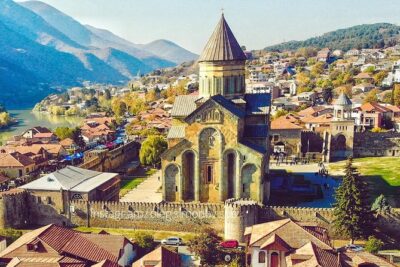
Ancient Mtskheta and Chronicle of Georgia half day tour
Read our review →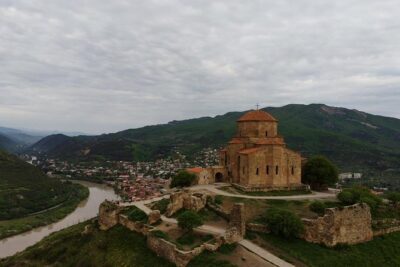
Private Day Trip to Gudauri and Kazbegi from Tbilisi via Jvari and Mtskheta
Read our review →Browse the lists this tour appears in