
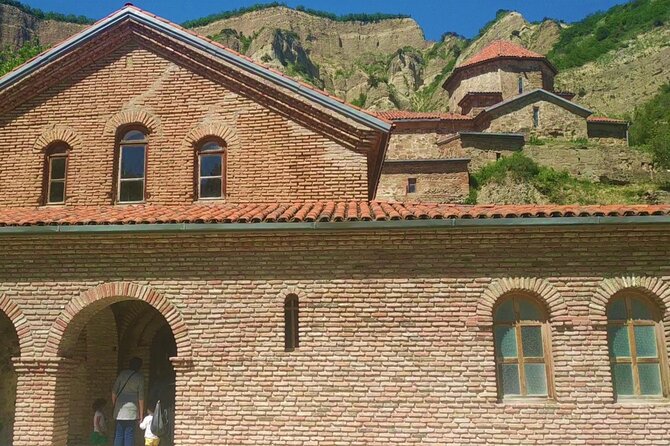
Reviewed · MTSKHETA AND JVARI TOURS
Mtskheta Tour with All UNESCO Sites & Ancient Ruins
Mtskheta packs Georgia’s early Christian story into one memorable day. From a hilltop sixth-century monastery, you look across the river country toward the old capital, then walk among churches where Georgian kings were buried and where local tradition places Christ’s robe. Jvari and Svetitskhoveli are the day’s main prizes.
I like the private car and hotel pickup, which save you from sorting out local transport. I also like the guide-led storytelling, especially with Giorgi, also referred to as George, who explains the monuments clearly and leaves time to look around. The main consideration is the nine-hour length and the walking on stairs and uneven ground.
Key points to know before you book
- Four major religious sites in one day: Jvari, Svetitskhoveli, Samtavro, and Shio-Mgvime give you a broad look at Georgian church architecture and monastic life.
- Jvari brings the big view: The sixth-century monastery sits on Jvari Mount at about 656 meters above sea level.
- Svetitskhoveli is the emotional center: This cathedral is linked to the claimed burial place of Christ’s mantle and to generations of Georgian kings.
- Private touring keeps the pace flexible: Only your group takes part, so you can ask questions and spend more time at a place that catches your attention.
- Dress matters: Women need a headscarf and dress in Georgian Orthodox churches. Men cannot wear short trousers.
- The day has some physical demands: Expect old-town walking, stairs, and varied terrain. Comfortable shoes are not optional.
Why Mtskheta makes such a strong day trip from Tbilisi
Mtskheta was Georgia’s ancient capital and remains one of the country’s main spiritual centers. It is close enough to visit from Tbilisi in a day, but the setting feels quite different from the capital’s streets and balconies.
This tour is built around sacred buildings rather than a long list of unrelated sights. You move from a hilltop monastery to the old town, then out to a monastery cut into a quieter mountain setting. That sequence gives the day a useful rhythm: wide views first, grand cathedral next, smaller religious buildings after that, and a more secluded final stop.
I find the private format especially helpful here. Churches are places where you may want to pause, lower your voice, and take in details without being pushed along by a large group. Guide Giorgi is described as a strong storyteller who explains the history of each monument and allows time to absorb the setting. That combination matters more in Mtskheta than a rushed checklist.
The tour begins at 9:00 a.m. and lasts about nine hours. Pickup is offered, and transport is in a private air-conditioned vehicle. That is a practical advantage in Georgia, where several of the sites are spread around the town and surrounding hills.
more mtskheta and jvari stops
- Day Trip to Mtskheta Gori and Uplistsikhe
★ 5.0 · 1,801 reviews - Tbilisi:Mtskheta,Jvari,Bazaar,wine tasting,Chronicles of Georgia
★ 5.0 · 730 reviews - Mtskheta-Gori-Uplistsikhe
★ 5.0 · 112 reviews
Jvari Church and the view from 656 meters
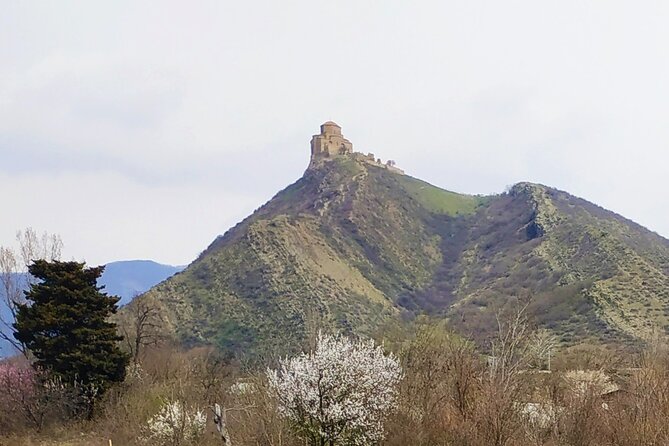
Jvari is usually the first stop, and it is a smart choice. The monastery gives you an immediate sense of Mtskheta’s setting before you begin walking through the old town.
Built in the sixth century, Jvari is one of the clearest surviving examples of early Georgian church design. It became the model for a type of church architecture used across Georgia and Armenia. The building has survived with remarkably little change, which helps you see the form as its builders intended.
The setting is just as important as the church itself. Jvari sits on Jvari Mount, about 656 meters above sea level, with views toward the river country below. One of the strongest details associated with this stop is the view of the lake and surrounding area from the mountaintop. Bring your attention outside as well as inside. The church’s relationship with the hill is part of its design, not a separate backdrop.
You get about 30 minutes here, with no admission charge. That is enough for a look inside, a short explanation from your guide, and time for photographs. It is not a long archaeological visit, so do not expect a museum-style exploration.
Jvari can also be the most exposed stop of the day. Weather affects the experience, and the tour requires good weather. If poor conditions force cancellation, you can choose another date or receive a full refund.
Svetitskhoveli Cathedral and Georgia’s sacred center
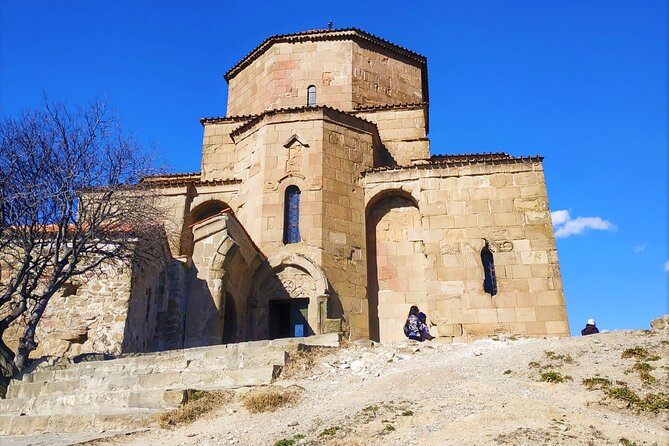
Back in historic Mtskheta, Svetitskhoveli is the largest and most important stop. Plan on about an hour, though the exact pace can depend on church activity and how much you want to ask your guide.
The cathedral you see today was completed between 1010 and 1029 by the medieval architect Arsukisdze. The site itself reaches back to the early fourth century, when Christianity was taking root in Georgia. That long timeline is easier to grasp once you notice the difference between the present building and the older traditions attached to the place.
Svetitskhoveli means Cathedral of the Living Pillar. Georgian Orthodox tradition identifies the cathedral as the burial place of Christ’s mantle, and the church has served as a burial place for Georgian kings. You do not need to share every religious belief connected with the site to understand its importance. This is a working place of worship and one of the country’s most revered churches.
Look closely at the exterior arches and stone decoration. The cathedral preserves strong examples of eleventh-century ornament, while the interior carries the marks of a difficult past. Some frescoes were lost after being whitewashed under Russian Imperial rule. That damage is part of the building’s story, and it keeps the visit from feeling like a perfectly preserved monument sealed off from time.
The cathedral is free to enter, but modest clothing is required. Women need a headscarf and dress, while men cannot wear short trousers. Scarves and dresses may be available near some church entrances, but I would not rely on that. Bring suitable clothing with you so the visit does not begin with a scramble at the doorway.
Svetitskhoveli is the place where a good guide earns the cost of the tour. The structure contains more than you can easily decode on your own, from its architectural form to the religious traditions and royal connections. Giorgi’s role is not simply to point at the walls. He explains why the cathedral matters, then gives you room to experience it quietly.
Samtavro Church and the smaller scale of Mtskheta
Samtavro offers a different experience from the grand cathedral. You spend about 30 minutes at the monastery, which combines the Transfiguration Church with the Nunnery of St. Nino.
The site was founded in the fourth century by King Mirian III, when Saint Nino built a small church here. The main temple belongs stylistically to the first half of the eleventh century and was likely built or rebuilt soon after Svetitskhoveli by King George I and Catholicos-Patriarch Melchizedek I.
That mix of dates gives Samtavro its appeal. You are not seeing one single moment in Georgian history. You are seeing a religious site that developed over centuries, with an early foundation and a later medieval church.
The visit is brief, but it adds useful context. Svetitskhoveli shows you the ceremonial heart of Mtskheta. Samtavro brings you closer to the town’s monastic and devotional life. You may find this stop less immediately dramatic than Jvari or Svetitskhoveli, but it helps round out the day.
Since Samtavro is in the historic town, this is also part of the walking section. Expect stairs and uneven surfaces. If your knees or balance are a concern, tell the guide at the start so the day’s pace can be discussed.
A different direction out of Tbilisi entirely:
- Day Trip to Kakheti Wine Region Including 9 Wine Tastings
★ 5.0 · 2,774 reviews - Highlights of Caucasus Mountains-Jinvali,Ananuri,Gudauri,Kazbegi(Group tour)
★ 5.0 · 2,682 reviews - Day Trip to Kazbegi and Gudauri
★ 5.0 · 2,009 reviews - Tbilisi Walking Tour Including Cable Car and Traditional Bakery
★ 5.0 · 1,310 reviews
Shio-Mgvime Monastery in a quieter setting
Shio-Mgvime is the longest out-of-town monastery stop, with about an hour planned for the visit. Its name means Shio’s cave, and the site connects directly to the life of the sixth-century monk Shio, one of the Thirteen Assyrian Fathers who came to Georgia as Christian missionaries.
Shio spent his final years as a hermit in a deep cave. The monastery’s earliest surviving building, the Church of St. John the Baptist, dates from the 560s to the 580s. Its original design is plain and strict, with a cruciform plan and an octagonal dome covered by a conical roof.
The monastery changed in the eleventh and eighteenth centuries, but much of its early architectural character remains. A stone iconostasis once housed here is now in the Art Museum of Georgia. That detail gives you a sense of how religious sites can lose important objects while still retaining their basic form.
Shio-Mgvime is a good final stop because it feels less tied to the main town center. The story shifts from kings and a national cathedral to monks, caves, and a more solitary form of faith. You get time to listen, walk around, and compare the monastery with the larger churches earlier in the day.
There is no admission charge listed for this stop. As at the other churches, proper clothing is required. Your guide can help explain the religious and architectural details, but this is also a place where you should allow a little quiet time. The value is not only in collecting facts. It is in seeing how Georgian Christianity developed both in formal cathedrals and in remote monastic communities.
What the private vehicle and nine-hour schedule change
The private air-conditioned vehicle is more than a comfort feature. It links four sites that would be awkward to combine without private transport, especially if you want to avoid changing vehicles or working around public schedules.
Hotel pickup removes another small but real problem. You do not have to find a meeting point in central Tbilisi at the start of the day. Pickup is offered, and the experience is conducted only for your group.
The private format also lets you ask for clarification. If a church’s symbols confuse you, you can stop and ask. If a site deserves a few extra minutes, you are not negotiating with a coach full of strangers. The schedule is still set, so do not expect unlimited time at every stop, but the pace is less rigid than on a large group excursion.
Nine hours is a full day. That suits you if you want to cover the principal Mtskheta sites in one outing. It may feel long if you prefer one major monument and plenty of unplanned wandering. The walking in Mtskheta includes varied terrain and stairs, so fatigue is possible by the afternoon.
The tour is offered in English. Six published ratings give it a perfect five-star average, with praise focused on the guide’s explanations, strong views, and a pace that does not feel rushed. The most useful takeaway is simple: this is a tour for people who want context, not just a driver pointing out church towers.
Lunch, shopping, and the practical details
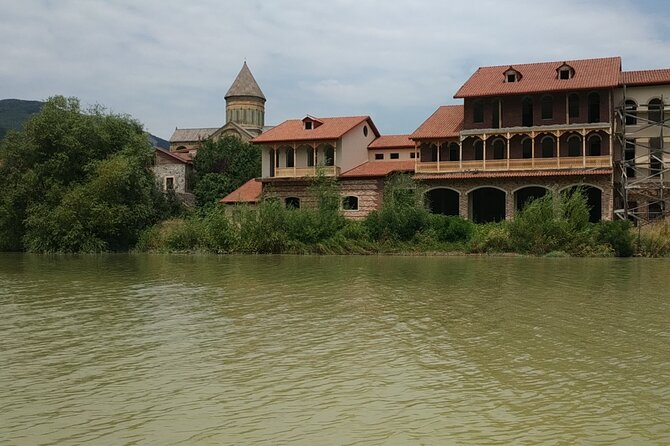
Lunch depends on the option you book. The budget option does not include lunch, but the route includes a restaurant stop where you can eat. A lunch option is also available, and you are asked to provide dietary restrictions so the operator can use that information when arranging the meal.
I would confirm exactly what your chosen option includes before paying. That matters because the base price is listed at $127.50 per person, while the meal arrangement may differ by option.
The price makes the most sense for a couple, family, or small group that values a private car and guide. Group discounts are offered, which can improve the per-person value. For one person, the cost is harder to justify unless private transport and a dedicated guide are especially important to you.
Mtskheta also has places to buy gifts. Allow a little time if you want to look for souvenirs for family, but do not let shopping crowd out the churches. The main reason to book this day is the concentration of sacred architecture and history, not retail time.
Wear comfortable shoes with a firm sole. Dress conservatively from the morning, rather than hoping to borrow clothing at each entrance. Bring water and any personal items you need for a long day, since the schedule runs from 9:00 a.m. for roughly nine hours.
Who should book this Mtskheta day trip
I would choose this tour if you are staying in Tbilisi and want a guided introduction to Mtskheta without arranging several separate rides. It suits first-time visitors, history fans, architecture enthusiasts, and anyone interested in Georgian Orthodox Christianity.
It is also a good fit for families or friends who want a private schedule. You can talk with the guide throughout the day, and the air-conditioned vehicle offers a welcome break between sites.
You may want a shorter or less structured outing if your priority is leisurely café time, independent wandering, or a single landmark. The route is ambitious. Four religious sites in nine hours give you breadth, but not unlimited time at each one.
The tour also demands respect for church rules. If you are not comfortable wearing a headscarf and dress as a woman, or avoiding short trousers as a man, this may not be the right cultural visit for you. For everyone else, those rules are a normal part of entering active Georgian Orthodox churches.
Should you book it?
Book this tour if you want the main Mtskheta churches explained in clear English, with private pickup, private transport, and a full day that includes both famous monuments and a quieter monastery.
The best reasons are the Jvari viewpoint, the spiritual importance of Svetitskhoveli, and the chance to compare four very different religious sites in one outing. The main trade-off is cost for solo participants and the physical effort of a long day with stairs and uneven ground.
At $127.50 per person, the value improves with a small group discount and becomes easier to defend if you would otherwise need to arrange transport, lunch, and a guide separately. Free cancellation is available up to 24 hours before the 9:00 a.m. start, while poor-weather cancellations offer a new date or full refund. For a focused, private introduction to Georgia’s old capital, this is a strong choice.
FAQ
How long does the Mtskheta tour last?
The tour lasts approximately nine hours.
What time does the tour begin?
The stated start time is 9:00 a.m.
Is hotel pickup offered?
Yes, pickup is offered for the experience.
Is this a private tour?
Yes. Only your group participates in the private tour or activity.
What language is the tour offered in?
The tour is offered in English.
How much does the tour cost?
The listed price is $127.50 per person. Group discounts are offered.
Are entrance tickets included?
Admission is listed as free at Jvari Church, Svetitskhoveli Cathedral, Samtavro Church, and Shio-Mgvime Monastery.
Is lunch included?
The budget tour option does not include lunch, but it stops at a restaurant for lunch. A tour option with lunch is also available.
What should women wear at the churches?
Women need to wear headscarves and dresses in Georgian Orthodox churches. Scarves and dresses may be available near some entrances.
Can the tour be canceled for a full refund?
You can cancel at least 24 hours before the experience start time for a full refund. Changes or cancellations made less than 24 hours before the start are not accepted for a refund. Poor-weather cancellations offer another date or a full refund.
Recently added around Tbilisi
- 2-Day Private Wine Tour to Kakheti from Tbilisi★ 5.0 · 3 reviews
- Kakheti wine region – Private Tour★ 5.0 · 3 reviews
- 17 Day Private Tour through Georgia★ 5.0 · 3 reviews
- Tbilisi and Mtskheta cities private, cultural tour★ 5.0 · 3 reviews
- Tbilisi City Tour with Street Photography★ 5.0 · 3 reviews
- Kakheti With Top Destinations★ 5.0 · 3 reviews
- Jvari monastery & Mtskheta – Half day group tour from Tbilisi★ 5.0 · 3 reviews
- Tbilisi City, Jvari Monastery, Uplistsikhe caves, Mtskheta city Private Day Trip★ 4.5 · 3 reviews
Mtskheta and Jvari Tours, compared.
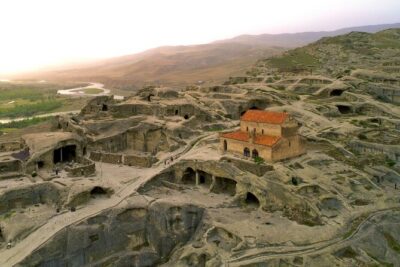
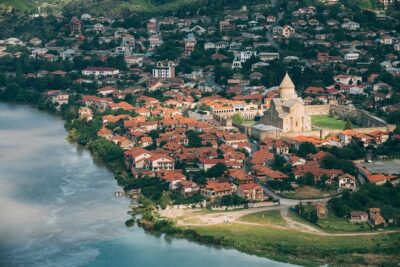
Mtskheta,Jvari,Bazaar,wine tasting,Chronicles of Georgia
Read our review →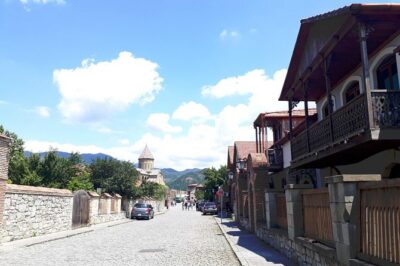
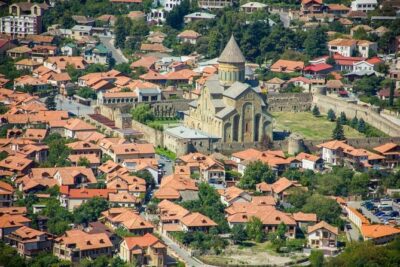
Mtskheta, Jvari, gori, uflistsikhe, history and panorama (group tours)
Read our review →
Jvari-Uplistsike-Chronicle of Georgia, PRIVATE Trip
Read our review →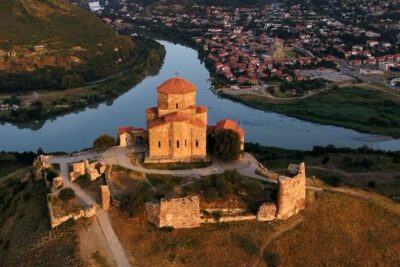
Ancient Georgia Group Tour: Mtskheta,Jvari, Gori, Uplistsikhe
Read our review →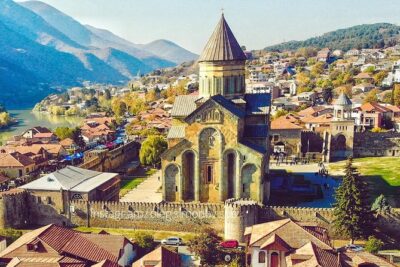
Ancient Mtskheta and Chronicle of Georgia half day tour
Read our review →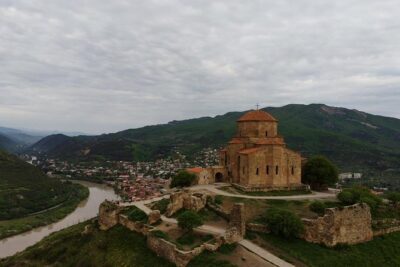
Private Day Trip to Gudauri and Kazbegi from Tbilisi via Jvari and Mtskheta
Read our review →Browse the lists this tour appears in