

Reviewed · TBILISI TOURS
Cook True Ajarian Khachapuri and Khinkali in Highlanders Style
The best part of this Tbilisi cooking class is its home-kitchen setting. At Chakandrila, you prepare two Georgian staples from scratch, then sit down to eat them with homemade wine or a non-alcoholic drink. It feels closer to being welcomed into a local family meal than being processed through a tourist kitchen.
I like two things in particular: the class teaches both Ajarian khachapuri and khinkali, so you learn a baked dish and a dumpling in one sitting; and the instructors, including Irina, Ella, and Tamara, are praised for patient, step-by-step teaching. The recipes are shared, too, which means the class can continue in your own kitchen.
The main consideration is the two-and-a-half-hour timing. Khachapuri dough may be prepared ahead because it needs a long rest, so the session is hands-on but not every stage happens from start to finish in real time. Meat is also part of the standard khinkali filling, although a vegetarian version can be requested.
Key points to know before you book
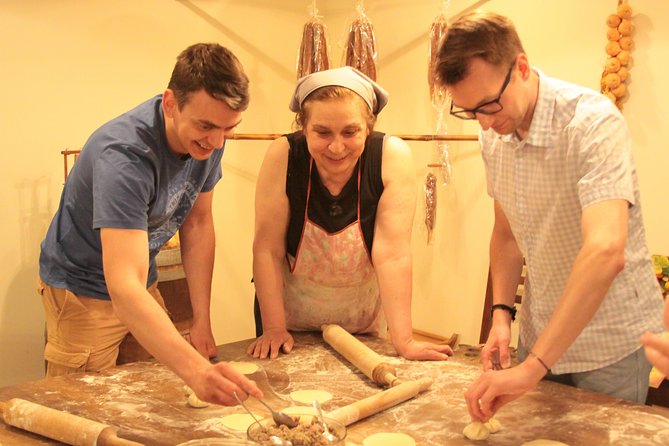
- You make two Georgian classics: Ajarian khachapuri and five to six khinkali per person.
- You cook in a home-style setting: The class takes place at Chakandrila, described in many accounts as an apartment or private home.
- The teaching is patient and practical: Irina is frequently praised for clear English instruction, gentle corrections, and help for beginners.
- You get a full meal: Lunch includes your khachapuri and dumplings, with a glass of homemade wine.
- Vegetarian cooking is possible: Meat-based dishes can be switched to vegetarian options, but cheese and eggs are used.
- It offers good value at $39: You receive food, instruction, wine, and recipes in about 2 hours and 30 minutes.
Why these two Georgian dishes matter
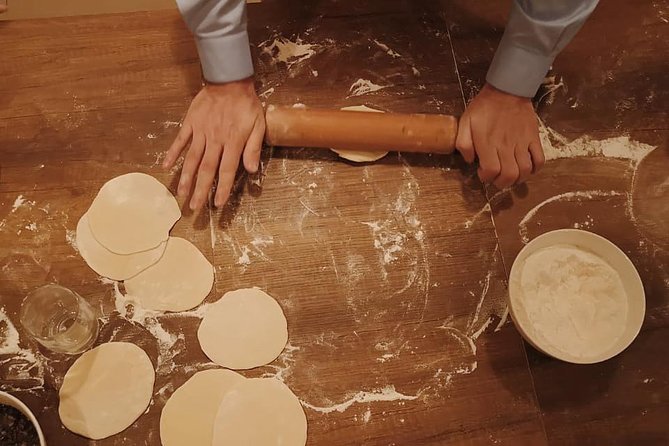
Georgian food is easy to enjoy in a restaurant, but cooking gives you a better sense of how the dishes work. Khachapuri is not simply cheese on bread. The Ajarian version is shaped like a boat, filled with cheese, and finished with egg and butter. You learn how the dough supports the filling and how the final dish is meant to be eaten.
Khinkali offers a different lesson. These pleated dumplings are filled with meat in the standard recipe, then cooked until the filling creates a hot broth inside. The folds are part of the craft, and making them by hand is often the most playful part of the class.
I like the pairing. Khachapuri is broad, rich, and baked. Khinkali is fiddly, folded, and boiled. In one session, you get a useful introduction to Georgian dough, fillings, shaping, and serving.
The class also helps explain why Georgian food is so social. You do not simply cook one small sample and leave. The included meal is substantial: one Ajarian khachapuri and five to six khinkali for each person. Come hungry.
more cooking classes in Tbilisi
- Small-Group Khinkali and Khachapuri Cooking Class in Tbilisi
★ 4.5 · 224 reviews - Nana’s Kitchen – traditional Georgian cooking class at real Georgian family home
★ 5.0 · 37 reviews - Join a Local for a Market Tour, Cooking Class and Meal in her Tbilisi Home
★ 5.0 · 15 reviews
Meeting at Biblusi on Merab Kostava Street
The listed meeting point is Biblusi #8 at 8 Merab Kostava Street in Tbilisi. The location is near public transportation, which makes it practical if you are staying elsewhere in the city.
You should allow a little extra time to find the exact meeting point. The official details identify the bookstore address, while the cooking itself takes place at Chakandrila, in a cozy home-style workshop or apartment setting. Confirm the meeting instructions after booking so you know how the host will guide you from the starting point to the kitchen.
The activity ends back at the meeting point. That matters if you have evening plans, a museum reservation, or a restaurant booking afterward. The listed duration is approximately 2 hours and 30 minutes, so I would avoid scheduling anything too tightly.
Entering Chakandrila’s home-style kitchen
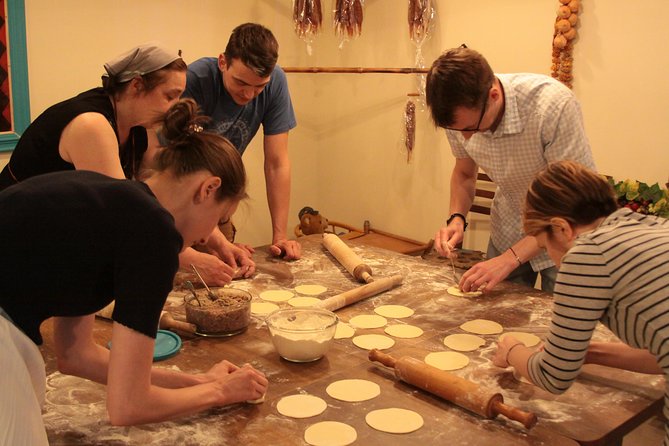
The setting is one of the strongest reasons to choose this class. Instead of a polished restaurant classroom, you cook in a warm, personal space. The available descriptions place the class in an apartment or private home, giving the session a more intimate feel.
That setup has clear advantages. You can ask questions without feeling rushed, watch the instructor closely, and hear stories about family cooking and Georgian food traditions. Several instructors have been described as warm hosts as well as cooks, which is important when the class takes place in someone’s home.
It also comes with a small tradeoff. A private apartment is not designed like a large commercial cooking school. Space may feel more personal and compact, and the setting may vary depending on the instructor assigned. If you want a sleek demonstration kitchen with individual workstations, this is probably not the right choice.
The official format is a private activity for your group. Some previous sessions included additional participants, including groups of four or six, so the exact social setup may not always feel completely one-on-one. Either way, the teaching style is described as hands-on rather than a simple demonstration.
Making Ajarian khachapuri
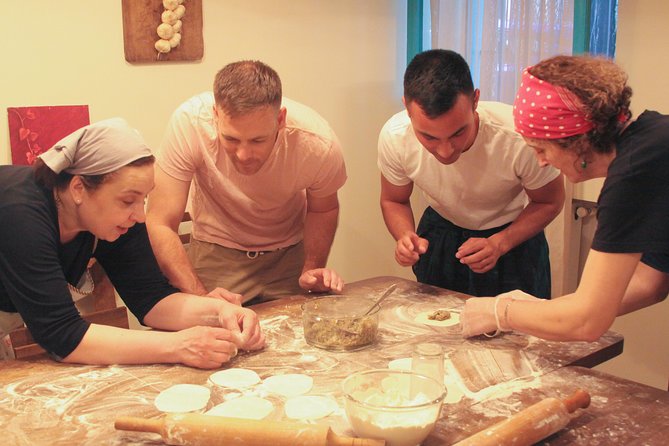
The first main dish is Ajarian, or Adjaruli, khachapuri. You shape the dough into a boat, add the cheese filling, and finish the dish in the oven. The result is a golden bread with a soft, cheesy center, usually completed with egg and butter.
The preparation teaches you several useful points:
- How to shape the boat so it holds the filling
- How to handle the dough without making it too heavy
- How to judge the balance between bread and cheese
- How the egg and butter finish the dish
- How to serve and eat the khachapuri while it is hot
One useful detail is that the dough may need to rest for around two hours before the class. That means you may not see every part of the dough-making process from beginning to end. This is not a flaw so much as a timing issue. The class needs to fit into 2 hours and 30 minutes, and a proper rest would otherwise take up most of the session.
You should still get practical guidance. An instructor can explain the dough, show you the shaping, and give you the recipe so you can repeat it at home. One of the appealing features of this class is that you are not left with a vague memory of ingredients and gestures. The instruction is intended to be useful after you return home.
For a first attempt, khachapuri is approachable. You do not need advanced pastry skills to shape a boat and fill it with cheese. The dough may be the part that requires the most attention, but the dish is forgiving enough for beginners.
A different direction out of Tbilisi entirely:
- Day Trip to Kakheti Wine Region Including 9 Wine Tastings
★ 5.0 · 2,774 reviews - Highlights of Caucasus Mountains-Jinvali,Ananuri,Gudauri,Kazbegi(Group tour)
★ 5.0 · 2,682 reviews - Day Trip to Kazbegi and Gudauri
★ 5.0 · 2,009 reviews - Day Trip to Mtskheta Gori and Uplistsikhe
★ 5.0 · 1,801 reviews
Folding five to six khinkali each
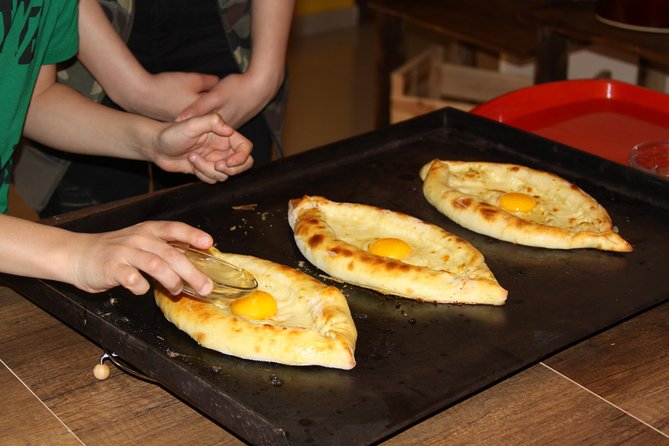
Khinkali is where the class becomes more tactile. You fill dough rounds with the traditional mixture, then pinch the edges into pleats. Each person receives five to six dumplings as part of lunch, enough to make the folding worthwhile and enough to leave you satisfied.
The pleating takes practice. Your first dumpling may look loose, lopsided, or more like a small pouch than a Georgian dumpling. That is fine. Patient instructors such as Irina are praised for helping people with limited cooking skills, and the point is to learn the technique rather than produce identical dumplings.
The meat filling is standard, but you can request a vegetarian alternative. This is useful for a mixed group, especially since the class already uses cheese and eggs in the cooking. You should mention dietary needs when booking or in advance, rather than waiting until the class begins.
Khinkali also gives the instructor a chance to explain how Georgian dumplings differ from familiar filled pasta or Asian dumplings. The central broth is part of the appeal, and careful cooking matters. You will want clear instructions on sealing the dumplings and handling them after boiling.
The class does not promise a broad tasting menu. The focus is narrow and sensible: learn two dishes well, eat what you make, and leave with recipes. If you want to sample many regional foods, a market visit or food tour would cover more ground.
The meal, wine, and social side
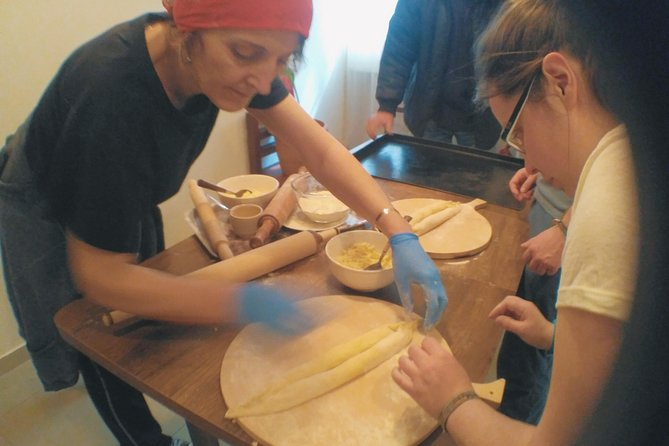
After the cooking, you eat the finished dishes together. Lunch includes one Ajarian khachapuri and five to six khinkali per person, plus a glass of homemade wine. That amount makes the $39 price easier to assess: this is not a short demonstration followed by a token bite.
The wine is part of the Georgian welcome, but it is not compulsory. Non-alcoholic drinks are available, and additional food or drinks can be ordered from the menu. Snacks are not included, so do not expect a series of extra appetizers unless you arrange or purchase them separately.
I like the shared meal because it gives the class a natural ending. You have made food with your hands, then get time to eat and talk. Past sessions have included people from different countries and language backgrounds, with instruction adapted between English and Russian when needed.
English is the listed language, and the teaching is described as clear enough for participants to take notes and follow recipes. The social element can vary because the activity is advertised as private, but some sessions have had several participants. If you enjoy meeting people at the table, that can be a bonus. If you want quiet time with only your own group, confirm the format before booking.
What makes the instructors important
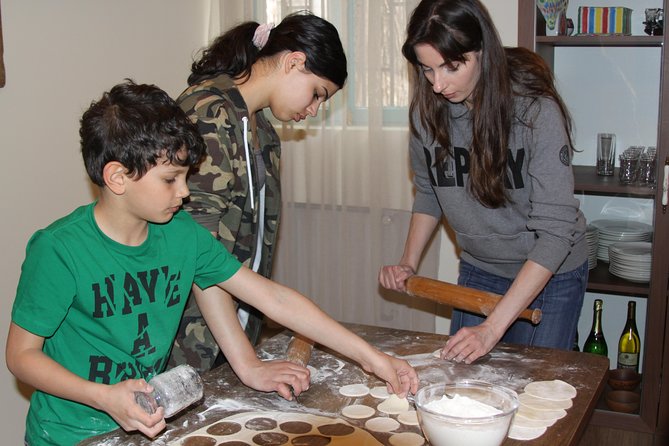
The food matters, but the host can make or break a cooking class. Here, the strongest theme is patience and hospitality. Irina is repeatedly described as kind, funny, and willing to explain each step. She has also taught in both English and Russian, which helped mixed-language groups follow along.
Ella and Tamara are also praised as friendly chefs who create a relaxed atmosphere. The names attached to different sessions suggest that the exact instructor may vary, so you should not assume Irina will lead every booking unless the provider confirms it.
This is especially helpful if you are not confident in the kitchen. You can expect correction without embarrassment, which is exactly what a beginner needs. The experience appears designed for participation, not for showing off your cooking skills.
The personal stories add value, too. The teaching has included family memories and background about Georgian cooking, turning the recipes into more than a list of measurements. That cultural context is modest but useful. You learn why these dishes are made, not only how to fold and bake them.
Price and value at $39 per person
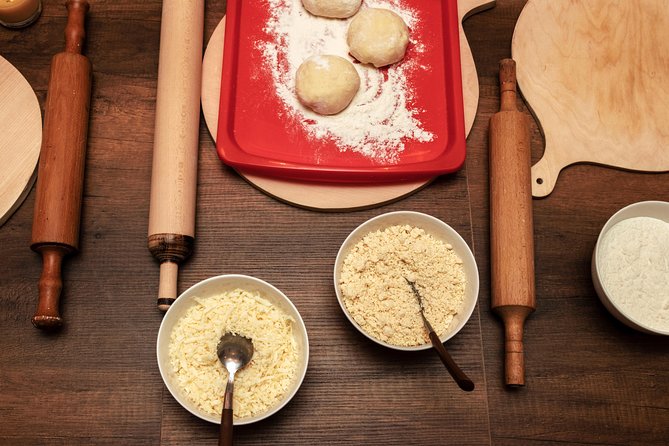
At $39 per person, this class sits in a reasonable range for a private cultural activity in Tbilisi. The price includes approximately 2 hours and 30 minutes of instruction, a full lunch, five to six khinkali, one Ajarian khachapuri, and a glass of homemade wine.
The main value is participation. You could spend less on a restaurant meal, but you would not get the practical instruction or recipes. You could also order khachapuri and khinkali easily in Tbilisi, but the class adds the pleasure of understanding how the food is made.
I would consider it particularly good value for couples, families, and small groups who want one shared activity. It also makes sense early in a Tbilisi visit. Once you learn the dishes, you may notice them more carefully at restaurants and have a better idea of what to order.
The value is weaker if you are only interested in eating. The class takes time, includes hands-on work, and may involve waiting for dough or cooking stages. For a quick meal, go to a restaurant. For a personal connection to Georgian food, the class earns its price.
Who should book this class
I would choose this activity if you enjoy cooking, local food, or small-scale cultural experiences. It suits complete beginners because the instruction is patient and practical. It also suits confident home cooks who want Georgian recipes and a chance to compare techniques.
Families can benefit from the hands-on format, though young children may find the 2-hour-30-minute session long. Couples may appreciate the home setting and shared meal, especially if they want something more personal than another dinner reservation.
Vegetarians can participate if they request meat-free versions in advance. Keep in mind that cheese and eggs are used, so this is not suitable for a vegan diet based on the information provided.
You should think twice if you need a fully accessible or highly standardized venue, since the class takes place in a home-style setting and specific accessibility details are not provided. The same applies if you dislike social cooking or prefer a large professional kitchen.
Practical details that affect your decision
The activity is offered in English and uses a mobile ticket. Confirmation is sent within 48 hours of booking, subject to availability, so do not assume your place is final until confirmation arrives.
Free cancellation is available if you cancel at least 24 hours before the local start time. Cancellations or changes made inside that window are not accepted for a refund.
The class is booked, on average, 19 days ahead. That does not guarantee a sellout on your dates, but it is a useful signal. If your Tbilisi schedule is fixed, reserve before arrival rather than leaving this for the last afternoon.
Bring an appetite, comfortable clothes, and a phone or small notebook for recipes. Photos and videos have been allowed in past sessions, but it is still polite to ask before filming inside a private home.
Should you book Cook True Ajarian Khachapuri and Khinkali?
Yes, if you want to do more than order Georgian food and take a picture of it. For $39, you get two signature dishes, a filling meal, wine, recipes, and a friendly lesson in a personal home setting.
I would book it for the warm teaching, the chance to make khinkali yourself, and the useful recipe handoff. I would be more cautious only if you need a vegan menu, a formal cooking school, or a tightly timed activity with no variation in group size.
For most food-minded visitors to Tbilisi, this is a smart two-and-a-half-hour choice. Arrive hungry, request a vegetarian filling early if needed, and leave enough time afterward that you can enjoy the meal rather than watch the clock.
FAQ
Where does the cooking class meet?
The listed starting point is Biblusi #8 at 8 Merab Kostava Street in Tbilisi, Georgia.
Where does the activity end?
The activity ends back at the meeting point.
How long does the class last?
The class lasts approximately 2 hours and 30 minutes.
What dishes will I make?
You will make Ajarian khachapuri, a boat-shaped Georgian cheese pie, and khinkali, traditional Georgian dumplings.
How many khinkali are included?
Lunch includes five to six khinkali for each person.
Is lunch included in the price?
Yes. Lunch includes one Ajarian khachapuri and five to six khinkali per person.
Is wine included?
Yes. A glass of homemade wine is included. Non-alcoholic drinks are also available.
Can I request vegetarian food?
Yes. Meat-based dishes can be switched to vegetarian options. Cheese and eggs are used in the cooking.
Is the class offered in English?
Yes. English is one of the listed languages for the experience.
Can I cancel for a full refund?
Yes, if you cancel at least 24 hours before the experience start time. Cancellations or changes made less than 24 hours before the start time are not accepted for a refund.
Recently added around Tbilisi
- 2-Day Private Wine Tour to Kakheti from Tbilisi★ 5.0 · 3 reviews
- Kakheti wine region – Private Tour★ 5.0 · 3 reviews
- 17 Day Private Tour through Georgia★ 5.0 · 3 reviews
- Tbilisi and Mtskheta cities private, cultural tour★ 5.0 · 3 reviews
- Tbilisi City Tour with Street Photography★ 5.0 · 3 reviews
- Kakheti With Top Destinations★ 5.0 · 3 reviews
- Jvari monastery & Mtskheta – Half day group tour from Tbilisi★ 5.0 · 3 reviews
- Tbilisi City, Jvari Monastery, Uplistsikhe caves, Mtskheta city Private Day Trip★ 4.5 · 3 reviews
Tbilisi Tours, compared.
Day Trip to Kakheti Wine Region Including 9 Wine Tastings
Read our review →
Highlights of Caucasus Mountains-Jinvali,Ananuri,Gudauri,Kazbegi(Group tour)
Read our review →

Tbilisi Walking Tour Including Cable Car and Traditional Bakery
Read our review →

Kakheti Wine Region: Signagi and Bodbe Tour with 10 Wine Tastings
Read our review →
Mtskheta,Jvari,Bazaar,wine tasting,Chronicles of Georgia
Read our review →Browse the lists this tour appears in