
Reviewed · TBILISI TOURS
Small-Group Khinkali and Khachapuri Cooking Class in Tbilisi
This Tbilisi cooking class turns two Georgian staples into a social meal. You shape khinkali, the pleated dumplings filled with veal, cheese, or mushrooms, and prepare Imeretian khachapuri, a round, cheese-filled bread. The chef adds stories about Georgian food, Tbilisi, and the proper way to handle a feast.
I like the central downtown setting and the low price of $27.50, which covers wine, salad, cheese, and the food you prepare. I also like the friendly, relaxed teaching style associated with instructors such as Seva, Artem, and Vladimir. The main thing to check before booking is the group size and the amount of hands-on cooking, since both have varied beyond the advertised small-group format.
Key points before you book
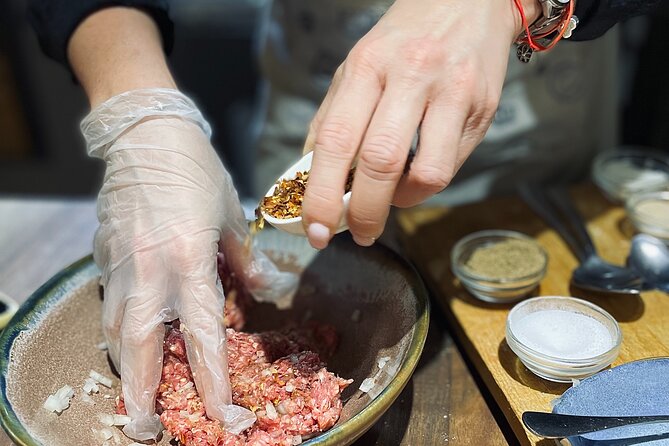
- Khinkali folding is the most hands-on part: You practice the famous gathered top and learn how the filling becomes a juicy dumpling.
- Khachapuri is Imeretian style: Expect a round cheese bread rather than the boat-shaped Adjarian version.
- Wine and extra food are included: Georgian wine comes with salad, farm cheeses, and your cooked dishes.
- The class happens in a restaurant hall: You work at a dining table, while the hot cooking is handled in the restaurant kitchen.
- Group size can change: The stated limit is six, but some sessions have had nine, ten, thirteen, or even more participants.
- Plan for a full meal: You should arrive hungry, though the timing and portion sizes may depend on the number of people in the class.
What you actually cook in two hours
The class begins with an introduction to the two dishes. The chef explains how khinkali dough works, how to prepare the khachapuri mixture, and which small tricks make these foods easier to handle at home.
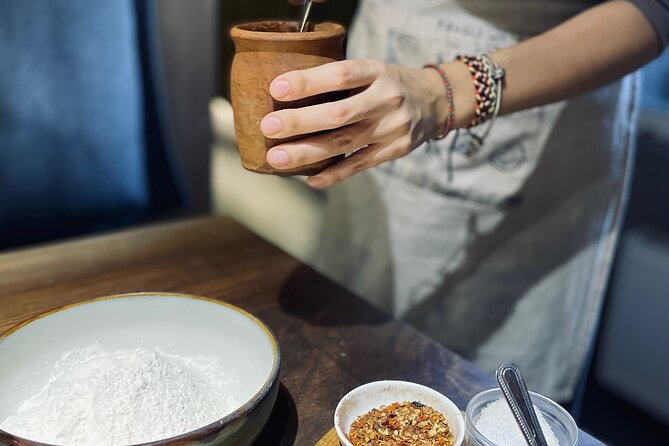
You then work on the khachapuri. Participants prepare the dough and filling, spread the cheese, and shape the bread before it is taken away for cooking. Imeretian khachapuri is not the egg-topped boat often seen in photographs from Batumi. It is a round, sealed bread with cheese inside, and it offers a simpler introduction to Georgian baking.
The khinkali portion focuses on the filling and the fold. The filling can be made with veal, cheese, or mushrooms, depending on the session. The chef demonstrates the pleated, pinched shape, then you try it yourself. This is the part where the class earns its keep. The dumplings look easy until you try to close one neatly without losing the filling.
The hot stages are completed by the restaurant staff. That point matters. The class gives you the skills to mix, fill, and shape the food, but it is not a full kitchen apprenticeship where every person boils dumplings and bakes bread from start to finish. Several sessions have also used khinkali dough that was prepared in advance, despite the explanation about making the dough.
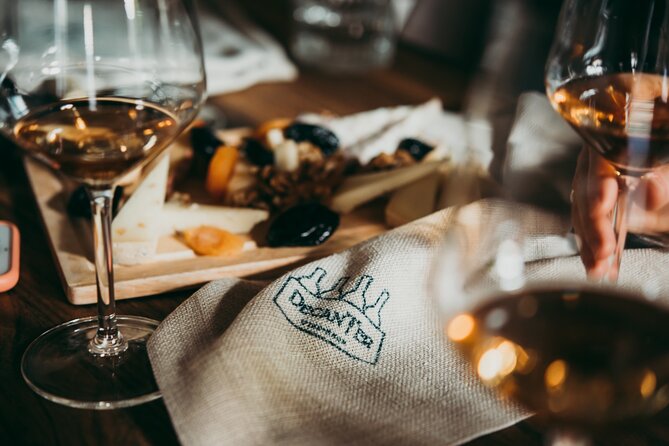
Once the food is ready, it comes back to the table for the meal. You eat the dumplings and khachapuri you helped prepare, along with Georgian tomato salad, farm cheese, and wine. The meal is substantial enough to serve as lunch or dinner, so avoid scheduling this between two large restaurant meals.
more cooking classes in Tbilisi
- Cook True Ajarian Khachapuri and Khinkali in Highlanders Style
★ 5.0 · 93 reviews - Nana’s Kitchen – traditional Georgian cooking class at real Georgian family home
★ 5.0 · 37 reviews - Join a Local for a Market Tour, Cooking Class and Meal in her Tbilisi Home
★ 5.0 · 15 reviews
Why khinkali folding is worth learning
Khinkali is one of Georgia’s signature foods, but eating it in a restaurant tells you little about the work behind it. The class lets you see why the pleats matter and why the dumpling needs a firm seal.
The chef explains the cooking details while you shape the dumplings. You may also hear stories about Georgian feasts, local customs, and the role of toasts at the table. Seva has been praised for making these explanations easy for complete beginners, while Artem is known for adding humor and background about the dishes. Vladimir has also received warm praise for creating a welcoming evening.
There is a practical lesson here. You do not need advanced cooking skills. The instructions are broken into small steps, and the atmosphere is casual rather than formal. If your first dumpling looks like a wrinkled pouch made in a hurry, you are in good company.
The biggest limitation is that you may not get to make every dumpling yourself. With a larger group, people take turns preparing the meat filling or khachapuri dough, then share the folding work. That makes the session social, but it reduces individual practice.
Imeretian khachapuri and the shared table
Khachapuri is not one single dish. Georgia has several regional forms, and this class teaches the Imeretian version. It is built around cheese-filled dough, with the cheese enclosed rather than piled on top.
The process gives you several useful skills: mixing dough, preparing the filling, spreading the cheese, and shaping the bread. The finished result is straightforward, filling, and easy to recreate if you save the recipes provided at the end of some sessions.
The food is served as part of a shared table rather than as a private plate for each participant from the start. Georgian meals are built around this kind of communal eating, so the format fits the subject. You can sample the salad and farm cheese while waiting, then eat the hot dishes once the kitchen finishes them.
Portions have not always matched the size of the group. In a session with only two participants, there was plenty of food. In a much larger class, the shared salad and cheese felt modest. If you care about having a generous spread, ask about the expected group size before you go.
Wine, conversation, and the restaurant setting
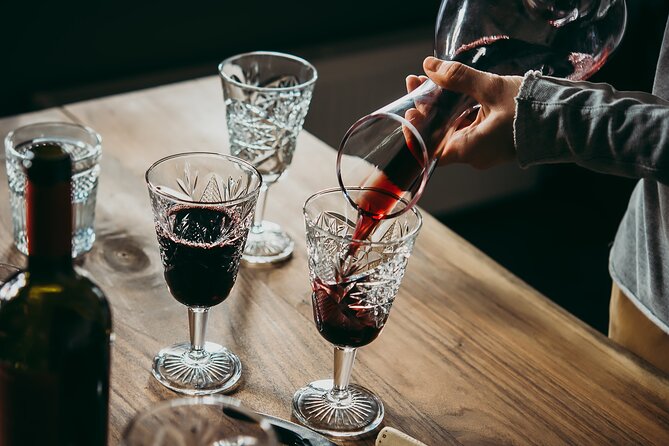
A glass of Georgian wine is included, along with salad and cheese. Wine helps the class feel more like a Georgian meal than a technical demonstration. It also gives you something to do during pauses between preparation, kitchen cooking, and serving.
The wine choice may not be flexible. At least one session offered red wine only, with no white alternative. If you cannot drink red wine, contact the provider before booking rather than assuming you can choose.
The class takes place inside the restaurant hall, not behind the kitchen door. This is partly a practical matter: the kitchen is not set up for participants to work inside it, and the hot stages are handled by staff. You still see the preparation process at the table, but you will not personally place the khinkali into boiling water or bake the khachapuri.
That setup has two sides. The restaurant gives you proper seating, a ready dining area, and a comfortable place to eat. It also means the class feels less like a family cooking lesson and more like a guided restaurant workshop. If you want a private home kitchen and direct contact with every stage, this is not the right format.
more days out of Tbilisi to compare
- Taste of Kakheti: Wine Tour Bread Baking & Churchkhela Workshop
★ 4.5 · 46 reviews - Georgian Dance Class in Tbilisi, Georgia
★ 5.0 · 10 reviews - Taste of Georgia. Cooking-Class Khinkali, Khachapuri and more
★ 5.0 · 7 reviews - Mtskheta: Exploring Heritage and Cuisine through Cooking Classes
★ 5.0 · 5 reviews
Group size and the importance of timing
The advertised maximum is six people, which would be ideal for this kind of activity. A group that size gives each person more time with the dough, filling, and folding. It also makes it easier to ask questions without waiting.
Actual sessions have varied. Some have had only two participants, while others have included nine, ten, thirteen, or more. One account described a class of about fourteen beginning as another session ended. The provider has explained that busy periods can bring larger groups.
This is the most important point to clarify before you pay. A six-person session and a thirteen-person session are not the same product. In a larger group, you will spend more time watching, chatting, and waiting for ingredients or equipment. Some people enjoy that relaxed pace, especially when meeting other people in Tbilisi. Others expect a true workshop and may find the personal cooking time limited.
Scheduling can also affect the experience. In some sessions, the chef has had to divide attention between groups. Delays of roughly 25 minutes have been reported, along with long pauses while staff brought ingredients and served the finished food. The class may also run longer than two hours, with one session taking about three hours including the meal.
For the best chance of a smooth experience, choose a time when the provider confirms the expected number of participants. If your schedule is tight, allow extra time after the stated two hours.
The teaching style and the social side
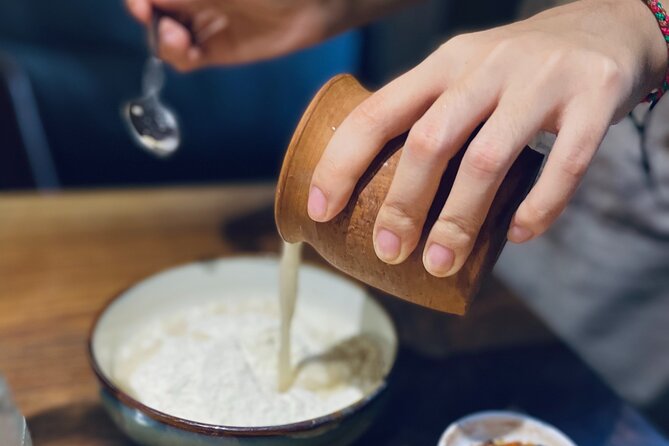
The best part of this class is often the human element. The instructors are described as patient, funny, and clear, especially when showing the khinkali folds. That matters because the recipes themselves are not complicated, but the shaping takes practice.
You will likely spend some time talking while the chef prepares ingredients or the kitchen cooks the food. Solo visitors can use the class to meet people, and families can work together without needing professional cooking skills. Children have taken part successfully, including a family with children aged two and eight, though the amount of direct participation will depend on the child and the group.
The social format is not perfect for everyone. If you want constant instruction, a private lesson, or a chef focused only on your work, the shared table may feel slow. If you enjoy a glass of wine, a few jokes, and a meal with people you have just met, the pauses become part of the experience rather than wasted time.
The food culture discussion can also vary. Some instructors give useful background on Georgian feasts, Tbilisi, and toast traditions. Other sessions have left more quiet time than some participants expected. Do not book this mainly as a formal history lesson. Book it to cook, eat, and learn enough context to understand the dishes better.
Price and practical value at $27.50
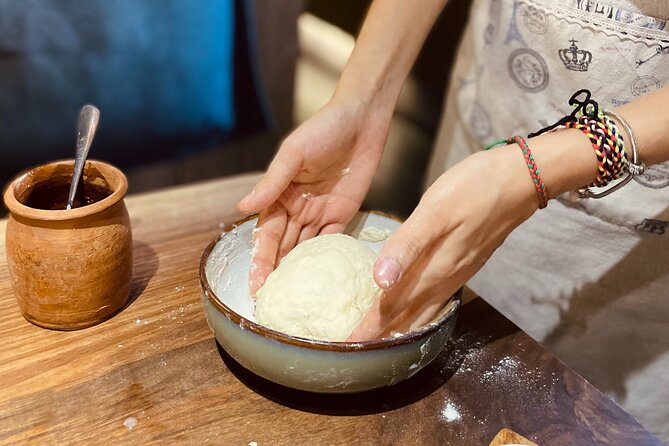
At $27.50 per person, this is a strong food value if you count the included meal. You receive instruction, khinkali, khachapuri, salad, farm cheese, and wine in a central Tbilisi location. A similar amount spent at a restaurant might buy a good meal, but not the chance to shape the dumplings and bread yourself.
The value depends on your expectations. You are paying for a casual workshop, not a professional culinary course. You will not necessarily make the complete recipe from raw ingredients, and the kitchen staff handle the hot cooking. The experience becomes less compelling if the group is large, the start is delayed, or shared portions are small.
I would view the price as especially good for a first visit to Georgia. You get a taste of two important dishes, learn their basic structure, and leave with recipes that can help you repeat the meal at home. It is also a useful rainy-day or midday activity because it combines food, conversation, and a seated indoor setting.
The central meeting point is St. Bunny31 on Griboedov Street in downtown Tbilisi, near public transportation. The activity ends at the same place. A mobile ticket is accepted, confirmation arrives at booking, and service animals are allowed.
Free cancellation is available up to 24 hours before the start time. Changes or cancellations inside that window are not refunded.
Who should book this Tbilisi cooking class
I would recommend it to first-time visitors who want an easy introduction to Georgian food without committing to a long culinary course. It suits solo visitors, couples, families, and people who enjoy meeting others over a shared meal.
It is also a good choice if you want to learn khinkali folding in particular. That skill is the most distinctive part of the class, and the chefs give clear step-by-step help.
Families should note that the activity can work with children, but not every participant will have equal hands-on time in a large group. Ask about numbers if personal participation matters.
I would hesitate if you are looking for a professional kitchen experience, a private class, a guaranteed six-person group, or complete control over the cooking. The restaurant-table format is stated clearly, but the hot cooking is done out of sight, and group sizes have not always matched the advertised limit.
Should you book it?
Book this class if you want a friendly, affordable introduction to khinkali and Imeretian khachapuri, with wine and a full meal included. The strongest sessions combine a patient chef, a small group, plenty of food, and enough time to practice the folds.
Before booking, confirm the group size, the wine option, and whether the khinkali dough will be made during your session. If the group is larger than six, expect more demonstration and less individual work. With realistic expectations, this is a tasty and sociable way to spend two hours in central Tbilisi.
FAQ
How long does the cooking class last?
The scheduled duration is approximately two hours. Some sessions have taken closer to three hours when the meal and delays are included.
What dishes will I prepare?
You will work with khinkali and Imeretian khachapuri. Khinkali may use veal, cheese, or mushrooms, while the khachapuri is a Georgian cheese-filled bread.
Is the class held in a restaurant kitchen?
No. The class takes place at a table in the restaurant hall. Participants prepare and shape the food, while the hot cooking is completed in the restaurant kitchen.
Is wine included?
Yes. Georgian wine is included, along with a vegetable salad and a plate of farm cheeses. Red wine has been served in at least some sessions, so ask ahead if you need a different option.
Where does the activity start and finish?
It starts at St. Bunny31 on Griboedov Street in Tbilisi. The activity ends back at the same meeting point.
Can I cancel for a refund?
Yes. You can cancel up to 24 hours before the experience start time for a full refund. Cancellations or changes made less than 24 hours ahead are not refunded.
Recently added around Tbilisi
- 2-Day Private Wine Tour to Kakheti from Tbilisi★ 5.0 · 3 reviews
- Kakheti wine region – Private Tour★ 5.0 · 3 reviews
- 17 Day Private Tour through Georgia★ 5.0 · 3 reviews
- Tbilisi and Mtskheta cities private, cultural tour★ 5.0 · 3 reviews
- Kakheti With Top Destinations★ 5.0 · 3 reviews
- Tbilisi City Tour with Street Photography★ 5.0 · 3 reviews
- Jvari monastery & Mtskheta – Half day group tour from Tbilisi★ 5.0 · 3 reviews
- Tbilisi City, Jvari Monastery, Uplistsikhe caves, Mtskheta city Private Day Trip★ 4.5 · 3 reviews
Tbilisi Tours, compared.
Day Trip to Kakheti Wine Region Including 9 Wine Tastings
Read our review →
Highlights of Caucasus Mountains-Jinvali,Ananuri,Gudauri,Kazbegi(Group tour)
Read our review →

Tbilisi Walking Tour Including Cable Car and Traditional Bakery
Read our review →

Kakheti Wine Region: Signagi and Bodbe Tour with 10 Wine Tastings
Read our review →
Mtskheta,Jvari,Bazaar,wine tasting,Chronicles of Georgia
Read our review →Browse the lists this tour appears in