
Reviewed · TBILISI TOURS
Taste of Georgia. Cooking-Class Khinkali, Khachapuri and more
The best part of this Tbilisi cooking class is that you do not simply watch someone prepare Georgian food. You work with the dough, shape khinkali, and learn how the broth stays inside those famous dumplings. I like the small maximum group of eight, which gives the class a more personal feel, and I like that the setting is a Georgian family home rather than a large restaurant kitchen.
You also get a full meal, homemade dishes, and alcoholic drinks for the $98 price. The main consideration is time: two hours is enough for a focused lesson and tasting, but not a long food tour or a broad survey of Georgian cooking.
Key points at a glance
- Khinkali from dough to dumpling: Learn to mix elastic dough, prepare the filling, trap the broth, and twist each dumpling closed.
- Adjarian khachapuri: Make the boat-shaped cheese bread with a soft center, melted cheese, and egg yolk.
- Family-home setting: The class takes place in a cozy Georgian home with culinary hosts.
- Small group size: No more than eight people means more room for questions and hands-on practice.
- Wine with the meal: Alcoholic drinks are included, adding a natural Georgian touch to the cooking and tasting.
- Room for a request: A previous booking request for Imeruli khachapuri was accepted, so you can ask ahead if you want a variation.
Why khinkali makes the ideal first lesson
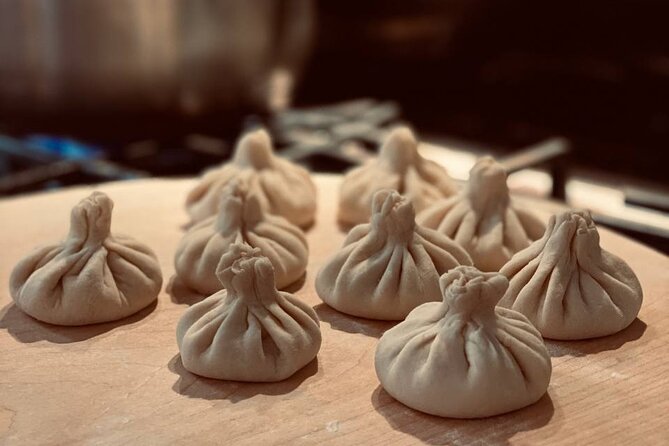
Khinkali is one of the clearest introductions to Georgian food. At first glance, it looks like a large pleated dumpling. The real trick is inside: the filling produces a savory broth that you need to keep sealed until the dumpling reaches your plate.
The class begins with dough. You learn how to measure the ingredients and mix them until the dough is soft and elastic. That detail matters. Dough that is too stiff can be difficult to shape, while dough that lacks strength may split during cooking.
You then work on the filling. The stated choices include meat, cheese, or mushrooms, prepared with their own sauce. This gives the lesson some flexibility, especially if you do not eat meat. The emphasis is not just on what goes into the dumpling, but on how the filling and liquid work together.
The final skill is the fold. You learn how to turn and seal the khinkali so the dumpling does not fall apart in the pot. Georgian cooks take pride in the pleats, and you should expect this part to require some practice. A few imperfect folds are part of the fun, and the finished dumpling still tastes good.
Khinkali also teaches you how to eat the dish. The broth is the point, so a careless first bite can send it across the table. You will want to handle the dumpling carefully and keep the liquid inside until you are ready.
more cooking classes in Tbilisi
- Small-Group Khinkali and Khachapuri Cooking Class in Tbilisi
★ 4.5 · 224 reviews - Cook True Ajarian Khachapuri and Khinkali in Highlanders Style
★ 5.0 · 93 reviews - Nana’s Kitchen – traditional Georgian cooking class at real Georgian family home
★ 5.0 · 37 reviews
Making Adjarian khachapuri with the right cheese
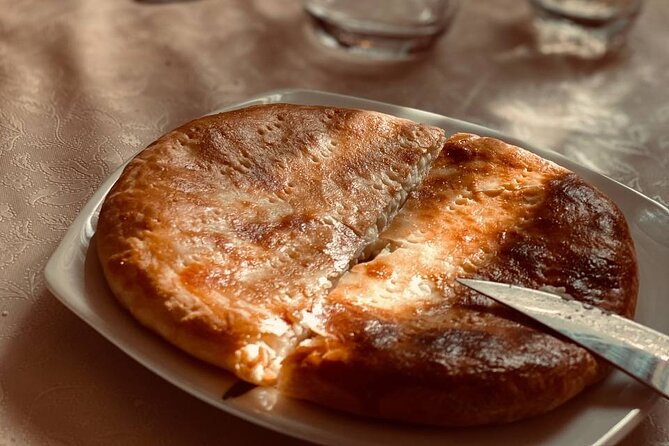
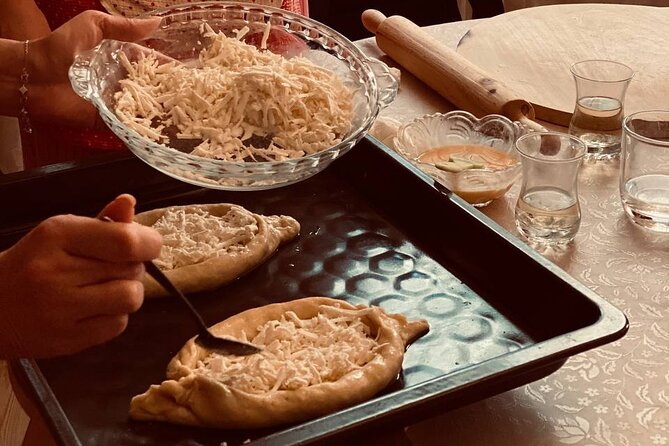
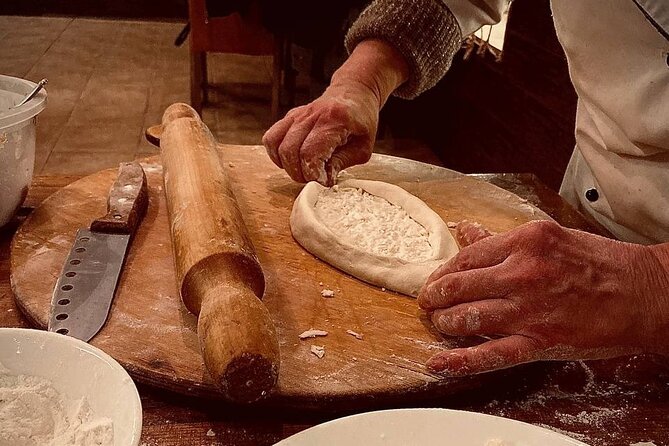
The second main dish is Adjarian khachapuri, Georgia’s famous boat-shaped cheese bread. The dough is stretched or arranged to hold a generous amount of melted cheese, then finished with an egg yolk in the center.
Here, the lesson focuses on texture. You learn how to prepare tender dough and which cheese creates the soft, stretchy filling that makes this dish so appealing. Cheese selection is not a minor point. The wrong type can melt poorly or lack the balance of salt and creaminess needed for the final dish.
The arrangement also matters. Adjarian khachapuri is not simply flat bread with cheese on top. Its shape creates a basin for the filling and egg yolk. Once served, you mix the center before tearing off pieces of bread and dipping them into the cheese.
This is a useful recipe to learn at home because it relies on a few basic components but rewards careful handling. You come away with a better sense of how dough, cheese, and heat work together. The class also covers different ways of arranging the dish, which gives you some room to adapt the recipe later.
The menu lists Adjarian khachapuri as the main dish, but you can make a request before the class. One booking included a request for Imeruli khachapuri, a round cheese-filled version, and the host agreed to it. That does not mean every variation is guaranteed, but it is a good reason to ask early if you have a particular Georgian dish in mind.
What two hours actually covers
The experience lasts about two hours. That makes it easy to fit into a Tbilisi schedule, especially if you want an evening activity that ends with dinner.
You should think of the timing as a practical workshop rather than a full cooking school course. The class concentrates on two signature dishes. You are shown the ingredients and recipes, then guided through the main techniques before sitting down to taste the results.
The sequence is well chosen. Khinkali starts with dough and filling, then moves to shaping. Khachapuri follows with another dough preparation and a different approach to cheese. You get variety without spending the whole night learning one recipe.
The short format also has limits. You should not expect detailed instruction on every Georgian dish, a market visit, or a long lesson in regional food customs. If your main goal is to learn a handful of reliable techniques and eat a Georgian meal, two hours should fit well. If you want a slow, multi-course food experience, this class may feel brief.
A family kitchen instead of a formal restaurant
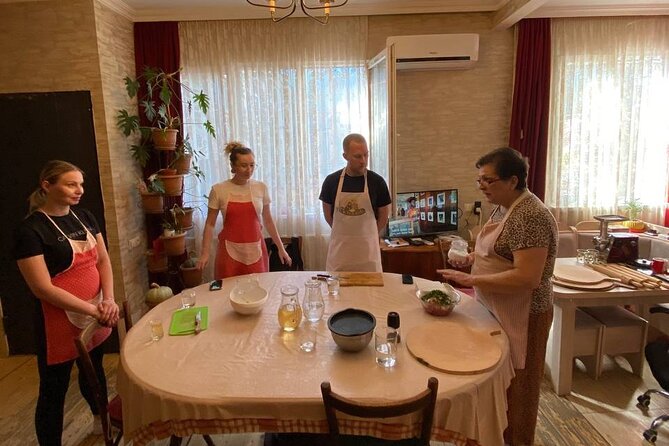
The class takes place at Georgian Cooking Classes Chakandrila8 on Merab Kostava Street in Tbilisi. The setting is described as a cozy family home, hosted by Georgian culinary specialists with experience in traditional cooking.
That setting changes the mood. You are not only following a recipe in a commercial kitchen. You are learning in a place designed to feel domestic and personal. For many people, that is the most valuable part of the experience because Georgian food is closely tied to sharing, hospitality, and meals around a table.
The small group limit helps here. With a maximum of eight people, the instructor can spend more time showing how to seal a dumpling or adjust the dough. You should also have a better chance to ask about ingredients and recipes than you would in a large demonstration class.
The exact host may vary, but Grisha is one name connected with the class. A previous participant described Grisha as the table-side chef and highlighted the clear communication before and during the experience. If you are hoping to work with a particular host, ask when booking rather than assuming a name is guaranteed.
more days out of Tbilisi to compare
- Taste of Kakheti: Wine Tour Bread Baking & Churchkhela Workshop
★ 4.5 · 46 reviews - Join a Local for a Market Tour, Cooking Class and Meal in her Tbilisi Home
★ 5.0 · 15 reviews - Georgian Dance Class in Tbilisi, Georgia
★ 5.0 · 10 reviews - Mtskheta: Exploring Heritage and Cuisine through Cooking Classes
★ 5.0 · 5 reviews
The value of lunch, wine, and instruction for $98
At $98 per person, this is not a budget meal. You are paying for more than a plate of khinkali and khachapuri, though. The fee includes the cooking lesson, lunch, homemade dishes, and alcoholic drinks.
The value is strongest if you plan to use what you learn. The hosts explain ingredient choices, dough preparation, fillings, shaping, and presentation. You can take those methods back to your own kitchen and repeat them, which gives the meal a longer usefulness than a standard restaurant dinner.
Wine also fits the setting. Georgian wine is part of the country’s food culture, and having alcoholic drinks included makes the class feel more like a shared meal than a technical demonstration. If you do not drink alcohol, the price still includes the lesson and food, but part of the package will have less value for you.
The cost makes the most sense for people who enjoy participation. If you only want to taste Georgian specialties, you can find a less expensive meal in Tbilisi. If you want to learn how to make the dishes and enjoy them at the table afterward, the fee is easier to justify.
What makes this more than a recipe handout
A recipe can tell you how much flour to use. It may not tell you how the dough should feel when it is ready, how much filling is too much, or how to close a khinkali without losing its broth.
That is where hands-on instruction helps. You can watch the host demonstrate the technique, try it yourself, and make corrections as you go. The class specifically focuses on dough texture, filling, sealing, and the cheese used for khachapuri.
This matters most for first-time cooks. One participant booked a cooking class for the first time and found the evening worth repeating with friends. The lesson is approachable because the dishes are famous, recognizable, and built from a manageable set of tasks.
You should still expect to do some work. This is not a show where every dish arrives finished. The more willing you are to handle sticky dough, shape uneven dumplings, and ask questions, the more you will get from the class.
Getting there and planning your visit
You meet at Georgian Cooking Classes Chakandrila8, 8 Merab Kostava Street, in Tbilisi. The location is near public transportation, so you do not need to arrange a private transfer as part of the experience.
Private transportation is not included. You are responsible for reaching the meeting point, so allow enough time to find the address and arrive ready to start. The activity ends back at the same meeting point, which makes planning the rest of your evening simpler.
The booking is confirmed at the time of reservation. The class is offered in English, an important point if you want to follow detailed cooking instructions without relying on gestures or translation.
Because the group is capped at eight, availability may be limited on popular dates. The free cancellation policy allows a full refund if you cancel at least 24 hours before the start time. Cancellations or changes made inside that window are not accepted for a refund.
Who will enjoy this class most
I would point this experience toward several kinds of visitors:
- First-time cooks: You get a guided introduction to two famous Georgian dishes without needing advanced kitchen skills.
- Food-focused visitors: The class gives you more context and participation than ordering the same dishes at a restaurant.
- Couples and friends: The shared preparation and meal suit a small social group, especially with wine included.
- Vegetarians: The filling options include cheese and mushrooms, though you should confirm your preference when booking.
- People staying in Tbilisi: The central meeting point and two-hour length make it easy to fit between other activities.
Families with young children may want to consider the dough work and the short, focused format. The available information does not state a minimum age or specific child arrangements, so ask before booking if that affects your plans.
A few things to consider before booking
The menu is centered on khinkali and khachapuri. That is excellent if these are the dishes you came to Georgia hoping to learn, but it may feel narrow if you want a wide range of regional recipes.
The class includes alcoholic drinks, but no separate nonalcoholic beverage details are provided. If you do not drink, ask what alternatives are available before you arrive.
You should also remember that the experience is approximate in length. It is listed as two hours, but cooking involves real preparation, shaping, and tasting. Plan a little flexibility around it rather than scheduling a tight appointment immediately afterward.
Most importantly, send any food preference or dish request at booking. The Imeruli khachapuri request was accepted in one case, showing that the hosts may be able to adjust the plan. It is better to ask early than hope for a change once the dough is already on the table.
Should you book Taste of Georgia?
Book this class if you want to learn two essential Georgian recipes in a small family setting, then sit down to eat what you made. The combination of hands-on dough work, included lunch, wine, English instruction, and a maximum of eight people gives the experience a personal feel.
Skip it if you only want a quick and inexpensive meal, or if you prefer a broad food tour with many tastings. At $98, the price depends on your interest in learning. For a first cooking class in Tbilisi, especially with friends, it offers a useful mix of instruction, food, and time around a Georgian table.
FAQ
Where does the cooking class take place?
The class begins and ends at Georgian Cooking Classes Chakandrila8, 8 Merab Kostava Street, Tbilisi, Georgia.
How long does the experience last?
The class lasts approximately two hours.
What language is the class offered in?
The experience is offered in English.
How many people can join the class?
The activity has a maximum group size of eight people.
What food will I learn to make?
You will learn to prepare Georgian khinkali and Adjarian khachapuri. Khinkali may include meat, cheese, or mushrooms in sauce, while Adjarian khachapuri includes melted cheese and an egg yolk.
Are food and drinks included?
Yes. The price includes the cooking class, lunch, tasting of homemade dishes, and alcoholic beverages.
Is transportation included?
Private transportation is not included. The meeting point is near public transportation, and the activity ends at that same location.
Recently added around Tbilisi
- 2-Day Private Wine Tour to Kakheti from Tbilisi★ 5.0 · 3 reviews
- 17 Day Private Tour through Georgia★ 5.0 · 3 reviews
- Tbilisi and Mtskheta cities private, cultural tour★ 5.0 · 3 reviews
- Kakheti wine region – Private Tour★ 5.0 · 3 reviews
- Kakheti With Top Destinations★ 5.0 · 3 reviews
- Tbilisi City Tour with Street Photography★ 5.0 · 3 reviews
- Jvari monastery & Mtskheta – Half day group tour from Tbilisi★ 5.0 · 3 reviews
- Tbilisi City, Jvari Monastery, Uplistsikhe caves, Mtskheta city Private Day Trip★ 4.5 · 3 reviews
Tbilisi Tours, compared.
Day Trip to Kakheti Wine Region Including 9 Wine Tastings
Read our review →
Highlights of Caucasus Mountains-Jinvali,Ananuri,Gudauri,Kazbegi(Group tour)
Read our review →

Tbilisi Walking Tour Including Cable Car and Traditional Bakery
Read our review →

Kakheti Wine Region: Signagi and Bodbe Tour with 10 Wine Tastings
Read our review →
Mtskheta,Jvari,Bazaar,wine tasting,Chronicles of Georgia
Read our review →Browse the lists this tour appears in